
I need to retrieve the information from the previous steps to write the blog post. Let me gather the article details, internet search data, and article selector information.
Office Rebuilds in Fort Worth: How to Transform Aging Spaces Into Modern Workspaces
The DFW office market is undergoing a dramatic shift. With changing workplace demands and evolving tenant needs, many Fort Worth property owners are discovering that traditional office spaces need a complete refresh to stay competitive. If you own or manage an aging office building, you’re not alone in wondering how to unlock its potential—and the answer might be closer than you think.
Why Fort Worth Office Buildings Need Reinvention
Fort Worth’s office market is tightening. Softness in the traditional office sector is pushing property owners toward strategic solutions: adaptive reuse and office rebuilds that transform outdated spaces into vibrant, mixed-use environments. The trend reflects a broader challenge across North Texas—older offices are sitting underutilized while demand surges for specialized spaces like medical offices, creative studios, and flexible work environments.
Modern tenants expect more than a desk and a window. They want contemporary amenities, efficient HVAC systems, updated plumbing infrastructure, and flexible layouts that adapt to how people actually work today. An office rebuild addresses these expectations systematically, positioning your property to attract quality tenants and command higher rents.
The Office Rebuild Process: From Feasibility to Final Delivery
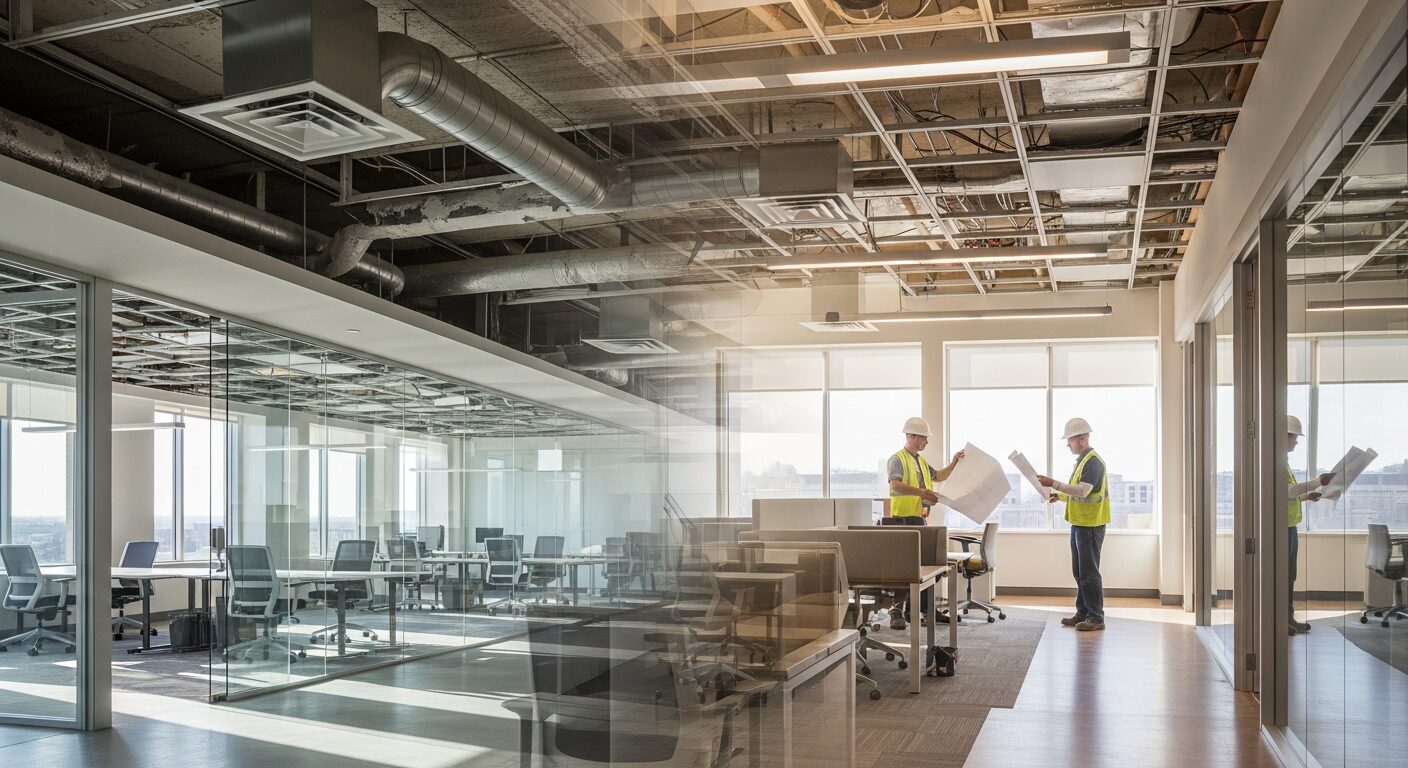
An effective office rebuild starts before any walls come down. The process requires detailed feasibility studies, careful planning around occupied spaces, and close coordination between your design team and experienced construction managers. This isn’t a simple renovation—it’s a strategic transformation that balances budget, timeline, and operational continuity.
Step 1: Assessment and Feasibility
Begin with a thorough property condition assessment to understand what systems need replacing and which elements can be refreshed. An experienced construction team evaluates your building’s bones—roof, HVAC, plumbing, electrical—and identifies quick wins alongside major improvements. This upfront analysis prevents surprises and sets realistic budgets.
Step 2: Strategic Planning
Next comes the design phase. Whether you’re converting office space into medical suites, creative studios, or mixed-use layouts, your plan must account for phased work, code compliance, and minimal disruption to any existing tenants. A construction manager collaborates with architects and engineers to create a roadmap that sequences work logically and maintains building operations throughout.
Step 3: Execution with Precision
The actual rebuild requires discipline and transparency. Quality construction management ensures every trade—electricians, HVAC specialists, plumbers—coordinates seamlessly. Communication matters more during office rebuilds because occupants may still be present. Regular updates, clear timelines, and quick problem-solving keep projects on track.
Step 4: Delivery and Handoff
Once the rebuild is complete, your space should feel entirely new. Modern fixtures, upgraded systems, flexible layouts, and code-compliant finishes attract tenants and justify premium positioning in the market.
Capital Improvements That Pay Dividends
Office rebuilds in Fort Worth often bundle cosmetic upgrades with essential capital improvements. The most impactful projects focus on:
- HVAC Modernization: Modern heating and cooling systems reduce energy costs and appeal to environmentally conscious tenants.
- Roof Replacements: A new roof extends building life and eliminates ongoing leak concerns.
- Plumbing Upgrades: Updated water systems support modern office requirements and reduce maintenance headaches.
- Energy-Efficiency Retrofits: As utility costs climb, tenants prioritize buildings with lower operating expenses.
These improvements aren’t cosmetic—they’re investments that increase property value, reduce vacancy periods, and justify higher lease rates.
Adaptive Reuse: Creating New Value From Old Spaces
Adaptive reuse takes the office rebuild concept further by repurposing office space for entirely new uses. A traditional office building might become:
- Medical Office Suites equipped with specialized HVAC, plumbing, and layouts that meet healthcare tenants’ needs
- Creative Studios with flexible floor plans, upgraded lighting, and modern tech infrastructure
- Mixed-Use Environments combining office, retail, and hospitality within a single building
- Professional Service Centers reconfigured to attract accountants, consultants, and service providers
Adaptive reuse projects demand careful feasibility studies to ensure the new use makes financial sense and meets building codes. But when executed correctly, they unlock entirely new revenue streams and position your property ahead of market trends.
Managing Office Rebuilds in Occupied Buildings
One of the biggest challenges for property owners is managing construction while tenants remain onsite. This requires special planning and experienced execution.
Minimize Disruption
Phase work strategically so that occupied areas remain accessible and functional. A skilled construction manager sequences trades to avoid conflicting activities—no loud HVAC work during peak business hours, no plumbing shutdowns without advance notice.
Maintain Clear Communication
Regular updates, courtesy notices about upcoming work, and responsive problem-solving build tenant confidence. Even when work is inconvenient, transparency and professionalism reduce friction.
Control Budget and Timeline
Detailed preconstruction planning prevents cost overruns and delays that impact tenants. Transparent bid reviews, change order discipline, and regular reporting keep everyone aligned.
Why Fort Worth Landlords Are Choosing Strategic Office Rebuilds
Fort Worth’s construction boom—driven by rapid population growth and shifting business needs—is creating unprecedented opportunities for property owners willing to invest in their buildings. Multifamily communities, senior living facilities, and hospitality properties are all investing heavily in capital improvements. The same logic applies to office buildings.
Smart landlords recognize that strategic construction services—from feasibility studies to final delivery—transform underutilized assets into competitive properties. Rather than watching rents stagnate, they’re partnering with experienced construction teams to rebuild offices that attract quality tenants and command premium positioning.
The regional trend is clear: veterans-owned construction firms are expanding their footprint across North Texas by combining military discipline with extensive construction expertise. These teams bring accountability, transparency, and proven execution to complex projects—exactly what office rebuilds require.
What to Look for in Your Office Rebuild Partner
Choosing the right construction team makes or breaks an office rebuild. Consider these factors:
- Experience with Occupied Buildings: Your partner should have proven success managing construction while tenants remain onsite.
- Design-Build Capabilities: A team that can coordinate architects, engineers, and trades minimizes delays and cost overruns.
- Third-Party Assessment Services: Before committing to a rebuild, an independent evaluation of your building’s condition provides confidence.
- Transparent Communication: Regular updates, detailed budgets, and open dialogue throughout the project reduce stress and surprises.
- Local Knowledge: Contractors familiar with Fort Worth codes, labor markets, and market conditions execute faster and adapt to local conditions.
- On-Time, On-Budget Delivery: References and track records matter—ask for examples of completed office rebuilds and communicate with past clients.
Office Rebuilds Are Investment, Not Expense
Many property owners hesitate before committing to an office rebuild, viewing the project as a sunk cost rather than an investment. The data tells a different story. Upgraded office buildings in Fort Worth attract tenants faster, support higher rents, and generate stronger returns over time. The initial rebuild cost is recovered through increased occupancy, premium lease rates, and reduced vacancy periods.
Fort Worth’s booming construction market, combined with shifting office demand, creates a unique window. Property owners who act now position themselves ahead of competitors still using outdated spaces to attract tenants. Your office rebuild isn’t just about fixing what’s broken—it’s about creating spaces that tenants actively want to occupy.
0 Comments