
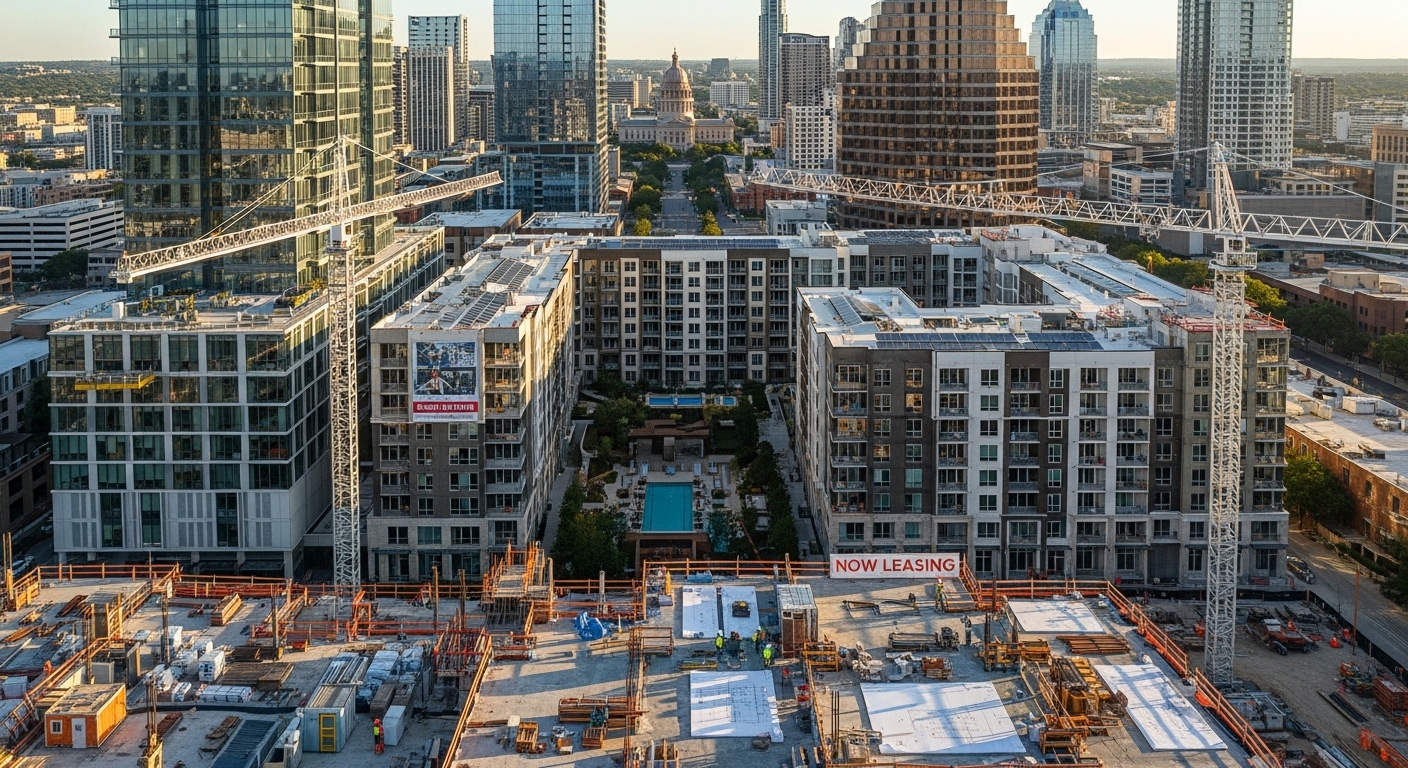
Austin’s Multi-Family Construction Boom: Strategic Upgrade Solutions for Property Owners in 2025
The Austin multi-family property market is experiencing unprecedented growth in 2025, creating both opportunities and challenges for property owners seeking to maximize their investments. With 19,490 new residential construction permits issued across Texas in Q1 2025 alone, and Austin maintaining its position as a construction hotspot despite a modest 2% decline in permits, the demand for strategic property upgrades has never been higher.
The Current State of Austin’s Multi-Family Market
Austin’s property landscape continues to evolve rapidly, driven by tech industry expansion and sustained population growth. According to recent construction reports, Austin recorded nearly 1,655 permits in early 2025, with Williamson and Travis counties leading activity. This robust construction environment has created a competitive market where property owners must strategically upgrade their assets to attract and retain tenants.
The shift toward design-build project delivery has become particularly pronounced in Austin’s construction sector, responding to client demands for speed and cost certainty. Property owners are increasingly seeking partners who can deliver comprehensive solutions while maintaining operational continuity in occupied environments.
Key Trends Shaping Multi-Family Upgrades in Austin
Technology Integration and Smart Building Features
The luxury property segment surge in Austin has set new standards for multi-family properties. Builders and renovation specialists are focusing on integrating technology and sustainability to meet evolving tenant expectations. Smart building features, energy-efficient systems, and tech-enabled facilities are no longer luxury additions but essential components for competitive properties.
Sustainable and Energy-Efficient Upgrades
Austin’s construction sector has embraced sustainable practices as a core focus in 2025. Properties featuring energy-efficient designs and eco-friendly upgrades are commanding premium rents and experiencing lower vacancy rates. These improvements not only attract environmentally conscious tenants but also provide long-term operational savings for property owners.
Fast-Track Renovation Solutions
With the competitive rental market in Austin, property owners cannot afford extended downtime during renovations. The demand for fast-track renovations and efficient room turn solutions has intensified, making it crucial to partner with construction teams that can deliver quality results without compromising timeline commitments.
Strategic Phased Upgrade Approaches for Multi-Family Properties
Phase 1: Infrastructure and Systems Assessment
Before embarking on visible improvements, smart property owners begin with comprehensive infrastructure evaluations. Capital needs assessments (CNA) and property condition assessments (PCA) provide the foundation for strategic upgrade planning. These evaluations identify critical systems requiring attention, from HVAC and plumbing to electrical and roofing components.
Understanding the current state of your property’s infrastructure prevents costly surprises and ensures upgrade investments are strategically prioritized. Professional third-party inspections offer objective insights that inform decision-making and budget allocation.
Phase 2: High-Impact Interior Upgrades
The second phase typically focuses on unit interiors and common areas that directly impact tenant satisfaction and rental rates. Room turns and unit refresh services have become essential for maintaining competitive positioning in Austin’s dynamic rental market.
Modern tenants expect updated kitchens, bathrooms, and living spaces that reflect contemporary design trends. Strategic upgrades in these areas often yield the highest return on investment while minimizing disruption to existing tenants.
Phase 3: Exterior and Amenity Enhancements
The final phase addresses exterior improvements and amenity additions that differentiate your property in the marketplace. This might include landscaping upgrades, recreational facilities, or building envelope improvements that enhance both aesthetics and energy efficiency.
Choosing the Right Construction Partner for Occupied Environments
Working in occupied multi-family properties requires specialized expertise and a disciplined approach to minimize disruption. The most successful upgrade projects involve construction teams that understand the unique challenges of maintaining operational continuity while delivering high-quality results.
Veteran-Led Precision and Discipline
Military veterans bring unique advantages to construction management, particularly in complex, occupied environments. Their background in mission-critical operations, attention to detail, and commitment to clear communication protocols make them ideal partners for multi-family upgrade projects.
Veteran-led construction teams understand the importance of precise scheduling, transparent reporting, and maintaining operational standards that don’t compromise tenant satisfaction during renovation periods.
Transparent Communication and Project Management
Successful phased upgrades require clear communication channels between property management, construction teams, and tenants. The best construction partners provide regular updates, maintain detailed progress reports, and ensure all stakeholders remain informed throughout the project lifecycle.
Design-Build Advantages
The design-build approach has gained popularity in Austin’s multi-family sector because it streamlines the renovation process under single-source responsibility. This methodology reduces coordination challenges, accelerates project timelines, and provides cost certainty that makes budgeting more predictable.
Maximizing ROI Through Strategic Timing and Planning
Market Timing Considerations
Austin’s construction market dynamics require careful timing of upgrade projects. With steady demand across the residential sector and ongoing interest in multi-family projects, property owners who strategically time their improvements can capitalize on market conditions.
Planning upgrades during traditionally slower leasing periods allows for completion before peak demand seasons, maximizing occupancy and rental rate potential.
Budget Optimization Strategies
Effective multi-family upgrades require careful budget allocation across multiple phases. Independent contractor bid reviews and payment audits help ensure cost efficiency while maintaining quality standards. Professional guidance in evaluating contractor proposals can result in significant savings without compromising project outcomes.
Long-Term Value Creation
The most successful multi-family upgrades focus on long-term value creation rather than short-term cosmetic improvements. Investments in infrastructure strengthening and efficiency improvements provide ongoing operational benefits that compound over time.
Regulatory Compliance and Permitting in Austin
Austin’s streamlined permitting process in 2025 has made renovation projects more efficient, but compliance remains crucial. Understanding local building codes, accessibility requirements, and environmental regulations ensures smooth project execution without costly delays or rework.
Professional construction partners familiar with Austin’s regulatory environment can navigate permitting requirements efficiently, ensuring projects remain on schedule and within budget.
Looking Ahead: Future-Proofing Your Multi-Family Investment
As Austin continues its growth trajectory, property owners must consider future market demands when planning upgrades. The integration of smart building technology, sustainable systems, and flexible space configurations will likely become standard expectations rather than premium features.
Partnering with construction professionals who understand these evolving trends ensures your upgrade investments remain relevant and competitive in Austin’s dynamic market. The focus should be on creating spaces that not only meet current tenant expectations but anticipate future needs.
Conclusion: Strategic Partnerships for Successful Multi-Family Upgrades
Austin’s booming construction market presents exceptional opportunities for multi-family property owners willing to invest strategically in their assets. The key to successful phased upgrades lies in partnering with experienced professionals who combine technical expertise with operational discipline.
Whether you’re planning comprehensive renovations or targeted improvements, the right construction partner can help navigate Austin’s competitive landscape while delivering results that enhance both tenant satisfaction and investment returns. The emphasis on quality, transparency, and efficient project delivery will determine the success of your multi-family upgrade initiative in this thriving Texas market.
By embracing strategic upgrade approaches and working with qualified professionals, multi-family property owners in Austin can capitalize on the city’s continued growth while creating exceptional living environments that attract and retain quality tenants.
0 Comments