
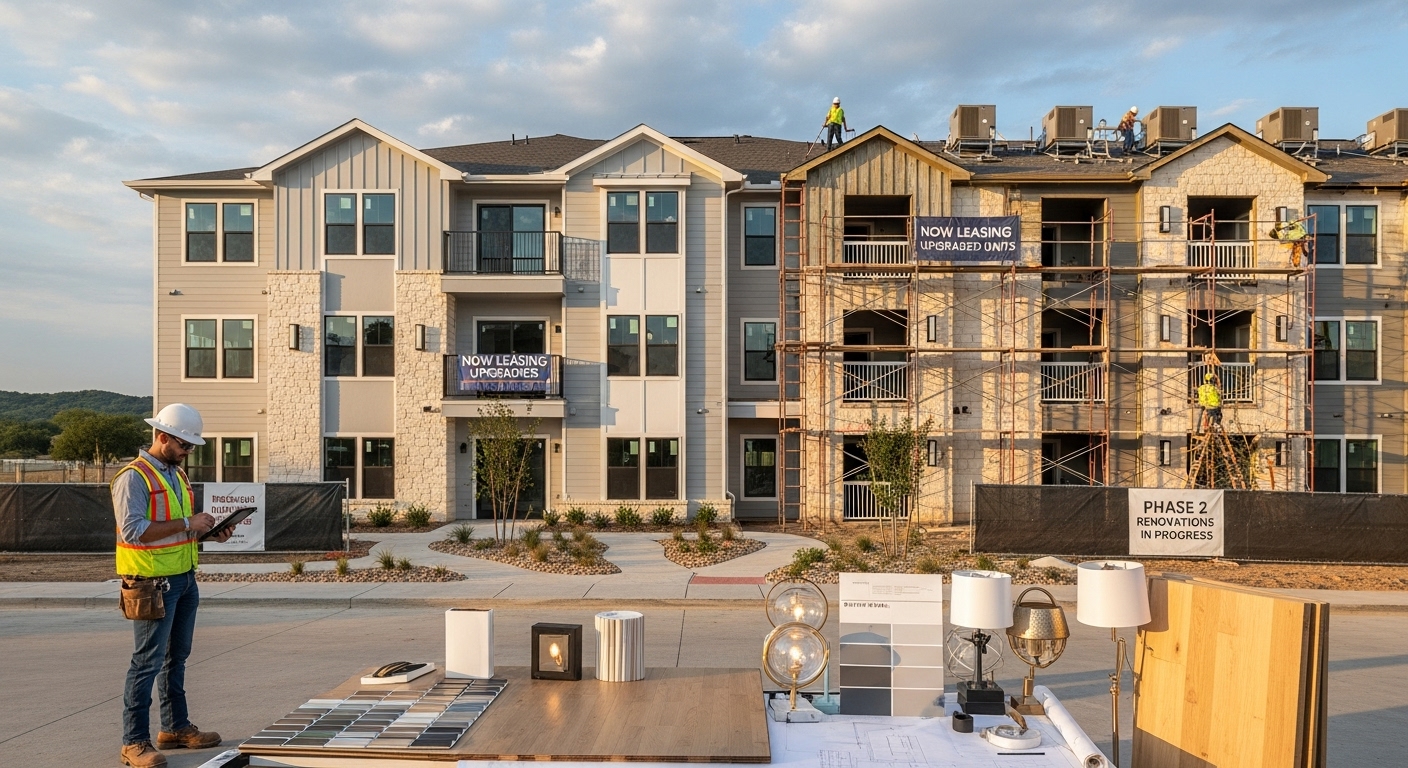
Strategic Multi-Family Property Upgrades in Denton, Texas: Maximizing ROI Through Phased Renovations in 2025
The Denton County region is experiencing unprecedented growth and investment, creating exceptional opportunities for multi-family property owners to enhance their assets through strategic upgrades. With major developments like Wistron’s $687 million manufacturing facility investment and Bell’s new aircraft manufacturing facility bringing thousands of jobs to the area, the demand for quality rental housing continues to surge.
The Current Multi-Family Market Landscape in North Texas
Robust Construction Activity Drives Demand
Recent data shows multifamily construction in Texas remains resilient despite national headwinds. While multifamily starts dropped 30.4% nationally in May 2025, permits increased 13% year-over-year, indicating strong developer confidence in the Texas market. Austin and Houston recorded some of the largest year-over-year increases in multifamily permitting, with Austin gaining 929 permits and Houston adding 847 permits.
The Denton County region benefits from this broader Texas growth story, positioning property owners to capitalize on increasing rental demand while supply remains constrained.
Economic Drivers Creating Opportunity
The economic fundamentals supporting multi-family investment in the Denton area are compelling:
- Major Industrial Expansion: Wistron InfoComm’s $687 million investment in two new manufacturing facilities will create significant employment opportunities
- Infrastructure Development: The Denton County Outer Loop Project represents massive infrastructure investment requiring substantial construction and support services
- Educational Growth: North Central Texas College’s new three-story residence hall project demonstrates ongoing institutional investment in the region
- Tax Advantages: Denton County’s recently adopted FY 2025-2026 budget includes reduced property tax rates while maintaining strong infrastructure funding
Strategic Phased Upgrade Approaches for Maximum ROI
Understanding Phased Renovation Benefits
Multi-family property owners face unique challenges when upgrading occupied properties. Phased renovations allow owners to:
- Maintain Cash Flow: Keep portions of the property generating revenue during upgrades
- Minimize Tenant Disruption: Reduce vacancy rates by renovating sections systematically
- Spread Capital Investment: Distribute costs over time while improving returns incrementally
- Test Market Response: Gauge tenant and market reaction to upgrades before full implementation
High-Impact Upgrade Categories
Energy Efficiency Improvements
Modern tenants increasingly prioritize sustainability and energy costs. Strategic upgrades include:
- HVAC system modernization for improved efficiency and lower utility costs
- LED lighting conversions throughout common areas and units
- Energy-efficient windows and insulation upgrades
- Smart thermostats and energy management systems
Technology Integration
Today’s renters expect modern technological amenities:
- High-speed internet infrastructure throughout properties
- Smart home features in individual units
- Mobile-enabled access control systems
- Package management solutions for e-commerce deliveries
Aesthetic and Functional Upgrades
Interior improvements that command premium rents include:
- Kitchen modernization with contemporary appliances and countertops
- Bathroom upgrades featuring modern fixtures and efficient layouts
- Flooring replacements with durable, attractive materials
- Fresh paint and updated lighting fixtures
Common Area Enhancements
Shared spaces significantly impact tenant satisfaction and retention:
- Fitness center installations or upgrades
- Community gathering spaces with modern amenities
- Outdoor areas including grilling stations and seating
- Enhanced security features including lighting and surveillance
Strategic Implementation Phases
Phase 1: Quick Wins and Cash Flow Protection
Focus initial efforts on improvements that provide immediate returns:
- Common area refreshes that enhance property appeal
- Exterior improvements including landscaping and signage
- Minor unit upgrades during natural turnover periods
- Energy efficiency improvements with measurable utility savings
Phase 2: Value-Add Renovations
Implement upgrades that support rent increases:
- Kitchen and bathroom modernization in targeted units
- Technology infrastructure improvements
- Amenity additions that differentiate the property
- Enhanced security and access control systems
Phase 3: Premium Positioning
Complete transformation for maximum market positioning:
- Comprehensive unit renovations to achieve top-market rents
- Luxury amenity installations
- Advanced technology integration
- Branding and marketing enhancements
Market-Specific Opportunities in the Denton Area
Capitalizing on Employment Growth
The influx of manufacturing jobs from companies like Wistron and Bell creates specific opportunities:
- Corporate Housing Demand: Temporary housing needs during employee relocations
- Professional-Grade Amenities: Home office spaces and high-speed internet for remote work capabilities
- Convenience Features: Time-saving amenities for busy professionals
Addressing Regional Demographics
North Texas demographics favor multi-family investment:
- Strong population growth among young adults aged 20-34
- Increasing demand for rental housing near employment centers
- Growing preference for amenity-rich communities over homeownership
Leveraging Local Infrastructure Investment
Denton County’s infrastructure investments create additional opportunities:
- Properties near transportation improvements command premium rents
- Enhanced connectivity increases property desirability
- Public safety investments improve neighborhood appeal
Financial Considerations for Phased Upgrades
ROI Optimization Strategies
Rental Premium Analysis
Market data indicates strategic upgrades can generate rental premiums of 15-25% in strong North Texas markets. Key factors include:
- Targeting improvements that tenants value most
- Timing renovations with lease renewals to minimize vacancy
- Implementing upgrades that reduce operational costs
Financing Advantageous Timing
Current market conditions present unique financing opportunities:
- Interest rates showing signs of stabilization after recent peaks
- Potential for improved financing terms as Federal Reserve policy adjusts
- Tax incentive programs for energy efficiency improvements
Cost Management Through Strategic Partnerships
Working with experienced construction management firms provides several advantages:
- Bulk Purchasing Power: Reduced material costs through volume purchasing
- Specialized Expertise: Understanding of occupied property renovation challenges
- Quality Assurance: Professional oversight ensuring work meets standards
- Timeline Management: Efficient scheduling minimizing tenant disruption
Companies like Alder Designs bring over 70 years of combined construction expertise specifically focused on multi-family renovations. Their veteran-owned approach emphasizes mission-driven performance with integrity, precision, and purpose—crucial qualities when managing complex phased renovation projects.
Technology and Innovation in Modern Multi-Family Upgrades
Smart Building Integration
Modern multi-family properties increasingly incorporate smart technology:
- IoT-Enabled Systems: Connected HVAC, lighting, and security systems
- Data Analytics: Usage monitoring for optimized energy management
- Predictive Maintenance: Systems that identify potential issues before failures occur
- Tenant Experience Apps: Mobile platforms for rent payments, maintenance requests, and community engagement
Sustainable Design Elements
Environmental consciousness drives tenant preferences:
- Green Building Certifications: LEED or similar certifications enhance property value
- Water Conservation: Low-flow fixtures and smart irrigation systems
- Renewable Energy: Solar panel installations where feasible
- Waste Reduction: Recycling programs and composting facilities
Regulatory and Compliance Considerations
Building Code Requirements
Multi-family renovations must comply with evolving building codes:
- Life Safety Systems: Updated fire suppression and alarm systems
- Accessibility Compliance: ADA-compliant features in common areas and select units
- Energy Efficiency Standards: Meeting or exceeding local energy codes
- Permit Requirements: Proper permitting for all renovation work
Fair Housing and Tenant Rights
Renovation projects must respect tenant rights:
- Proper Notice: Required advance notice for renovation activities
- Habitability Standards: Maintaining livable conditions during construction
- Reasonable Accommodations: Addressing tenant needs during disruption
- Lease Agreement Compliance: Following lease terms regarding property modifications
Selecting the Right Construction Partner
Key Qualifications to Consider
Specialized Experience
Multi-family renovation requires specific expertise:
- Experience with occupied property construction
- Understanding of phased renovation logistics
- Knowledge of multi-family building systems
- Proven track record with similar projects
Operational Continuity Focus
The ability to maintain operations during construction is crucial:
- Minimizing noise and disruption during occupied hours
- Coordinating work schedules with tenant needs
- Maintaining security and safety standards
- Protecting tenant privacy and comfort
Quality and Timeline Management
Professional construction management ensures:
- Work completion within agreed timeframes
- Quality standards that enhance property value
- Budget adherence with transparent pricing
- Clear communication throughout the project
The Value of Local Expertise
Working with Fort Worth-based construction professionals offers advantages:
- Regional Market Knowledge: Understanding of local building practices and regulations
- Established Vendor Networks: Relationships with quality subcontractors and suppliers
- Proximity Advantages: Quick response times and easy site accessibility
- Community Investment: Local firms invested in regional success
Future Market Outlook and Strategic Positioning
Emerging Trends Shaping Multi-Family Investment
Build-to-Rent Growth
The build-to-rent sector continues expanding, creating competition for traditional multi-family properties. Strategic upgrades help existing properties compete effectively with new construction.
Demographic Shifts
Millennial and Gen Z preferences drive demand for:
- Technology-integrated living spaces
- Sustainable and environmentally conscious features
- Flexible lease terms and co-living options
- Community-focused amenities and programming
Economic Resilience
North Texas markets demonstrate strong economic fundamentals:
- Diversified employment base reducing recession risk
- Continued population growth from domestic migration
- Business-friendly regulatory environment attracting companies
- Infrastructure investment supporting long-term growth
Positioning for Long-Term Success
Market Differentiation
Strategic upgrades create competitive advantages:
- Premium amenities justifying higher rents
- Operational efficiencies reducing long-term costs
- Enhanced tenant satisfaction improving retention
- Property positioning for future appreciation
Value Creation Through Quality
Professional renovation execution delivers lasting value:
- Durable improvements reducing future maintenance costs
- Energy efficiency features providing ongoing operational savings
- Enhanced property appeal supporting strong occupancy rates
- Quality construction maintaining value over time
Conclusion: Maximizing Multi-Family Investment Returns in 2025
The convergence of strong regional economic growth, infrastructure investment, and favorable market conditions creates exceptional opportunities for multi-family property owners in the Denton, Texas area. Strategic phased renovations allow property owners to capitalize on these opportunities while managing risk and maintaining cash flow.
Success requires careful planning, quality execution, and partnerships with experienced professionals who understand the unique challenges of multi-family property improvement. By focusing on high-impact upgrades that address tenant preferences while improving operational efficiency, property owners can achieve significant returns on their renovation investments.
The key to maximizing ROI lies in implementing a strategic approach that balances immediate cash flow protection with long-term value creation. Through phased renovations that prioritize tenant satisfaction, energy efficiency, and modern amenities, multi-family property owners can position their assets for sustained success in North Texas’s dynamic real estate market.
With major employment drivers, infrastructure improvements, and continued population growth supporting the region, now represents an optimal time to invest in strategic property improvements that will deliver returns for years to come.
0 Comments