
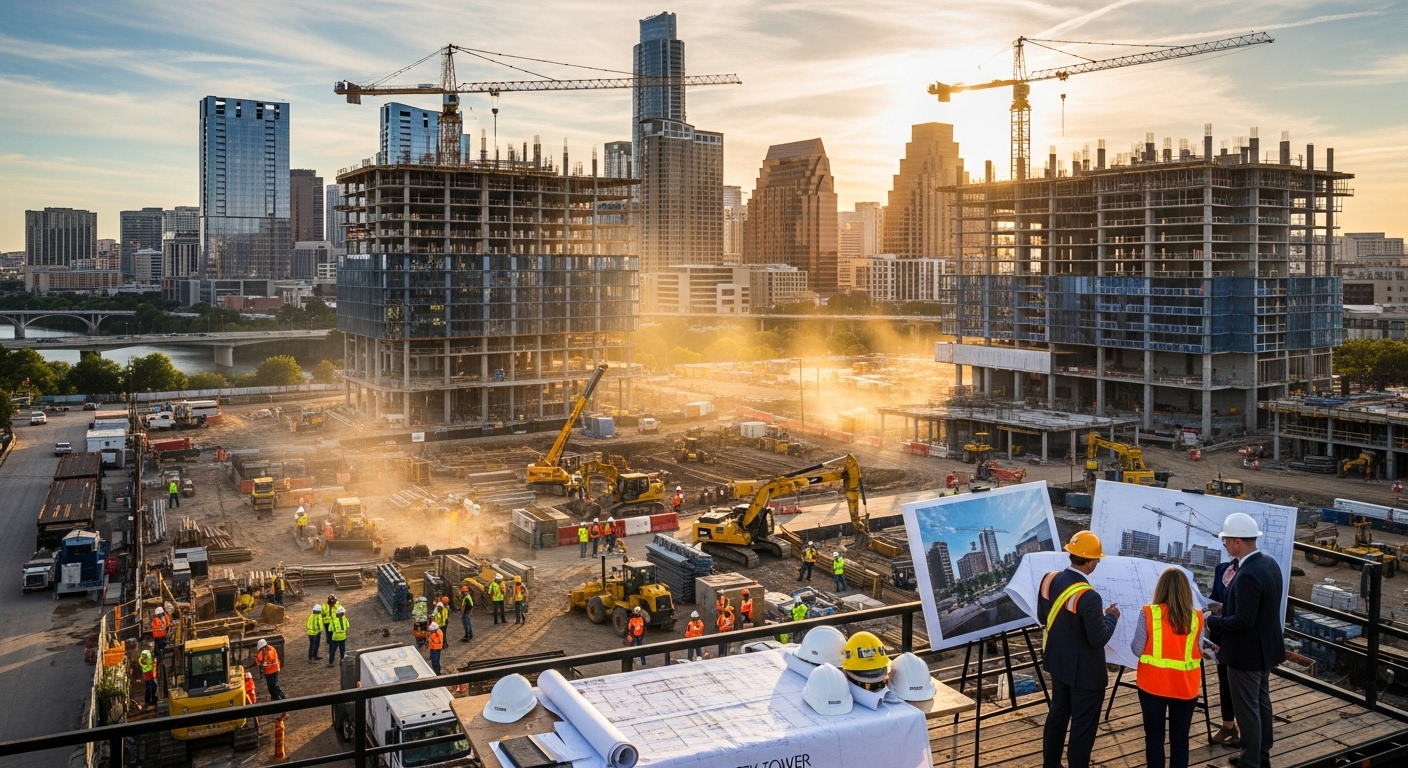
Austin Construction Market Thrives: How Design-Build Partnerships Are Reshaping Texas Development in 2025
Austin’s construction landscape is experiencing unprecedented growth in 2025, with architectural and design-build firms playing a pivotal role in the city’s transformation. As major infrastructure projects and commercial developments reshape the Texas capital, the demand for strategic construction partnerships has never been higher.
Record-Breaking Construction Activity Drives Partnership Opportunities
Austin’s construction boom shows no signs of slowing down, with industry forecasts pointing to continued vitality throughout 2025. The city is witnessing a surge in mega-projects that require sophisticated coordination between design professionals and construction experts.
Major developments currently underway include the $515.9 million east drainage tunnel project, extensive I-35 Capital Express upgrades, and the ambitious Waterline mixed-use tower. These large-scale initiatives are creating ripple effects throughout the market, generating opportunities for architectural firms seeking reliable construction execution partners.
Key market indicators include:
- Steady population growth driving residential and commercial demand
- $2.1 billion in active infrastructure investments
- Rising emphasis on sustainable building practices and smart technology integration
- Increased focus on design-build delivery methods for faster project completion
Emerging Trends Reshaping Austin’s Construction Partnerships
The most successful architectural and design-build firms in Austin are adapting to several key trends that are defining the 2025 construction landscape:
Technology Integration and Innovation
Austin’s construction sector is embracing cutting-edge technologies including Building Information Modeling (BIM), modular construction techniques, and smart building sensors. These innovations require construction partners who can seamlessly integrate advanced systems while maintaining design integrity.
The adoption of 3D printing applications and prefabricated components is accelerating project timelines, making it essential for design firms to work with construction teams experienced in these emerging methodologies.
Sustainability and Environmental Responsibility
Eco-friendly materials and sustainable construction practices are no longer optional in Austin’s competitive market. Projects increasingly require LEED certification and energy-efficient solutions, demanding construction partners who understand both environmental regulations and cost-effective implementation strategies.
Occupied Environment Construction
Many of Austin’s most lucrative projects involve renovations and improvements to occupied buildings, particularly in the hospitality, senior living, and multi-family sectors. This specialized construction approach requires teams that can maintain operational continuity while delivering high-quality results.
Addressing Critical Market Challenges
Austin’s construction boom comes with significant challenges that architectural and design-build firms must navigate carefully:
Labor Market Pressures
The tight labor market for skilled trades is impacting project costs and schedules across Central Texas. Successful partnerships now depend on construction teams that have established relationships with certified professionals and proven recruitment strategies.
Recent industry surveys indicate that labor shortages are affecting up to 70% of active projects, making it crucial for design firms to partner with construction companies that have demonstrated workforce stability.
Material Cost Management
Rising material costs continue to pressure project budgets, with inflation affecting everything from steel and concrete to specialized building systems. Construction partners who provide transparent pricing and effective cost management strategies are becoming invaluable assets to design teams.
Regulatory Navigation
Austin’s rapid growth has created increasingly complex regulatory environments. Projects now require extensive permitting coordination, environmental assessments, and compliance with evolving building codes. Design-build partnerships thrive when construction teams bring expertise in regulatory navigation alongside technical execution capabilities.
The Value of Veteran Leadership in Construction Management
Military-trained construction professionals are making significant impacts in Austin’s market, bringing unique advantages to design-build partnerships:
Disciplined project management ensures adherence to timelines and specifications, critical factors when architectural vision must be translated into built reality without compromise.
Clear communication protocols eliminate the miscommunication issues that often plague complex projects, ensuring design intent is preserved throughout construction phases.
Quality-first mindset aligns with architectural firms’ commitment to design excellence, creating partnerships built on shared values of precision and attention to detail.
Strategic Positioning for Design-Build Success
Austin’s construction market rewards firms that can offer comprehensive solutions from initial feasibility studies through final project completion. The most successful architectural partnerships involve construction teams capable of:
Independent Assessment Services
Property condition assessments and capital needs evaluations provide the foundational data that inform design decisions. Construction partners who offer certified inspection services add significant value to the design process.
Bid Review and Contractor Auditing
Third-party bid reviews and contractor payment audits protect both design firms and their clients from cost overruns and quality issues. This oversight capability is particularly valuable on large-scale projects where multiple subcontractors are involved.
Fast-Track Execution
Austin’s competitive market often requires accelerated project delivery. Construction partners experienced in fast-track methodologies, including room turns and unit refresh services, can help design firms win time-sensitive projects.
Looking Ahead: Market Opportunities Through 2025
The outlook for Austin’s construction market remains exceptionally strong, with several factors driving continued growth:
Infrastructure Investment: Major public works projects will continue generating opportunities for design-build teams throughout 2025 and beyond.
Commercial Expansion: The Austin Convention Center rebuild and numerous office tower projects are creating demand for sophisticated design-build partnerships.
Mixed-Use Development: Projects like The Row and The Confluence represent the future of Austin development, requiring seamless coordination between architectural vision and construction execution.
Residential Growth: Continued population growth ensures steady demand for both new construction and renovation projects across all residential sectors.
Building Lasting Partnerships in Austin’s Market
Success in Austin’s construction market requires more than technical expertise—it demands partnerships built on trust, transparency, and shared commitment to excellence. Architectural and design-build firms are finding that their most successful projects result from relationships with construction teams that bring:
- Proven track records in complex project delivery
- Transparent communication throughout all project phases
- Certified professional credentials that ensure quality and compliance
- Financial stability to support large-scale project commitments
- Local market knowledge specific to Austin’s regulatory and logistical requirements
The construction partners who understand that architectural vision and construction execution must work in harmony are the ones driving Austin’s most successful projects. As the city continues its remarkable growth trajectory, these collaborative relationships will remain the foundation of exceptional built environments that define Austin’s future skyline.
For architectural and design-build firms ready to capitalize on Austin’s construction boom, the key lies in identifying construction partners who share their commitment to quality, precision, and project success. The market rewards those who choose collaboration over competition, creating lasting partnerships that benefit clients, communities, and the broader Austin development landscape.
0 Comments