
Austin Construction Market 2025: Why Real Estate Developers Need Strategic Partners
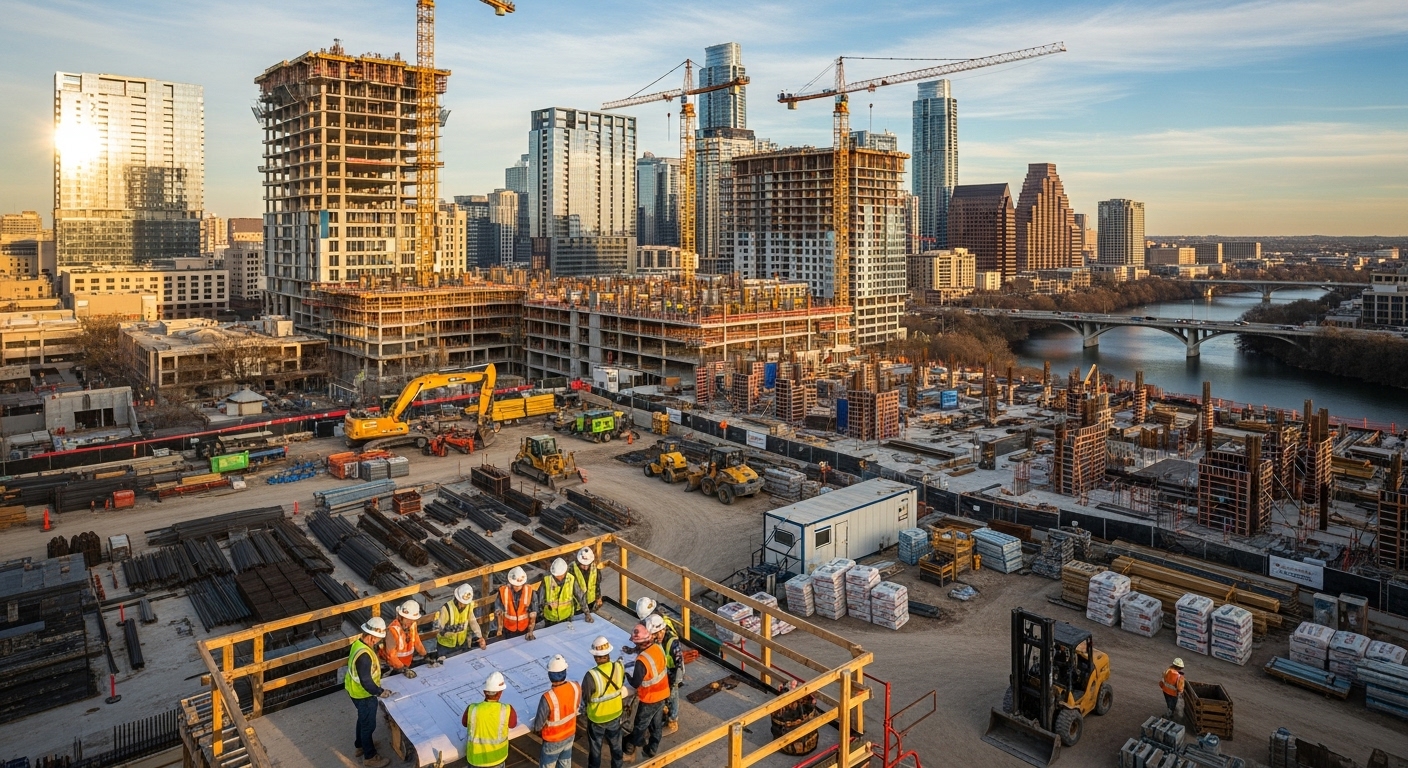
Austin’s construction landscape is experiencing unprecedented growth, making it one of the most dynamic markets in the United States. Real estate developers seeking reliable construction partners must navigate a complex environment of booming demand, skilled labor shortages, and evolving market conditions. With over 15,000 new apartment units projected for completion in 2025 alone, Austin leads the nation in apartment construction while simultaneously managing massive infrastructure projects and commercial developments.
The Austin Construction Boom: By the Numbers
Austin’s construction market is thriving on multiple fronts. The city’s rapid population growth, driven by tech industry expansion and major corporate relocations, has created an insatiable demand for both residential and commercial space. Tesla’s recent $500 million Gigafactory expansion exemplifies the scale of investment flowing into Central Texas, while Project Connect’s multi-billion dollar transit initiative represents one of the largest public infrastructure undertakings in the region’s history.
Key market drivers include:
- Population surge: Young professionals and tech workers continue migrating to Austin
- Industrial investments: Major facilities like Samsung’s semiconductor plant and expanded data centers
- Infrastructure modernization: The massive I-35 expansion and light rail construction
- Mixed-use development: Increasing demand for transit-oriented and adaptive reuse projects
However, this rapid growth comes with significant challenges. Construction costs remain elevated, skilled labor shortages persist across trades, and the state’s power grid faces strain from increased demand. Despite a recent economic slowdown that has tempered some market segments, forecasts project continued vitality for the Texas construction industry through 2025.
Design-Build: The Preferred Approach for Austin Developers
The Austin market has shown strong preference for design-build services, particularly in multi-family housing, office renovations, and infrastructure upgrades. This integrated approach offers developers several advantages in the current market climate:
Speed to Market: Design-build delivery methods reduce project timelines by allowing concurrent design and construction phases. In a competitive market where timing can determine project viability, this approach provides crucial advantages.
Cost Control: Integrated project delivery helps manage the budget challenges facing Austin developers. With construction costs remaining elevated, the collaborative approach of design-build services often results in better cost predictability and value engineering opportunities.
Risk Mitigation: Single-source accountability reduces coordination risks that can derail complex projects. Given Austin’s challenging regulatory environment and infrastructure constraints, this streamlined approach proves particularly valuable.
Navigating Occupied Environment Construction
One of the most critical skills in Austin’s evolving market is the ability to perform construction in occupied environments. As the city experiences adaptive reuse trends and existing building renovations become more common, developers need partners who can maintain operational continuity while delivering high-quality improvements.
Specialized capabilities required include:
- Tenant retention strategies: Minimizing disruption during renovations to maintain occupancy rates
- Phased construction planning: Coordinating work to allow continued operations in commercial and multi-family properties
- Safety protocols: Enhanced safety measures for occupied space construction
- Communication systems: Clear tenant and stakeholder communication throughout projects
Veterans in the construction industry often excel in these environments due to their training in complex operational scenarios and disciplined approach to project management. Companies with military backgrounds bring valuable experience in logistics, coordination, and execution under challenging conditions.
The Value of Veteran-Owned Construction Partners
Austin’s construction market increasingly recognizes the value of veteran-owned contractors, particularly those specializing in complex projects and occupied environment renovations. These companies often demonstrate distinct advantages:
Operational Excellence: Military training instills discipline in project execution, attention to detail, and commitment to completion deadlines. These qualities prove essential in Austin’s fast-paced development environment.
Team Coordination: Veterans understand the importance of clear communication channels and coordinated team efforts. In complex construction projects involving multiple stakeholders, this experience translates to smoother project delivery.
Problem-Solving Under Pressure: Military experience develops skills in adapting to changing conditions and solving problems efficiently. Austin’s dynamic construction environment, with its regulatory challenges and infrastructure constraints, benefits from this adaptability.
Integrity and Transparency: Veterans typically bring strong ethical standards to their business operations, providing the transparency and reliability that developers need in long-term partnerships.
Market Challenges and Solutions for 2025
Austin developers face several key challenges that require strategic construction partnerships:
Labor Market Pressures
The skilled labor shortage affecting Texas construction is particularly acute in Austin. Successful developers are partnering with contractors who have established relationships with skilled trades and proven track records of workforce retention.
Infrastructure Strain
Ongoing infrastructure projects, including the I-35 expansion and Project Connect, create logistical challenges for new developments. Experienced contractors understand how to work around these constraints while maintaining project schedules.
Regulatory Complexity
Austin’s development approval process has become increasingly complex. Construction partners with local experience and established relationships with city departments provide significant advantages in project approval timelines.
Sustainability Requirements
Growing emphasis on green building practices and energy efficiency requires contractors with specialized knowledge. Developers benefit from partners who understand both regulatory requirements and cost-effective implementation strategies.
Strategic Partnership Advantages
The most successful Austin developers are recognizing that construction partnerships extend beyond basic contracting relationships. Strategic partnerships provide:
Market Intelligence: Experienced local contractors offer valuable insights into regulatory changes, material availability, and labor market conditions.
Financial Partnerships: Established contractors with strong financial backing can help developers manage cash flow challenges and project financing requirements.
Long-term Relationships: Ongoing partnerships reduce the time and cost associated with contractor selection and project startup for each new development.
Quality Assurance: Proven contractors stake their reputation on consistent quality delivery, reducing the risk of costly rework or warranty issues.
Looking Forward: Austin’s Development Future
Despite recent economic headwinds, Austin’s fundamentals remain strong. The city’s continued population growth, ongoing corporate relocations, and massive infrastructure investments create sustained demand for construction services. However, the market is becoming more sophisticated, requiring developers to work with partners who understand both the opportunities and challenges ahead.
Key trends shaping the market include:
- Transit-oriented development: Project Connect’s implementation will create new opportunities around transit corridors
- Adaptive reuse: Historic preservation and sustainability trends favor renovation over new construction in many cases
- Mixed-use projects: Integrated living, working, and retail spaces respond to changing lifestyle preferences
- Technology integration: Smart building systems and advanced construction techniques become standard expectations
For real estate developers in Austin’s dynamic market, success depends increasingly on choosing the right construction partners. Companies with proven local experience, veteran leadership, and expertise in complex project delivery offer the reliability and strategic value that today’s competitive environment demands.
The Austin construction market of 2025 rewards developers who move beyond transactional contractor relationships toward strategic partnerships with proven performers. In a market where timing, quality, and cost control determine project success, the choice of construction partner often makes the difference between profitable development and missed opportunities.
As Austin continues its remarkable growth trajectory, developers who align with experienced, reliable construction partners position themselves to capitalize on the city’s ongoing transformation while navigating the challenges that come with rapid market evolution.
0 Comments