
817-401-0091

by | Sep 24, 2025

Dallas Commercial Real Estate: Major Construction Trends Driving REIT Investment Opportunities in 2025

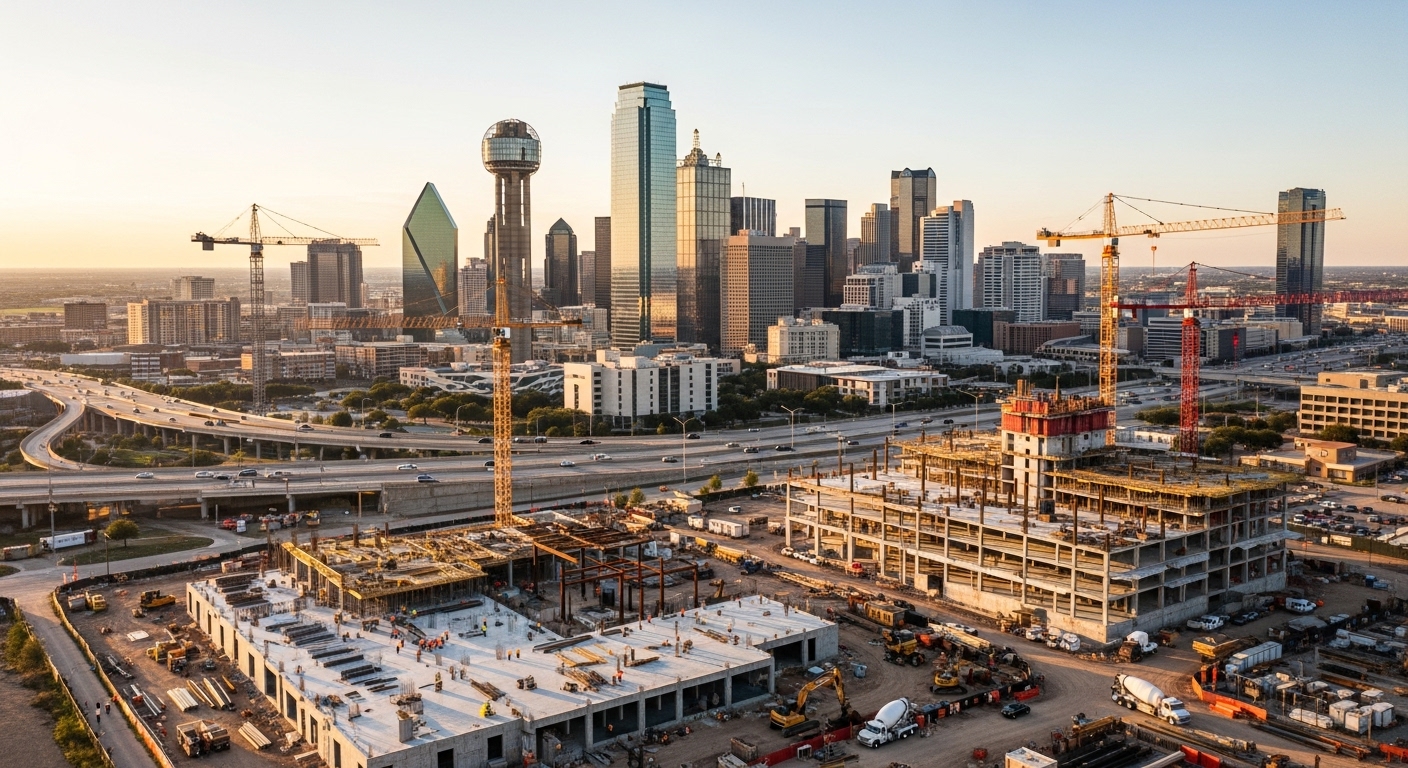
Dallas continues to cement its position as a premier destination for real estate investment trusts (REITs) seeking high-value construction and renovation opportunities. With over $146 billion in planned transportation investments and the city leading the nation’s hotel construction pipeline, North Texas presents unprecedented opportunities for institutional investors focused on large-scale property assets.

Dallas Leads National Construction Activity

The Dallas metropolitan area is experiencing remarkable growth in commercial construction, with 199 hotel projects representing approximately 24,500 rooms either under construction or in planning stages for 2025. This construction boom extends far beyond hospitality, encompassing educational facilities, healthcare infrastructure, and commercial developments that create substantial opportunities for REIT portfolios.

Recent major completions demonstrate the market’s strength. Skanska’s $95-million modernization of CHRISTUS Santa Rosa Hospital showcases the sophisticated healthcare construction capabilities available in the Texas market, while Adolfson & Peterson Construction’s $53-million Heritage High School expansion highlights the robust educational infrastructure investment occurring throughout the region.

Strategic Renovation Market Expansion

The commercial renovation sector in Dallas presents particularly attractive opportunities for REITs focused on value-add strategies. Current market trends show increasing demand for:

  • Modernization of existing commercial assets to meet contemporary operational standards
  • Energy efficiency upgrades that reduce operational costs and improve asset values
  • Technology infrastructure improvements in office and commercial spaces
  • Compliance renovations for healthcare and educational facilities

Companies like Alder Designs, based in Fort Worth, exemplify the veteran-owned, experienced contractors driving this renovation market. Their expertise in occupied environment construction ensures minimal disruption to tenant operations—a critical factor for REIT asset management strategies.

Infrastructure Investment Impact on REIT Assets

Governor Greg Abbott’s recently announced 10-year transportation plan, totaling over $146 billion statewide, will significantly impact commercial real estate values throughout the Dallas-Fort Worth region. These infrastructure improvements create enhanced accessibility and connectivity for commercial properties, directly benefiting REIT portfolios through:

Increased Asset Values

Transportation improvements typically correlate with 15-25% increases in commercial property values within proximity corridors. REITs with strategically positioned assets stand to benefit substantially from these public investments.

Enhanced Tenant Attraction

Modern infrastructure improvements make commercial properties more attractive to high-quality tenants, supporting higher rental rates and improved occupancy levels across REIT portfolios.

Development Opportunities

New transportation corridors often create prime development sites for mixed-use projects, retail centers, and office complexes that align with REIT investment strategies.

Market-Specific Construction Capabilities

The Dallas construction market offers REITs access to sophisticated contractors capable of handling complex, large-scale projects. Recent examples include:

  • Healthcare facility expansions requiring specialized mechanical, electrical, and safety systems integration
  • Educational campus developments incorporating advanced technology infrastructure
  • Hospitality projects meeting contemporary guest experience standards
  • Commercial renovations in occupied environments with minimal operational disruption

Opportunity Assessment for REIT Investment

High-Growth Sectors

Hospitality remains dominant, with Dallas launching 35 new hotels representing 3,700 rooms by 2027. This presents opportunities for REITs focused on hospitality assets to acquire development projects or partner with established operators.

Healthcare infrastructure continues expanding, with major hospital systems investing in modernization and expansion projects exceeding $100 million. Healthcare REITs can capitalize on this growth through strategic partnerships with health systems requiring modern facilities.

Educational facilities across multiple districts are undergoing significant renovations and expansions, creating opportunities for REITs specializing in educational real estate assets.

Value-Add Renovation Opportunities

The active renovation market presents numerous value-add opportunities for REITs seeking to improve existing asset performance. Key focus areas include:

  • Energy efficiency upgrades that reduce operational expenses and improve tenant satisfaction
  • Technology infrastructure modernization essential for contemporary commercial operations
  • Space optimization through strategic renovations that maximize rentable square footage
  • Compliance improvements that ensure long-term asset viability and tenant retention

Construction Quality and Reliability Standards

Working with established contractors like Alder Designs ensures REITs receive construction services that meet institutional investment standards. Their veteran-owned operation brings military discipline to project management, ensuring:

  • Transparent budget management with clear cost tracking and reporting
  • On-time project delivery minimizing revenue disruption for income-producing assets
  • Quality construction that supports long-term asset value preservation
  • Occupied environment expertise allowing renovations without tenant displacement

Market Positioning for Maximum Returns

REITs considering Dallas market entry or expansion should focus on:

Strategic Asset Positioning

Target properties within proximity to planned transportation improvements to maximize appreciation potential from public infrastructure investments.

Partnership Development

Establish relationships with proven local contractors capable of handling large-scale projects while maintaining operational continuity for existing tenants.

Diversification Opportunities

The Dallas market offers diversification across multiple property types—hospitality, healthcare, educational, and traditional commercial—allowing REITs to balance portfolio risk while capturing growth opportunities.

Forward-Looking Investment Considerations

The Dallas construction and renovation market presents compelling opportunities for REITs through 2025 and beyond. With major public infrastructure investments supporting property values, robust construction capabilities enabling complex projects, and diverse property types offering portfolio diversification, the region provides an attractive environment for institutional real estate investment.

The combination of experienced contractors, major infrastructure investment, and diverse construction activity creates an environment where REITs can confidently pursue both acquisition and development strategies. Whether focusing on ground-up development, value-add renovations, or strategic acquisitions, Dallas offers the construction expertise and market dynamics necessary for successful large-scale real estate investment.

For REITs evaluating construction partners, companies with proven track records in occupied environments, transparent project management, and institutional-quality delivery standards will be essential for maximizing investment returns while minimizing operational disruptions to existing portfolio assets.

0 Comments

Submit a Comment

Your email address will not be published. Required fields are marked *

Denton’s 10-Year Downtown Design Plan: Guide for REITs & Construction Firms

Denton’s 10-year downtown design plan is sparking a construction boom that REITs and developers can’t ignore. This article breaks down why multi-family projects, life-sciences facilities, and downtown infrastructure upgrades are driving investment, and why experienced construction management and property assessments are essential. Learn how design-build services, occupied-facility expertise, and third-party CNAs reduce risk, speed time-to-market, and protect returns. If you’re a REIT, developer, or construction firm evaluating Denton opportunities, this guide outlines the capital, compliance, and partner-selection strategies you need to win projects and deliver on schedule and on budget.

Waco HUD Grants: Funding for Senior Living Renovations

Waco’s Housing & Community Development office invites qualified organizations to apply for HUD grant funding from March 2 to April 3, 2026. Grants will support senior living renovations, affordable housing rehabilitation, accessibility upgrades, and community facility improvements. Developers, nonprofits, and construction service providers that serve lower-income residents are encouraged to partner on projects that improve safety, accessibility, and quality of life. This article outlines eligible projects, the value of a capital needs assessment, tips for working with contractors in occupied facilities, and practical steps to prepare a competitive application before the deadline.

Fort Worth Architects: Secure a Trusted Construction Partner for the 2026 Multifamily Boom

With Dallas‑Fort Worth ranked among the top U.S. markets for multifamily construction, Fort Worth architects face unprecedented demand for renovations, capital improvements, and fast-track builds. Success now depends on partnering with construction firms that can manage occupied environments, deliver on time and on budget, and handle multi-unit capital programs, senior living retrofits, and hospitality renovations. This post explains what to look for in a construction execution partner—industry expertise, certifications, transparent project management, and occupied-site experience—and outlines a four-step framework to protect your design intent while scaling your firm. Learn how the right partner turns design excellence into reliable delivery.

Senior Living Renovations in Waco: Strategic Upgrades to Boost Occupancy

Waco’s senior living communities face growing demand—and aging facilities risk occupancy, staff retention, and reputation. This article explains why strategic renovations are essential, outlining a four-step roadmap: property assessment, design and planning, phased execution in occupied environments, and final delivery. High-impact upgrades include unit refreshes, common-area modernizations, infrastructure improvements, accessibility updates, and kitchen/dining enhancements. Learn how Waco’s cost advantages and veteran-owned construction expertise deliver fast, transparent projects that minimize disruption. Start with a free property condition assessment to prioritize work, control costs, and boost resident experience and occupancy.

Frisco, Texas Development Boom: New Hospitality, Retail & Entertainment Projects

Frisco, Texas is experiencing a major development surge as new hospitality, retail, and entertainment projects reshape the market through 2026. For commercial owners and investors, staying competitive requires strategic capital planning, professional property condition assessments, and renovation partners who can execute occupied, phased work quickly and transparently. This article outlines why CNAs and disciplined design-build execution matter, how fast unit turns and specialized tenant finishes drive rent recovery, and a practical four-step framework to assess, plan, bid, and execute capital improvements that protect and grow your investment.

Waco VA EHRM Infrastructure Upgrades: Guide for Waco Contractors

A federal procurement notice outlines EHRM infrastructure upgrades at the Waco VA Medical Center, including building-system modifications, IT improvements, and facility work in an occupied healthcare setting. This opportunity is especially relevant to contractors experienced with phased, occupied renovations—such as senior-living and institutional projects—who can manage coordination, safety, and IT integration. This article summarizes the procurement highlights, regional construction context, and practical bidding tips to help qualified firms assess fit and prepare responsive proposals. Read on for key takeaways and action steps to pursue this Waco contract opportunity.

Modernize Hotel Rooms (2026): Boost Occupancy with Smart Renovations

Guest expectations have shifted—today’s travelers book experiences, not just rooms. This 2026 guide shows Dallas-Fort Worth hospitality owners how targeted room upgrades, efficient room turns, and capital improvements (HVAC, plumbing, energy systems) boost guest satisfaction and occupancy without long closures. Learn how design-build teams, construction crews experienced with occupied hotels, and third-party inspections protect your investment and speed delivery. Prioritize high-ROI improvements, work around operations, and partner with veteran-led teams for disciplined project management. Start with a property condition assessment and request a free, no-obligation quote to turn renovations into a competitive advantage.

DFW Multifamily Report: Renovation Budgets Rise in Irving — 2026 Phased Strategy for Owners

Irving is among the most active DFW markets as owners boost renovation budgets to compete with newer Class A buildings. This guide explains typical scopes—unit refreshes, common-area modernizations, and systems upgrades—plus why PCAs and CNAs are essential for smart planning. Learn how to phase work around lease turnover, control costs with construction management, and prioritize projects that drive rent premiums and reduce operating expenses. If you own or manage 1980s–90s multifamily assets in Irving, this article shows how strategic, phased renovations can protect value and accelerate returns in 2026.

BAM Builders Recognized Among Leading Waco Remodelers

BAM Builders, a Waco-based contractor featured on Yelp, is being recognized among the area’s leading remodelers for bathroom renovations, custom homes and high-end finish work. Reviews emphasize strong project management, clear pricing, and the ability to work in occupied homes—qualities that matter as Waco adopts updated building codes. This post explains which renovations deliver the best return, how to vet contractors, and why starting with a professional assessment and transparent bid review protects your investment.

Adaptive Reuse and Renovation Surge in Fort Worth’s Urban Core (2026 Opportunities)

Fort Worth’s urban core is experiencing a surge in adaptive reuse and renovation projects as developers convert older office, industrial, and hospitality properties into multifamily, healthcare, and mixed‑use spaces. These complex, occupied‑building renovations require thorough pre‑project assessments, phased construction strategies, and disciplined project management to avoid costly delays and budget overruns. Veteran‑led construction teams and independent contractor audits provide the structured planning, operational continuity, and accountability developers need to deliver fast unit turns and maximize returns. Read on to learn why choosing an experienced, locally rooted construction partner is the key to profitable adaptive reuse in Fort Worth in 2026.