
I need to retrieve the information from the previous steps to write your blog post. Let me gather the details now.
Capital Improvements and Unit Turns: How to Maximize Property Value in McKinney’s Competitive Real Estate Market
The Dallas–Fort Worth multifamily market is booming, and McKinney’s northern suburbs are at the center of unprecedented development activity. If you own or manage residential or commercial property in North Texas, you already know that competitive pressure is intense. Class A and B communities are filling fast, capital markets are tightening, and investors are looking for partners who can deliver fast, efficient unit turns and strategic capital improvements—not just contractors, but true strategic partners.
That’s where a disciplined approach to capital improvements and unit turnovers becomes your competitive advantage.
Why Capital Improvements Matter More Than Ever in McKinney’s Real Estate Landscape
Capital improvements and unit refreshes directly impact property valuation, occupancy rates, and investor returns. In a March 2026 market review, analysts noted that despite tightening capital markets, ground-up and value-add projects continue moving forward across McKinney and Allen. The winners aren’t those who cut corners—they’re those who execute capital improvements efficiently, maintain operational continuity, and deliver measurable returns on investment.
Here’s what the data shows: properties that strategically upgrade aging stock command higher rents, retain tenants longer, and attract quality residents. But execution matters. Slow construction, budget overruns, and disrupted operations kill momentum.
Understanding Capital Improvements vs. Basic Maintenance
Not all property upgrades are equal. Capital improvements are major enhancements that extend a building’s life, increase its value, or improve its function—think roofing replacements, HVAC system upgrades, plumbing infrastructure work, and energy-efficient improvements. These are tax-deductible, long-term investments that show up on balance sheets and appraisals.
Routine maintenance keeps things running. Capital improvements transform the property.
For multifamily property managers in McKinney, this distinction matters because capital improvements attract appraisers’ attention, qualify for accelerated depreciation, and justify rent increases. Investors understand this, which is why the best real estate developers are increasingly seeking construction partners with proven expertise in capital needs assessments and phased renovation programs.
The Four-Step Process: From Assessment to Delivery
Strategic capital improvements follow a proven methodology:
1. Assessment & Property Condition Analysis
Before you spend a dollar, understand exactly what needs to be done. A certified property condition assessment (PCA) identifies deferred maintenance, aging systems, and prioritized improvement opportunities. This prevents surprises mid-project and protects your ROI.
2. Capital Needs Planning
A capital needs assessment (CNA) translates findings into a realistic, phased improvement roadmap. Which upgrades deliver the highest return? Which can be bundled for efficiency? Which improve occupancy or safety most directly? This strategic layer separates reactive maintenance from purposeful value creation.
3. Design and Bid Review
Before construction starts, have independent professionals review contractor bids and project designs. This protects you from inflated costs and ensures quality standards align with your property’s market positioning. In Fort Worth and McKinney’s competitive submarkets, precision in planning saves weeks of construction delays and thousands in budget overruns.
4. Execution with Accountability
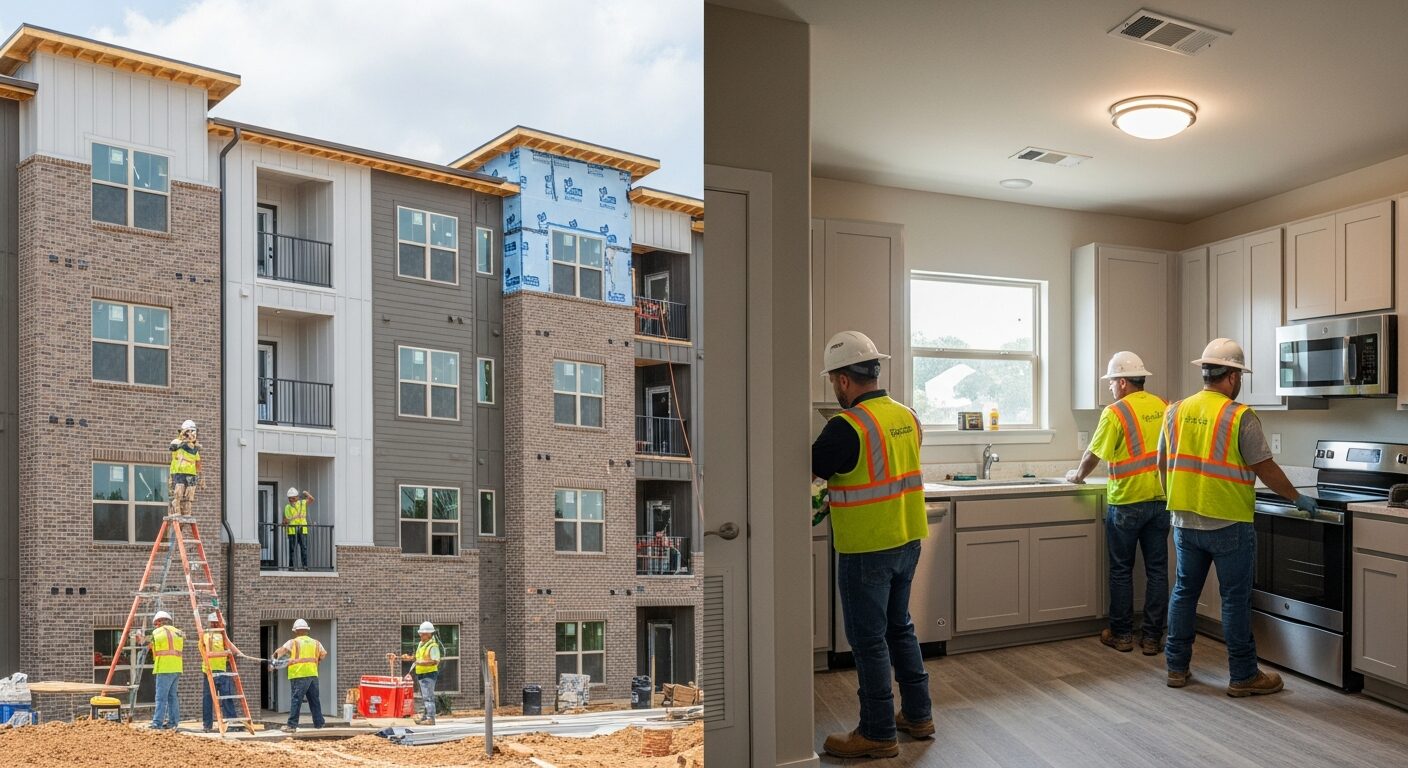
Construction happens in occupied environments. Tenants are living in or using your property. This demands disciplined project management, transparent communication, and respect for operational continuity. Projects must stay on schedule, within budget, and with minimal disruption to your business.
Unit Turns: Speed and Quality as Competitive Advantages
Unit turnovers are critical in multifamily operations. Every vacant unit is lost revenue. Fast, professional room turns minimize downtime while maintaining quality standards.
In McKinney’s tight multifamily market, the difference between a 5-day turn and a 10-day turn is substantial: lost rent, delayed leasing, and reduced cash flow. But rushed work creates quality issues, rework delays, and tenant dissatisfaction.
The solution? A construction partner that combines:
- Predetermined scope clarity – exactly what gets refreshed, upgraded, or replaced
- Pre-positioned materials and crews – no delays hunting for supplies
- Systematic workflow – flooring, painting, appliances, fixtures in a logical sequence
- Quality checkpoints – inspections prevent rework and ensure standards
- On-time execution – predictable schedules mean predictable occupancy
For real estate developers and property managers managing Class A and B multifamily communities in the McKinney area, this operational precision directly impacts bottom-line performance.
Capital Improvements for Different Property Types
Multifamily Residential Properties
In McKinney’s active multifamily market, value-add opportunities typically include kitchen and bathroom upgrades, flooring improvements, energy-efficient lighting and HVAC systems, security enhancements, and common area renovations. These improvements justify rent increases of 5–15% while improving retention and brand positioning.
Senior Living Facilities
Senior communities require specialized capital improvements: accessibility upgrades, safety railings, emergency response systems, and common dining or activity areas. Renovations must maintain a homelike environment while meeting rigorous health and safety codes. This sector demands construction partners with healthcare facility experience.
Hospitality Properties
Hotels and resorts need phased renovation programs that don’t disrupt guest operations. Think guest room refreshes, lobby modernization, meeting space upgrades, and restaurant or bar improvements. Hospitality construction requires coordinated scheduling, quality standards, and the discipline to work around active operations.
Commercial and Office Spaces
Tenant improvements, office rebuilds, and common area modernization keep commercial properties competitive. Energy upgrades, flexible workspace design, and updated building systems attract quality tenants. Office construction in occupied buildings demands minimal disruption and precision scheduling.
Why Local Expertise Matters: The Fort Worth and McKinney Advantage
Construction in North Texas requires regional knowledge. Building codes, permit timelines, local contractor networks, supplier relationships, and municipal coordination all matter. A construction partner based in Fort Worth, with established experience across McKinney and the broader DFW region, brings familiarity with local requirements, faster permitting, and relationships with vetted subcontractors.
The engineering firm recently selected to design McKinney’s downtown parking garage, the ongoing renovation at Toyota Stadium in nearby Collin County, and the accelerating construction at the new McKinney Fire Station—these projects underscore the region’s growth trajectory and the value of working with contractors who understand local municipal processes, utility coordination challenges, and the unique demands of construction in active, occupied environments.
How to Choose a Construction Partner for Capital Improvements
When evaluating construction partners for capital improvements or unit turns, prioritize:
- Proven experience with capital needs assessments – they should understand how to prioritize improvements for maximum ROI
- Track record in multifamily, hospitality, or senior living – sector expertise matters
- Transparency in budgeting and scheduling – clear communication prevents surprises
- Third-party inspection capabilities – independent verification protects your interests
- Ability to work in occupied environments – your property doesn’t stop operating during construction
- Local presence and relationships – Fort Worth and McKinney region expertise accelerates permits and coordinates with municipal stakeholders
- Certified professionals and industry recognition – quality credentials reflect quality work
The ROI of Strategic Capital Improvements
Numbers speak louder than intentions. A property that undergoes thoughtful, well-executed capital improvements typically sees:
- Rent growth of 5–15% in competitive markets like McKinney
- Improved tenant retention and reduced turnover costs
- Appraisal increases that support refinancing or resale
- Operational efficiency gains (lower utility costs, reduced maintenance calls)
- Competitive positioning in tight multifamily markets
For real estate developers seeking reliable construction partners in the McKinney and Fort Worth area, the partnership approach—combining assessments, strategic planning, transparent bidding, and disciplined execution—transforms capital improvements from necessary expenses into measurable wealth creation.
Moving Forward: Your Next Step
If you’re managing property in McKinney, Fort Worth, or the broader DFW region, the competitive advantage belongs to those who approach capital improvements strategically. Start with a professional property condition assessment. Understand your opportunities. Plan your priorities. Partner with builders who combine expertise in your property type with the discipline and transparency to deliver results.
The multifamily market in McKinney will continue moving fast. Properties that stay ahead aren’t those that react to maintenance crises—they’re those that make purposeful, timely investments in their assets, guided by experienced partners who understand both the numbers and the operational realities of property management in North Texas.
0 Comments