
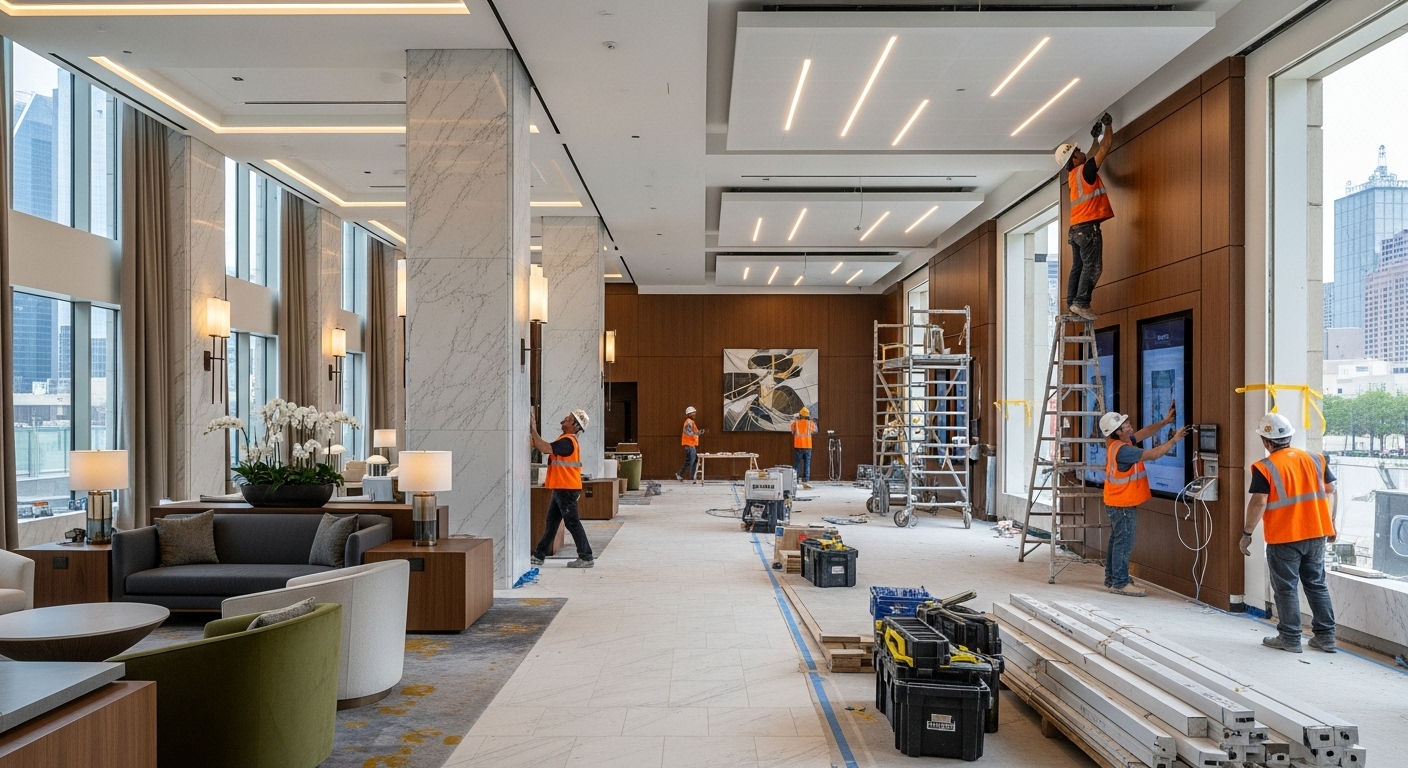
Dallas Hotel Renovation and Construction: Why 2025 Is the Perfect Time to Modernize Your Property
The Dallas-Fort Worth hospitality market is experiencing unprecedented growth and transformation in 2025. With major construction projects reshaping the city’s landscape and travelers demanding elevated experiences, hotel owners who invest in renovations and modernization now are positioning themselves for significant competitive advantages.
The Dallas Hospitality Boom: Market Trends Driving Investment
Dallas has emerged as a prime destination for both business and leisure travelers, creating exceptional opportunities for hotel owners to capitalize on increased demand. Recent market analysis shows that the DFW area is witnessing robust construction activity across multiple sectors, with hospitality properties leading the charge in renovation and expansion projects.
Rising Construction Activity Signals Market Confidence
The construction landscape in Dallas tells a compelling story of growth and opportunity. Major mixed-use developments like Fields West in Frisco and 23Springs in Uptown Dallas are incorporating hospitality components, signaling strong market confidence in the sector. These projects emphasize sustainability and high-quality construction management, setting new standards for what modern travelers expect from their accommodations.
Recent data shows that Dallas-Fort Worth continues to attract significant investment, with luxury developments like the Vivante Turtle Creek securing $180 million in construction financing. This level of investment activity creates a ripple effect throughout the hospitality industry, as properties must modernize to remain competitive in an increasingly sophisticated market.
Why Hotel Renovations Are Critical in Today’s Market
Meeting Evolving Guest Expectations
Today’s travelers demand more than basic accommodations. They seek properties that offer modern amenities, energy-efficient systems, and spaces that provide both comfort and functionality. Hotels that fail to modernize risk losing market share to competitors who understand the importance of staying current with design trends and technological advances.
Energy Efficiency as a Competitive Advantage
With rising operational costs, energy-efficient upgrades have become essential for maintaining profitability. Modern HVAC systems, LED lighting, and smart building technologies not only reduce operating expenses but also appeal to environmentally conscious travelers who increasingly choose accommodations based on sustainability practices.
Maximizing Revenue Through Strategic Improvements
Smart renovations can significantly impact your property’s bottom line. Updated guest rooms command higher nightly rates, while improved common areas and amenities increase guest satisfaction scores and encourage repeat bookings. The key is implementing improvements that provide measurable returns on investment.
Key Areas for Hotel Modernization in 2025
Guest Room Transformations
Modern travelers expect guest rooms that function as comfortable living spaces, not just places to sleep. Strategic room renovations should focus on:
- Technology Integration: USB charging stations, smart lighting controls, and high-speed Wi-Fi infrastructure
- Bathroom Upgrades: Walk-in showers, modern fixtures, and improved lighting
- Flexible Furniture: Pieces that serve multiple purposes and can adapt to different guest needs
- Sound Control: Enhanced insulation and noise-reduction materials for better guest experiences
Common Area Enhancements
Lobby and common areas serve as the first impression for guests and significantly impact their overall experience. Successful renovations in these spaces should emphasize:
- Open, Flexible Layouts: Spaces that can accommodate both business travelers and leisure guests
- Natural Light: Large windows and skylights that create welcoming environments
- Multi-Functional Spaces: Areas that can serve as work spaces during the day and social spaces in the evening
- Local Design Elements: Incorporating Dallas-area culture and aesthetics to create a unique sense of place
Infrastructure and Mechanical Systems
Behind-the-scenes improvements often provide the greatest long-term value. Priority areas include:
- HVAC Modernization: Energy-efficient systems that provide consistent comfort while reducing operational costs
- Plumbing Upgrades: Modern fixtures and efficient water systems that prevent costly maintenance issues
- Electrical Infrastructure: Adequate power distribution for modern technology needs and safety compliance
- Building Envelope Improvements: Enhanced insulation, windows, and roofing that improve energy efficiency and guest comfort
Navigating Construction in Operational Hotels
Minimizing Guest Disruption
One of the biggest challenges hotel owners face during renovations is maintaining operations while construction is underway. Successful projects require careful planning to minimize noise, dust, and disruption to guest experiences. Phased renovation approaches allow hotels to maintain revenue streams while gradually upgrading different areas of the property.
Strategic Timing and Project Phasing
The most effective hotel renovations are planned around occupancy patterns and seasonal demand. Working with experienced construction professionals who understand the hospitality industry ensures that projects are completed efficiently without compromising guest satisfaction or revenue generation.
The Fort Worth Advantage: Regional Construction Expertise
Hotel owners in the Dallas area benefit from access to experienced construction professionals who understand the unique challenges of hospitality renovation projects. The Fort Worth region has developed a strong network of contractors and construction management companies specializing in occupied environment projects, ensuring that hotel renovations can be completed with minimal operational disruption.
Local construction expertise means faster project completion times, better understanding of regional building codes and requirements, and access to trusted subcontractors who have proven track records in hospitality projects.
Financial Considerations and Return on Investment
Understanding Capital Improvement Benefits
Strategic hotel renovations should be viewed as investments rather than expenses. Properties that undergo comprehensive modernization typically see:
- Increased Nightly Rates: Updated properties can command premium pricing
- Higher Occupancy Rates: Modern amenities attract more bookings
- Reduced Operating Costs: Energy-efficient systems lower monthly expenses
- Extended Property Life: Quality renovations protect long-term property values
Planning for Construction Costs
Successful hotel renovation projects require detailed budgeting and cost planning. Working with construction professionals who provide transparent pricing and detailed project evaluations helps ensure that renovations stay within budget while achieving desired outcomes.
Emerging Trends in Hotel Design and Construction
Sustainability and Green Building Practices
Environmental consciousness is no longer optional in the hospitality industry. Guests increasingly choose accommodations based on sustainability practices, making green building improvements essential for market competitiveness. This includes energy-efficient lighting, water conservation systems, and sustainable building materials.
Technology Integration
Modern hotels must seamlessly integrate technology throughout the guest experience. This includes everything from mobile check-in systems to smart room controls that allow guests to customize their environment through smartphone apps.
Flexible Space Design
The COVID-19 pandemic fundamentally changed how people use hotel spaces. Modern renovations should emphasize flexibility, with areas that can quickly adapt to different uses depending on guest needs and market conditions.
Choosing the Right Construction Partner
Experience in Hospitality Projects
Not all construction companies understand the unique requirements of hotel renovations. Successful projects require partners who have specific experience working in occupied environments and understand the importance of maintaining guest satisfaction during construction activities.
Comprehensive Service Offerings
The most effective hotel renovation projects benefit from working with construction partners who can provide comprehensive services, from initial property assessments through final project completion. This includes design-build capabilities, project management, and ongoing support.
Veteran-Owned Reliability
Working with veteran-owned construction companies often provides additional benefits in terms of discipline, attention to detail, and commitment to completing projects on time and within budget. Military training translates well to construction management, particularly in complex projects that require precise coordination and execution.
Making the Decision to Renovate
Property Assessment and Planning
Before beginning any renovation project, hotel owners should conduct comprehensive property assessments to identify areas that will provide the greatest return on investment. This includes evaluating current conditions, identifying immediate needs, and developing long-term improvement strategies.
Market Timing Considerations
The current Dallas market presents exceptional opportunities for hotel owners willing to invest in renovations. With strong economic growth, increasing tourism, and continued business development, properties that modernize now are positioned to capture increased demand and command premium rates.
Conclusion: Your Path to Hotel Success in Dallas
The Dallas hospitality market in 2025 offers tremendous opportunities for hotel owners who recognize the importance of modernization and strategic investment. With robust construction activity throughout the region and increasing demand for high-quality accommodations, now is the ideal time to begin planning renovation projects that will position your property for long-term success.
Success in today’s competitive hospitality market requires more than just basic maintenance and upkeep. It demands strategic thinking about how physical spaces can enhance guest experiences, improve operational efficiency, and generate sustainable revenue growth. Hotel owners who partner with experienced construction professionals and invest in comprehensive modernization projects will find themselves well-positioned to capitalize on the continued growth and development of the Dallas-Fort Worth market.
The key to successful hotel renovation lies in working with construction partners who understand both the hospitality industry and the unique challenges of working in occupied environments. By choosing experienced professionals who can provide comprehensive services from assessment through completion, hotel owners can ensure that their investment in modernization delivers the intended results while minimizing disruption to ongoing operations.
0 Comments