
Dallas Hotel Renovations Accelerate: Fast Room Turns & Design-Build Upgrades
As Dallas travel and conventions rebound, hotel owners are accelerating renovations—fast room turns, design-build delivery, and energy-efficient upgrades—to…
I need to retrieve the information from the previous workflow steps to generate this blog post. Let me gather the necessary details.
The Dallas hospitality sector is booming, and hotel owners are racing to modernize their properties. With travel and conventions rebounding across North Texas, hospitality businesses face a critical choice: invest in strategic renovations now or risk losing market share to competitors with updated guest experiences. The pressure is real—occupancy rates depend on guest satisfaction, and guest satisfaction starts with well-maintained, contemporary spaces.
Fast room turns, energy-efficient upgrades, and flawless design-build execution aren’t luxuries anymore—they’re survival strategies in a competitive market. If you’re a hotel owner in Dallas looking to accelerate your renovation timeline while keeping budgets tight and quality high, you need a partner who understands the unique demands of occupied-space construction.
Why Dallas Hotels Are Investing Heavily in Renovations Right Now
The Dallas-Fort Worth region is experiencing unprecedented commercial growth. Recent market data shows that Dallas continues to lead the nation in commercial development, and the hospitality sector is no exception. Hotel owners across the Dallas area are accelerating renovation schedules specifically because they recognize what the data confirms: updated properties attract higher-paying guests and achieve better occupancy rates.
The drivers behind this renovation surge are clear:
- Rebounding travel demand: Conventions, business travel, and leisure tourism are returning to pre-pandemic levels, creating urgency to capture market share.
- Competitive repositioning: Older hotel stock is falling behind newer, upgraded properties; owners know they must modernize or lose customers.
- Evolving guest expectations: Modern travelers demand updated guest rooms, improved amenities, high-speed internet, and sustainable building practices.
- Labor market pressure: Fast, efficient renovations mean less downtime, faster revenue recovery, and lower operational disruption.
The challenge isn’t deciding whether to renovate—it’s finding a construction partner who can deliver renovations fast, affordably, and with zero operational interruption.
The Hidden Costs of Slow Hotel Renovations
When a guest room is under construction, it’s offline. That’s lost revenue. A three-month guest room renovation that drags to four months isn’t just a scheduling inconvenience—it’s thousands of dollars in lost occupancy and guest satisfaction damage.
Hotel owners in Dallas face this dilemma daily: How do you modernize a property while it’s fully occupied and operational?
Poorly managed renovations create cascading problems:
- Guest complaints and negative reviews from construction noise, dust, and disruption
- Lost revenue from rooms taken offline during extended renovation cycles
- Budget overruns caused by poor planning, contractor miscommunication, or scope creep
- Contractor delays that extend timelines and increase labor costs
- Safety and compliance risks in occupied environments where construction and guest operations coexist
These aren’t hypothetical concerns—they’re documented patterns across the hospitality industry. The solution isn’t just finding any construction contractor. It’s finding a construction management partner who specializes in occupied-space renovations and understands hospitality operations inside and out.
Design-Build Services: The Fast-Track Path to Modern Hotel Properties
Design-build delivery has become the hospitality industry’s preferred method for renovation projects, and for good reason. Instead of the traditional approach—where owners hire architects, wait for designs, then bid the work to contractors—design-build collapses these steps into a unified process where design, planning, and construction happen in parallel.
The advantages for Dallas hotel owners are substantial:
- Compressed timelines: Eliminating handoffs and approvals between design and construction teams means faster project starts and completions.
- Single-source accountability: One team, one point of contact, one entity responsible for the entire project from concept to completion.
- Cost transparency: Budgets are locked early, and changes are clearly documented, eliminating surprise invoices.
- Proven feasibility studies: Design-build teams complete detailed feasibility analysis upfront, identifying potential issues before they become costly problems.
In the Dallas market, design-build firms are winning hotel renovation contracts specifically because owners want faster project delivery and fewer administrative headaches. When you’re losing occupancy revenue every week a project extends, speed and clarity are worth premium pricing.
Room Turns and Unit Refresh Services: Maximizing Occupancy While Renovating
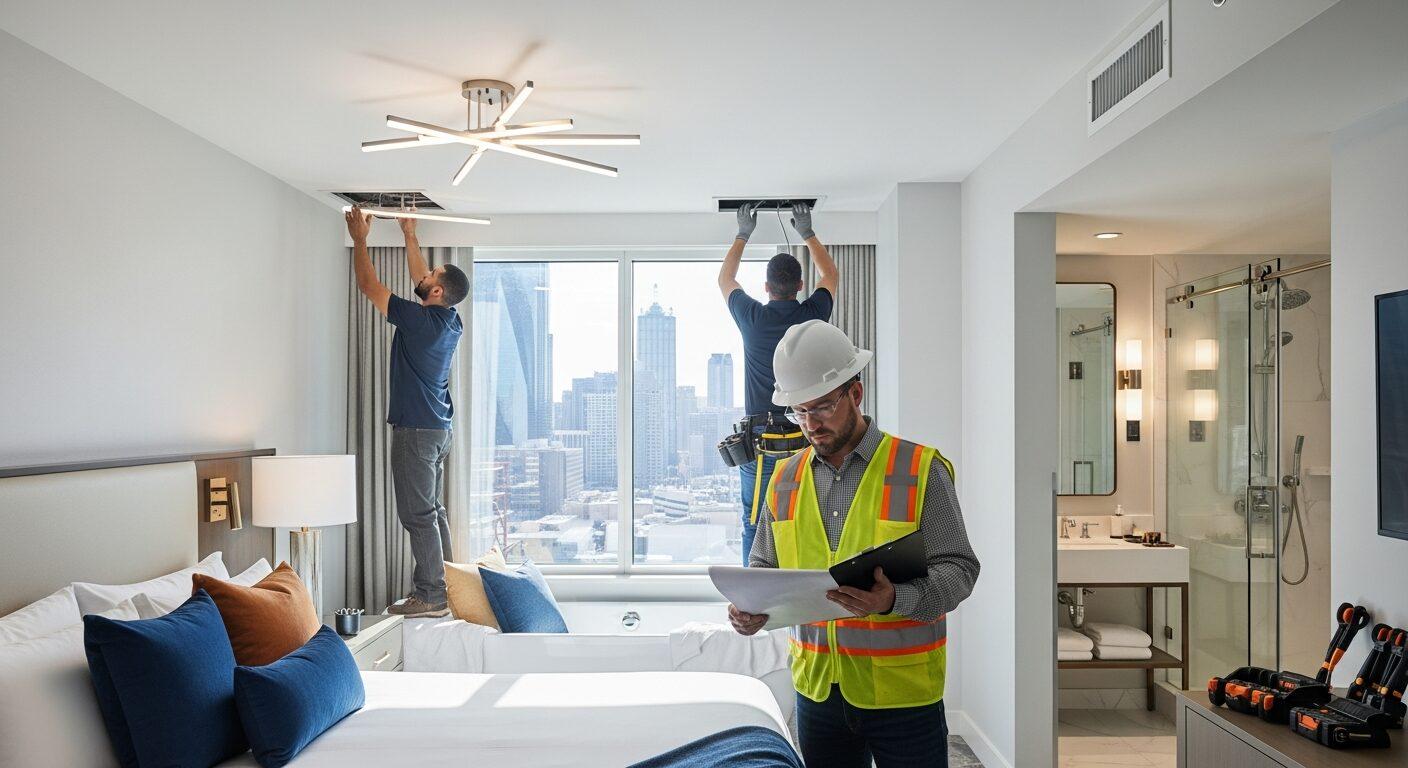
Room turns and unit refreshes are specialized services that distinguish professional hospitality contractors from general construction firms. A room turn isn’t just new paint and furniture—it’s a complete, coordinated refresh that keeps a property operational and revenue-generating.
Effective room turns require:
- Detailed project evaluation: Understanding exactly which rooms need which upgrades and in what sequence to maximize occupied revenue.
- Phased execution: Renovating in stages so the hotel remains operational during construction.
- Quality control and inspections: Third-party oversight ensuring each refreshed room meets hospitality standards before guests occupy it.
- Timeline discipline: Completing each room on schedule so it generates revenue immediately upon completion.
- Contractor coordination: Managing multiple trades (electricians, plumbers, HVAC technicians, painters) in a way that minimizes disruption to adjacent occupied rooms.
Dallas hospitality properties that have managed successful room turns report consistent results: reduced vacancy periods, faster revenue recovery, and guest satisfaction scores that climb as new rooms come online.
Energy Efficiency Improvements: Reducing Operating Costs While Enhancing Guest Experience
Dallas hotels are prioritizing energy-efficiency upgrades not just for environmental reasons—they’re doing it because energy costs directly impact profitability. HVAC replacements, building envelope improvements, and controls upgrades are high-ROI capital improvements that pay for themselves through reduced utility bills.
Energy upgrades that matter to Dallas hotels:
- Modern HVAC systems: Energy-efficient climate control improves guest comfort and dramatically reduces heating and cooling costs, particularly important in Texas where HVAC runs year-round.
- LED lighting and smart controls: Guest rooms and common areas with LED systems use 75% less energy than traditional lighting, and smart controls adjust usage based on occupancy.
- Building envelope improvements: Upgraded windows, insulation, and weatherstripping reduce heating and cooling load, especially critical in North Texas where summer temperatures exceed 95°F regularly.
- Water conservation systems: Modern plumbing fixtures and controls reduce water consumption and wastewater costs.
- Integrated management systems: Smart building controls monitor energy usage in real-time, allowing operators to identify inefficiencies and adjust consumption patterns.
The secondary benefit: guests appreciate modern, energy-efficient rooms with reliable climate control and contemporary amenities. These upgrades enhance guest experience while lowering operating costs—a rare win-win in hospitality.
Construction Management in Occupied Spaces: Maintaining Operations During Renovation
This is where many Dallas hotels face their biggest challenges. Generic construction contractors don’t understand hospitality operations. They don’t grasp that every hour of downtime costs revenue, that guest satisfaction depends on zero-disruption construction, that safety and compliance in occupied environments demand specialized expertise.
Effective construction management in hotel environments requires:
- Operational continuity planning: Detailed schedules that isolate construction zones from active guest areas.
- Safety protocols for occupied spaces: Strict dust control, noise management, and security procedures that protect guests while construction proceeds.
- Real-time communication: Daily coordination between construction teams, hotel staff, and management to address issues before they impact guests.
- Quality assurance and inspections: Third-party oversight ensuring completed work meets hospitality standards and building codes.
- Budget tracking and change management: Clear documentation of scope, costs, and timeline so surprises don’t derail the project.
- Coordination with multiple trades: Plumbers, electricians, HVAC technicians, painters, and other specialists working in synchronized sequences that minimize disruption.
Hotels that hire construction management partners rather than general contractors report significantly better outcomes: projects stay on budget, timelines are predictable, and guest satisfaction remains high throughout the renovation period.
Project Evaluations and Contractor Bid Reviews: Making Smart Capital Decisions
Before committing to a major hotel renovation, savvy Dallas owners hire independent contractors to evaluate proposals, review bids, and assess feasibility. This third-party evaluation protects against contractor overruns, scope creep, and unrealistic timelines.
Why independent project evaluations matter:
- Objective assessment: An outside expert isn’t emotionally invested in any contractor’s bid; they evaluate proposals on merit.
- Cost comparison: Detailed bid reviews identify inflated pricing, unnecessary scope, and opportunity for legitimate cost savings.
- Timeline validation: Experienced evaluators can spot unrealistic schedules before work begins, preventing the delays that cost hospitality properties thousands in lost revenue.
- Risk identification: Pre-project assessments flag potential complications (hidden structural issues, code compliance gaps, sequencing risks) that could derail timelines if discovered mid-project.
- Quality standards verification: Evaluators confirm that proposed methods and materials meet hospitality-specific quality standards, not just minimum building codes.
Dallas property owners increasingly view independent bid reviews as insurance against the most common renovation pitfalls. The small upfront investment in evaluation saves massive amounts downstream when problems are caught early.
Alder Designs: Built for Dallas Hotel Renovations
When Dallas hospitality owners need design-build services, room turn expertise, and construction management for occupied properties, Alder Designs stands apart. This is a veteran-owned, Fort Worth-based construction company with over 70 years of combined expertise specializing in exactly what Dallas hotels need: fast, high-quality renovations in operational environments.
What Alder Designs brings to hotel renovation projects:
- Mission-driven execution: Built on military discipline and teamwork, Alder Designs approaches every project with the precision and accountability that hospitality operations demand.
- Proven four-step process: Assessment, planning, execution, and delivery—a structured approach that eliminates surprises and keeps projects on track.
- Specialized occupied-space expertise: They’ve mastered the unique challenge of construction in fully operational hotels, senior living communities, and multifamily properties where downtime equals lost revenue.
- Design-build integration: Combining feasibility studies, design, budgeting, and construction management under one roof means faster timelines and single-source accountability.
- Quality without compromise: Their commitment to “construction done right the first time” reflects their veteran ethos—no cutting corners, no shortcuts, just solid execution.
- Transparent communication: Clear, honest communication throughout the project means no surprises, no hidden costs, and predictable outcomes.
For Dallas hospitality owners, this means one thing: a construction partner who gets it. Who understands that time is money in hotels, that guest satisfaction depends on seamless renovations, and that accountability matters.
Making Your Dallas Hotel Renovation Decision
If you’re a Dallas hotel owner evaluating renovation options, the core question is simple: Do you want a generic contractor who treats your property like any other construction job, or a specialized partner who understands hospitality operations and specializes in occupied-space execution?
The data is clear. Hotels that invest in strategic renovations with specialized construction partners recover costs faster, achieve higher occupancy rates, and see better guest satisfaction scores. The Dallas hospitality market is rebounding, and properties that move decisively on renovations now are capturing market share from competitors that delay.
Start with a detailed property evaluation. Understand exactly what your property needs, what the realistic timeline is, and what the actual costs will be. Then partner with a construction team that specializes in hospitality, understands occupied-space challenges, and brings transparent, accountable execution to every project. That’s how Dallas hotels win in a competitive market and deliver the modern, well-maintained guest experiences that fill rooms and generate revenue.