
DFW Multifamily Upgrades: Capital Improvements & Fast Unit Turns in McKinney & Allen
Struggling with vacancies or rising maintenance costs in McKinney or Allen? This guide shows how targeted capital improvements—unit renovations, HVAC and…
I need to retrieve the specific details from the previous workflow steps to write the blog post. Let me gather that information now.
When multifamily property owners in Fort Worth and across the Dallas–Fort Worth region face aging units, declining occupancy rates, and rising maintenance costs, capital improvements become essential to stay competitive. The difference between a portfolio that attracts premium tenants and one that struggles with vacancies often comes down to smart, timely upgrades.
Capital improvements—targeted renovations that enhance property value, reduce operational expenses, and improve tenant satisfaction—are no longer optional for multifamily investors. They’re a strategic necessity. Whether you’re managing a 50-unit complex in McKinney, a newer development in Allen, or an established property portfolio across Fort Worth, understanding how to plan and execute capital improvements effectively can directly increase your net operating income (NOI) and property value.
What Are Capital Improvements in Multifamily Properties?
Capital improvements differ fundamentally from routine maintenance. While maintenance keeps systems running, capital improvements actively enhance the property’s functionality, appearance, and marketability.
For multifamily properties, capital improvements typically include:
- Unit renovations: Kitchen and bathroom upgrades, flooring replacements, fresh paint, and appliance updates
- Building systems upgrades: HVAC replacements, electrical modernization, and plumbing improvements
- Roofing projects: Full roof replacements or substantial repairs extending asset life
- Energy-efficient upgrades: LED lighting, high-efficiency HVAC, insulation improvements, and smart thermostats
- Common area enhancements: Lobby renovations, landscaping improvements, and amenity upgrades
- Safety and code compliance: Fire suppression system upgrades, accessibility improvements, and code-required repairs
These improvements directly impact tenant quality, lease rates, occupancy duration, and operational efficiency—all key drivers of NOI growth.
Why Capital Improvements Drive Revenue Growth for DFW Multifamily Owners
The Dallas–Fort Worth multifamily market is highly competitive. The region saw continued population growth and corporate relocations, which increased demand for residential units. However, this same growth means property managers face fierce competition for quality tenants.
Units with modern finishes, efficient systems, and attractive amenities command higher rents. A renovated unit can lease 15–25% faster than an outdated one and often supports rent premiums of $100–$300 per month or more, depending on the market and upgrade scope.
Beyond rent premiums, capital improvements reduce operational costs:
- Energy-efficient HVAC systems can lower utility costs by 20–30%
- Modern plumbing reduces water waste and emergency repair expenses
- Roof upgrades eliminate costly leak repairs and extend asset life by 20+ years
- LED lighting cuts electricity consumption significantly
For a 200-unit multifamily property, these efficiencies translate to thousands in annual savings—direct improvements to the bottom line.
Fast Unit Turns: Minimizing Vacancy and Maximizing Occupancy
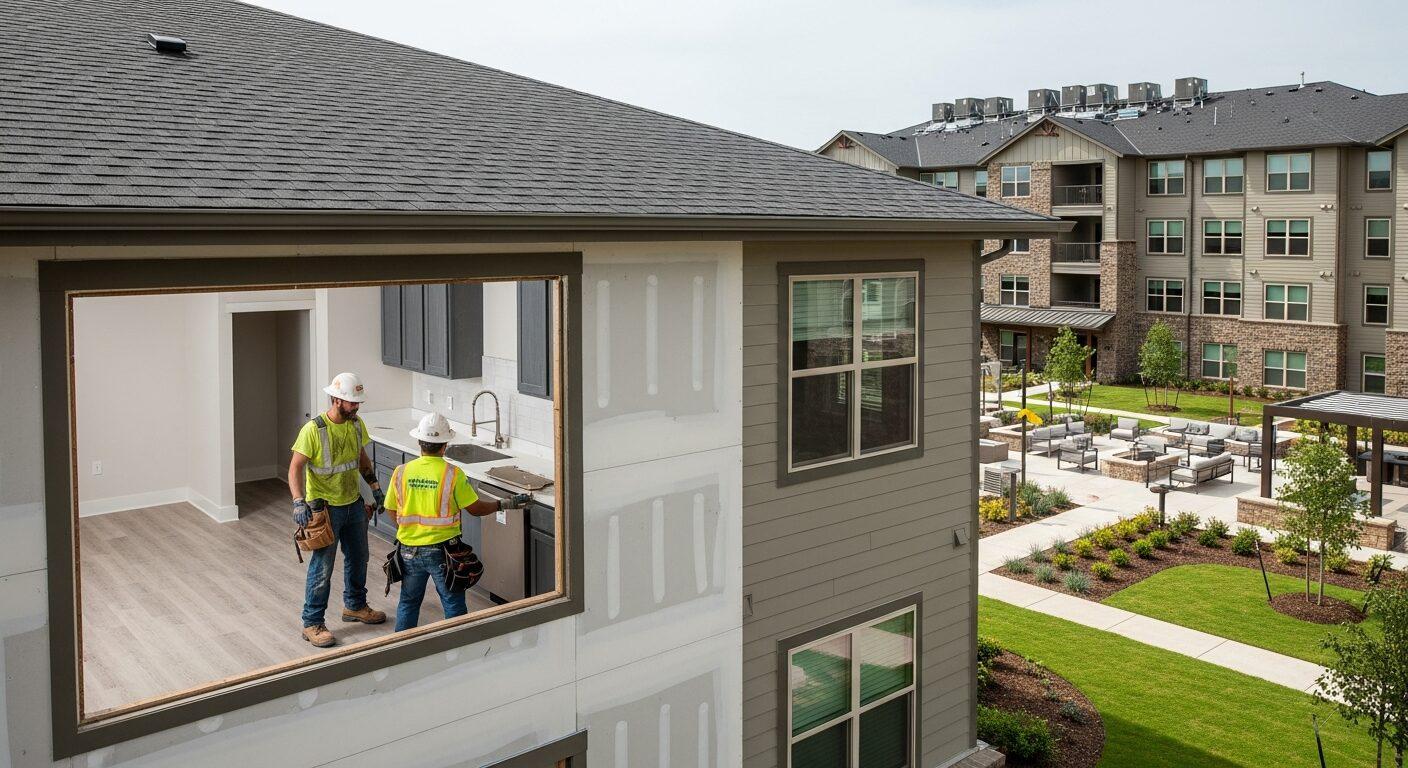
One of the most impactful capital improvement strategies is the fast unit turn—completing unit renovations quickly between tenants to minimize downtime and keep occupancy rates high.
In the competitive DFW market, every day a unit sits vacant costs money. A 14-day vacancy translates to lost rent, and if turned into a 30-day vacancy, losses compound quickly. Fast, professional unit turns keep your property’s occupancy rate at or above market standards.
What a professional unit turn includes:
- Complete interior refresh: painting, flooring, fixture updates
- Appliance and cabinet refurbishment or replacement
- Bathroom and kitchen modernization
- HVAC filter replacement and system inspection
- Deep cleaning and final walkthrough
Coordinated, professional execution matters. A disorganized renovation can drag for weeks; a disciplined approach completes the work in 7–21 days, depending on scope. The faster you turn units, the less rent you lose and the more competitive your property becomes.
Prioritizing Capital Improvements: Assessment Before Execution
Smart property managers don’t guess at which improvements to prioritize. Instead, they start with a structured assessment.
A property condition assessment (PCA) or capital needs assessment (CNA) evaluates the entire property—roofs, HVAC, plumbing, electrical, structural elements, and finishes. This assessment identifies:
- Immediate safety or code-compliance issues
- Systems approaching end-of-life (timeline and budget planning)
- High-impact improvements that drive rent growth or reduce operating costs
- Phased improvement schedules that spread costs across multiple budget cycles
With assessment data in hand, you can prioritize improvements strategically:
- Phase One: Urgent System Upgrades — Roof, electrical, plumbing, HVAC issues that pose operational risk or code violations
- Phase Two: High-ROI Unit Improvements — Kitchen, bathroom, flooring, and appliance upgrades that drive rent premiums and faster leasing
- Phase Three: Amenity and Common Area Enhancements — Lobby renovation, outdoor space improvements, and amenity upgrades that boost property appeal and retention
This phased approach spreads capital expenditures, improves cash flow predictability, and ensures you’re investing in improvements that directly support your business goals.
Building Systems Upgrades: ROI Through Efficiency and Reliability
HVAC, roofing, and plumbing upgrades represent significant capital commitments but deliver outsized returns through reduced operating costs and improved tenant satisfaction.
Roofing Upgrades
A 20-year-old roof is a liability. Leaks lead to water damage, mold remediation costs, and unhappy tenants. A roof replacement—typically a $3,000–$8,000 per unit expense—eliminates emergency repairs, extends asset life, and provides peace of mind.
HVAC Modernization
Modern, high-efficiency HVAC systems reduce utility costs dramatically while improving tenant comfort. Tenants value climate control consistency, and efficient systems cut operating expenses that directly impact NOI.
Plumbing Improvements
Water main replacements and fixture upgrades reduce emergency repairs and water waste. Low-flow fixtures are both cost-effective and environmentally responsible—a selling point for environmentally conscious tenants.
Energy-Efficient Upgrades: Long-Term Cost Reduction
Energy-efficient capital improvements often qualify for tax incentives and rebates, improving ROI even further.
Common energy upgrades for multifamily properties:
- LED lighting throughout common areas and units (60–75% energy reduction compared to incandescent)
- Smart thermostats and occupancy sensors
- Window and door upgrades for improved insulation
- Insulation improvements in walls and attics
- Energy-efficient appliances
For a 150-unit property, LED lighting alone might save $15,000–$20,000 annually. Add efficient HVAC and improved insulation, and annual savings could exceed $50,000. Over a 10-year asset hold, that’s $500,000 in operational savings—substantial additional value creation.
Planning Your Capital Improvement Budget
Successful capital improvements require disciplined budgeting and clear timelines.
Key budget considerations:
- Per-unit renovation costs: Typically $3,000–$8,000 for basic unit refreshes; $10,000–$25,000 for comprehensive kitchen/bathroom upgrades
- Building system work: Roofing ($2,000–$5,000 per unit), HVAC replacements ($3,000–$7,000 per unit), electrical upgrades ($1,500–$4,000 per unit)
- Contingency planning: Reserve 10–20% for unforeseen issues uncovered during renovation
- Financing options: DSCR loans, cash flow-based financing, or capital reserve funds
Many successful DFW multifamily owners finance capital improvements through refinancing or dedicated reserve funds, ensuring improvements don’t disrupt operations or stress cash flow.
Working with Experienced Construction Partners
Executing capital improvements in occupied multifamily environments requires specialized expertise. Unlike new construction, you’re managing work around active tenants, coordinating multiple trades, and maintaining property operations—all while staying on schedule and budget.
Experienced construction partners understand:
- Occupied environment logistics: Minimizing tenant disruption, managing noise and access, coordinating schedules around lease-up cycles
- Multi-trade coordination: Ensuring plumbing, electrical, HVAC, and finish work flow seamlessly without delays
- Quality and durability: Using materials and methods that withstand heavy use and provide lasting value
- Timeline discipline: Completing unit turns and system upgrades on schedule to minimize lost rent and operational disruption
- Transparent budgeting: Providing clear cost estimates, managing change orders, and avoiding surprises
In Fort Worth and across the DFW region, multifamily owners increasingly partner with construction teams that combine disciplined project management with deep property experience. These partnerships ensure capital improvements deliver intended results—higher rents, faster leasing, lower operating costs, and improved property value.
The Strategic Impact: Capital Improvements as Value Creation
For multifamily property owners, capital improvements are investments that directly drive business outcomes. A property that invests strategically in unit renovations, building system upgrades, and energy efficiency doesn’t just maintain value—it creates it.
Consider two comparable 100-unit properties in the DFW market:
- Property A: Deferred capital improvements, aging systems, outdated finishes, 88% occupancy, $900/month average rent
- Property B: Strategic capital improvements over 18 months, modern systems, updated units, 96% occupancy, $1,050/month average rent
At Property B:
- Rent growth: $900 to $1,050 = $150/unit additional monthly revenue = $180,000 annually
- Occupancy improvement: 88% to 96% = 8 more units occupied = $86,400 additional annual rent
- Operational savings: Modern systems reduce utilities and repairs by an estimated $15,000 annually
- Total annual value creation: $281,400
Over a 10-year hold, that’s nearly $3 million in additional cash flow—value created directly through disciplined capital improvements.
Moving Forward: Building Your Capital Improvement Strategy
Successful multifamily owners in Fort Worth and across Dallas–Fort Worth don’t leave capital improvements to chance. They start with assessment, prioritize high-impact work, execute with discipline, and measure results.
Your next steps:
- Assess your portfolio: Identify aging systems, deferred maintenance, and high-impact improvement opportunities
- Calculate ROI: Estimate rent premiums, occupancy improvements, and cost reductions each improvement will deliver
- Plan phasing: Develop a realistic timeline and budget that align with your cash flow and market conditions
- Execute strategically: Partner with experienced construction teams that understand multifamily operations and deliver results on time and on budget
Capital improvements are how successful multifamily owners stay competitive, attract quality tenants, and build sustainable value in the dynamic DFW market. By approaching them strategically—not reactively—you position your portfolio for growth and operational excellence.