
I’ll retrieve the previous step outputs to gather all necessary information for creating this SEO blog post.
Why Frisco, Texas Is the Next Construction Goldmine for Smart Developers
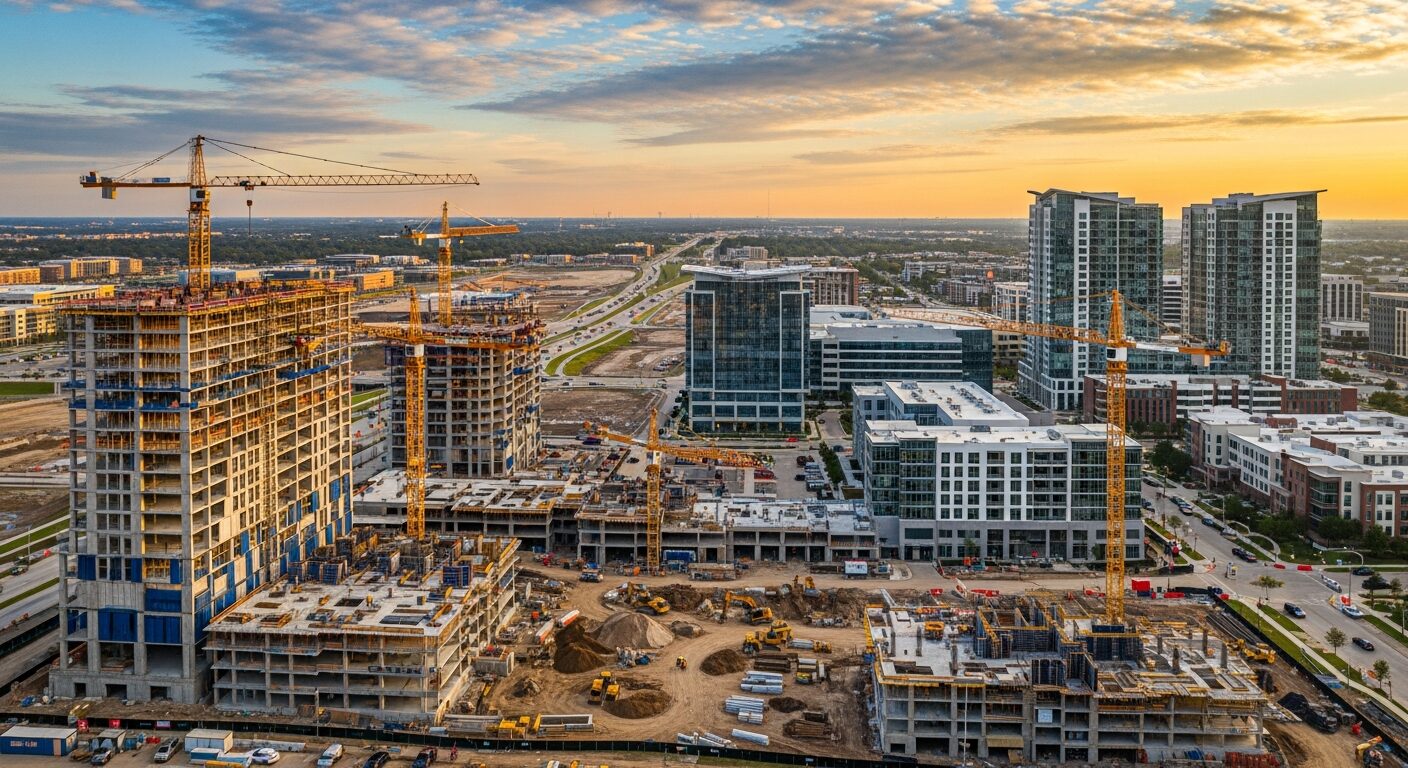
Frisco is experiencing one of the most explosive development booms in the DFW region. If you’re a real estate developer, the signals are unmistakable: this is the moment to position your projects for maximum growth and profitability.
The numbers tell the story. Frisco’s city government allocated $31.1 million for capital projects through Q2 2026, spanning roadway improvements, drainage systems, and public facilities designed to support massive population growth. Simultaneously, the private sector is racing ahead with major mixed-use developments, high-rise residential towers, and master-planned communities that signal investor confidence at the highest level.
For developers operating in this market, one thing becomes crystal clear: you need construction partners who understand both the opportunity and the complexity of rapid-growth environments. The winning projects aren’t the ones built on shortcuts—they’re the ones backed by strategic construction management, precise execution, and transparent partnerships.
The Frisco Boom: Five Megaprojects Reshaping North Texas
The $3 Billion Tollway Project
Frisco’s long-stalled “hole by the tollway” site off the Dallas North Tollway is undergoing a complete reimagining. This $3 billion mixed-use development includes office, residential, retail, and hospitality components, rolling out over several years. For developers, this signals intense competition for quality construction partners capable of managing large-scale, multi-asset builds.
The Mix: Mixed-Use Innovation in Action
Construction has officially kicked off at The Mix, a major mixed-use development blending residential, retail, office, and entertainment space. This project represents the type of complex tenant improvement work that demands construction management expertise, phased build-outs, and seamless coordination across multiple asset classes.
High-Rise Residential Growth
A planned 233-unit high-rise apartment building is moving toward construction in north Frisco. This signals sustained investor demand for higher-density housing and creates cascading needs for interior build-outs, finishes, and property condition assessments before leasing and operations begin.
Multi-Family Expansion Corridor
The Frisco Apartments project is adding approximately 300 residential units to a fast-growing corridor near Celina. This type of large-scale multifamily development generates continuous demand for design-build services, tenant finishes, capital improvements, and ongoing maintenance cycles.
The Preserve: Luxury Custom-Home Market
The Preserve, a luxury custom-home neighborhood in far north Frisco, showcases developer demand for premium renovation and house renewal services. High-end residential products require specialized construction expertise and attention to detail that separates quality builders from the rest.
Infrastructure Investment Creates Development Tail Winds
Beyond private projects, Frisco’s commitment to public infrastructure is creating a favorable backdrop for developers. The city’s ongoing road construction and transportation projects focus on expanding capacity and improving traffic flow. Once these improvements complete, surrounding neighborhoods become even more attractive for senior living, hospitality, and multifamily projects.
This is classic real estate logic: infrastructure investments increase property values and accessibility, which attract more development. As a developer, you want to position your projects ahead of these improvements to capture value and market demand.
The Adjacent Opportunity: Celina and the Greater Submarket
Frisco doesn’t exist in isolation. Development is spreading north to Celina, where Wilson Creek Park is opening in summer 2026. This multi-phase public park includes recreational amenities and trails designed to serve rapid population growth. For developers, parks and public facilities increase neighborhood appeal and support residential and commercial construction pipelines.
The same applies to the Keller Sports Park renovation project, just 20-25 miles from Fort Worth. These municipal investments signal sustained demand for construction services in occupied, multi-use environments throughout the greater DFW region.
What Developers Actually Need Right Now
If you’re developing in Frisco, you face specific pressures:
- Timeline urgency. Markets move fast in growth corridors. Delays compound costs and miss leasing windows.
- Occupied environment complexity. Many Frisco projects involve phased build-outs where residents or tenants are present. Construction must continue without disrupting operations.
- Quality expectations. Frisco’s market attracts sophisticated investors and tenants. Finishes, systems, and inspections must be flawless.
- Budget accountability. Large projects demand transparent cost tracking, independent bid reviews, and contractor audits to protect your margins.
- Multifaceted expertise. Mixed-use developments require contractors experienced across residential, commercial, hospitality, and retail systems simultaneously.
Strategic Construction: From Feasibility to Completion
The best developers don’t just hire contractors—they partner with construction firms that function as strategic advisors. This means:
Assessment & Planning: Understanding site conditions, code requirements, and budget realities before a single nail is driven.
Design-Build Expertise: Eliminating delays between design approval and construction start, critical in fast-moving markets.
Occupied-Space Construction: Managing complex renovations and build-outs while maintaining tenant operations and occupancy.
Third-Party Oversight: Independent inspections and property condition assessments that validate quality and protect investor interests.
Room Turns & Capital Improvements: Fast, professional execution on roofing, HVAC, plumbing, and energy upgrades that maximize rental rates and occupancy.
Why Frisco Developers Should Partner With Fort Worth-Based Expertise
The geographic proximity of quality construction management matters more than developers often realize. A Fort Worth-based partner with deep ties to the DFW region brings several advantages:
- Local knowledge of municipal timelines, code enforcement, and contractor networks.
- Regional presence that supports projects from conceptual feasibility through final delivery.
- Understanding of market rhythms in Frisco, Celina, and surrounding growth corridors.
- Established relationships with inspectors, architects, and subcontractors trusted throughout North Texas.
Developers operating in Frisco face relentless timelines and high stakes. Pairing with a construction partner who has spent over 70 years managing complex projects across residential, commercial, hospitality, and multifamily environments isn’t just practical—it’s strategic.
The Bottom Line: Execution Excellence Drives Developer Success
Frisco’s boom is real, and the opportunities are substantial. But development success hinges on execution. A $3 billion mixed-use project, a 300-unit apartment complex, or a luxury custom-home neighborhood doesn’t succeed because the market is hot—it succeeds because the construction is managed with military-grade discipline and transparent communication.
The developers winning in Frisco right now are the ones who invest in partnerships with construction firms that approach every project with integrity, precision, and proven processes. They understand that quality without compromise, on-time delivery, and budget transparency aren’t luxuries—they’re competitive advantages.
The next phase of Frisco’s development is underway. Your project’s success depends on the partners you choose today.
0 Comments