
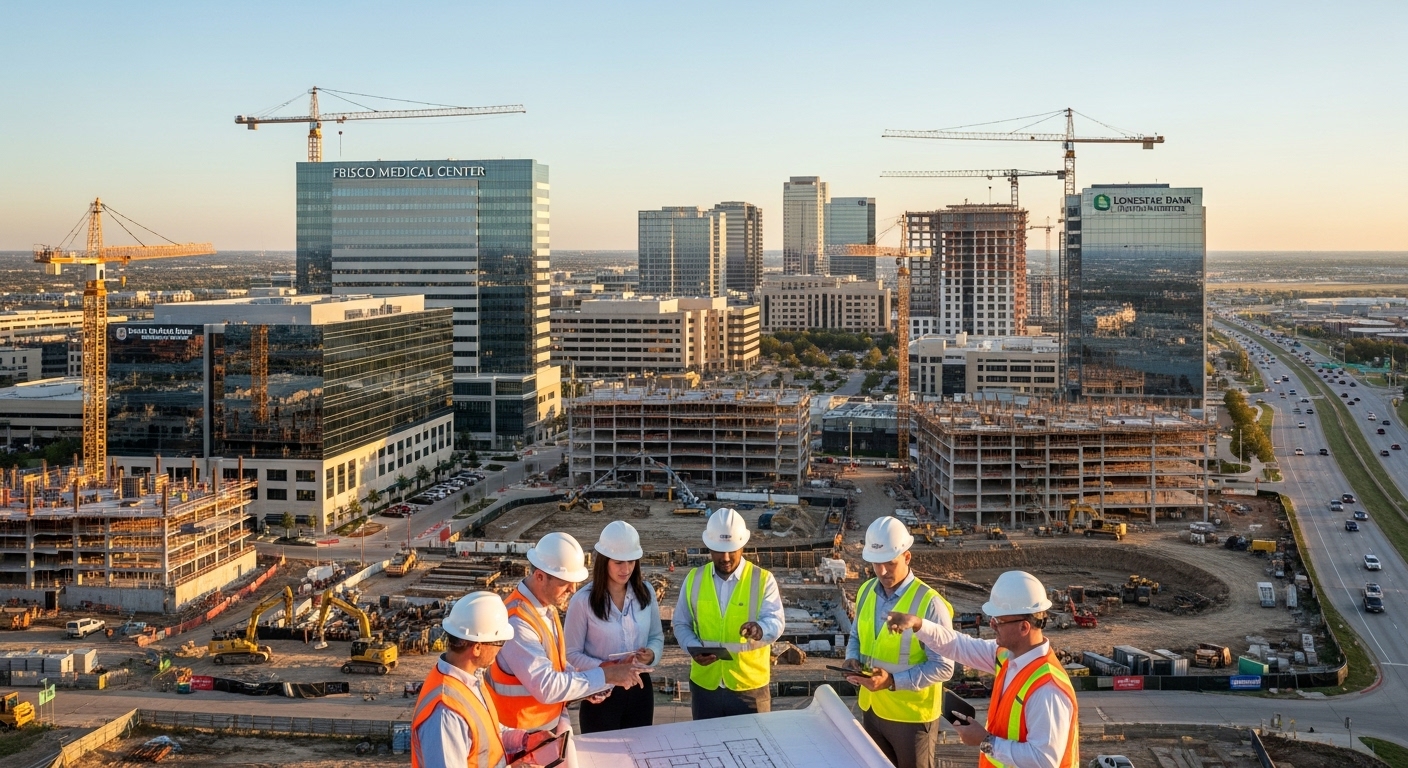
Major Commercial Growth in Frisco, TX Creates Unprecedented Opportunities for Facilities Managers
The Dallas-Fort Worth metroplex is experiencing explosive commercial growth, and nowhere is this more evident than in Frisco, Texas. With over $340 million in new commercial developments announced for 2025-2027, facilities managers are facing both exciting opportunities and complex challenges that require strategic planning and expert construction partnerships.
Frisco’s Commercial Boom: What Facilities Managers Need to Know
Frisco has emerged as a premier destination for major corporations, healthcare systems, and financial institutions. The city’s strategic location along the Dallas North Tollway and its business-friendly environment have attracted significant investments that are reshaping the commercial landscape.
Key Development Projects Driving Demand
Healthcare Infrastructure Expansion
Baylor Scott & White Health is making substantial investments in Frisco, with a $265 million state-of-the-art hospital complex near PGA Parkway scheduled for completion by May 2025. Additionally, the health system is investing over $48 million in a 173,000 square foot expansion on Everwell Lane, set to open by March 2027. These developments signal the growing demand for specialized medical facilities and the ongoing maintenance requirements they’ll generate.
Financial Sector Growth
The banking industry is also making significant commitments to Frisco. Texas Regional Bank is investing $1.7 million in a 3,488 square foot branch at Preston Road, while Veritex Community Bank is developing a $22 million, 42,200 square foot regional headquarters at the corner of Championship Drive and PGA Parkway. These high-end financial facilities require specialized maintenance protocols and ongoing property management expertise.
Automotive and Technology Innovation
Rivian’s $3.2 million investment in a 55,498 square foot facility at FM 423 demonstrates Frisco’s appeal to cutting-edge technology companies. This development highlights the need for facilities managers who understand the unique requirements of modern industrial and technology spaces.
Strategic Implications for Facilities Management
Increased Demand for Specialized Services
The influx of major corporations means facilities managers must prepare for more sophisticated property management challenges. Healthcare facilities require specialized HVAC systems, compliance with strict regulatory standards, and emergency preparedness protocols. Financial institutions demand enhanced security systems, disaster recovery capabilities, and premium finishes that require ongoing maintenance.
Capital Improvement Planning
With new facilities come opportunities for strategic capital improvements in existing properties. As competition for tenants intensifies, property owners and facilities managers must invest in renovations and upgrades to remain competitive. This includes energy efficiency improvements, modern workspace configurations, and enhanced amenities.
Vendor Selection and Management
The rapid growth in Frisco means facilities managers need reliable construction and renovation partners who understand the local market dynamics. Projects must often be completed while facilities remain operational, requiring contractors with specialized expertise in occupied environment construction.
Regional Context: Fort Worth’s Growing Influence
While Frisco experiences unprecedented growth, Fort Worth continues to establish itself as a major commercial hub. The Tarrant Regional Water District’s $60 million, 108,676 square foot facility demonstrates the region’s commitment to infrastructure development. Alcon’s $1 million investment in a 28,000 square foot Fort Worth location further emphasizes the interconnected nature of the Dallas-Fort Worth commercial market.
For facilities managers operating in this region, understanding these market dynamics is crucial for strategic planning and vendor selection.
Legislative Changes Streamlining Construction Projects
Recent Texas legislation has eliminated rezoning requirements for specific construction projects, significantly streamlining approval processes and expediting project timelines. This regulatory change benefits facilities managers by reducing administrative burdens and enabling faster implementation of necessary renovations and improvements.
Best Practices for Facilities Managers in a Growth Market
Proactive Maintenance Planning
In a competitive market, proactive maintenance becomes even more critical. Facilities managers should develop comprehensive maintenance schedules that prevent costly emergency repairs and ensure continuous operation of essential systems.
Energy Efficiency Focus
With rising operational costs and environmental consciousness, energy efficiency improvements offer both cost savings and competitive advantages. Modern HVAC systems, LED lighting upgrades, and building automation systems can significantly reduce operating expenses.
Vendor Relationship Development
Establishing relationships with qualified contractors before emergencies arise is essential. Look for construction partners with proven experience in your specific property type, proper licensing and insurance, and a track record of completing projects on time and within budget.
Tenant Satisfaction Through Strategic Improvements
In a competitive leasing market, tenant retention depends on maintaining high-quality facilities. Strategic renovations such as lobby upgrades, common area improvements, and modern workspace configurations can significantly impact tenant satisfaction and retention rates.
The Importance of Veteran-Owned Construction Partners
As facilities managers navigate this complex landscape, partnering with experienced, reliable contractors becomes paramount. Veteran-owned construction companies bring unique advantages including disciplined project management, attention to detail, and commitment to mission accomplishment. These qualities are particularly valuable when working in occupied environments where operational continuity is essential.
Future Outlook and Strategic Planning
The construction outlook for 2025 indicates continued growth in the Texas market, despite national economic uncertainties. Facilities managers should prepare for ongoing opportunities in infrastructure upgrades, green building initiatives, and resilient renovation projects.
Key Areas of Focus
Technology Integration: Modern facilities require sophisticated technology infrastructure, from high-speed internet capabilities to advanced security systems.
Sustainability Initiatives: Environmental consciousness is driving demand for green building certifications and sustainable operational practices.
Flexible Space Design: The evolving nature of work requires adaptable spaces that can accommodate changing tenant needs.
Maximizing ROI Through Strategic Partnerships
The rapid commercial development in Frisco presents facilities managers with unprecedented opportunities to enhance property values and operational efficiency. Success in this environment requires strategic partnerships with construction professionals who understand the unique challenges of maintaining and improving properties in a growth market.
Whether managing existing facilities or preparing new developments for occupancy, facilities managers need contractors who can deliver quality results on schedule while minimizing disruption to ongoing operations. The combination of local market knowledge, construction expertise, and proven project management capabilities ensures successful outcomes in even the most challenging environments.
The commercial boom in Frisco, Texas represents more than just new construction—it signals a fundamental shift in the region’s economic landscape. For facilities managers, this growth creates opportunities to elevate their properties, improve operational efficiency, and contribute to the continued success of the Dallas-Fort Worth metroplex’s commercial development.
By staying informed about market trends, maintaining strong vendor relationships, and focusing on strategic improvements, facilities managers can position their properties for long-term success in this dynamic and rapidly evolving market.
0 Comments