
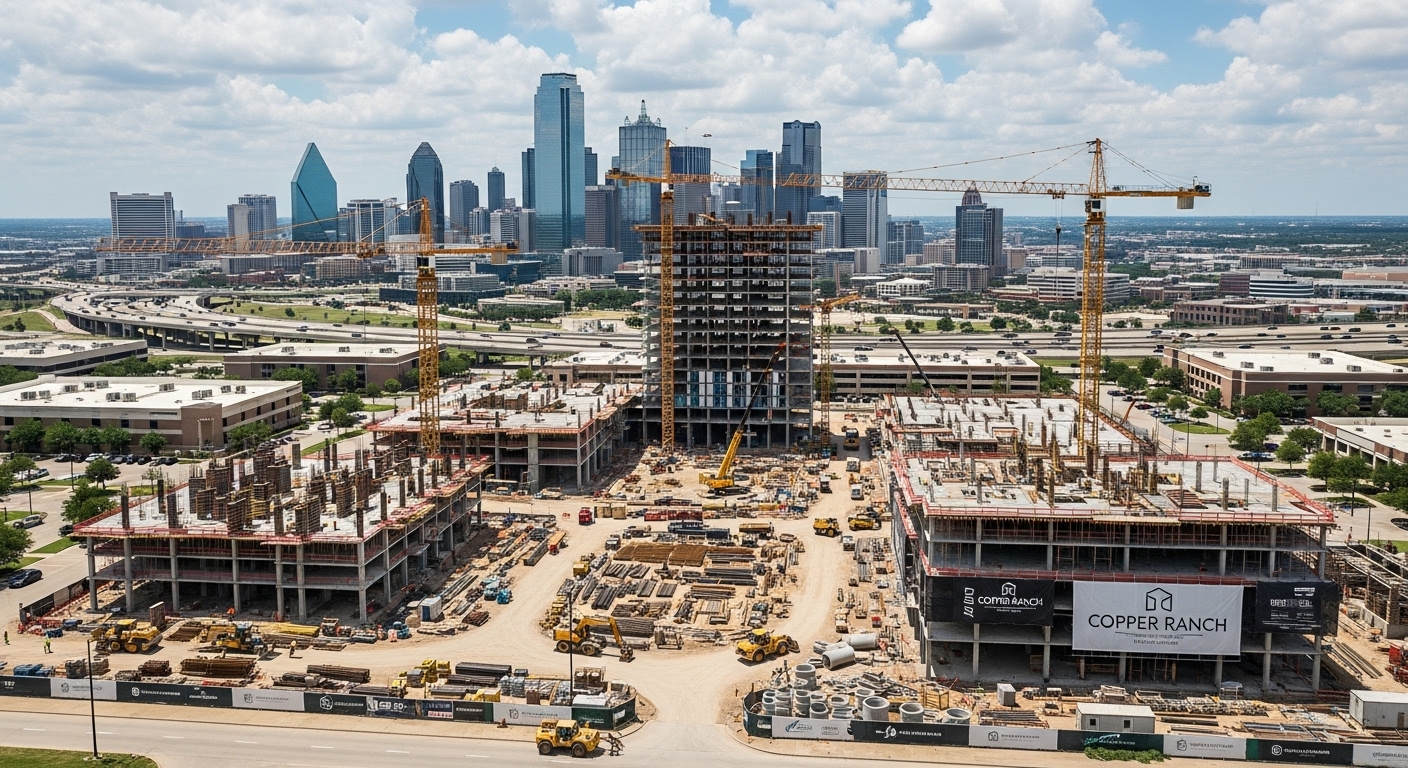
Irving’s $1.1B Construction Boom: What Commercial Property Owners Need to Know About Maximizing Investment Returns
The Dallas-Fort Worth metroplex is experiencing an unprecedented construction surge, and Irving stands at the epicenter of this economic transformation. With the groundbreaking of the massive $1.1 billion Copper Ranch mixed-use development, commercial property owners and investors across North Texas are witnessing a pivotal moment that will reshape the region’s commercial real estate landscape for decades to come.
The Irving Development Revolution: A $1.1 Billion Game-Changer
Irving’s Copper Ranch development represents more than just another construction project—it’s a blueprint for the future of integrated commercial spaces. This ambitious undertaking combines residential, hospitality, and commercial elements with a strong emphasis on sustainability and modern workplace needs, setting new standards for mixed-use developments throughout Texas.
For commercial building owners and investors, this development signals several critical market shifts that demand immediate attention:
Rising Property Values and Market Competition
The infusion of $1.1 billion into Irving’s economy will inevitably drive up property values across the region. However, this also means increased competition for tenants who will have access to state-of-the-art facilities with modern amenities. Commercial property owners who fail to upgrade their buildings risk losing tenants to newer, more attractive spaces.
Sustainability as a Competitive Advantage
Copper Ranch’s emphasis on sustainable design reflects a broader market trend that commercial investors can no longer ignore. Today’s tenants—particularly corporate clients—increasingly prioritize environmentally conscious buildings that align with their own sustainability goals and help reduce operational costs.
The Broader North Texas Construction Landscape: Opportunities Everywhere
The Irving development is just one piece of a larger construction puzzle reshaping the Dallas-Fort Worth area. Recent infrastructure investments totaling $2.2 billion in highway improvements, including the Southern Gateway and Southeast Connector projects, are enhancing accessibility and making previously less desirable commercial locations more attractive to businesses and investors.
Infrastructure Improvements Drive Commercial Value
These major roadway enhancements directly impact commercial property values by improving access and reducing commute times for employees. Properties near these improved corridors are experiencing increased demand, making now an optimal time for strategic renovations and capital improvements.
Airport Modernization Creates Ripple Effects
Dallas-Fort Worth Airport’s $3 billion Terminal C modernization project will generate substantial economic activity throughout the region. Commercial properties within the airport corridor—extending through Irving and surrounding areas—stand to benefit significantly from increased business travel, corporate relocations, and hospitality demand.
Market Trends Demanding Immediate Attention
Warehouse and Logistics Boom
North Texas has emerged as a logistics hotspot, with warehouse absorption surging nearly 20 million square feet year-over-year. This trend creates opportunities for commercial property owners to convert underutilized spaces or invest in properties that can serve the growing e-commerce and distribution sector.
Mixed-Use Development Preference
Modern businesses increasingly prefer mixed-use environments that offer employees dining, retail, and recreational options within walking distance. Commercial properties that can incorporate or connect to these amenities maintain higher occupancy rates and command premium rents.
Strategic Capital Improvements: Your Competitive Edge
In this rapidly evolving market, commercial property owners must think strategically about capital improvements that will attract and retain high-quality tenants while maximizing long-term investment returns.
Energy Efficiency Upgrades
With rising energy costs and increased environmental awareness, energy-efficient building systems have become essential. HVAC system upgrades, LED lighting conversions, and smart building technologies not only reduce operational costs but also appeal to environmentally conscious tenants.
Modern Workplace Infrastructure
Today’s businesses require robust technology infrastructure, flexible workspace configurations, and amenities that support employee wellness. Properties that can accommodate these needs through strategic renovations will outperform those that don’t adapt to changing tenant requirements.
Exterior and Common Area Enhancements
First impressions matter significantly in commercial real estate. Professional exterior renovations, landscaping improvements, and modernized common areas can dramatically increase a property’s appeal and rental rates.
The Veteran-Led Construction Advantage in Fort Worth
As commercial property owners navigate these market changes, partnering with experienced construction professionals becomes crucial. Veteran-owned construction companies bring unique advantages to commercial renovation and capital improvement projects:
Disciplined Project Management
Military-trained construction teams apply proven leadership principles and systematic approaches to complex commercial projects, ensuring on-time completion and budget adherence—critical factors when dealing with occupied commercial buildings.
Operational Continuity Expertise
Experienced construction professionals understand how to perform renovations and improvements in occupied commercial environments without disrupting business operations, minimizing tenant complaints and vacancy risks.
Comprehensive Assessment Capabilities
Professional property condition assessments and capital needs analyses help commercial property owners make informed investment decisions, prioritizing improvements that will generate the highest returns.
Fort Worth’s Strategic Position in the Growth Corridor
Fort Worth’s location within the Dallas-Fort Worth metroplex positions it perfectly to benefit from the Irving development boom and broader regional growth. Commercial properties in Fort Worth offer investors several advantages:
Cost-Effective Market Entry
Compared to Dallas proper, Fort Worth commercial properties often provide better value propositions while still offering access to the same economic opportunities and transportation infrastructure.
Diverse Industry Base
Fort Worth’s economy spans aerospace, healthcare, education, and logistics, creating stable demand for various types of commercial space and reducing risk for property investors.
Future Growth Potential
As the metroplex continues expanding westward, Fort Worth properties are well-positioned to appreciate significantly over the next decade.
Making Smart Investment Decisions in a Hot Market
The current construction boom creates both opportunities and risks for commercial property owners and investors. Success requires strategic thinking and professional execution:
Timing Is Critical
With construction costs fluctuating and demand increasing, property owners must act decisively when planning capital improvements. Delays can result in higher costs and missed opportunities.
Quality Over Quick Fixes
In a competitive market, tenants have choices. Half-measures and cheap renovations will not attract or retain quality tenants who can afford to be selective about their commercial space.
Professional Assessment First
Before investing in any improvements, conduct thorough property condition assessments to identify the most impactful upgrades and avoid costly surprises during construction.
The Bottom Line: Preparation Meets Opportunity
Irving’s $1.1 billion development boom represents a watershed moment for commercial real estate throughout North Texas. Property owners who recognize this opportunity and take strategic action—through professional assessments, quality renovations, and strategic capital improvements—will position themselves to capitalize on the region’s unprecedented growth.
The question isn’t whether the Dallas-Fort Worth commercial market will continue growing; it’s whether your commercial properties will be ready to compete for the high-quality tenants this growth will attract. In a market where newer, more modern facilities are constantly entering the competition, standing still means falling behind.
For commercial building owners and investors focused on long-term value, the time for strategic action is now. The construction boom is here, the infrastructure improvements are underway, and the opportunities are unprecedented. The only question remaining is: Will your commercial properties be ready to capitalize on North Texas’s bright future?
0 Comments