
817-401-0091

by | Feb 11, 2026

I’ll retrieve the previous step outputs to gather all the necessary information and context for creating this comprehensive SEO blog post.

Irving’s Construction Boom: Why Multifamily and Mixed-Use Development Are Your Next Big Opportunities

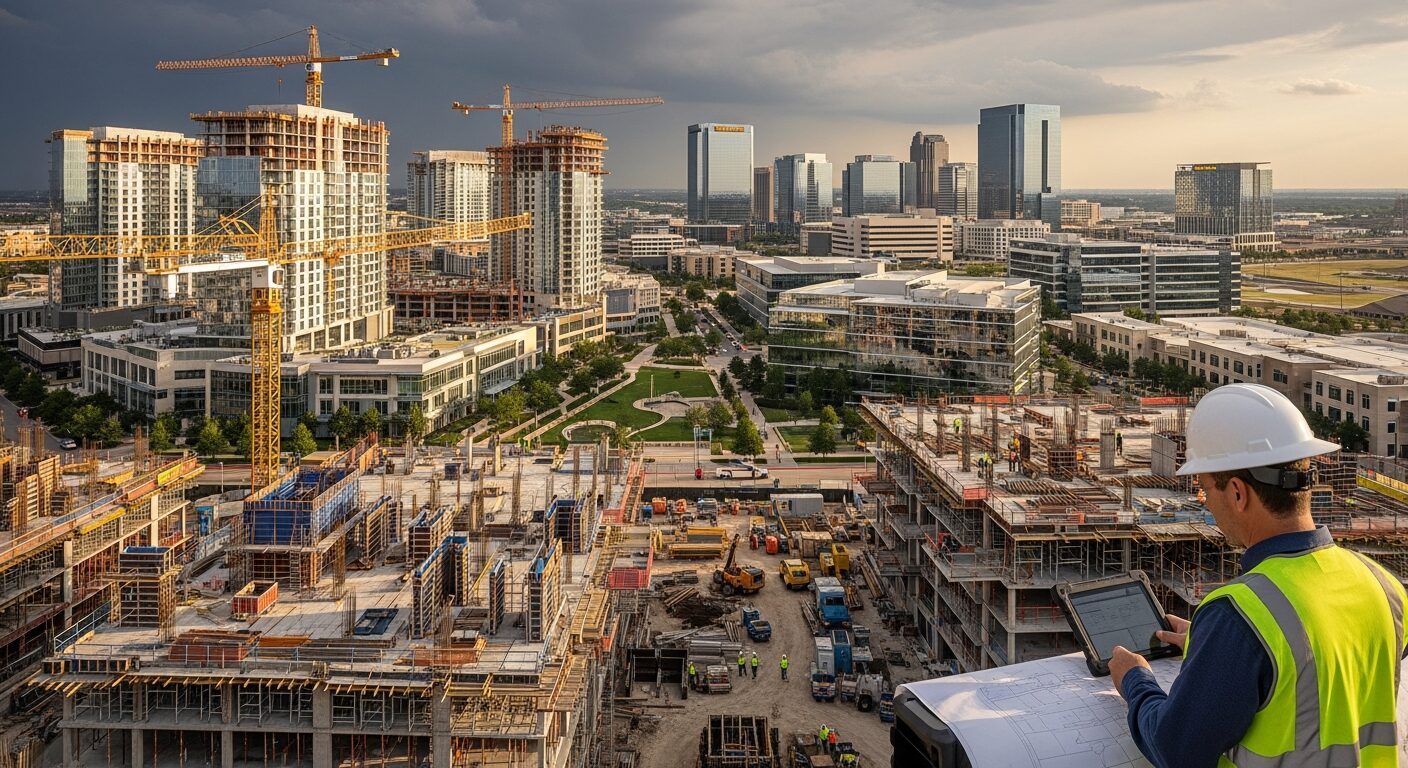
Irving, Texas is experiencing unprecedented growth in residential and commercial construction. Between new multifamily developments, major infrastructure improvements, and corporate expansions like Wells Fargo’s 850,000-square-foot headquarters, the city is attracting serious capital from investors and developers. If you’re a real estate developer looking to capitalize on Irving’s growth, understanding the market dynamics—and finding a reliable construction partner—is critical to your success.

The recent adoption of Irving’s “Multifamily By Right” standards signals that the city is committed to streamlined development. Combined with ongoing infrastructure investments, a steady deal flow of multifamily acquisitions, and growing commercial activity, Irving represents one of the strongest construction markets in the North Texas region right now.

Irving’s Multifamily Market Is Heating Up

Irving has officially embraced multifamily development. The city’s new “Multifamily + Residential Mixed-Use Development Standards” (Ordinance 2025-11165) establishes clear, predictable rules for where and how multifamily and mixed-use projects can be built. This isn’t just regulatory housekeeping—it’s a green light from the city that says: we want quality multifamily projects that fit our community vision.

For developers, this framework removes uncertainty. You know the density limits, design standards, and site requirements upfront. No surprises. No years of zoning hearings. That certainty attracts capital and keeps projects on timeline and on budget.

The market is already responding. Recent transactions like the sale of Embassy Apartments—a 111-unit multifamily asset in Irving—show that investor appetite remains strong despite broader headwinds. These value-add acquisitions generate immediate demand for capital improvements, renovations, and professional assessments. Whether you’re repositioning an aging complex or building new, Irving’s regulatory environment and investor interest create a window of opportunity.

Capital Improvements: The City Is Investing—and Creating Opportunities

Irving isn’t just opening doors for private development; the city itself is pouring money into infrastructure. The West Irving Creek drainage improvement project, set to begin construction in summer 2026, represents a major capital initiative that will expand stormwater capacity and reduce flooding. The city’s broader Capital Improvements Program includes utility upgrades, facility renovations, and infrastructure modernization across the region.

For developers managing properties in Irving, this means infrastructure capacity is improving, which supports higher-density development. It also means adjacent properties may benefit from infrastructure work, creating opportunities for coordinated renovation and repositioning.

Irving backs this commitment with ongoing funding. The city’s utility rate structure—updated in October 2025—ensures that water and sewer fees support long-term capital improvements and system reliability. This sustained investment signals stability and ongoing infrastructure support for the next decade.

Corporate Expansion Is Driving Tenant-Finish and Office Construction

Irving’s position as a corporate hub just got stronger. Wells Fargo’s new 850,000-square-foot regional headquarters campus in Las Colinas is one of the area’s largest recent office projects. The development features modern workspaces and extensive amenities—and it’s already generating demand for office buildouts, renovations, and facilities management across Irving.

Retail is booming too. H-E-B’s expansion into Irving, along with new Joe V’s Smart Shop locations, requires extensive ground-up construction and interior buildouts. Every major retailer needs site work, utilities, finishes, and ongoing capital maintenance.

For developers managing commercial properties, this activity means:

  • Tenant-finish opportunities as new corporate and retail tenants move into Irving
  • Property repositioning to attract higher-quality tenants
  • Ongoing maintenance and capital renewal to compete in an increasingly competitive market

Irving is also facing real decisions about its future. The city council voted 9-0 to call a special election on continued participation in Dallas Area Rapid Transit (DART). Depending on the outcome, transit-oriented development strategies could shift. Developers considering high-density, transit-adjacent projects should monitor this closely.

Additionally, Irving officials have weighed neighborhood impacts and infrastructure capacity as state laws make it easier to build apartments in commercial zones. This reflects the city’s balance between growth and livability. The good news: Irving’s new multifamily standards show the city wants quality development—projects that integrate thoughtfully and meet high community standards.

The Construction Partner You Need in Irving

With this much opportunity comes one critical requirement: you need a construction partner who understands Irving’s regulatory environment, can execute on time and on budget, and brings integrity and transparency to every project.

Irving’s growth is too important to leave to chance. The multifamily market is competitive. Infrastructure projects demand precision. Commercial buildouts require coordination across multiple trades and tight deadlines. Your construction partner needs to deliver.

Look for a partner who:

  • Understands multifamily development and the specific demands of new construction and value-add repositioning
  • Has experience with capital improvements and infrastructure work in complex environments
  • Brings proven expertise in occupied-environment construction—because time is money when properties are operating
  • Delivers transparent communication throughout every phase, from feasibility studies to final completion
  • Provides third-party assessments and professional reviews to protect your investment and timeline

In Fort Worth, Texas, construction firms with this level of expertise and commitment are positioning themselves as trusted partners for developers across the broader North Texas region, including Irving. These partners bring military-grade discipline to project execution, veteran-owned operations that prioritize integrity, and deep experience across residential, commercial, and multifamily sectors.

Your Next Move

Irving’s opportunity window is real and measurable. The city’s regulatory framework is clear. Capital is flowing. Corporate and retail activity is accelerating. Infrastructure investments are happening now.

The developers who win in Irving will be those who move decisively with partners who can execute flawlessly. Whether you’re planning a new multifamily development, acquiring and repositioning an existing asset, or building out commercial space, the foundations are in place for success.

The question isn’t whether Irving will grow—it will. The question is: are you ready to capitalize on it with a construction partner who can deliver?

0 Comments

Submit a Comment

Your email address will not be published. Required fields are marked *

Modernize Hotel Rooms (2026): Boost Occupancy with Smart Renovations

Guest expectations have shifted—today’s travelers book experiences, not just rooms. This 2026 guide shows Dallas-Fort Worth hospitality owners how targeted room upgrades, efficient room turns, and capital improvements (HVAC, plumbing, energy systems) boost guest satisfaction and occupancy without long closures. Learn how design-build teams, construction crews experienced with occupied hotels, and third-party inspections protect your investment and speed delivery. Prioritize high-ROI improvements, work around operations, and partner with veteran-led teams for disciplined project management. Start with a property condition assessment and request a free, no-obligation quote to turn renovations into a competitive advantage.

DFW Multifamily Report: Renovation Budgets Rise in Irving — 2026 Phased Strategy for Owners

Irving is among the most active DFW markets as owners boost renovation budgets to compete with newer Class A buildings. This guide explains typical scopes—unit refreshes, common-area modernizations, and systems upgrades—plus why PCAs and CNAs are essential for smart planning. Learn how to phase work around lease turnover, control costs with construction management, and prioritize projects that drive rent premiums and reduce operating expenses. If you own or manage 1980s–90s multifamily assets in Irving, this article shows how strategic, phased renovations can protect value and accelerate returns in 2026.

BAM Builders Recognized Among Leading Waco Remodelers

BAM Builders, a Waco-based contractor featured on Yelp, is being recognized among the area’s leading remodelers for bathroom renovations, custom homes and high-end finish work. Reviews emphasize strong project management, clear pricing, and the ability to work in occupied homes—qualities that matter as Waco adopts updated building codes. This post explains which renovations deliver the best return, how to vet contractors, and why starting with a professional assessment and transparent bid review protects your investment.

Adaptive Reuse and Renovation Surge in Fort Worth’s Urban Core (2026 Opportunities)

Fort Worth’s urban core is experiencing a surge in adaptive reuse and renovation projects as developers convert older office, industrial, and hospitality properties into multifamily, healthcare, and mixed‑use spaces. These complex, occupied‑building renovations require thorough pre‑project assessments, phased construction strategies, and disciplined project management to avoid costly delays and budget overruns. Veteran‑led construction teams and independent contractor audits provide the structured planning, operational continuity, and accountability developers need to deliver fast unit turns and maximize returns. Read on to learn why choosing an experienced, locally rooted construction partner is the key to profitable adaptive reuse in Fort Worth in 2026.

Senior Living Renovation Deal Highlights Capital Improvements in Frisco Market

Frisco’s senior living market is seeing major capital investment—including a $13M renovation of a 150,000 sq ft facility—highlighting the urgency for operators to modernize without disrupting residents. This article outlines high-impact upgrades (HVAC, roofing, interiors, accessibility), the value of property condition and capital needs assessments, and construction strategies for occupied environments: phased work, dust and noise containment, fast room turns, and independent bid reviews. Prioritize projects that boost resident satisfaction and operational efficiency, and partner with experienced teams to protect wellbeing and occupancy.

Denton’s 10-Year Downtown Design Plan: What REITs and Construction Firms Need to Know

Design Downtown Denton outlines a 10-year vision to transform Denton’s city center with mixed-use infill, multifamily housing, adaptive reuse of historic buildings, new public spaces, and “chill streets” to boost walkability. For REITs, construction managers, and contractors, the plan signals multi-year demand for tenant finishes, multifamily development, retail renovations, and public-space upgrades. This article explains how the downtown design plan intersects with ongoing projects—like Alta Rayzor Ranch and major industrial investments—and recommends strategic construction partnerships, bid reviews, and occupied-environment expertise to capture value and protect portfolio returns.

Rosewood & Barings Break Ground on The Gilman in Irving: Impact for Property Managers

Rosewood Property Co. and Barings have started construction on The Gilman, a 370‑unit Class A multifamily community in Irving’s Las Colinas, intensifying competition for rental housing. This article guides property managers through the resulting capital improvement priorities for 2026 — updated permit fees, phased upgrade strategies, high-ROI renovations, and infrastructure investments like HVAC and roofing. Learn practical steps: conduct property condition assessments, plan phased work to minimize tenant disruption, and partner with contractors experienced in Irving’s permitting and occupied environments to protect asset value and maintain occupancy.

Strategic Construction Management for REITs: Maximize ROI on Senior Living Renovations in Fort Worth & Frisco

Targeting REITs and institutional investors active in Fort Worth and Frisco, this article shows how strategic construction management turns capital projects into measurable returns. Learn why Property Condition Assessments (PCAs) and Capital Needs Assessments (CNAs) are essential, how design-build delivery and contractor audits reduce risk, and why phased, occupied-site execution accelerates tenant turns while protecting assets. Focused on senior living and multifamily renovations, the guidance highlights ways to improve occupancy, cut operating costs, and boost NOI. Discover how Alder Designs’ veteran-led teams deliver disciplined, low-disruption capital programs that maximize ROI.

Centurion’s $1B Collin Creek Mall Transformation in Plano

Centurion’s $1 billion redevelopment of Collin Creek Mall in Plano is moving into new construction phases, with single-family homes underway and apartments next. The master plan blends residential, office, retail and public space, creating sustained demand for multifamily construction, tenant finishes and phased capital improvements across the Dallas-Fort Worth market. For REITs and property owners, this long-term project underscores the importance of strategic capital planning, thorough property condition assessments, and experienced construction management to protect asset value and minimize disruption. Read on for practical guidance to capture Plano’s growth.

Dallas–Fort Worth Property Condition Assessments: Rising Demand & Strategic Planning in 2026

With Dallas–Fort Worth’s booming development, demand for property condition assessments (PCAs) is climbing in 2026. Investors, lenders, and facilities managers are commissioning third‑party inspections and capital needs assessments to guide acquisitions, refinancing, and multi‑year budgeting. A professional PCA delivers a clear inventory of roofing, HVAC, plumbing, electrical, structural, and energy-efficiency issues, plus cost estimates and life‑cycle recommendations. For Fort Worth properties, assessments reduce emergency repairs, support capital planning, and improve negotiation leverage with stakeholders. Learn how to prioritize high‑impact systems, choose the right inspection partner, and turn PCA findings into a practical implementation plan.