
I’ll help you create an SEO-optimized blog post targeting property management companies in the Frisco area. Let me first search for additional context about property management challenges and capital improvements in the current market.Now let me create an SEO-optimized blog post targeting property management companies in the Frisco area, incorporating the construction boom information and addressing their capital improvement challenges.
Navigating Frisco’s Construction Boom: Strategic Capital Improvements for Property Management Companies
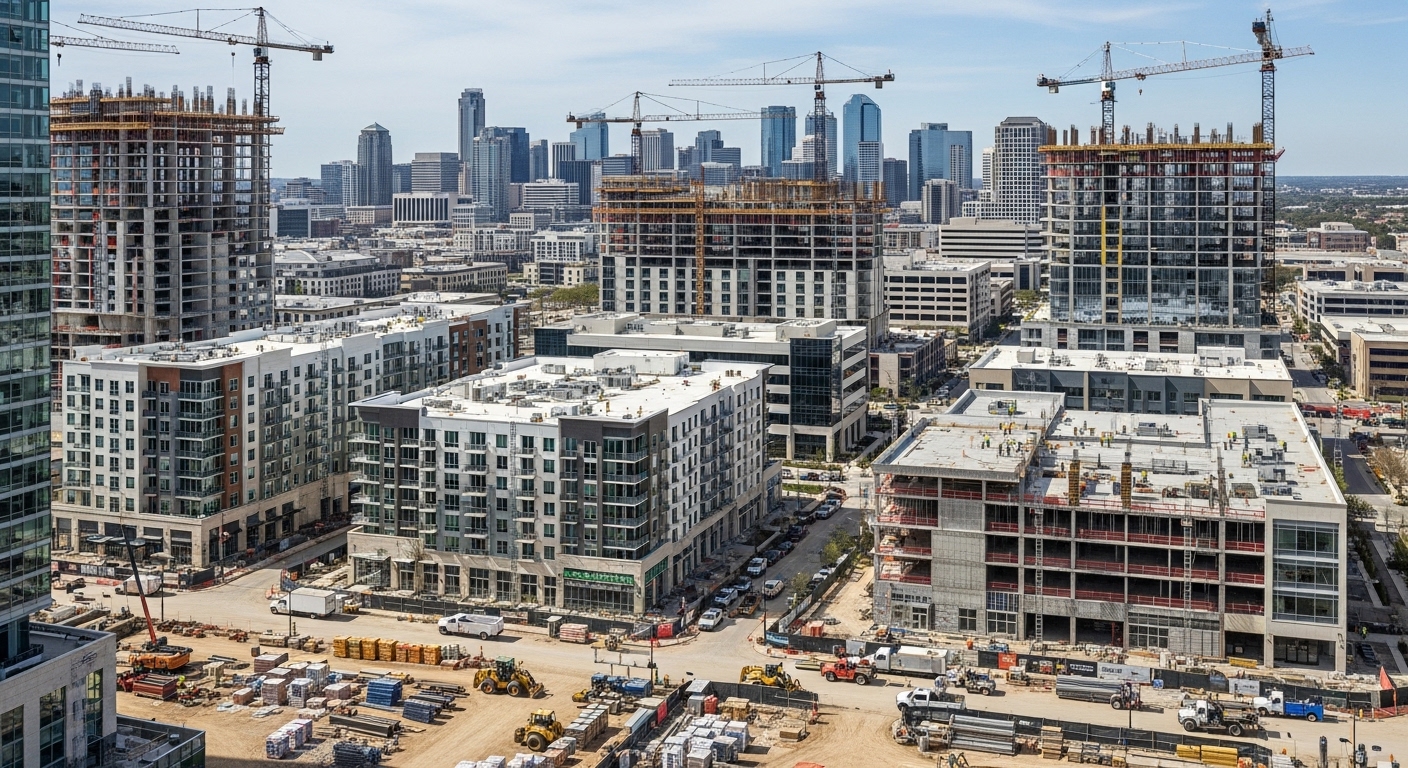
Frisco, Texas, is experiencing an unprecedented construction surge in 2025, with over $3 billion in major developments transforming the city’s landscape. While this growth presents exciting opportunities, it also creates unique challenges for property management companies who must strategically plan capital improvements to stay competitive in an evolving market. As a veteran-owned construction company serving the Fort Worth area, Alder Designs understands the complexities property managers face during periods of rapid development.
Frisco’s $3 Billion Development Wave Creates New Market Dynamics
The construction boom reshaping Frisco is anchored by several transformational projects that will redefine the city through 2027. The Mix, a 112-acre, $3 billion mixed-use development, broke ground in 2025 and promises to bring 100,000 square feet of upscale retail, 114,000 square feet of medical office space, and 635 residential units to North Platinum Corridor. Meanwhile, Fields West is adding 1,200 multifamily units alongside retail and entertainment venues, creating a new urban hub that will be completed by 2027.
These massive developments, combined with Universal Kids Resort, downtown redevelopment initiatives, and major roadway improvements, are attracting new businesses and residents while driving up property values across the region. For property management companies, this presents both opportunity and challenge.
Rising Construction Costs Impact Capital Improvement Planning
The construction industry faces significant headwinds in 2025, with material costs rising steadily and construction expenses growing 5.1% in 2024 alone—well above the general inflation rate of 2.9%. These increases are driven by several factors affecting capital improvement projects:
- Labor shortages requiring higher wages to attract skilled workers
- Supply chain disruptions causing material delivery delays
- Tariff impacts on imported construction materials, with effective rates reaching 25-30%
- Contractor availability becoming increasingly limited as major projects consume local resources
For property management companies planning capital improvements, these cost pressures mean budgets that worked last year may no longer be sufficient. Strategic planning and early contractor engagement are more critical than ever.
The Strategic Advantage of Proactive Capital Improvements
While Frisco’s construction boom creates competitive pressure, it also offers property managers a unique opportunity. New developments are setting higher standards for amenities, technology integration, and energy efficiency. Properties that fail to modernize risk becoming obsolete as tenants and buyers gravitate toward newer options.
Smart property managers are viewing this moment as an opportunity to:
- Upgrade aging infrastructure before emergency repairs become necessary
- Implement energy-efficient systems that reduce long-term operational costs
- Modernize common areas and amenities to compete with new developments
- Address deferred maintenance while contractors are still available
The key is acting strategically rather than reactively, securing reliable construction partners before the market becomes oversaturated with demand.
Contractor Selection Critical in High-Demand Environment
With Frisco experiencing record construction activity and facing a projected need for 499,000 new construction workers nationwide by 2026, selecting the right construction partner has never been more important. Property management companies should prioritize contractors who demonstrate:
Proven Project Management Capabilities: The ability to deliver projects on time and on budget becomes crucial when construction schedules are stretched thin across the market.
Supply Chain Expertise: Contractors who maintain strong vendor relationships and can navigate material sourcing challenges help avoid costly project delays.
Specialized Experience: Working with occupied properties requires contractors who understand how to minimize tenant disruption while maintaining safety standards.
Financial Stability: In a volatile market, partnering with financially stable contractors protects against project abandonment or quality compromises.
Strategic Capital Improvement Priorities for 2025
Given the current market dynamics, property management companies should prioritize capital improvements that offer the highest return on investment while addressing immediate competitive pressures:
Energy Efficiency Upgrades
With operating costs under scrutiny, energy-efficient HVAC systems, LED lighting, and smart building technologies provide immediate operational savings while appealing to environmentally conscious tenants.
Technology Infrastructure
As new developments showcase advanced technology integration, older properties need Wi-Fi infrastructure upgrades, smart access systems, and building automation capabilities to remain competitive.
Common Area Modernization
Lobbies, fitness centers, and community spaces often require updates to match the amenities offered by new developments. These improvements can be accomplished without full renovations through strategic design updates.
Preventive Maintenance Systems
Implementing preventive maintenance programs for roofing, plumbing, and electrical systems helps avoid emergency repairs when contractor availability is limited.
Timing and Phasing Strategies
The current construction environment requires careful timing of capital improvement projects. Property managers should consider:
- Securing contractors early in the planning process to avoid scheduling conflicts
- Phasing large projects to minimize tenant disruption and spread costs
- Planning around seasonal demand when possible to secure better contractor rates
- Coordinating with vacancy periods to minimize revenue impact
Financial Planning in an Uncertain Environment
Recent market analysis shows that construction expenses continue rising faster than inflation, making accurate budgeting increasingly challenging. Property management companies should:
- Build contingency reserves of 15-20% above initial estimates
- Consider value engineering options that maintain quality while controlling costs
- Evaluate financing options while interest rates remain relatively stable
- Prioritize projects by ROI to maximize the impact of available capital
The Veteran Advantage in Construction Management
Military-trained construction professionals bring unique advantages to capital improvement projects, particularly in high-pressure environments like Frisco’s current market. The discipline, systematic approach, and problem-solving skills developed through military service translate directly to successful project execution.
Veteran-owned construction companies often demonstrate superior project management capabilities, clear communication protocols, and the ability to adapt quickly when circumstances change—all critical factors in today’s dynamic construction environment.
Long-Term Strategic Positioning
While Frisco’s construction boom creates short-term challenges, property management companies that navigate this period successfully will be well-positioned for long-term success. The infrastructure improvements, job creation, and economic growth driving current construction activity will ultimately benefit well-maintained properties.
Properties that undergo strategic capital improvements now will be competitive with new construction while offering the established community connections and operational history that many tenants value. The key is executing improvements that enhance property value without overcapitalizing relative to market conditions.
Making Capital Improvement Decisions in Fort Worth’s Extended Market
As part of the broader Dallas-Fort Worth metropolitan area, Frisco’s development boom affects property markets throughout the region. Property management companies in Fort Worth and surrounding communities should monitor Frisco’s development patterns as indicators of broader market trends.
The same factors driving Frisco’s growth—job creation, infrastructure investment, and quality of life improvements—are influencing property values and tenant expectations across North Texas. Capital improvement strategies that work in this dynamic environment can be adapted for properties throughout the region.
Conclusion: Strategic Action in a Growth Market
Frisco’s $3 billion construction boom represents both challenge and opportunity for property management companies. Rising construction costs, contractor shortages, and increased tenant expectations require strategic thinking and early action.
Success in this environment depends on partnering with experienced construction professionals who understand the unique challenges of working in occupied properties during periods of high market demand. By prioritizing high-impact capital improvements, securing reliable contractors early, and maintaining financial flexibility, property management companies can position their assets to thrive in Frisco’s evolving market.
The construction boom reshaping Frisco is more than a temporary phenomenon—it’s the foundation for sustained economic growth that will benefit well-positioned properties for years to come. Property managers who act strategically now will reap the rewards of this historic development period.
0 Comments