
Transforming Senior Living Spaces: Why Waco’s Construction Projects Demand Specialized Renovation Expertise
The senior living industry in Texas is experiencing unprecedented growth, with communities across the state investing heavily in facility upgrades and renovations. As operators in Waco and surrounding areas face increasing demands for modernized amenities and safety enhancements, the need for specialized construction management has never been more critical.
Recent industry data shows that 78% of senior living facilities nationwide are planning major renovations within the next two years, with Texas leading the charge in capital improvement investments. For Waco-area operators, this presents both tremendous opportunities and unique challenges that require expert navigation.
The Unique Challenges of Senior Living Renovations
Working in Occupied Environments
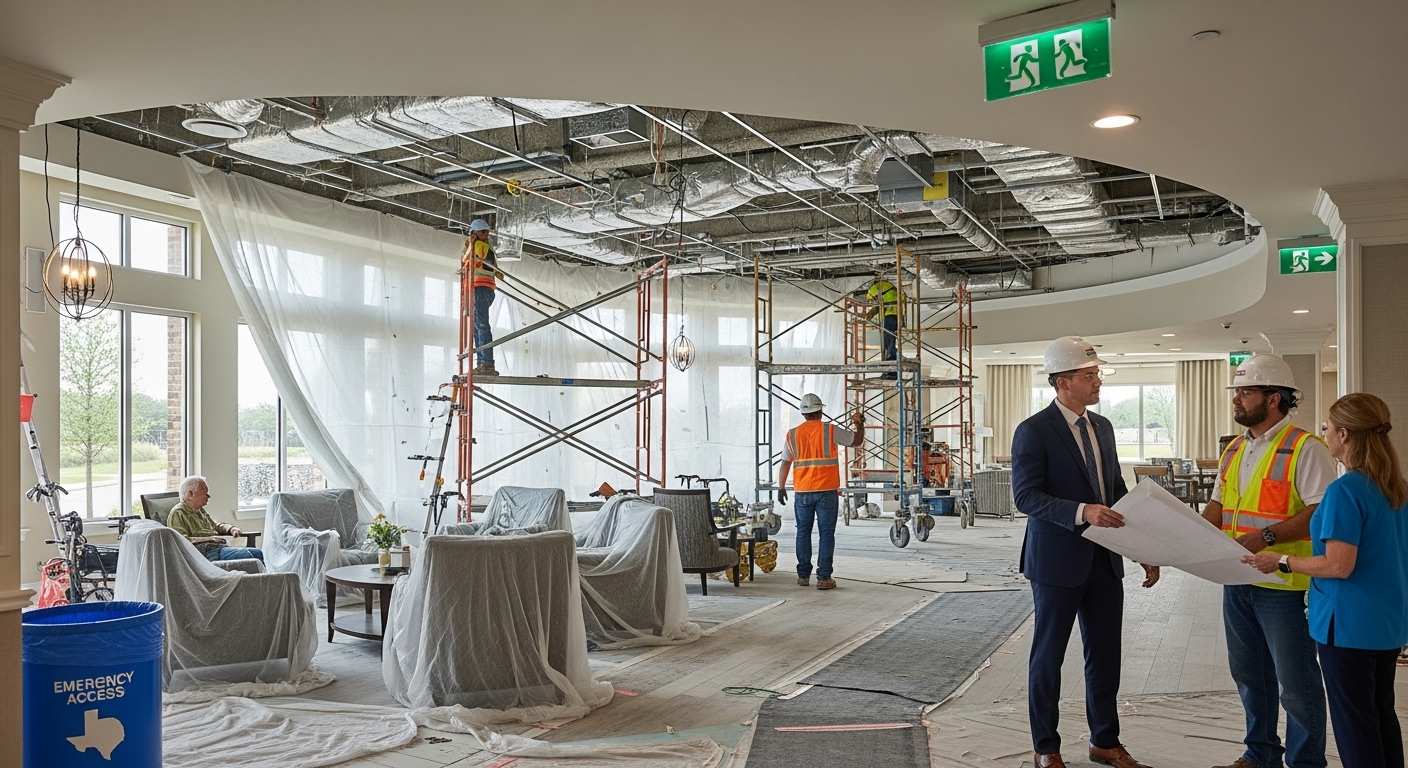
Senior living renovations present distinct complexities that set them apart from traditional construction projects. Unlike vacant commercial spaces, these facilities must maintain full operations while undergoing significant improvements. This requires:
- Specialized scheduling to minimize disruption to residents’ daily routines
- Enhanced safety protocols to protect vulnerable populations during construction
- Noise management strategies that respect residents’ need for peaceful environments
- Dust containment systems critical for respiratory health considerations
- Emergency access maintenance throughout all phases of construction
Compliance and Regulatory Requirements
Senior living facilities in Texas operate under stringent regulatory frameworks that construction teams must navigate expertly. Recent updates to state regulations have emphasized:
- ADA compliance upgrades in common areas and resident units
- Fire safety system enhancements including sprinkler and alarm modernization
- HVAC system improvements for better air quality and infection control
- Accessibility modifications to accommodate aging-in-place residents
The Design-Build Advantage for Senior Living Projects
Industry experts consistently recommend the design-build approach for senior living renovations, and data supports this preference. Projects utilizing design-build methodology show:
- 23% faster completion times compared to traditional design-bid-build projects
- Reduced change orders by up to 40% through integrated planning
- Single point of accountability eliminating finger-pointing between architects and contractors
- Enhanced communication throughout all project phases
This integrated approach proves especially valuable in senior living environments where timing and precision are paramount.
Three Critical Success Factors
Recent analysis of successful senior living renovation projects reveals three key elements that separate exceptional outcomes from mediocre results:
1. Strategic Amenity Upgrades
Modern seniors demand resort-style amenities. Successful renovations focus on:
- Wellness centers with state-of-the-art fitness equipment
- Technology-integrated common areas with high-speed WiFi
- Upgraded dining facilities with flexible seating arrangements
- Outdoor living spaces designed for year-round use in Texas climate
2. Phased Construction Approach
Smart operators combine routine maintenance with major improvements, maximizing efficiency by:
- Coordinating HVAC replacements with unit renovations
- Timing flooring upgrades with plumbing improvements
- Scheduling electrical updates alongside technology installations
3. Resident-Centric Planning
The most successful projects prioritize resident experience through:
- Alternative activity spaces during construction phases
- Clear communication about project timelines and impacts
- Flexible scheduling to accommodate medical appointments and family visits
Local Market Insights: Waco Region Opportunities
The Waco metropolitan area presents unique opportunities for senior living operators. Recent market analysis indicates:
- Growing senior population with 31% increase in residents over 65 projected by 2030
- Rising demand for premium amenities as affluent retirees relocate to Central Texas
- Competitive landscape requiring facility differentiation through strategic improvements
Local operators are responding with significant investments in:
- Memory care unit expansions to meet increasing dementia care needs
- Independent living upgrades attracting active seniors seeking maintenance-free lifestyles
- Technology infrastructure supporting telehealth and family communication systems
Construction Management Best Practices
Selecting the Right Partner
The complexity of senior living renovations demands contractors with specialized expertise. Essential qualifications include:
- Proven track record in occupied senior living environments
- Comprehensive insurance coverage protecting against unique liability risks
- Certified project managers with healthcare construction experience
- Strong local references from similar facility types
Project Planning Excellence
Successful senior living renovations require meticulous planning phases that address:
Risk Assessment and Mitigation
- Comprehensive property condition assessments identifying potential complications
- Capital needs assessments prioritizing improvements by urgency and impact
- Detailed feasibility studies ensuring realistic timelines and budgets
Communication Protocols
- Regular resident town halls explaining project progress
- Daily coordination with facility management teams
- Emergency response procedures for construction-related incidents
Financial Considerations and ROI Optimization
Senior living renovations represent significant capital investments that must deliver measurable returns. Smart operators focus on improvements that:
Drive Immediate Revenue Impact
- Unit turn optimization reducing vacancy periods between residents
- Amenity upgrades supporting premium pricing strategies
- Energy efficiency improvements lowering operational costs
Support Long-Term Asset Value
- Infrastructure modernization extending facility lifespan
- Compliance upgrades avoiding future regulatory penalties
- Market positioning enhancements maintaining competitive advantage
Recent data from completed projects shows average ROI of 15-22% for comprehensive renovation programs, with payback periods typically ranging from 3-5 years.
The Veteran Advantage in Construction Excellence
Military-trained construction professionals bring unique value to senior living projects through:
- Disciplined project management ensuring on-time, on-budget delivery
- Attention to detail critical in healthcare environments
- Problem-solving expertise addressing unexpected challenges efficiently
- Respectful communication essential when working around residents
This combination of military precision and construction expertise proves particularly valuable in the complex environment of occupied senior living facilities.
Technology Integration and Future-Proofing
Modern senior living renovations must anticipate future technological needs while addressing current requirements. Key considerations include:
Infrastructure Improvements
- Robust WiFi networks supporting resident devices and facility operations
- Smart building systems enabling remote monitoring and energy management
- Integrated security systems providing comprehensive facility protection
Accessibility Technology
- Voice-activated controls for lighting and temperature management
- Emergency call systems with GPS location capabilities
- Automated medication management integration readiness
Quality Assurance and Project Success
The most successful senior living renovation projects incorporate rigorous quality control measures:
Third-Party Inspections
Independent assessments throughout construction phases ensure:
- Code compliance verification at each milestone
- Material quality confirmation meeting specified standards
- Safety protocol adherence protecting residents and workers
Post-Completion Support
Ongoing relationships with construction partners provide:
- Warranty coverage for all completed work
- Preventive maintenance programs protecting renovation investments
- Future planning consultation for additional improvement phases
Maximizing Resident Satisfaction During Construction
Successful senior living renovations prioritize resident experience through careful planning and execution:
Minimizing Disruption
- Strategic work scheduling during optimal hours
- Noise reduction techniques protecting quiet zones
- Dust containment protocols maintaining air quality
- Alternative space provisions for displaced activities
Communication Excellence
- Regular progress updates keeping residents informed
- Feedback collection systems addressing concerns promptly
- Celebration events marking project milestones with residents
Conclusion: Partnering for Success
Senior living renovation projects in the Waco region require specialized expertise that goes far beyond traditional construction capabilities. The combination of occupied environment challenges, regulatory compliance requirements, and resident care considerations demands partners who understand these unique complexities.
Successful operators recognize that renovation investments represent more than facility improvements—they’re investments in resident quality of life, staff satisfaction, and long-term business success. By partnering with experienced construction management teams who bring military precision, healthcare construction expertise, and proven track records in senior living environments, operators can ensure their renovation projects deliver exceptional results.
The senior living industry’s continued growth in Central Texas creates tremendous opportunities for operators willing to invest in facility improvements. However, success requires careful planning, expert execution, and partners committed to excellence in every project phase.
For senior living operators in Fort Worth and the broader Texas region considering renovation projects, the time for planning is now. With proper expertise and strategic approach, these investments can transform facilities while maintaining the operational continuity that residents and families depend upon.
0 Comments