
Waco Construction Market Trends 2025: Strategic Partnership Opportunities for Design-Build Firms
The Texas construction industry continues its remarkable trajectory in 2025, with Waco emerging as a standout market experiencing unprecedented growth. For architectural and design-build firms seeking reliable construction execution partners, understanding these market dynamics is crucial for successful project delivery and client satisfaction.
Waco’s Construction Renaissance: A Market Overview
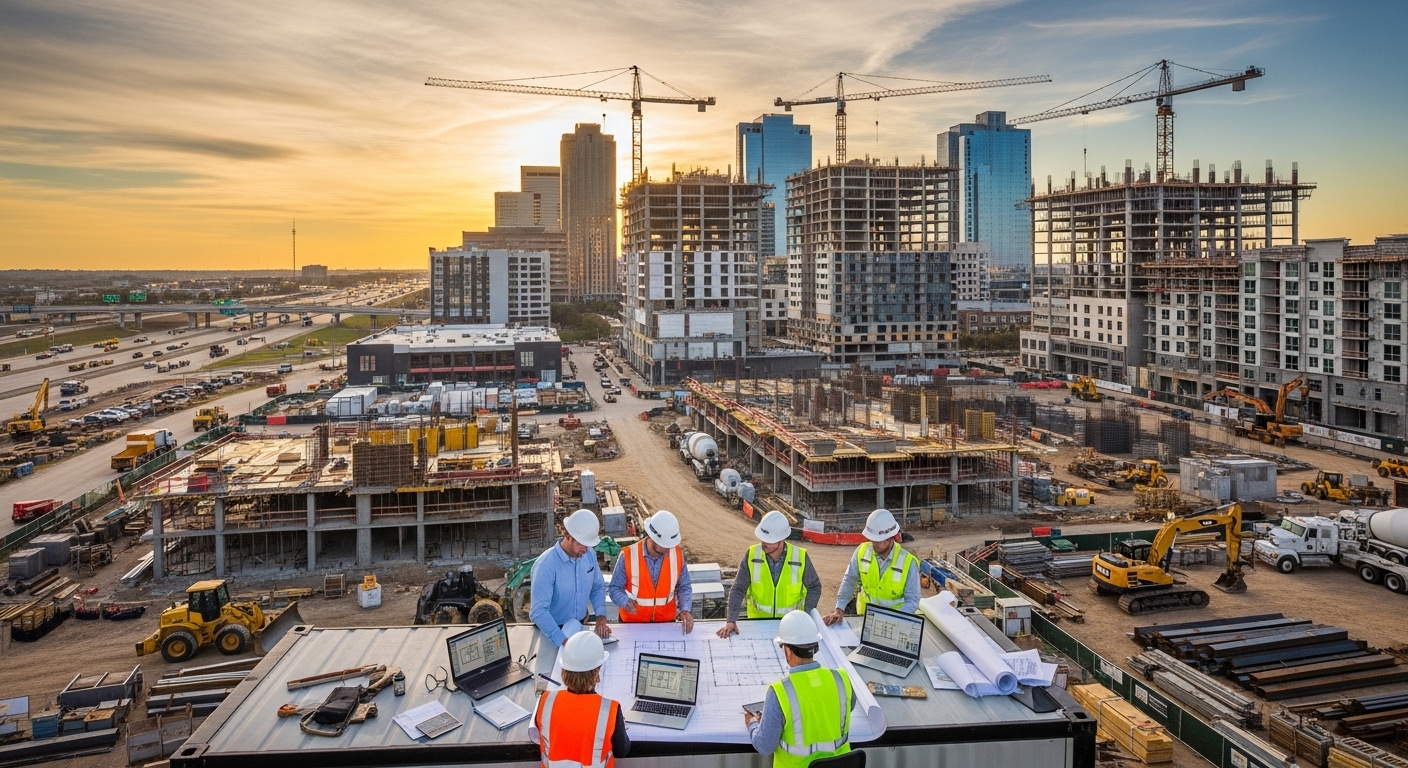
Waco’s construction landscape is undergoing dramatic transformation, driven by major infrastructure investments, commercial developments, and residential expansion. The city’s strategic location along I-35 positions it perfectly for continued growth, with the ongoing I-35 South expansion project catalyzing additional development opportunities throughout Central Texas.
Recent data reveals that Waco is experiencing one of its most robust construction periods in decades. The Central Texas Food Bank’s new $25 million facility and Electrolit’s manufacturing plant represent just two examples of the large-scale projects reshaping the region’s economic landscape.
Current Market Challenges Facing Design-Build Teams
Labor Shortage Crisis
The Texas construction labor market has tightened significantly throughout 2025, creating unprecedented challenges for project delivery. Design-build firms are reporting extended project timelines due to skilled labor shortages, particularly in specialized trades like electrical, plumbing, and HVAC installation.
This labor crunch affects not just residential projects but extends to commercial and industrial developments. Many architectural firms are finding their carefully planned timelines disrupted when construction partners cannot secure adequate workforce allocation.
Material Cost Volatility
Construction material costs continue to fluctuate, with some materials experiencing price increases of 15-20% compared to early 2024. This volatility makes accurate project budgeting increasingly difficult for design-build partnerships, requiring more flexible pricing strategies and contingency planning.
Subcontractor Capacity Constraints
With high project volume across Texas, subcontractor capacity is stretched thin. Many specialized contractors are booked months in advance, forcing design-build teams to either accept longer lead times or work with less preferred partners.
Strategic Solutions for Design-Build Success
Partnership-Based Project Delivery
Forward-thinking architectural firms are shifting toward strategic partnerships with experienced construction companies rather than relying on traditional bidding processes. These partnerships enable better coordination between design intent and construction execution, ultimately delivering superior results for end clients.
The most successful partnerships combine design expertise with construction experience, creating seamless project delivery from concept through completion. This approach proves particularly valuable in Waco’s fast-paced market, where quick decision-making and execution capabilities determine project success.
Phased Construction Approaches
Given current market constraints, many successful projects in the Waco area utilize phased construction strategies. This approach allows design-build teams to manage resource allocation more effectively while maintaining project momentum despite labor and material challenges.
Phased approaches also provide opportunities for mid-project adjustments based on market conditions or client feedback, ensuring final deliverables exceed expectations despite external pressures.
Technology Integration and Efficiency
Digital Project Management
The most successful construction partnerships in 2025 leverage advanced project management technologies to maintain transparency and efficiency. Cloud-based platforms enable real-time communication between design teams and construction crews, reducing errors and accelerating decision-making processes.
These tools prove particularly valuable when managing multiple projects simultaneously, as many Waco-based firms are experiencing increased demand across residential, commercial, and industrial sectors.
Energy Efficiency Focus
With growing emphasis on sustainable construction practices, design-build partnerships increasingly focus on energy-efficient solutions. This trend aligns with both regulatory requirements and client preferences for environmentally responsible building practices.
Modern construction approaches in Waco emphasize HVAC efficiency upgrades, improved insulation systems, and smart building technologies that reduce long-term operational costs for property owners.
Local Market Opportunities
Commercial Sector Growth
Waco’s economic development initiatives have attracted numerous commercial projects requiring sophisticated design-build coordination. From manufacturing facilities to retail developments, these projects demand partners who understand both aesthetic requirements and functional construction needs.
The Greater Waco Chamber continues highlighting new investments and job creation initiatives, suggesting sustained demand for quality construction services throughout 2025 and beyond.
Multi-Family Development
The multi-family housing sector presents significant opportunities for design-build partnerships. With Waco’s growing population and economic activity, demand for quality residential developments continues increasing.
Successful projects in this sector require careful coordination between architectural vision and practical construction execution, making experienced partnerships essential for delivering competitive advantages in this active market.
Quality Control and Project Success
Third-Party Assessments
Smart design-build partnerships incorporate independent quality assessments throughout the construction process. These evaluations ensure work meets both design specifications and industry standards, protecting both architectural firms and their clients from potential issues.
Professional assessments also provide valuable documentation for warranty purposes and future maintenance planning, adding long-term value beyond initial construction completion.
Contractor Vetting Processes
With subcontractor capacity constraints, thorough vetting becomes crucial for project success. Experienced construction partners maintain networks of reliable subcontractors and can quickly identify qualified teams for specialized work requirements.
This vetting capability proves particularly valuable in Waco’s competitive market, where securing quality subcontractors often determines project timeline success.
Future Market Outlook
Infrastructure Investment Impact
The ongoing I-35 expansion and other infrastructure investments position Waco for continued construction growth. These projects improve regional accessibility and attract additional commercial development, creating sustained opportunities for design-build partnerships.
Understanding these infrastructure developments helps architectural firms position themselves for emerging opportunities while building relationships with construction partners capable of executing complex projects.
Technology Adoption Trends
Construction technology adoption continues accelerating, with successful partnerships leveraging everything from drone surveys to AI-powered project scheduling. These technologies improve both efficiency and quality while reducing project risks.
Design-build teams that embrace these technological advances position themselves for competitive advantages in an increasingly sophisticated marketplace.
Building Strategic Construction Partnerships
Success in Waco’s dynamic construction market requires more than just finding available contractors. The most effective partnerships combine technical expertise with proven project management capabilities, ensuring design intent translates successfully into built environments.
When evaluating potential construction partners, consider their track record with similar projects, their approach to communication and transparency, and their ability to maintain quality standards despite market pressures. The right partnership creates synergy between design creativity and construction execution, delivering exceptional results that exceed client expectations.
For architectural and design-build firms operating in the Fort Worth and greater Central Texas region, understanding these market dynamics and building strong construction partnerships becomes essential for sustained success. The opportunities in Waco’s growing market are substantial, but realizing them requires strategic thinking and reliable execution partners committed to excellence in every project phase.
By focusing on partnership-based approaches, embracing technology solutions, and maintaining quality standards despite market challenges, design-build firms can capitalize on Waco’s construction boom while delivering the exceptional results their clients demand.
0 Comments