
Waco, Texas REIT Investments: Property Condition Assessments & Capital Planning
REITs investing in Waco, Texas need accurate asset intelligence to manage risk and maximize returns.
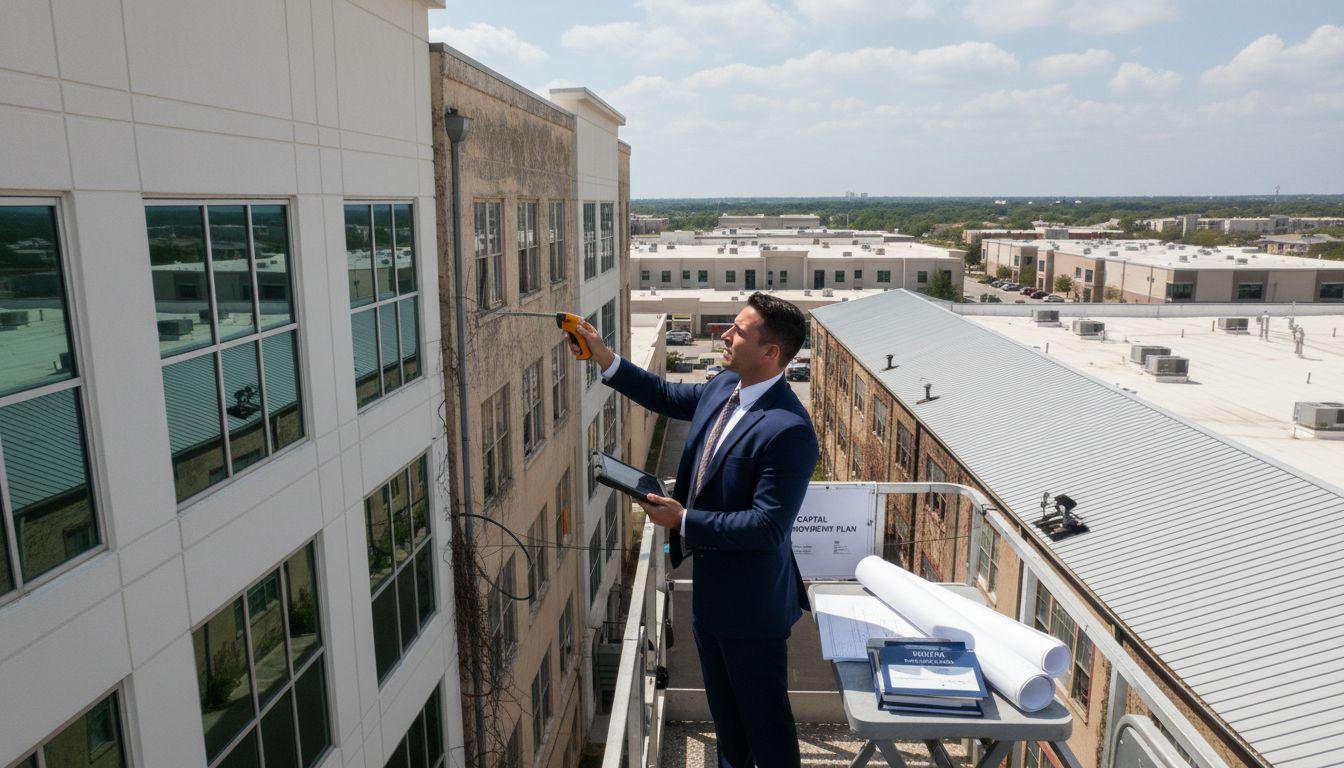
Real estate investment trusts (REITs) managing large-scale property portfolios in Waco, Texas face mounting pressure to maximize returns while minimizing risk. Whether you own multifamily complexes, senior living facilities, or commercial properties, understanding the true condition of your assets is critical—yet many REIT managers rely on incomplete or outdated information. Property condition assessments (PCAs) and capital needs assessments (CNAs) provide the strategic insight you need to make informed decisions about renovations, capital planning, and portfolio optimization.
A comprehensive Property Condition Assessment isn’t just a rubber-stamp inspection. It’s a detailed evaluation that identifies structural issues, system deficiencies, and deferred maintenance before they become costly emergencies. For REITs operating in Waco’s competitive real estate market, this independent assessment capability serves as the foundation for sound acquisition decisions, renovation prioritization, and long-term capital planning.
Why Property Condition Assessments Matter for REIT Portfolios
When you’re evaluating a potential acquisition or managing existing properties across multiple asset classes, incomplete knowledge of building conditions can derail projections. A property might appear attractive on paper, but hidden defects—failing roofing systems, outdated HVAC infrastructure, plumbing liabilities, or structural concerns—can transform a promising investment into a financial drain.
Property Condition Assessments provide independent, third-party verification of asset status. Unlike in-house evaluations, a professional PCA offers objective findings that lenders, investors, and board members trust. This is especially important in Waco’s real estate landscape, where older properties mixed with newer developments create variable conditions across multifamily, senior living, and commercial portfolios.
A thorough PCA examines:
- Structural and foundation integrity across residential, commercial, and senior living facilities
- Building envelope performance including roofing, windows, exterior walls, and waterproofing
- Mechanical, electrical, and plumbing (MEP) systems critical for tenant occupancy and operational reliability
- Life safety and code compliance issues that affect insurance, liability, and occupancy standards
- Accessibility and Americans with Disabilities Act (ADA) compliance for senior living and commercial spaces
- Environmental concerns including asbestos, lead-based paint, and moisture intrusion risks
- Energy efficiency opportunities that can drive operational cost savings
For REITs, these findings translate directly to better acquisition decisions and smarter renovation investments.
Capital Needs Assessments: Prioritizing Investments Across Your Portfolio
A Capital Needs Assessment (CNA) takes PCA findings one step further by translating physical conditions into a prioritized investment roadmap. Instead of a reactive approach—fixing problems as they arise—a CNA empowers you to plan systematically and allocate capital where it delivers the highest return.
CNAs organize identified deficiencies into short-term, medium-term, and long-term improvement categories. This phased approach helps REIT managers balance immediate safety and code compliance needs with strategic upgrades that enhance property value and tenant retention.
For example, in a senior living facility, a CNA might identify:
- Immediate priorities: Roof repairs, electrical code upgrades, and accessibility enhancements (months 1–6)
- Medium-term investments: HVAC system replacements, flooring upgrades, and water system improvements (years 1–3)
- Strategic long-term projects: Energy-efficient window replacement, common area renovations, and technology infrastructure upgrades (years 3–5)
This structured approach helps you:
- Forecast capital expenditure requirements across your portfolio with confidence
- Secure financing and board approval with detailed, professional documentation
- Prioritize ROI-driven improvements that enhance occupancy rates, rental income, or asset resale value
- Avoid costly surprises that derail annual budgets or operational planning
Third-Party Inspections: Independent Verification You Can Trust
In Waco’s competitive investment environment, independent assessments reduce acquisition risk and protect your capital. Third-party inspections provide the objective verification that due diligence demands, especially when evaluating multifamily properties, senior living facilities, or commercial assets outside your core expertise.
A professional inspection report becomes a negotiation tool during acquisition discussions. If defects are discovered, you have data-backed justification for price reductions or seller concessions. Conversely, if a property passes rigorous inspection, you can confidently present results to lenders and stakeholders.
Third-party inspectors bring no financial interest in your acquisition decision. This independence is crucial for institutional investors. Whether you’re evaluating a single property or comparing multiple assets in your pipeline, professional inspections deliver the impartial assessment needed for sound decision-making.
Contractor Audits and Bid Reviews: Protecting Your Construction Budget
Once you’ve prioritized capital improvements, the next challenge is ensuring renovation projects stay on budget and on schedule. Many REITs discover cost overruns or quality shortcomings only after construction is underway—when change orders and rework are expensive fixes.
Contractor audits and independent bid reviews help you evaluate vendor proposals before committing capital. A qualified construction auditor reviews contractor bids against industry standards, checks labor and material costs, and identifies scope gaps or overcharges that could inflate your project budget.
This oversight is particularly valuable for complex renovation projects across multifamily or commercial portfolios where:
- Multiple vendors submit competing bids and you need expert evaluation to separate realistic from inflated proposals
- Capital improvement budgets are large and even small percentage savings compound across the portfolio
- Quality standards must be maintained across different properties and contractors
- Timelines are tight and you need confidence that contractors can deliver on schedule without operational disruption
In Waco’s construction market, where permit requirements and local code compliance add complexity, an experienced contractor auditor ensures your project timeline and budget account for local factors.
Design-Build and Construction Management: Streamlining Renovation Execution
Once PCAs and CNAs have identified priorities and bid reviews have validated contractor proposals, the construction phase demands expert project oversight. For REITs managing occupied properties—senior living facilities, multifamily complexes, tenant-occupied commercial space—renovations must minimize disruption to residents, tenants, and operations.
Design-build and construction management services coordinate the entire renovation process from design through completion. This integrated approach offers several advantages for REIT-owned properties:
- Faster project timelines through concurrent design and construction phases
- Fixed budgets and single-point accountability from design through delivery
- Minimized tenant disruption with careful planning for occupied-space renovations
- Quality control and compliance ensuring work meets code standards and property specifications
- Transparent communication with regular progress updates and change order management
For a Waco-area hospitality property undergoing guest-experience renovations, a design-build team can execute rapid room turns while maintaining revenue-generating occupied areas. For a multifamily complex addressing deferred maintenance, construction management keeps the project coordinated and occupancy disruption minimal.
How to Choose the Right Assessment Partner for Your REIT
When selecting a firm to conduct PCAs, CNAs, and inspections for your Waco-area portfolio, prioritize:
- Independence and objectivity – Ensure assessors have no financial interest in future construction contracts or renovation recommendations
- Multi-asset experience – Choose a team that understands multifamily, senior living, commercial, and hospitality properties across your portfolio types
- Local market knowledge – Waco’s permit requirements, local code standards, and construction practices require familiarity with the specific regulatory environment
- Certification and credentials – Look for professionals certified by recognized industry organizations (CCIM, RICS, AIA, or equivalent)
- Construction expertise – The best assessors combine inspection skills with deep construction knowledge, enabling practical renovation recommendations
- Transparent reporting – Assessments should be clear, well-documented, and usable for investor communication, lender requirements, and board presentations
Integrating Assessments Into Your Capital Planning Workflow
A strategic REIT maximizes assessment value by integrating findings into an ongoing capital planning cycle:
Year 1: Conduct comprehensive PCAs and CNAs across your portfolio. Identify top-priority improvements and forecast five-year capital needs.
Year 2–3: Execute highest-priority capital improvements using design-build or construction management services. Update assessments for renovated properties.
Year 4–5: Reassess lower-priority assets and identify emerging maintenance needs. Adjust capital forecasts based on market conditions and asset performance.
Continuous: Monitor portfolio condition through property-by-property updates and periodic third-party reinspections to track improvement progress.
This cyclical approach ensures your capital planning stays aligned with asset conditions, market trends, and investment performance targets.
The ROI of Professional Assessment and Capital Planning
When you calculate the true value of Property Condition Assessments and Capital Needs Assessments, the return is substantial. A comprehensive PCA that costs $3,000 to $5,000 per property can:
- Reveal hidden liabilities that would cost 10 times more to repair if left undetected
- Justify price reductions on acquisition targets, saving millions on large-scale purchases
- Prioritize $50,000 to $500,000 in capital improvements across a property portfolio, ensuring the highest-impact investments get funded first
- Reduce construction surprises and change orders by 20–40% through detailed baseline documentation
- Strengthen lender confidence and improve financing terms through professional due diligence
- Support insurance negotiations by documenting property conditions and hazard mitigation efforts
For a REIT managing a $100 million portfolio across Waco and surrounding markets, professional assessment and construction oversight can unlock $2–5 million in better renovation decisions and cost avoidance.
Getting Started With Professional Assessment Services in Waco, Texas
REITs operating in Waco and the broader Texas region benefit from