
I need to retrieve the information from the previous workflow steps to generate your blog post. Let me gather that data now.
Multifamily Renovation and Design-Build Construction in Austin: Why Property Owners Choose Professional Execution Partners
Multifamily property owners across Austin are racing to upgrade their portfolios, but ambitious designs don’t guarantee successful execution. Whether you’re planning unit refreshes, common area renovations, or a full property repositioning, the gap between design intent and built reality can cost you thousands—or worse, stall your timeline entirely.
This is where professional construction execution partners make the difference. Architects and design-build firms excel at conceptualizing your vision, but turning that vision into a completed, budget-conscious project requires specialized construction management expertise that many property owners overlook until problems arise.
The Austin Multifamily Boom Creates Execution Pressures
Austin’s multifamily sector is booming. Investor interest in repositioning aging stock, adding amenities that today’s renters demand, and capitalizing on rising property values has never been higher. But this growth comes with tight timelines, competitive labor markets, and investor expectations for predictable budgets and on-time delivery.
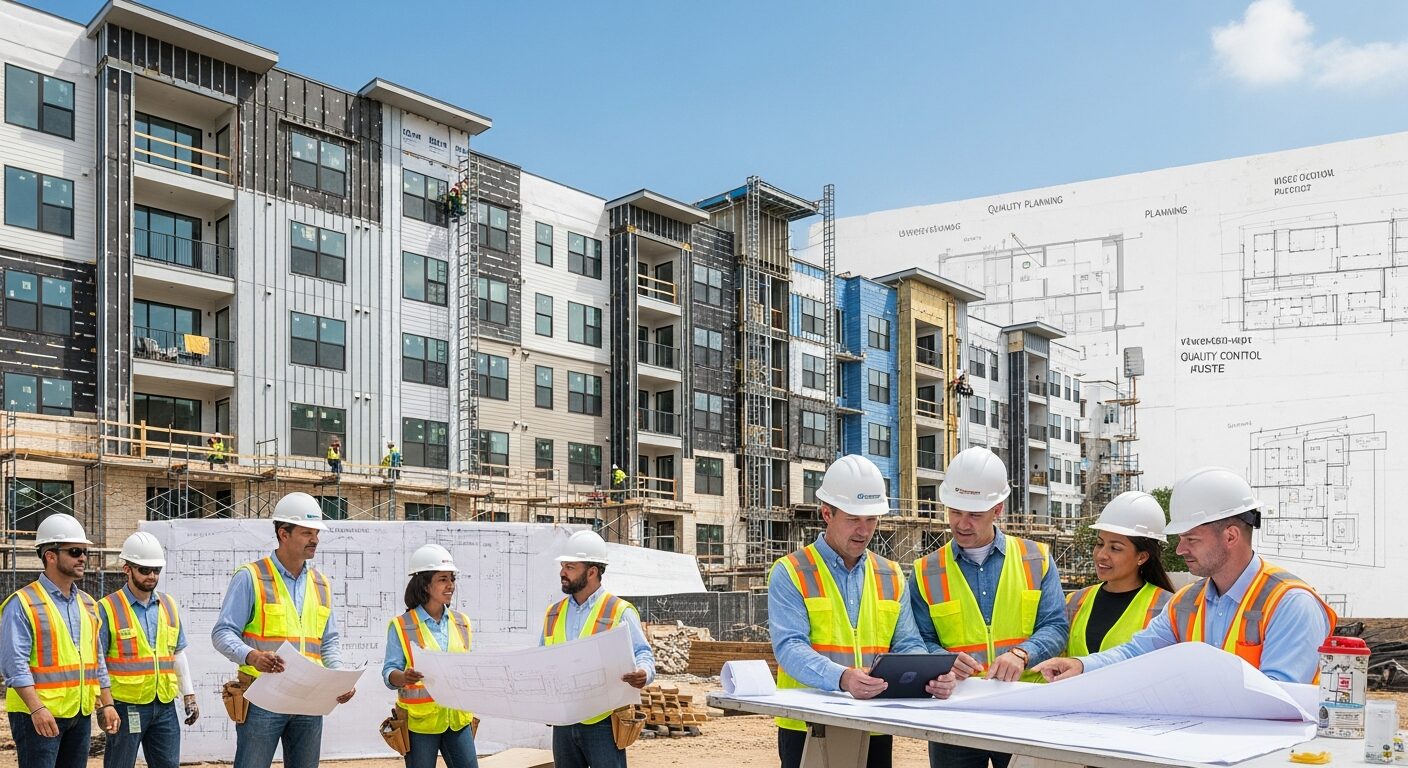
When you partner with a design-build firm, you gain an integrated design team—but design excellence alone won’t get your project completed on schedule and within budget. You need experienced construction professionals who understand Austin’s local building codes, vendor networks, and labor conditions. They’ll coordinate with your designer, manage subcontractors, handle quality control, and keep everyone accountable to the original timeline and scope.
Without this layer of execution discipline, change orders multiply, timelines slip, and costs overrun—especially in occupied multifamily buildings where you can’t simply shut everything down mid-project.
What Execution Partners Bring to Multifamily Renovation Projects
A dedicated construction execution partner acts as the bridge between design vision and physical reality. Here’s what they deliver:
Constructability Reviews and Value Engineering
Before a single nail is driven, experienced construction teams review the design for buildability, cost optimization, and schedule efficiency. They identify potential conflicts, suggest material substitutions that maintain quality while reducing costs, and flag issues that might surface during construction. This upfront analysis prevents expensive changes later.
Subcontractor Coordination and Quality Control
Managing ten or more trades on an active multifamily property requires discipline, clear communication, and accountability. A professional execution partner maintains strict quality standards, ensures all work meets code and design specifications, and coordinates schedules so one trade doesn’t delay the next. They also conduct inspections at critical phases to catch problems before they become expensive fixes.
Budget and Schedule Management
Multifamily renovations in Austin operate under tight margins and investor timelines. Construction execution partners maintain transparent project budgets, track spending against estimates, and flag overruns early so you can make informed decisions. They also manage the critical path—identifying which tasks must happen first and which can happen in parallel—to keep projects moving without sacrificing quality.
Occupied Environment Expertise
Many Austin multifamily properties operate at occupancy during renovation, meaning you’re upgrading units and common areas while residents are still there. This requires specialized project planning, noise control, dust mitigation, and maintenance of building systems. Experienced construction teams know how to work efficiently in occupied environments while respecting resident needs and maintaining tenant satisfaction.
Why Design-Build Firms Partner With Dedicated Execution Teams
Design-build models are popular because they streamline decisions and improve collaboration between design and construction—but the model’s success depends on having strong execution resources. Many design-build firms are design-heavy organizations that subcontract construction management to other firms or rely on less-experienced internal teams.
The best approach: Choose a design-build partner who either has deep, in-house construction management expertise or has a track record of working closely with reliable execution partners. Ask about their past projects, their subcontractor relationships, and how they handle schedule pressure and budget overruns.
In Austin’s competitive market, property owners who choose execution partners carefully gain a significant advantage. You get on-time delivery, predictable costs, quality results, and peace of mind—exactly what investors and property managers need to succeed.
Making the Right Choice: Questions to Ask Your Construction Partner
Before committing to a design-build or general contractor, ask these critical questions:
-
What is your track record on multifamily projects in Austin? Ask for references and examples of projects similar to yours—especially occupied buildings or large repositioning efforts.
-
How do you handle change orders and budget overruns? A strong partner uses transparent processes and early communication to minimize surprises.
-
What is your approach to quality control and inspections? Professional teams conduct inspections at specific phases and maintain detailed documentation.
-
How do you manage occupied buildings or properties with operational constraints? This is especially important if your multifamily property will be partially or fully occupied during renovation.
-
Who will be on my project team, and how accessible are they? You want direct access to the project manager, not multiple layers of subcontractors.
-
Do you have existing vendor and subcontractor relationships in the Austin market? Established networks mean faster problem-solving and better pricing.
The Real Cost of Cutting Corners on Execution
Choosing the cheapest general contractor or skipping professional construction management often backfires. Projects that lack strong execution oversight commonly experience:
- Schedule delays that push completion months past the target date, delaying tenant move-ins and rental revenue
- Budget overruns from change orders, rework, and inefficient coordination
- Quality issues that require expensive corrections and damage your property’s reputation
- Tenant disruption from poor planning and lack of communication
- Regulatory compliance problems from cutting corners on inspections and code adherence
In Austin’s multifamily market, where property values and rents rise with completed renovations, even a three-month delay can cost you tens of thousands in lost revenue.
Veteran-Owned Construction Discipline Applies to Multifamily Success
Many of the most effective construction execution partners—especially in the Austin and Fort Worth region—bring military discipline and teamwork to their operations. Veteran-owned firms often excel at project execution because they prioritize clear communication, defined roles, accountability, and precision.
This mindset translates directly to multifamily projects. When your execution partner operates with military discipline, you get:
- Clear hierarchies and communication channels so decisions happen fast
- Accountability at every level—no finger-pointing when issues arise
- Precision in planning and execution
- Respect for timelines and deadlines
- Integrity in cost estimation and change management
For Austin property owners managing complex multifamily repositioning projects, this disciplined approach reduces risk and improves outcomes.
Start With a Realistic Assessment and Strong Planning
The best multifamily renovation projects begin with a clear assessment of what needs to be done, realistic timelines, and accurate budgets. Before you hire a design-build firm or construction partner, invest time in:
- Property condition assessments that identify the true scope of work needed
- Phasing strategies that balance scope, budget, and timeline
- Feasibility studies that confirm your vision is buildable and economically sound
- Clear communication with investors and stakeholders about expectations
With this foundation, choosing the right execution partner becomes much easier. You’ll know exactly what you need and be able to evaluate contractors based on their ability to deliver your specific requirements.
Austin’s multifamily market rewards property owners who combine vision with flawless execution. The design is only the beginning—your choice of construction execution partner determines whether that design becomes a competitive asset or a costly missed opportunity.
0 Comments