
I need to retrieve the specific information from the previous workflow steps before I can write the blog post. Let me gather the details.
Strategic Capital Improvements: Smart Renovation Planning for Multi-Family Properties
In 2026, multi-family property owners face a pivotal challenge: construction budgets are tight, labor is scarce, and material costs remain elevated. Yet the opportunities have never been clearer. With the global AEC market projected to reach $16 trillion by 2031 and owners increasingly pivoting toward long-life, resilient, and technology-enabled assets, strategic capital improvements have become the competitive edge that separates thriving properties from underperforming ones.
If you manage a multi-family complex in the Dallas-Fort Worth area, you’re likely wrestling with questions that keep you up at night: How do I maximize occupancy while managing renovation timelines? How can I modernize my property without disrupting residents? How do I ensure my capital dollars deliver lasting value? The answer lies in partnering with a construction team that understands occupied-environment complexities and delivers both speed and quality.
Why Multi-Family Capital Improvements Matter Now
The construction backlog for nonresidential and multifamily work sits at 8.6 months—a signal of sustained demand but also longer lead times and fierce competition for skilled trades. Property owners who delay capital improvements risk falling behind market benchmarks, while those who act strategically gain a competitive advantage.
Energy efficiency upgrades, room renovations, and infrastructure strengthening are no longer nice-to-haves. They’re essential investments that:
- Attract and retain tenants in a competitive rental market
- Reduce long-term operating costs through HVAC, plumbing, and electrical modernization
- Increase property valuation for refinancing or sale
- Maintain building code compliance and safety standards
- Enhance resident satisfaction and reduce turnover
According to industry data, capital improvements deliver measurable ROI. Properties that prioritize strategic upgrades see higher occupancy rates, longer resident tenures, and better resale values—often justifying the short-term construction disruption.
The Challenge: Renovating Occupied Multi-Family Properties
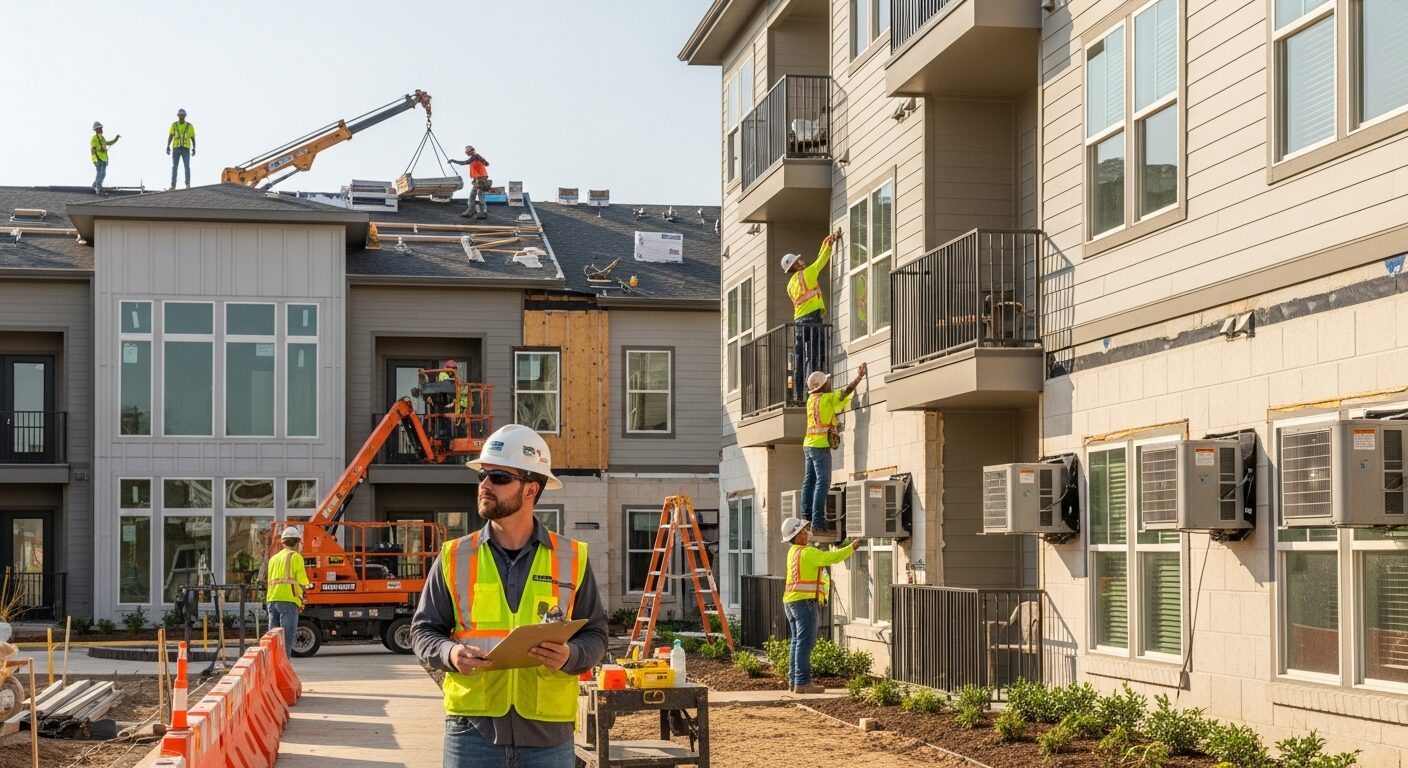
Standard renovation approaches don’t work for multi-family properties. You can’t shut down an entire building for months while crews work. Your residents need their homes, your staff needs operational space, and your revenue can’t disappear during construction.
This is where most general contractors stumble. They follow residential or commercial playbooks designed for vacant buildings—and chaos ensues: schedule delays, resident complaints, cost overruns, and quality issues that get punted to warranty disputes months later.
The solution: construction done in occupied environments with precision, discipline, and military-grade planning.
This approach requires:
- Phased project scheduling that minimizes resident impact
- Coordinated unit turnover aligned with lease expirations and lease-up cycles
- Fast, professional room turns that maximize occupancy without sacrificing quality
- Clear communication protocols with residents and property management staff
- Independent third-party inspections to verify work quality before final payment
Veteran-owned firms like Alder Designs in Fort Worth specialize in exactly this scenario. With over 70 years of combined construction expertise and a proven four-step process—assessment, planning, execution, and delivery—they bring the discipline of military teamwork to the complexities of occupied-facility construction.
Types of Capital Improvements That Drive Results
When you’re planning a capital improvement program for multi-family properties, focus on upgrades that tenants notice and that reduce your operating costs:
Roofing and Weather Envelope Upgrades
A failing roof isn’t just a liability—it signals poor property maintenance to prospective residents. Modern roofing materials, proper drainage, and waterproofing extend building life and prevent costly water damage claims.
HVAC System Modernization
Aging HVAC systems consume energy, fail unpredictably, and frustrate residents with temperature complaints. Upgrading to efficient, smart-enabled systems cuts utility costs 15–25% and improves tenant satisfaction.
Plumbing Infrastructure and Water Quality
Corroded pipes, low water pressure, and aging fixtures are deal-breakers for renters. Full or partial repipe projects, along with water heater upgrades, show residents you’re investing in their comfort.
Interior Finishes and Unit Refreshes
Room turns—refreshing units between tenants—are critical for lease-up speed. Professional flooring, painting, fixture upgrades, and appliance replacements make units lease faster and command higher rents.
Electrical System Upgrades and EV Charging
Modern multifamily properties increasingly offer EV charging stations. Electrical system upgrades that support higher loads, improve safety, and enable smart metering are future-proofing investments.
Common Area Modernization
Updated lobbies, fitness centers, outdoor spaces, and amenity areas increase perceived property value and justify rent premiums.
Planning Your Capital Improvement Strategy
Step 1: Conduct a Professional Property Condition Assessment (PCA)
Before spending a dollar on construction, hire a certified third-party assessor to evaluate your building’s current condition. A comprehensive PCA identifies:
- Structural integrity issues
- Systems performance and remaining useful life (RUL)
- Code compliance gaps
- Priority repairs vs. elective upgrades
- Estimated replacement costs and timelines
This independent assessment prevents costly guessing games and gives lenders, investors, or buyers confidence in your property’s true condition.
Step 2: Develop a Phased Improvement Timeline
You can’t—and shouldn’t—renovate everything at once. A smart capital improvement plan prioritizes work based on:
- Revenue impact: Units in the highest-demand lease-up cycle first
- Building impact: Critical infrastructure before cosmetic upgrades
- Resident impact: Minimize vacancy disruption with summer/fall scheduling
- Budget flow: Spread spending across fiscal years to manage cash
For multi-family properties in Fort Worth and the Dallas area, this typically means phasing work across 18–36 months, with intensive focus during low-occupancy seasons.
Step 3: Partner With a Contractor Experienced in Occupied Environments
This is non-negotiable. Your general contractor must demonstrate:
- Proven experience renovating occupied multi-family properties
- Transparent budgeting with fixed pricing and clear change-order protocols
- Certified professionals with industry-recognized qualifications
- On-time delivery record with documented project completion data
- Clear communication protocols for resident updates and issue resolution
- Insurance and bonding to protect against liability and incomplete work
What Makes Alder Designs Stand Out for Multi-Family Capital Improvements
Alder Designs is a 100% veteran-owned construction company based in Fort Worth, Texas, with a specialization in exactly what multi-family property owners need: high-impact renovations in occupied environments.
Here’s what sets them apart:
Military Discipline Applied to Construction
The leadership team consists of veterans who served together. That foundation of trust, discipline, and teamwork translates directly into project execution. Multi-family properties aren’t just buildings to them—they’re occupied homes where residents depend on reliable, professional work.
Proven Four-Step Process
- Assessment: Understand your property’s unique challenges
- Planning: Develop a customized improvement strategy aligned with your timeline and budget
- Execution: Deliver work on schedule, in budget, with transparency
- Delivery: Final inspections, resident transitions, and warranty support
Fast, Professional Room Turns
When units need refreshing between tenants, speed matters. Alder Designs specializes in fast room turns—completing interior renovations in compressed timelines without sacrificing quality. This minimizes vacancy losses and keeps your occupancy rates healthy.
Third-Party Inspection and Quality Verification
Before paying contractors, they help you verify work quality through independent inspections. This independent oversight protects your interests and ensures lasting craftsmanship.
Construction Services in Occupied Environments
They understand the unique challenges of working while residents are present:
- Minimal disruption protocols
- Resident communication management
- Phased scheduling around lease cycles
- Coordination with property management staff
Transparent Communication and Budget Control
No surprises. Clear, honest communication throughout the project lifecycle means you know where your money is going and what to expect. In an industry known for cost overruns, this predictability is invaluable.
The ROI of Strategic Capital Improvements
Let’s talk numbers. A multi-family property with 100 units can realize significant returns from a well-executed capital improvement program:
- Energy Efficiency: HVAC and electrical upgrades can reduce utility costs by $2–5 per unit per month, totaling $2,400–6,000 annually
- Higher Rents: Properties with modern finishes and amenities command 5–10% rent premiums
- Lower Turnover: Residents stay longer when their homes are well-maintained, reducing expensive turnover costs (average $3,000–5,000 per unit to re-lease)
- Property Value: Every dollar spent on strategic improvements typically returns $1.50–2.00 in property valuation gains
Over a 10-year hold, these improvements compound. A $500,000 capital improvement program might generate $1.5–2 million in cumulative financial benefit through lower operating costs, higher rents, reduced vacancies, and increased property value.
Planning Around Today’s Construction Environment
The 2026 construction outlook presents both challenges and opportunities for multi-family owners:
Challenges:
- Labor shortages continue; skilled trades are hard to find and expensive
- Material costs remain elevated with limited downward pressure
- Contractor backlogs are stretching timelines; booking delays are common
Opportunities:
- Owners focused on lifecycle value and cost control are winning market share
- Construction demand for nonresidential and multifamily work remains robust (8.6-month backlog)
- Smart infrastructure and efficiency upgrades are becoming standard expectations
- Veteran-owned contractors with proven occupied-environment expertise are differentiating themselves
For multi-family property owners in Dallas-Fort Worth, this environment rewards decisive action. Properties that invest in strategic capital improvements now will command rent premiums, attract better tenants, and hold value through market cycles.
Your Next Steps
Start with a Property Condition Assessment. If you haven’t had an independent third-party evaluation of your multi-family property in 12 months, schedule one now. A professional PCA costs $2,000–5,000 and identifies priorities, prevents costly surprises, and gives you data to present to lenders or investors.
Develop a Three-Year Improvement Plan. Work with your property management team and a construction partner to prioritize capital improvements across your phased timeline. Front-load revenue-generating upgrades (room refreshes, amenity improvements) while building toward critical infrastructure work.
Interview Contractors With Occupied-Environment Experience. Not all general contractors are equipped to manage renovations in occupied multi-family properties. Ask about past projects, resident communication protocols, timeline management, and warranty support. Request references from property managers, not just the contractors themselves.
Consider Energy Efficiency and Smart Infrastructure. The industry is clearly moving toward longer-life, resilient, and technology-enabled assets. HVAC upgrades, EV charging, smart metering, and water efficiency improvements aren’t just good for your residents—they’re expected by modern renters and valued by institutional investors.
Strategic capital improvements are how you future-proof your multi-family property, increase its market position, and deliver lasting value to residents and investors alike. In a market with rising costs and labor constraints, the time to plan and execute is now.
0 Comments