
I need to retrieve the information from the previous workflow steps to write your blog post. Let me gather those details now.
Strategic Construction Management in Plano: Why Real Estate Developers Choose Expert Partners
Plano’s booming commercial landscape is reshaping corporate real estate at an unprecedented pace. From office relocations to tenant improvements and multifamily capital projects, the city’s expanding business base demands construction management expertise that goes beyond standard contracting. Real estate developers across the Dallas-Fort Worth region know that finding a reliable construction partner can make or break a project’s timeline and budget—especially in a competitive market where every missed deadline costs thousands in lost opportunity.
The challenge for developers isn’t just completing construction; it’s orchestrating complex renovations in occupied environments, coordinating multiple trades, delivering transparent budgets, and maintaining relationships with tenants and stakeholders throughout the process. This is where strategic construction management becomes essential.
Understanding Plano’s Construction Demand Landscape
Plano has transformed into one of the strongest suburban markets in Texas. Corporate relocations, multifamily expansions, and hospitality upgrades are driving continuous demand for experienced construction management teams. According to recent market analysis, Plano’s growing business base fuels steady activity in office reconfiguration, retail tenant finish-outs, and building system upgrades.
The types of projects landing on developers’ desks have evolved significantly. Rather than simple renovations, today’s work typically involves:
- Hybrid workspace reconfigurations requiring rapid office redesigns while maintaining operational continuity
- Multifamily interior upgrades and MEP improvements to stay competitive and maximize occupancy rates
- Commercial tenant improvements that minimize disruption and meet aggressive timelines
- Hospitality multi-phase renovations completed while properties remain guest-operational
Each project type demands construction management discipline that combines design-build coordination, budget transparency, and the ability to work in occupied environments without disrupting daily operations.
The Construction Management Challenge in Occupied Environments
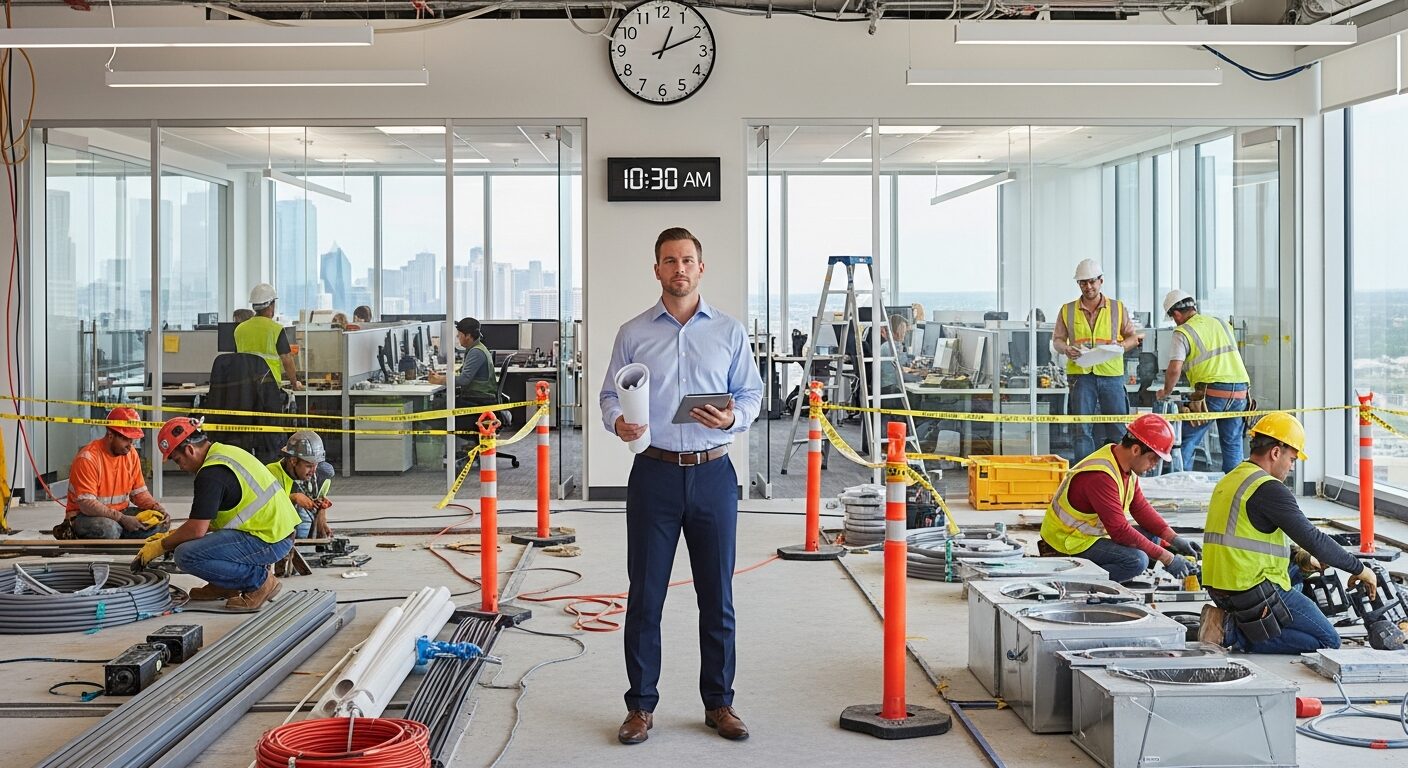
One of Plano’s most common project scenarios is renovation work in properties that remain operational. A hotel guest needs to check in. Multifamily residents expect quiet evenings. Commercial tenants can’t relocate their teams mid-project.
Working in occupied environments creates specific pressures:
- Phasing must be carefully planned to isolate work zones and control noise, dust, and disruption
- Scheduling requires military-grade precision to complete work during off-hours or between tenant cycles
- Communication protocols must keep residents, tenants, and stakeholders informed without causing alarm
- Quality oversight becomes even more critical because poor craftsmanship impacts people’s daily lives and property values
This is why developer teams increasingly seek construction partners with proven experience in occupied-space project delivery. The difference between an average contractor and a strategic construction management firm shows in the details: coordinated subcontractor schedules, pre-planned material delivery, daily site inspections, and transparent reporting.
Strategic Construction Management: From Feasibility to Final Delivery
Successful construction management in Plano’s competitive market follows a structured approach that begins long before the first trade arrives on site.
Phase 1: Assessment and Feasibility
Before breaking ground, developers need clarity on what’s actually possible. Third-party property condition assessments and capital needs evaluations identify infrastructure challenges, code compliance issues, and hidden costs. Experienced construction management firms conduct thorough feasibility studies that reveal realistic budgets and timelines, preventing costly surprises later.
Phase 2: Planning and Coordination
With feasibility established, construction management moves into design-build coordination and bid review. This phase involves assembling the right subcontractor team, reviewing bids for value and competency, and creating detailed project schedules that account for phasing constraints. Transparent communication with stakeholders—including tenants, HOAs, and facility managers—happens during planning, not after mistakes occur.
Phase 3: Execution with Oversight
Execution is where discipline matters most. Daily site inspections, quality audits, and subcontractor coordination keep projects on track. Experienced teams anticipate conflicts between trades, manage material delivery, and adapt quickly when unforeseen conditions emerge. Real-time communication with developers ensures no surprises bubble up at project conclusion.
Phase 4: Delivery and Closeout
Final delivery isn’t just handing off a certificate of occupancy. It includes punch-list resolution, contractor payment audits, warranty documentation, and a smooth handoff to property management. Developers deserve a complete, documented project file and confidence that work was completed to specification.
Why Budget Transparency Matters to Developers
In Plano’s commercial real estate market, budget overruns erode profit margins and damage investor confidence. Developers increasingly demand construction management partners who commit to transparent budgeting from the start.
Transparent budgeting includes:
- Clear line-item breakdowns for every scope element
- Regular cost reports tracking actual spend versus estimate
- Early notification of change orders or cost pressures, with documented justification
- Contractor bid audits ensuring competitive pricing and elimination of waste
Real estate developers making capital investment decisions rely on accurate budget information. When construction management firms deliver consistent, transparent reporting, developers can confidently commit resources and hit their financial targets.
Multifamily Capital Improvements: Maximizing Occupancy Through Strategic Renovation
Multifamily owners across Plano and the DFW region face relentless pressure to maintain competitive occupancy rates. Aging interiors, outdated MEP systems, and worn common areas drive vacancies and reduce property value. The solution is strategic capital improvement programs that deliver maximum impact per renovation dollar spent.
Experienced construction management teams understand the multifamily owner’s perspective: fast room turns, quality finishes, and minimal operational disruption. They schedule unit renovations around tenant move-out and move-in cycles, coordinate fixture and appliance delivery to avoid delays, and maintain common areas throughout the project so the property remains appealing to prospective residents.
Typical multifamily upgrade projects include:
- Unit interior refreshes with updated flooring, paint, fixtures, and appliances
- Kitchen and bathroom modernizations to increase market-rate potential
- HVAC, plumbing, and electrical upgrades to improve efficiency and reliability
- Common area renovations including lobbies, fitness centers, and amenity spaces
The construction management firm that coordinates these projects efficiently maximizes the owner’s return by reducing downtime, minimizing lost rent, and delivering quality work on schedule.
Commercial Tenant Improvements: Coordinating Complex Finishes in Active Buildings
Plano’s office and retail markets remain dynamic, with tenants constantly upgrading spaces to reflect brand identity and functional needs. Corporate relocations, hybrid work reconfigurations, and tenant finishes drive continuous construction activity in commercial buildings.
Common commercial improvement challenges:
- Working around existing tenants whose businesses must continue uninterrupted
- Coordinating MEP work with building systems to avoid utility disruptions
- Managing strict architectural and code compliance requirements
- Delivering interior build-outs to aggressive timelines so new tenants can occupy quickly
Construction management firms with commercial expertise navigate these constraints by pre-planning utility work, coordinating with building engineers, scheduling intensive work during after-hours, and maintaining transparent communication with both landlords and tenants. The goal is tenant satisfaction, lease renewals, and a building that remains fully operational and profitable throughout the project.
Design-Build Services: Streamlining the Project Delivery Path
Traditional design-bid-build approaches separate design and construction, often creating communication delays and cost surprises. Design-build services integrate these phases, allowing architectural vision and construction practicality to inform each other from the beginning.
For developers in Plano, design-build offers clear advantages:
- Single point of accountability: One team responsible for both design and execution eliminates finger-pointing when issues arise
- Cost control: Builders weigh in during design to optimize material selection, labor efficiency, and scheduling
- Faster delivery: Overlapping design and construction phases compress overall project timelines
- Value engineering: Design-build teams identify cost-saving opportunities without compromising quality or aesthetics
Real estate developers appreciate design-build because it simplifies contract management, reduces project administration overhead, and delivers predictable outcomes.
Third-Party Inspections and Property Assessments: Protecting Developer Investments
Before committing capital to acquisition, renovation, or capital improvement projects, developers need independent verification of property condition. Third-party inspections and property condition assessments (PCAs) provide unbiased documentation of existing conditions, code deficiencies, and infrastructure needs.
These assessments inform critical developer decisions:
- Acquisition pricing: Knowing exact renovation requirements before closing on a property
- Capital budgeting: Identifying all major systems requiring replacement or upgrade to maintain competitiveness
- Risk management: Documenting existing conditions to avoid disputes with sellers or tenants
- Financing: Providing lenders with detailed property condition data for underwriting
Experienced assessment teams understand what lenders and investors need to see. They deliver thorough, professionally photographed reports with clear recommendations and budget ranges for remediation.
Building Trust Through Veteran-Driven Construction Excellence
In Plano’s competitive construction market, reputation matters. Real estate developers need partners they can trust to deliver consistently, communicate transparently, and maintain integrity under pressure. Veteran-owned and operated construction firms bring unique advantages to this relationship.
Military backgrounds emphasize discipline, attention to detail, and mission-focused execution. Teams of veterans working together bring established trust and communication patterns refined through high-stakes environments. The result is construction management that operates with clarity, accountability, and unwavering commitment to client success.
Developers working with veteran-led construction teams often report higher confidence in project outcomes, fewer surprises, and relationships that extend beyond single projects into long-term partnerships.
Long-Term Value Over Short-Term Savings
Real estate developers sometimes face pressure to select the lowest-cost contractor option. However, the true measure of construction management value includes quality, timeline adherence, communication, and long-term asset performance—not just initial bid price.
The difference between discount contracting and strategic construction management shows up in:
- Project velocity: Professional coordination delivers faster completion, reducing carrying costs and accelerated revenue generation
- Quality outcomes: First-rate craftsmanship means fewer post-occupancy repairs and warranty claims
- Tenant satisfaction: Well-executed projects create positive occupancy experiences that extend lease renewals
- Asset value: Properties completed with precision and transparency command premium valuations and attract quality tenants
Developers who invest in experienced construction management partners typically recover their partnership costs through faster project delivery, reduced change orders, and enhanced final asset quality.
Growing Your Development Pipeline with Reliable Construction Partners
Plano’s real estate market continues expanding, and successful developers are those with reliable construction management partnerships in place. Rather than managing project-to-project relationships with different contractors, experienced developers build long-term partnerships with teams that understand their standards, preferences, and business objectives.
These partnerships compound value over multiple projects. Construction management teams familiar with a developer’s process deliver faster estimates, smoother execution, and fewer coordination gaps. They understand the developer’s risk tolerance, budget discipline, and quality expectations without requiring extensive onboarding.
For real estate developers seeking to accelerate project delivery, maximize capital efficiency, and build a reputation for excellence in Plano and the broader Dallas-Fort Worth region, finding the right construction management partner is one of the highest-leverage decisions available. The firms that master occupied-environment construction, deliver transparent budgets, and operate with military-grade discipline become the partners that developers return to repeatedly—and recommend to peers.
0 Comments