
I need to retrieve the information from the previous workflow steps to write the blog post. Let me gather all the necessary details.
Strategic Construction Management for Austin’s Hospitality and Mixed-Use Renovation Pipeline
Austin’s hospitality and mixed-use sectors are experiencing unprecedented growth, but aging property stock demands high-impact renovations to remain competitive. Property owners and developers across Central Texas face a critical challenge: how to execute capital improvements, tenant build-outs, and unit refreshes without disrupting ongoing operations or exceeding budgets.
The Austin market is booming. Austin Business Journal reports robust construction pipelines driven by population growth and corporate relocations, with mixed-use and hospitality projects leading activity throughout the metro. CedarView’s 118-acre development in Cedar Park and Northline’s downtown-style district in Leander demonstrate the scale and complexity of projects underway. Yet for owners managing existing assets—hotels, multifamily complexes, senior living facilities, and commercial spaces—the real pressure is maintaining operations while upgrading property conditions.
This is where strategic construction management becomes essential. Experienced construction partners who understand both the technical demands and the operational constraints of occupied environments can be the difference between a project that drains resources and one that creates lasting value.
Why Renovation Quality Matters in Today’s Austin Market
The Austin metro continues to attract residents and businesses, but competition for occupancy is intensifying. Hotels, multifamily buildings, and mixed-use properties that fail to refresh their spaces lose tenants and revenue to newer competitors. A comprehensive capital needs assessment combined with disciplined construction execution directly impacts asset value and occupancy rates.
Aging properties require strategic planning, not just repairs. Energy-efficiency upgrades, modern finishes, and infrastructure improvements must be prioritized based on financial impact and operational urgency. This is where many property owners struggle—deciding which improvements deliver the best return and how to sequence work to minimize downtime.
The Veteran-Owned Advantage in Complex Construction
Construction done right requires more than technical skills—it demands leadership, discipline, and transparent communication. A 100% veteran-owned construction firm brings military-grade project discipline, proven team coordination, and mission-focused execution to every job.
Veterans understand accountability. When military leaders transition to construction, they bring:
- Clear command structure and decision-making processes that accelerate problem-solving
- Detailed planning and contingency management to prevent costly delays
- Team coordination across trades and subcontractors, eliminating communication breakdowns
- Safety-first culture that protects your property and workforce
- Transparent reporting so you always know project status and budget impact
Fort Worth-based Alder Group Solutions exemplifies this approach—over 70 years of combined construction expertise managed by veterans who served together, applying the same trust and discipline that defined their military careers to construction partnerships.
Four-Step Process for Successful Property Renovation
Effective construction management follows a proven sequence: assessment, planning, execution, and delivery. Each phase directly supports the next, eliminating rework and scope creep.
1. Assessment and Property Condition Analysis
Before renovation begins, property conditions must be thoroughly documented. A certified property condition assessment (PCA) or capital needs assessment (CNA) provides the factual foundation for renovation decisions.
This isn’t a cursory inspection—it’s a detailed analysis that identifies:
- Structural deficiencies and safety concerns
- Systems performance (HVAC, plumbing, electrical, roofing)
- Energy-efficiency opportunities and cost-saving upgrades
- Code compliance gaps requiring remediation
- Deferred maintenance that impacts long-term asset value
For hospitality and multifamily owners, this assessment becomes the blueprint for phased improvements that don’t overwhelm the budget or force building closures.
2. Planning and Design-Build Coordination
Once assessment is complete, planning begins. This phase includes:
- Contractor bid reviews and payment audits to ensure competitive pricing and quality standards
- Design-build coordination that integrates architectural plans with construction feasibility and cost controls
- Phasing strategy that prioritizes high-impact improvements and sequences work around occupancy
- Budget transparency with contingency planning for unknown conditions discovered during construction
A skilled construction manager serves as the owner’s advocate during this phase, reviewing contractor proposals, identifying cost-reduction opportunities, and ensuring the final plan balances quality with financial reality.
3. Execution in Occupied Environments
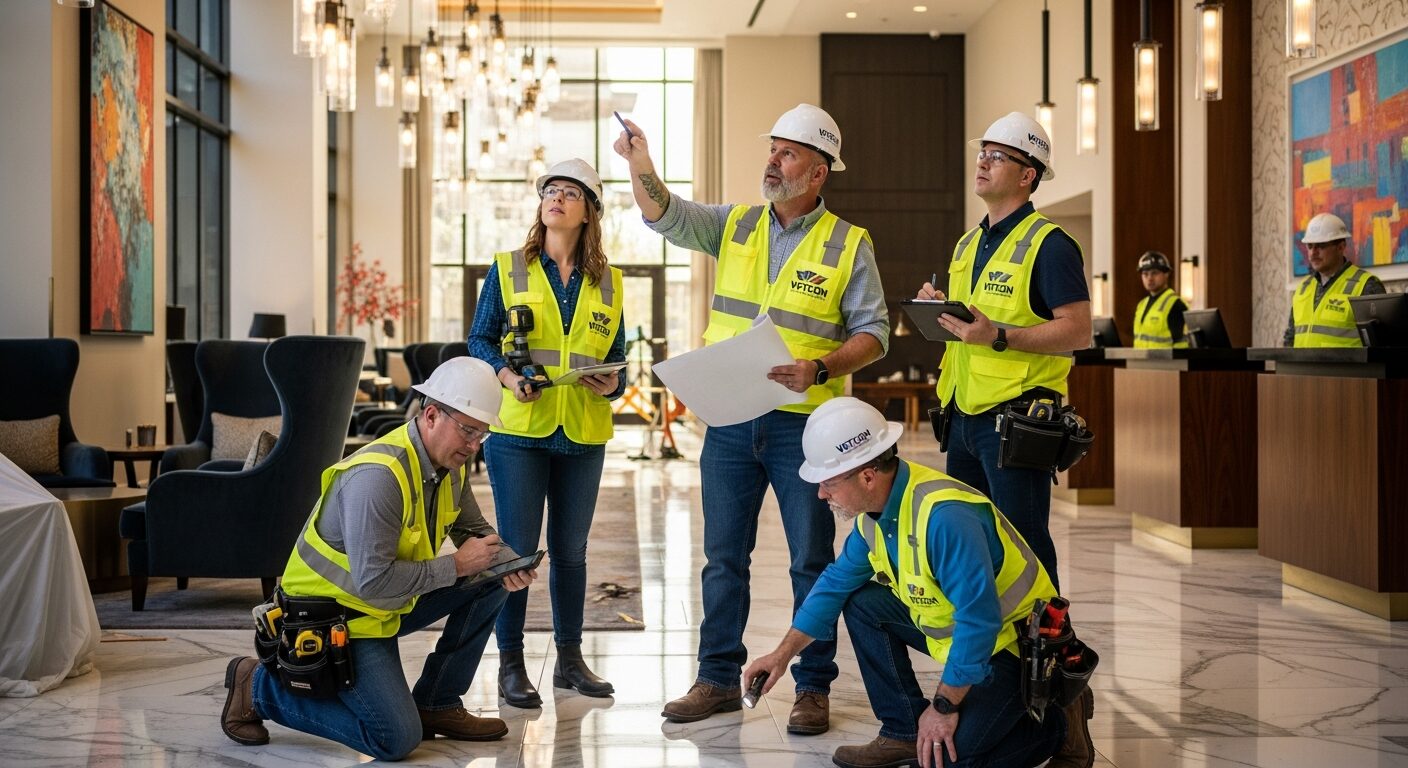
Austin’s hospitality and commercial properties rarely shut down for renovation. Construction must proceed while tenants operate, guests stay on-site, and staff maintain daily operations. This demands specialized expertise.
Room turns provide a perfect example. Hotels need to refresh guest rooms rapidly—sometimes in 24-48 hours—to maximize occupancy. Multifamily complexes must complete unit refreshes efficiently as tenants move out. Commercial tenants expect build-outs to finish on schedule with minimal disruption.
Execution success depends on:
- Advanced scheduling and trade coordination to work within tenant availability windows
- Dust and noise containment to protect other guests and operations
- Quality control at every stage to prevent rework and delays
- Clear communication with property management, tenants, and contractors
- Safety protocols that exceed standard construction requirements in occupied settings
4. Delivery and Lasting Quality
The final phase ensures completed work meets specifications, passes inspections, and delivers lasting value. Third-party inspections and punch-list management verify quality before handoff.
For hospitality and multifamily properties, this means:
- Systems verification confirming HVAC, electrical, plumbing and other upgrades function properly
- Aesthetic quality ensuring finishes match design intent and feel premium to guests and tenants
- Warranty documentation clearly outlining contractor guarantees and maintenance requirements
- Operational handoff with staff training on new systems if applicable
Specific Renovation Solutions for Austin’s Key Sectors
Senior Living Facilities
Senior living properties require specialized construction expertise. Renovations must accommodate accessibility standards, infection control protocols (especially post-COVID), and the specialized needs of aging residents.
High-impact improvements include:
- Bathroom upgrades with grab bars, accessible fixtures, and non-slip surfaces
- Flooring replacements reducing fall risk while improving aesthetics
- Lighting and wayfinding improvements supporting independent mobility
- Common area refreshes creating welcoming social spaces
- HVAC and air quality upgrades for health and comfort
A construction team experienced in senior living understands regulatory requirements, works efficiently during operational hours, and maintains infection control during renovation.
Hospitality Properties
Hotels competing in Austin’s booming market must refresh interiors, upgrade systems, and modernize amenities. Energy-efficient HVAC, LED lighting, and updated water systems reduce operating costs while improving guest experience.
Strategic renovations include:
- Guest room refreshes with modern finishes, updated technology (smart locks, streaming systems), and energy-efficient fixtures
- Common area upgrades including lobbies, restaurants, fitness centers, and meeting spaces
- Roofing and exterior improvements protecting long-term structural integrity
- Kitchen and laundry equipment upgrades reducing utility costs and labor demands
- Energy efficiency programs that lower operational costs and attract eco-conscious guests
Room-turn speed is competitive advantage—a construction team that completes refreshes on schedule enables higher occupancy rates and revenue per available room (RevPAR).
Multifamily Communities
Multifamily renovations directly impact occupancy, rent growth, and asset value. Aging complexes compete for residents by offering upgraded interiors and modern amenities.
Priority improvements include:
- Unit interiors: Modern kitchens, luxury flooring, updated bathrooms, smart home features
- Amenities: Fitness centers, co-working spaces, outdoor areas, package handling facilities
- Infrastructure: Energy-efficient HVAC, water conservation systems, electrical upgrades for EV charging
- Common area finishes: Lobbies, hallways, laundry facilities, social spaces
Phased unit refresh programs minimize occupancy impact while steadily modernizing the property. A construction team coordinating with leasing operations can execute turns between tenant departures and new arrivals, generating continuous improvement without wholesale building closure.
Commercial Tenant Finishes
Office, retail, and restaurant tenants need rapid build-outs and customized finishes. Commercial space availability means delays are costly—tenants expect construction to finish on schedule so they can open doors.
Specialized services include:
- Turnkey tenant build-outs integrating all trades in coordinated sequencing
- Design-build services translating tenant vision into functional, budget-compliant spaces
- Fast-track construction using parallel scheduling to compress timelines
- Occupied building coordination protecting existing tenants while constructing new spaces
Why Third-Party Inspections Protect Your Investment
Investor confidence depends on independent verification of construction quality and contractor performance. A third-party inspection provides unbiased assessment of workmanship, material quality, and specification compliance.
Third-party inspections serve three critical functions:
- Quality assurance — Verify completed work meets design specifications and building codes
- Payment protection — Confirm contractors earned their payments before disbursement
- Dispute prevention — Create documented evidence of quality, preventing contractor disputes after project completion
For property owners managing multiple properties or investors deploying capital across the DFW-Austin corridor, third-party assessments become essential risk management tools. They’re particularly valuable for renovation projects where contractor accountability directly affects your asset value.
Construction Management in the DFW-Austin Corridor
The I-35 corridor connecting Dallas-Fort Worth to Austin is experiencing explosive growth. Mixed-use projects, healthcare campuses, multifamily developments, and hospitality properties are under construction or in planning stages throughout the region.
Property owners and developers in Austin, Cedar Park, Leander, and surrounding areas need construction partners who:
- Understand local regulations and inspector expectations in each jurisdiction
- Coordinate across the extended region without losing project focus
- Maintain quality standards regardless of location
- Communicate transparently across distance, keeping all stakeholders informed
- Execute efficiently reducing timeline and cost pressures
A veteran-owned firm based in Fort Worth and operating throughout the Texas region brings regional expertise without sacrificing local accountability.
Transparent Budgeting and Cost Control
Property owners and investors fear cost overruns and timeline delays. Transparent construction management prevents surprises through disciplined planning and real-time reporting.
Best practices for budget control:
- Detailed value engineering identifying cost-reduction opportunities without sacrificing quality
- Competitive bid reviews ensuring contractor pricing is market-rate
- Contingency planning allocating realistic reserves for unknown conditions
- Change order management documenting scope changes before they impact budget
- Monthly reporting providing stakeholders visibility into spending, progress, and timeline status
- Contractor audits verifying payment justification and work completion quality
When construction partners provide transparent communication, owners regain control of their projects and their capital.
Getting Started: Free, No-Obligation Consultation
Strategic construction management begins with honest assessment. Whether you’re planning a single property renovation or managing a portfolio across the Austin-DFW region, the first step is clear: understand your property’s conditions, prioritize improvements, and develop a realistic execution plan.
A professional construction assessment includes:
- On-site property evaluation identifying conditions and opportunities
- Capital needs analysis prioritizing improvements by impact and cost
- Phasing recommendations sequencing work for operational efficiency
- Budget estimation providing realistic cost projections
- Timeline planning establishing realistic schedules
Free, no-obligation quotes ensure you can evaluate options without commitment. Response to inquiries typically comes within 24 business hours, allowing you to move forward with confidence.
The best construction partners don’t lock you into their vision—they listen to yours, provide honest expertise, and execute with discipline. In Austin’s competitive hospitality and multifamily markets, construction quality and execution speed directly impact occupancy, revenue, and long-term asset value.
Strategic construction management transforms aging properties into competitive, profitable assets. With the right veteran-led team managing your renovation pipeline, you’ll execute faster, stay on budget, and deliver lasting quality that benefits your bottom line for years to come.
0 Comments