
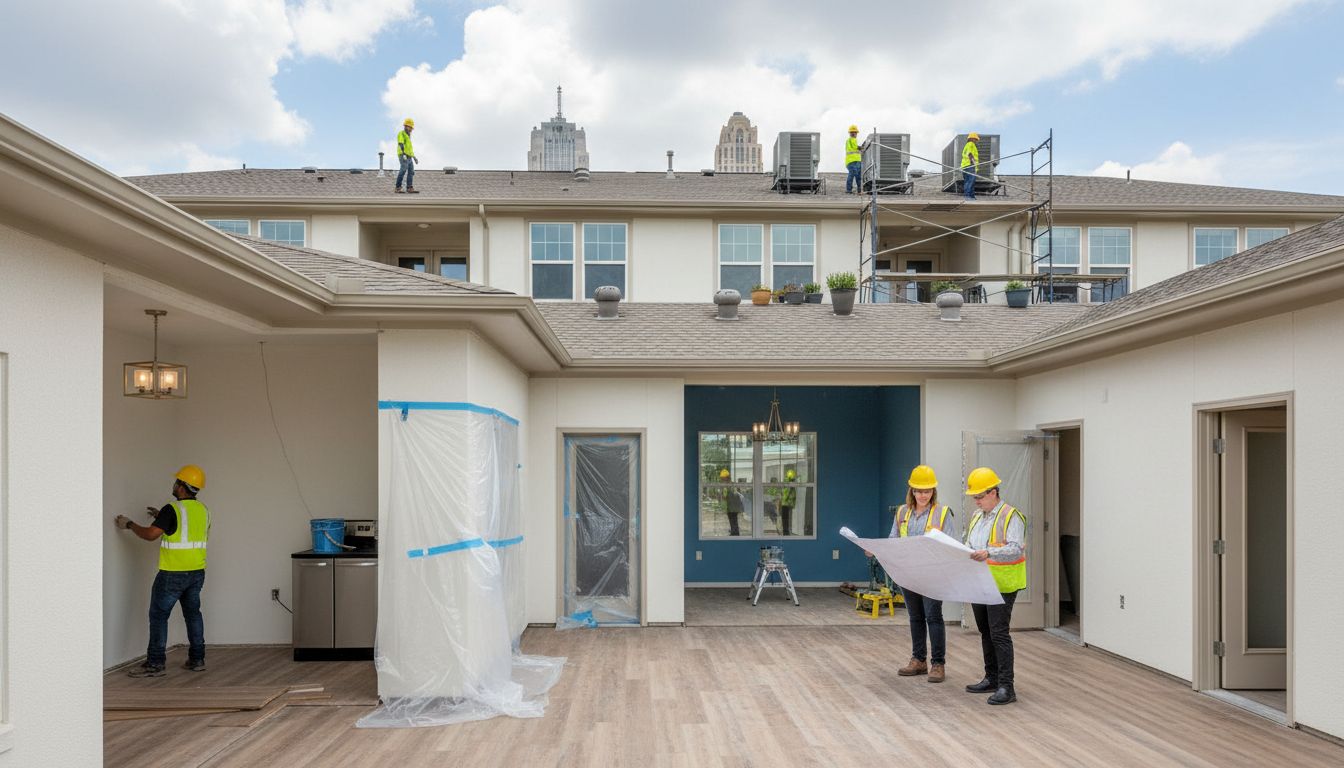
Strategic Construction Services for Capital Improvements in Waco
Waco is experiencing unprecedented growth in property development and renovation. From downtown redevelopment initiatives to student housing expansions near Baylor University, the region is seeing major investment in multifamily communities, hospitality properties, and mixed-use spaces. If you’re a property manager, investor, or facility owner in Waco seeking to maximize your asset’s value while minimizing downtime, understanding your capital improvement options is critical.
Capital improvements aren’t just about aesthetics—they’re about increasing property value, extending asset life, and keeping your operations running smoothly. Whether you’re managing a multifamily community, senior living facility, or commercial property, the right construction partner makes all the difference between a successful upgrade and a costly headache.
What Are Capital Improvements and Why Do They Matter?
Capital improvements are upgrades or replacements to building systems and components that extend the property’s useful life, increase its market value, or improve its function. They’re different from routine maintenance because they’re depreciable assets that provide long-term value.
For property managers and investors in Waco, capital improvements typically include:
- Roofing replacements and repairs to protect structural integrity
- HVAC system upgrades to improve efficiency and tenant comfort
- Plumbing and water system improvements to reduce waste and enhance reliability
- Energy efficiency upgrades including LED lighting, insulation, and solar considerations
- Unit renovations and room turns to maintain occupancy rates and rental income
- Common area enhancements that boost resident or guest experience
- Building envelope work such as window replacement and weatherproofing
These improvements directly impact your bottom line. A recent renovation project at a Waco multifamily community (Bend at New Road) demonstrates how unit refreshes and amenity upgrades keep properties competitive. Similarly, Tailwind Group’s acquisition of a 543-bed student housing community near Baylor University with planned interior and system upgrades shows the market’s continued demand for capital improvement services.
Why Third-Party Assessments Matter Before You Invest
Before committing capital to any project, property condition assessments (PCA) and capital needs assessments (CNA) are essential. These independent evaluations identify what truly needs upgrading, prioritize work by urgency and ROI, and help you avoid overspending on unnecessary work.
A certified third-party assessment provider will:
- Evaluate all major building systems (roofing, HVAC, plumbing, electrical, structural)
- Identify current deficiencies and project when systems will fail
- Estimate remaining useful life for each component
- Recommend maintenance vs. replacement based on cost-benefit analysis
- Prioritize work to align with your budget and operational timeline
- Provide detailed documentation for lenders, insurers, and future buyers
In a market like Waco, where downtown redevelopment projects and multifamily investments are accelerating, accurate assessment data directly informs capital planning. Investors and property managers who rush into upgrades without proper evaluation often overpay or underperform on ROI.
Construction Management in Occupied Environments: The Hidden Challenge
One of the biggest challenges property managers face is renovating while the property remains occupied. Whether it’s a senior living facility, hospitality property, multifamily community, or commercial office building, construction noise, dust, temporary utility disruptions, and limited work windows create complexity that inexperienced contractors struggle to manage.
Successful occupied-environment construction requires:
- Detailed phasing plans that minimize resident or guest impact
- Clear communication schedules so occupants know when work will occur
- Dust control and site containment protocols to protect inhabited spaces
- Flexible work windows (evenings, weekends, or staged unit approaches)
- Rapid space restoration after work to maintain operations
- Project coordination that tracks progress against schedule and budget
Waco’s ongoing construction projects—from downtown redevelopment to public amenity improvements at Alice Martinez Rodriguez Park—show how coordinated construction management keeps communities engaged even during active renovation.
Room Turns and Quick Unit Refreshes: Maximizing Occupancy
For multifamily and hospitality properties, fast, high-quality unit refreshes directly impact revenue. Every day a unit sits vacant is lost rent. Every guest-facing room that looks worn reduces your competitive positioning and pricing power.
A professional room turn typically includes:
- Interior painting and finishes
- Flooring repair or replacement
- Fixture upgrades (faucets, hardware, lighting)
- Appliance updates or cleaning
- Cosmetic restoration of common areas
- Quality inspection before occupancy
In Waco’s competitive multifamily market, properties that maintain fast turnover and updated interiors command better occupancy rates and higher rents. The Bend at New Road community’s focus on ongoing renovations and amenity upgrades exemplifies this strategy.
Bid Review and Contractor Audits: Protecting Your Budget
Not all construction bids are created equal. Without independent bid reviews, you might overpay by 15–30% for the same work, or worse, hire a contractor who cuts corners and leaves you with warranty issues later.
A professional bid review and contractor audit includes:
- Scope comparison across multiple bids to ensure they’re identical
- Pricing analysis to identify outliers and potential red flags
- Contractor verification (licensing, insurance, references, track record)
- Quality standards assessment to ensure specs meet your requirements
- Payment structure review to protect against contractor defaults or liens
- Timeline feasibility checking—can the contractor realistically deliver on schedule?
For property managers overseeing capital improvement budgets in Waco, especially in competitive downtown redevelopment projects, bid review is non-negotiable risk management.
Design-Build Services: Combining Planning and Execution
Design-build differs from traditional construction: one firm manages both design and construction, reducing coordination issues and speeding project delivery.
A design-build team approaches projects by:
- Assessing your property and understanding your goals (tenant retention, revenue growth, system reliability)
- Designing solutions that balance quality, cost, and timeline
- Planning execution with detailed phasing to minimize impact
- Building on schedule and budget with transparent communication throughout
- Delivering turnkey results with inspection and warranty support
For Waco property owners planning major renovations or repositioning projects (especially in hospitality, multifamily, or commercial sectors), design-build streamlines the process and reduces unexpected costs.
The Texas Construction Market in 2025–2026: What You Need to Know
Material and labor costs across Texas remain elevated but are stabilizing in key categories. For property managers planning capital improvements, this means:
- Budget earlier rather than later—locking in pricing protects against future inflation
- Value engineering becomes critical—working with contractors who understand cost control helps you stretch capital dollars
- Phased approaches allow spreading costs over multiple budget cycles
- Energy efficiency upgrades can qualify for rebates or tax incentives, improving ROI
Waco’s position within the broader Texas market means local contractors who track cost trends and regional availability can often provide more accurate budgeting than national firms.
What Makes the Right Construction Partner
When evaluating construction firms for capital improvement work in Waco, look for:
- Proven experience in occupied environments (not just new construction)
- Industry-specific expertise (multifamily, hospitality, senior living, commercial)
- Transparent cost management and regular communication
- Professional certifications and verifiable credentials
- Track record of on-time, on-budget delivery
- Third-party assessment capabilities (PCA, CNA, bid reviews)
- Local knowledge of Waco’s climate, code requirements, and supply chains
- Military discipline and accountability in project management
Firms with veteran ownership and military-trained teams often bring distinctive advantages: structured processes, commitment to precision, and strong communication disciplines that reduce project surprises.
Your Next Steps: Planning a Capital Improvement Strategy
If you’re managing property in Waco and considering capital improvements, start here:
- Schedule a property assessment to identify current conditions and prioritize needs
- Develop a multi-year capital plan aligned with your revenue and operations timeline
- Gather competitive bids on priority projects and request independent bid reviews
- Plan execution with phased approaches that minimize occupant disruption
- Monitor progress with clear communication and transparent cost tracking
- Inspect and document final results to ensure quality and warranty protection
Capital improvements are investments that pay dividends through increased asset value, higher occupancy, improved tenant satisfaction, and operational reliability. With Waco’s robust development activity—from downtown redevelopment to student housing renovations—the market is moving. Properties that invest strategically in upgrades now will command premium positioning and returns.
Working with a construction partner who understands capital improvement delivery, assessment, and management removes the guesswork and protects your investment from start to finish.
0 Comments