
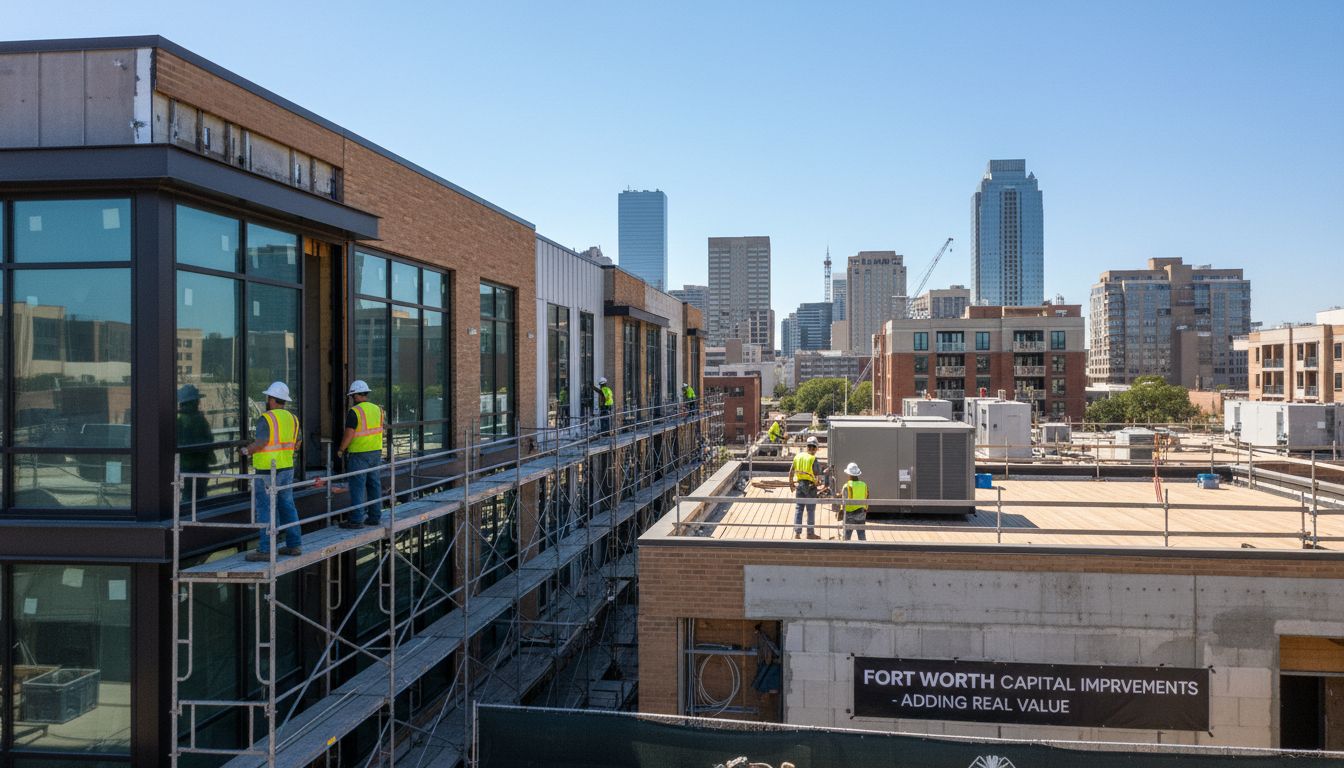
Capital Improvements That Add Real Value: A Fort Worth Property Manager’s Guide
Commercial building owners and investors across Fort Worth face a critical question: Which capital improvements actually move the needle on property value and tenant satisfaction? According to recent market trends, Fort Worth’s Tax Increment Finance districts, mixed-use redevelopment projects, and multifamily renovations are driving significant demand for strategic upgrades—and the contractors who execute them right deliver measurable ROI.
Capital improvements aren’t just maintenance fixes. They’re investments in your property’s future competitiveness, occupancy rates, and long-term asset value. Whether you’re managing a multifamily complex, commercial office space, or mixed-use property in Fort Worth, understanding which upgrades matter most can mean the difference between a property that merely maintains value and one that commands premium rents and attracts quality tenants.
What Exactly Are Capital Improvements—And Why They Matter
Capital improvements are building system upgrades, renovations, or enhancements that extend a property’s useful life, increase its capacity, or improve its functionality. Unlike routine maintenance, capital improvements add lasting value to your asset and are typically depreciated over several years on your balance sheet.
For Fort Worth property owners, this distinction matters. A fresh coat of paint? Maintenance. A complete HVAC system replacement with energy-efficient units? Capital improvement. Replacing worn carpet? Maintenance. Upgrading to premium, commercial-grade flooring with improved durability and aesthetics? Capital improvement.
The key benefit: Capital improvements boost your property’s market value, reduce operating costs, and attract and retain higher-quality tenants. In Fort Worth’s competitive multifamily and commercial markets, properties with modern systems, updated aesthetics, and improved efficiency consistently outperform their outdated peers in occupancy rates and rental income.
The Fort Worth Market Is Rewarding Capital Investment Right Now
Fort Worth’s construction and redevelopment landscape reveals a clear trend: property owners who invest in strategic capital improvements are gaining competitive advantage. The historic Knights of Pythias building redevelopment demonstrates how adaptive reuse and substantial interior renovations can reposition an older asset for modern mixed-income housing demand. Far north Fort Worth’s retail expansion shows developers investing heavily in commercial tenant finishes and build-outs to capture the surrounding residential growth.
These aren’t theoretical trends—they’re happening on Fort Worth properties today. Tax Increment Finance districts across the city are actively funding infrastructure improvements and building rehabilitation projects. This public investment signals where market demand is strongest and where tenant expectations are highest.
For commercial building owners and investors, the message is clear: The properties attracting quality tenants, commanding premium rents, and appreciating in value are the ones with modern systems, thoughtfully designed spaces, and efficient operations. That means capital improvements in roofing, HVAC, plumbing, electrical systems, and energy efficiency aren’t optional—they’re competitive necessities.
The High-Impact Capital Improvements That Move the Needle
Not every upgrade delivers equal value. Strategic property owners prioritize improvements that solve real tenant and operational problems while improving the bottom line.
HVAC and Energy Systems
Outdated climate control systems drive high operating costs and create tenant dissatisfaction. Upgrading to modern, energy-efficient HVAC systems reduces utility expenses by 15–25% annually, depending on the current system’s age. Modern systems also offer improved temperature control and quieter operation, which directly impact tenant satisfaction and lease renewal rates.
Roofing and Weatherproofing
A failing roof isn’t just a maintenance issue—it threatens your entire asset. Replacing an aging roof with modern, high-performance materials extends the building’s lifespan, reduces water damage risk, and can qualify for energy tax credits if you choose cool roof technology. In Fort Worth’s climate, a sound roof is foundational to every other capital improvement.
Plumbing Upgrades
Aging plumbing systems lead to water waste, emergency repairs, and tenant complaints. Replacing outdated pipes, fixtures, and water heaters with modern, efficient alternatives reduces water consumption, lowers utility costs, and eliminates the uncertainty of emergency failures.
Electrical System Modernization
Outdated electrical infrastructure can’t support modern tenant needs and creates safety risks. Upgrading to contemporary electrical capacity, adding EV charging stations, and installing LED lighting throughout the property signals to tenants that the building is modern, efficient, and serious about sustainability.
Common Area Renovations
For multifamily properties, renovated lobbies, hallways, fitness centers, and amenity spaces directly influence tenant perception and lease rates. Recent trends in senior living and multifamily development highlight how thoughtful common area upgrades drive occupancy and rental premiums.
Unit Refreshes and Turnover Renovations
Between tenants, strategic unit upgrades dramatically impact lease rates for the next occupant. Modern kitchens, updated flooring, fresh paint, and efficient climate control transform “standard” units into units that command 10–20% rental premiums in competitive markets.
Smart Capital Planning: The Assessment-First Approach
The mistake many property owners make is deciding on capital improvements without first understanding their property’s true condition and needs. A property condition assessment (PCA) or capital needs assessment (CNA) should precede any major investment decision.
These third-party evaluations identify which systems are near end-of-life, which upgrades offer the best ROI, and how to prioritize work across your portfolio. For commercial building owners managing multiple properties, a certified assessment tells you where capital is best deployed—perhaps the electrical system at Building A is critical, while Building B needs roof replacement first.
Fort Worth property managers benefit especially from this methodical approach. With TIF districts actively funding redevelopment and tenants increasingly demanding modern, efficient spaces, properties with documented condition assessments and clear capital improvement plans attract better financing, accelerate sale processes, and command higher valuations.
The Execution Matters as Much as the Plan
Capital improvements executed poorly create more problems than they solve. Disruption to tenants during occupied renovations, cost overruns, delays, and quality shortfalls erode the value that improvements should deliver.
The best outcomes happen when property owners partner with construction teams experienced in occupied environments, multifamily rehabs, and commercial renovations. These firms understand how to minimize tenant disruption, maintain schedule discipline, and deliver transparent communication throughout the project.
In Fort Worth, where multifamily complexes, senior living facilities, and commercial properties operate continuously, the ability to execute capital improvements without compromising occupancy or operations is a competitive differentiator. Veterans and construction professionals with military discipline bring a project-management rigor that protects your investment and schedule.
Financing Capital Improvements: Options Available to Fort Worth Owners
Property owners often think capital improvement budgets are always constrained, but several financing options exist:
Cash Flow from Operations
If your property generates strong operating income, self-funding capital improvements avoids interest costs and maintains full ownership control. This works best for phased improvement plans spread across multiple years.
Conventional Construction Financing
Banks and commercial lenders offer construction loans specifically for capital improvements on income-producing properties. Interest rates reflect your property’s cash flow and loan-to-value ratio.
Tax Increment Finance (TIF) Districts
Fort Worth’s active TIF districts can help fund infrastructure improvements in eligible corridors. These programs reduce your out-of-pocket costs for roofing, façade, utilities, and building rehabilitation work.
Energy Efficiency Programs and Tax Credits
Federal and state programs offer tax credits and rebates for energy-efficient system upgrades. Investments in LED lighting, HVAC modernization, and cool roofing can reduce your net cost through available incentives.
Investor Capital
For larger properties or portfolios, bringing in investor capital through partnerships or syndication can fund capital improvements while maintaining your operational control.
Creating Your Capital Improvement Timeline
Strategic property owners don’t treat capital improvements as emergencies—they plan them. A multi-year capital reserve and improvement roadmap ensure you’re ready when systems near end-of-life and prioritized correctly based on ROI and operational necessity.
The process looks like this:
- Assess: Commission a professional property condition or capital needs assessment to identify which systems need attention and when.
- Prioritize: Based on the assessment, rank improvements by urgency, ROI, and tenant impact.
- Plan: Map a timeline across 3–5 years that balances occupancy protection, financing, and seasonal considerations.
- Budget: Build a capital reserve fund that covers your planned improvements without constraining operating cash flow.
- Execute: Partner with experienced construction firms that specialize in occupied, phased renovations and deliver transparent project management.
- Monitor: Track ROI through occupancy rates, lease rates, utility consumption, and tenant satisfaction post-completion.
Making the Most of Fort Worth’s Booming Market
Right now is an advantageous moment for Fort Worth property owners. Market demand for modern, efficient, well-maintained properties is strong. Tenants are willing to pay premium rents for quality spaces. Capital improvements deliver faster ROI in competitive markets than they do in soft markets.
The multifamily development boom, commercial expansion, and TIF-funded redevelopment across Fort Worth signal that property values and rent growth will continue. Owners who invest in strategic capital improvements position themselves to capture that value. Owners who delay fall behind—their properties age relative to renovated competitors, occupancy softens, and rents stagnate.
The competitive advantage belongs to property owners and managers who think strategically about capital improvements, execute them with discipline and transparency, and partner with construction professionals who understand both the technical requirements and the business imperatives of occupied property renovation.
Your capital improvements should be more than deferred maintenance—they should be an intentional strategy to enhance value, satisfy tenants, and position your property for long-term success in Fort Worth’s dynamic market.
0 Comments