
Capitalize on McKinney’s $1.3B Long Branch Development
McKinney’s $1.3 billion Long Branch mixed‑use development is reshaping the local market and creating long‑term demand for construction, tenant finishes, and…
I need to retrieve the specific information from the previous workflow steps to generate your blog post. Let me gather the Article Details, Internet Search data, and Article Selector information.
McKinney is experiencing unprecedented growth. The city’s infrastructure investments, combined with major developments like the $1.3 billion Long Branch mixed-use project, have created both opportunities and management challenges for property owners and facilities teams. If you’re responsible for managing multifamily, senior living, hospitality, or commercial properties in McKinney, you’re likely facing a critical question: How do you keep your assets competitive and compliant while managing complex renovations in occupied environments?
The answer lies in strategic construction management—the difference between reactive maintenance and proactive capital planning that protects your investment and increases asset value.
The McKinney Construction Boom: What It Means for Property Managers
McKinney’s construction market is booming. The city recently allocated $327.7 million in capital projects through FY 2026 alone, with a five-year plan totaling $2.2 billion. That investment is trickling down to private property owners in the form of rising occupancy expectations, infrastructure improvements, and demand for modernized facilities.
The Long Branch development alone represents a $1.3 billion vote of confidence in McKinney’s future. When completed, it will add 1,600 apartments, 135,000 square feet of retail, a 100-room hotel, and 318,600 square feet of office space to the market. That expansion means more competition for tenant attention and higher expectations from residents, guests, and employees.
For property managers, this growth creates urgency: properties that don’t keep pace with market improvements lose tenants, command lower rents, and deteriorate faster.
Understanding Property Condition Assessments (PCA) and Capital Needs Assessments (CNA)
Before you can plan effective capital improvements, you need accurate data about your property’s actual condition. This is where third-party assessments become critical.
A Property Condition Assessment (PCA) is an independent evaluation of your building’s physical systems, structural integrity, and major components. Unlike in-house evaluations, a PCA provides an objective, certified report that investors, lenders, and stakeholders trust. It identifies deferred maintenance, assesses remaining useful life, and quantifies needed repairs and upgrades.
A Capital Needs Assessment (CNA) goes deeper, projecting capital requirements over a 20-30 year horizon and prioritizing them by urgency and impact. A CNA transforms scattered maintenance issues into a strategic roadmap.
Why do these assessments matter? Because guessing about your property’s needs leads to budget surprises, emergency repairs, and operational disruptions. A PCA or CNA costs a fraction of emergency repairs and positions your property for refinancing, sale, or successful long-term operations.
In McKinney’s competitive market, independent assessments also signal to investors and lenders that you’re managing your asset professionally and transparently.
High-Impact Renovations in Occupied Environments
One of the biggest challenges property managers face is conducting renovations without disrupting daily operations. A hospitality property can’t shut down entirely for a month of construction. A multifamily complex can’t relocate 200 families while the lobby and common areas are rebuilt.
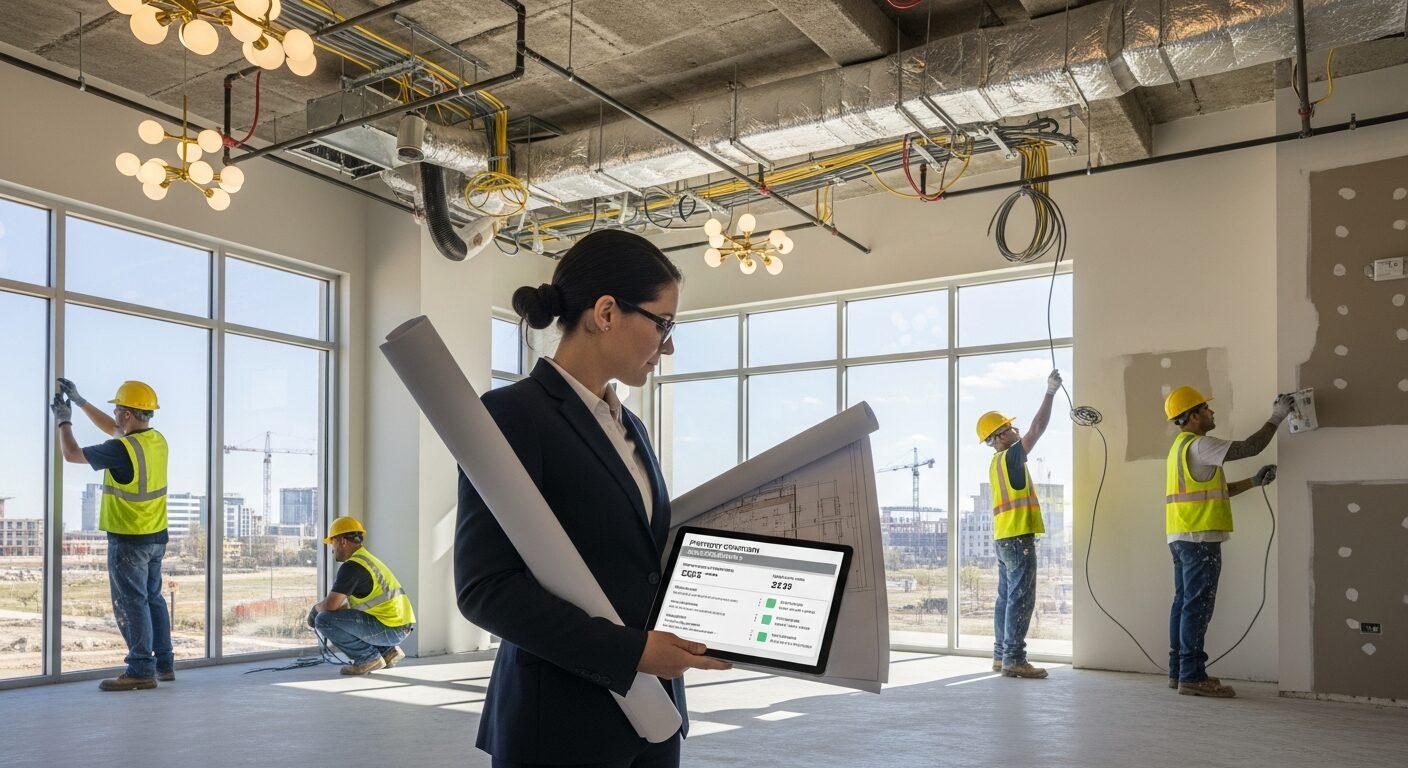
This is where construction management expertise becomes invaluable. The best construction partners understand how to execute high-impact renovations—HVAC upgrades, roofing replacements, plumbing overhauls, electrical system improvements, common area refreshes—while keeping your property operational.
The approach typically involves phased planning: breaking large projects into manageable segments, coordinating with tenants or guests, isolating work zones, and maintaining clear communication. A veteran-owned, 70+ years of combined experience construction firm can navigate these complexities with military discipline and proven systems.
When you pair an experienced construction partner with a solid PCA or CNA, you’re able to:
- Prioritize work by ROI and tenant satisfaction impact
- Schedule projects during low-occupancy seasons when possible
- Coordinate multiple trades and specialists efficiently
- Minimize operational disruption and tenant complaints
- Deliver quality results on time and within budget
Room Turns and Unit Refresh Services: Maximizing Occupancy
In hospitality and multifamily properties, room turns and unit refreshes directly impact occupancy rates and rental revenue. A hotel that gets a room back into service quickly captures revenue it would otherwise lose. A multifamily complex that refreshes units faster between tenants reduces vacancy loss.
The difference between a standard room refresh and a high-impact unit refresh is strategic design thinking. Instead of replacing worn-out fixtures with similar items, you’re evaluating what tenants or guests actually want—updated finishes, modern lighting, fresh paint in current colors, upgraded appliances if budget allows, and small touches that justify premium pricing.
Alder Designs in Fort Worth specializes in fast, professional room turns and unit refresh services. Their veteran-led teams understand the economics of multifamily and hospitality operations: they know that every day a room sits empty is revenue lost, and they execute refreshes with precision and speed.
The four-step process they use is typical of professional construction management:
- Assessment: Understand the space, condition, and goals
- Planning: Create a timeline that minimizes operational impact
- Execution: Deliver quality work on schedule with clear communication
- Verification: Inspect and verify that work meets standards before handoff
Capital Improvements That Drive Asset Value
McKinney’s $327.7 million capital program and the Long Branch development raise the bar for what modern properties need. Energy-efficient HVAC systems, modern roofing solutions, updated plumbing infrastructure, and strategic common-area improvements aren’t luxuries anymore—they’re competitive necessities.
Strategic capital improvements serve multiple purposes:
- Attract and retain tenants by delivering modern, efficient, comfortable spaces
- Reduce operating costs through energy-efficient upgrades (HVAC, lighting, insulation)
- Extend asset life by addressing deferred maintenance before it becomes emergency repairs
- Increase asset value for refinancing, sale, or investment reporting
- Ensure code compliance with current safety, accessibility, and efficiency standards
The McKinney market is too competitive to ignore these improvements. Properties that modernize their infrastructure command higher rents and maintain higher occupancy. Properties that delay face higher turnover, higher maintenance costs, and lower valuation.
Choosing the Right Construction Partner for Your McKinney Property
Not all construction firms are equipped to handle the complexity of property management construction—occupied environments, multiple stakeholders, strict timelines, and budget constraints.
Look for construction partners who demonstrate:
- Experience in your property type (multifamily, senior living, hospitality, or commercial)
- Proven track record with third-party inspections, PCAs, and complex renovations
- Transparent communication and realistic timelines
- Certified professionals with industry-recognized credentials
- Clear understanding of how construction impacts operations and revenue
- Military discipline (veteran-owned firms often bring this advantage—teamwork, precision, accountability, and integrity matter when your property is occupied)
- Local presence in the McKinney market with understanding of local codes and contractor networks
A veteran-owned construction firm like Alder Designs in Fort Worth brings 70+ years of combined expertise, a proven four-step process, and the military values of integrity, precision, and teamwork to every project—from feasibility studies through final completion.
Planning Your Property’s Construction Strategy for 2025 and Beyond
McKinney’s growth trajectory means the demand for skilled construction management will only increase. The $1.3 billion Long Branch development, the $327.7 million municipal capital program, and the rising expectations from tenants and investors all create pressure to act now rather than later.
Start with an honest assessment of your property’s condition and needs. A professional PCA or CNA will give you the data you need to prioritize and budget accurately. From there, a strategic construction partner can help you phase improvements, manage occupied-environment challenges, and deliver results that increase asset value and tenant satisfaction.
The companies that win in McKinney’s competitive market are the ones that treat capital improvements as strategic investments, not just maintenance headaches. They partner with construction managers who understand the business side of property ownership and the operational realities of keeping tenants happy while renovation is happening.
Your property deserves construction management that reflects both the opportunities and the urgency of McKinney’s growth market.