
I need to retrieve the article details and internet search data from the previous workflow steps to generate the blog post. Let me gather that information now.
The internet search data appears to be empty. Let me search for relevant industry data and trends to support the blog post about renovation and construction management services.
Let me scrape some of the relevant articles to get better information on the subject matter.
Perfect! Now I have all the information I need to write a comprehensive SEO blog post for Alder Designs. Let me create an article focused on hospitality and hotel renovations that targets the Fort Worth, Texas area and addresses the target audience of hospitality and hotel owners.
Hotel Renovations in Fort Worth: Modernize Your Property and Maximize Guest Satisfaction
The hospitality industry is experiencing unprecedented demand for property upgrades. Between 300,000 and 400,000 hotel rooms across the United States are scheduled for renovation and conversion in 2025 alone, with momentum continuing into 2026. If you’re a hotel or hospitality property owner looking to stay competitive, now is the time to invest in professional hotel renovations that enhance guest experience and drive revenue.
At Alder Designs in Fort Worth, Texas, we specialize in strategic construction services that transform hospitality properties into spaces guests love. As a veteran-owned company with over 70 years of combined construction expertise, we understand the unique challenges of renovating occupied hotel environments while maintaining operational continuity.
Why Hotel Renovations Matter in Today’s Market
Guest expectations have shifted dramatically. Modern travelers prioritize updated amenities, seamless technology integration, and unique local experiences when choosing where to stay. Your property’s condition directly impacts your competitiveness, occupancy rates, and revenue.
Major brand-name hotels refresh their spaces every five to seven years to remain relevant in the market. During those cycles and in between, smart operators add meeting spaces, new dining options, pool amenities, and cutting-edge technologies. These aren’t luxury upgrades—they’re strategic investments that keep properties thriving.
The renovation trend extends across all property types. Senior living facilities, multi-family housing complexes, and commercial spaces are all investing in capital improvements. Whether you operate a boutique hotel, a large resort, or a mid-scale property in the Fort Worth or Celina areas, renovations directly impact your bottom line.
Key Hotel Renovation Trends Your Guests Expect
Technology Integration
Seventy-five percent of millennial and Gen Z hotel guests prefer properties offering self-service technology. This isn’t optional anymore—it’s essential. Modern guests expect:
- Mobile check-in and keyless entry systems
- Smart room controls (lighting, climate, entertainment)
- Automated temperature and lighting management
- Apps for restaurant reservations and concierge services
- Voice-activated technology
These upgrades do more than impress guests; they reduce operational costs through energy efficiency and streamlined processes. When you invest in modern hotel renovations, you’re improving both the guest experience and your property’s profitability.
Wellness and Fitness Amenities
The wellness tourism market is projected to reach $1.1 trillion by 2025, growing over 10% annually since 2019. Guests increasingly seek hotels with:
- Advanced fitness centers
- Spa and relaxation spaces
- Yoga and meditation rooms
- Healthy dining options
- Wellness-focused room designs with improved air quality
Hotels that integrate wellness amenities see higher guest satisfaction and increased revenue per available room (RevPAR). Alder Designs understands how to incorporate these features into both new renovations and existing hotel spaces.
Sustainable and Eco-Friendly Upgrades
Seventy-five percent of global travelers are interested in sustainable travel options. Properties with LEED, WELL, or Green Globe certifications attract environmentally conscious guests willing to pay premium rates. Consider adding:
- Energy-efficient LED lighting and HVAC systems
- Water-saving fixtures and systems
- Renewable energy options (solar panels, geothermal)
- Sustainable building materials
- Waste reduction and recycling programs
Sustainability isn’t just good for the planet—it’s good for your brand reputation and bottom line. Guests remember properties that align with their values.
Flexible and Adaptable Spaces
Pandemic-related lessons taught the hospitality industry that flexibility matters. Modern hotel renovations should include:
- Modular furniture and movable walls in meeting spaces
- Multi-use rooms that adapt to different guest needs
- Flexible layouts for both work and leisure
- Dynamic spaces that accommodate various group sizes
These design elements ensure your property can adapt as travel trends evolve.
Biophilic Design and Local Authenticity
Travelers increasingly seek immersive, authentic experiences. Incorporate:
- Natural elements (living green walls, indoor gardens, water features)
- Large windows with views of the surrounding landscape
- Local materials, artwork, and design elements
- Partnerships with local artisans and restaurants
- Culturally authentic furnishings and décor
A property that reflects the unique character of Fort Worth or your local area stands out in an increasingly commoditized market.
Property Condition Assessments: Know Before You Invest
Before launching a renovation project, a professional property condition assessment (PCA) provides the roadmap for success. A thorough PCA identifies:
- Current structural and mechanical condition
- Capital improvement priorities
- Long-term maintenance needs
- Budget requirements and timeline
- Compliance and code issues
Alder Designs conducts comprehensive property condition assessments for hospitality owners throughout Texas. We evaluate HVAC systems, roofing, plumbing, electrical systems, building envelope integrity, and more. This assessment-first approach prevents costly surprises and ensures your renovation budget is allocated strategically.
Strategic Capital Improvements That Drive ROI
Not all hotel renovations are created equal. Strategic capital improvements focus on high-impact upgrades that directly influence guest satisfaction and revenue. These include:
- Room turns and unit refreshes: Fast, professional updates that maximize occupancy and reduce downtime
- Guest room renovations: Updated furnishings, smart technology, enhanced amenities
- Common area upgrades: Lobbies, hallways, meeting spaces that create strong first impressions
- Amenity additions: Fitness centers, pools, dining venues
- System upgrades: Modern HVAC, plumbing, electrical, and security systems
Your capital expenditure (CapEx) budget should align with your property’s age, competitive set, and market position. A veteran-owned construction team like Alder Designs helps you prioritize improvements for maximum impact.
Design-Build Services for Seamless Renovations
The design-build approach combines architecture, engineering, and construction under one trusted partner. Benefits include:
- Single point of accountability from concept to completion
- Better cost control and predictable budgets
- Faster project delivery timelines
- Reduced change orders and disputes
- Consistent communication with one project team
For hospitality properties requiring complex renovations, design-build services streamline the process and reduce risk. Alder Designs’ design-build approach has successfully delivered projects for senior living facilities, commercial spaces, and multi-family housing—applying those same principles to hospitality properties.
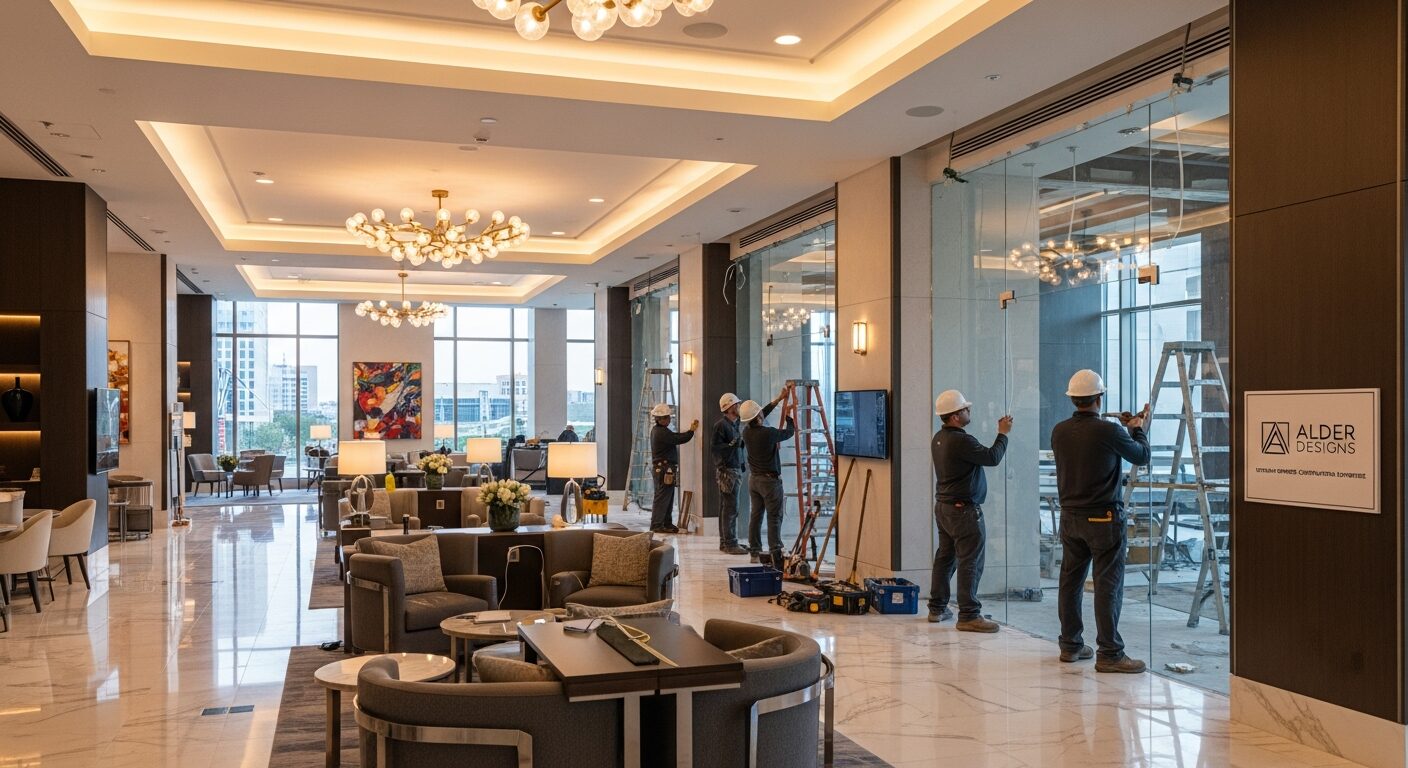
Managing Renovations in Occupied Environments
Renovating a hotel while guests occupy rooms requires military-level precision. Here’s how professional construction management makes it work:
Phase Planning: Divide projects into phases that allow the property to remain operational. Renovate wings one at a time, rotate meeting spaces, schedule work during slow seasons when possible.
Noise and Disruption Control: Coordinate work hours, contain dust, manage contractor traffic, and protect guest comfort. Your guests’ experience must remain priority number one.
Clear Communication: Establish daily briefings with your operations team. Align construction schedules with housekeeping, front desk, and maintenance staff. Transparent communication prevents conflicts.
Quality Control: On-site inspections ensure work meets specifications and timelines. Budget transparency keeps owners informed of costs and progress.
Safety Protocols: Protect guests and staff with controlled work zones, proper signage, and adherence to building codes and OSHA requirements.
Alder Designs specializes in construction in occupied environments. Our military veteran leadership brings discipline, teamwork, and operational mindset to every project. We understand how to balance construction excellence with hospitality operations.
From Assessment to Completion: The Alder Designs Four-Step Process
Every successful hotel renovation follows a proven methodology:
1. Assessment: Conduct property condition assessments and evaluate renovation needs. Identify priorities, scope, and budget requirements.
2. Planning: Develop detailed renovation plans, timelines, and budgets. Coordinate with your operations team. Finalize design specifications and material selections.
3. Execution: Manage construction with precision, quality control, and clear communication. Minimize disruption to guest operations. Address issues proactively.
4. Delivery: Complete projects on time and within budget. Conduct final inspections. Transition spaces back to operations smoothly.
This four-step approach has guided Alder Designs through hundreds of successful projects across residential, commercial, and hospitality sectors.
Construction Services for Every Hospitality Need
Whether you need a complete renovation or targeted capital improvements, Alder Designs delivers:
- Full-property renovations that modernize aging facilities
- Room turn services for rapid unit refreshes
- Capital improvement projects (roofing, HVAC, plumbing, electrical, energy upgrades)
- Technology infrastructure for smart room systems and guest connectivity
- Bid reviews and contractor audits for independent verification of quality and costs
- Project management services for owner-directed projects
- Emergency repairs and maintenance for unexpected issues
Working With a Veteran-Owned Construction Partner
Alder Designs is a 100% veteran-owned and operated company. Our leadership team consists of veterans who served together, bringing a foundation of trust, discipline, and teamwork to construction operations.
Why does veteran ownership matter? Veterans understand:
- Mission-focused execution
- Clear communication and accountability
- Working under pressure with precision
- Team discipline and integrity
- Delivering results, no excuses
These values translate directly to better construction outcomes, reliable timelines, and quality craftsmanship. When you hire Alder Designs, you’re partnering with professionals who bring military-grade discipline to your hotel renovation project.
Ready to Modernize Your Fort Worth Hospitality Property?
The competition for guest loyalty intensifies every year. Properties that invest in thoughtful, strategic renovations attract more guests, command higher rates, and build stronger brand loyalty.
If you operate a hotel, resort, or hospitality property in Fort Worth, Celina, or the surrounding Texas area, Alder Designs is ready to help. Contact us for a free, no-obligation consultation and property assessment. We’ll evaluate your space, discuss your goals, and outline a renovation strategy tailored to your property and market position.
Whether you need comprehensive renovations or targeted capital improvements, we deliver construction done right the first time—with integrity, precision, and purpose.
Let’s build spaces your guests will love coming home to.
0 Comments