
Frisco Construction Boom: Strategic Capital Planning for Commercial & Multifamily Investors
Frisco’s development surge is reshaping the DFW market, increasing competition and raising the stakes for commercial and multifamily owners.
I need to retrieve the specific business details and information from the previous workflow steps to write the blog post. Let me gather that information now.
The Dallas-Fort Worth multifamily market is experiencing unprecedented growth, with Frisco at its epicenter. A recent $57 million construction loan for a new apartment community in Frisco is just one example of the massive capital flowing into the region. Yet with this explosive growth comes a critical challenge: property owners and managers must prioritize capital improvements strategically to protect net operating income, stay competitive, and maximize asset value in an increasingly crowded market.
If you own or manage multifamily properties in Frisco or the surrounding DFW region, the question isn’t whether you need capital improvements—it’s how to plan them wisely, execute them efficiently, and measure their impact on occupancy and rent growth.
Why Capital Improvements Matter More Now Than Ever
Capital improvements directly affect your bottom line. They reduce vacancy rates, justify rent increases, attract and retain quality tenants, and extend the useful life of building systems. In Frisco’s fast-moving market, properties that lag behind in amenities and infrastructure updates lose competitive positioning.
Frisco’s growth trajectory tells the story. Firefly Park, a $2+ billion mixed-use development currently under construction, will add millions of square feet of residential, office, hotel, and entertainment space. Grand Park’s Phase 1 civic infrastructure is coming online in early 2026. The Downtown Rail District redevelopment continues through 2026. Meanwhile, a new multi-phase office development is rising adjacent to Toyota Stadium. This concentration of new, high-quality competition means existing properties must continually improve to justify their rents and occupancy.
Property investors closing multifamily asset sales in the DFW metro are increasingly focused on value-add strategies—exactly where capital improvements shine. New owners repositioning stabilized communities know that thoughtful upgrades drive higher rents and stronger NOI. Older communities, conversely, face occupancy pressure if they don’t maintain feature parity with newly delivered product.
Understanding Your Capital Improvement Priorities
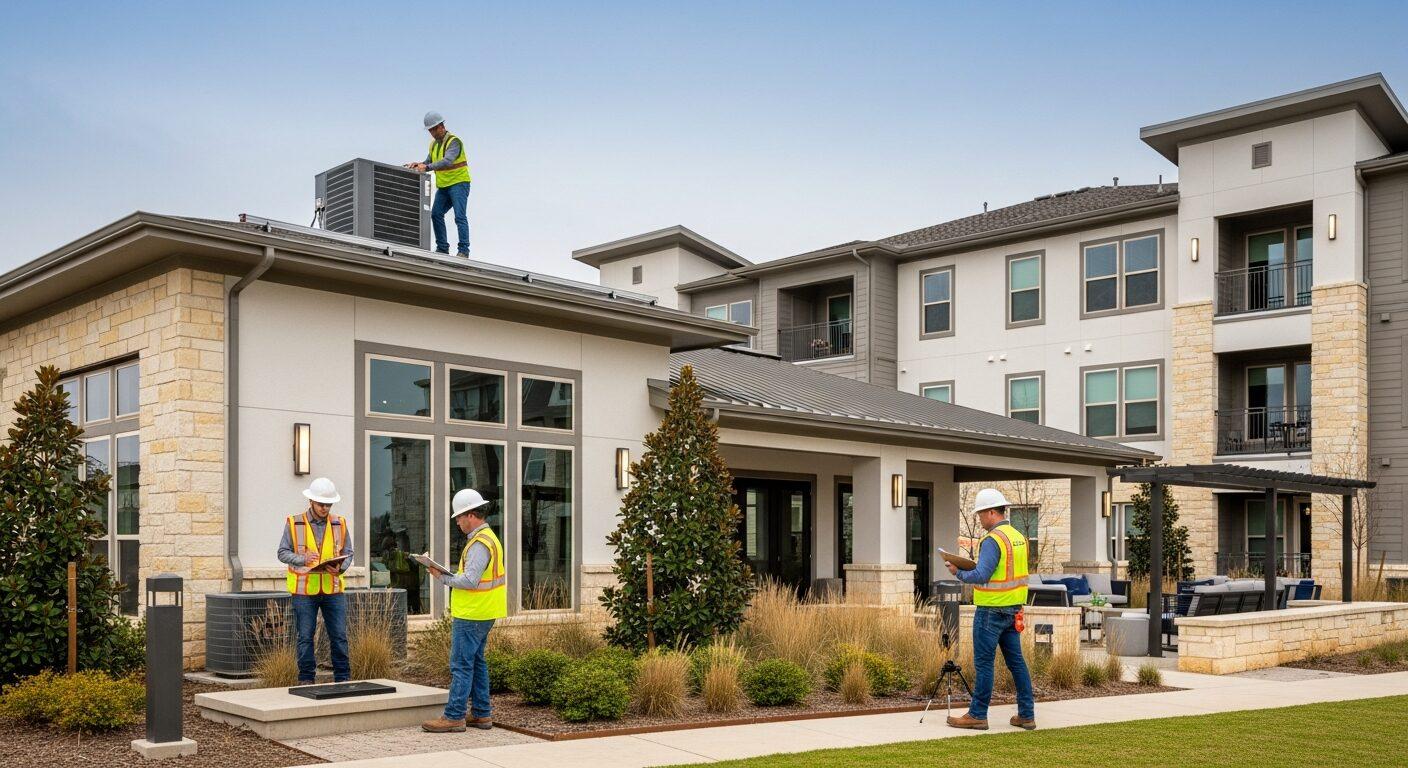
The first step in any capital improvement strategy is understanding your property’s actual condition and needs. This requires more than a visual walkthrough. Property Condition Assessments (PCA) and Capital Needs Assessments (CNA) provide the data-driven foundation for smart planning.
A thorough PCA evaluates the structural, mechanical, and operational integrity of your building. It identifies deferred maintenance, safety concerns, and near-term failure risks. A CNA goes further, projecting capital requirements over a 20-year horizon and recommending prioritized spending schedules aligned with your investment timeline and financial goals.
In Frisco’s competitive environment, investors and lenders increasingly require these assessments as part of acquisition due diligence or refinancing. Independent third-party reports provide the credibility and objectivity that stakeholders demand. They protect your position with institutional partners and help you secure favorable financing terms.
What Gets Assessed?
- Roofing systems and waterproofing integrity
- HVAC equipment efficiency and remaining useful life
- Plumbing infrastructure for corrosion, leaks, and code compliance
- Electrical systems capacity and safety
- Building envelope condition (siding, windows, doors)
- Common area amenities functionality and marketability
- Energy efficiency opportunities and ROI
- Life safety systems (fire suppression, alarms, egress routes)
The Strategic Capital Improvement Plan: Room Turns, System Upgrades, and Amenity Enhancements
Once you understand your property’s condition, the next step is building a prioritized improvement roadmap. Smart capital planning addresses three tiers of work:
Tier 1: Unit Interiors and Room Turns
Fast, professional unit refreshes directly impact occupancy and revenue. Modern flooring, updated cabinetry, fresh paint, and efficient appliances command higher rents and reduce turnover costs. In Frisco’s high-velocity market, properties that can turn units quickly and cost-effectively maintain higher occupancy rates.
This work is particularly valuable in competitive submarkets where tenants choose based on unit condition and in-unit amenities. A $4,000 unit refresh can justify a $100–150 rent increase, recovering the investment in 3–4 years while occupancy improves and turnover slows.
Tier 2: Building Systems and Infrastructure
Roofing, HVAC, plumbing, and electrical upgrades ensure operational reliability and future marketability. These systems don’t generate immediate rent increases, but failure is catastrophic. Frisco’s climate—hot summers, occasional ice storms, seasonal fluctuations—puts stress on HVAC, roofing, and outdoor infrastructure.
Energy efficiency upgrades deserve special attention. LED lighting, smart thermostats, high-efficiency HVAC, and insulation improvements reduce utility costs, lower operating expenses, and make your property more attractive to environmentally conscious tenants.
Tier 3: Common Area Amenities and Repositioning
Fitness centers, leasing offices, courtyards, parking areas, and exterior lighting shape tenant perception and justify premium positioning. In multifamily, tenants don’t just rent a unit—they rent a lifestyle. Upgrading common areas signals that ownership cares about the property experience, reducing turnover and supporting rent growth.
Execution: Construction in Occupied Environments
Multifamily capital improvements happen in occupied buildings. Residents are living, working, and raising families in your property while construction crews work. This reality demands specialized expertise: contractors who understand phased construction, noise control, access management, and operational continuity.
Poorly managed construction disrupts tenant satisfaction, accelerates lease non-renewals, and erodes the rent premiums you worked to justify. Professional construction management ensures work happens on schedule, within budget, with minimal tenant impact.
Key Execution Principles
- Phased scheduling that isolates work zones and maintains uninterrupted access to common areas
- Communication protocols that keep residents informed and set clear expectations
- Time-certain work windows that minimize disruption and demonstrate respect for tenant space
- Quality oversight that catches defects early and prevents rework
- Budget transparency that protects you from cost overruns and change orders
In Fort Worth and Frisco, where multifamily development is dense and tenant expectations are high, execution excellence separates properties that maintain pricing power from those that face occupancy pressure.
The Role of Independent Contractor Review and Bid Audits
Before executing capital improvements, competitive bidding among qualified contractors is essential. Yet many property managers accept the first two or three bids without critical analysis. Independent bid reviews and contractor audits provide objective evaluation of pricing, scope, timeline, and contractor qualifications.
A third-party review answers critical questions:
- Is the scope of work clearly defined, or are there ambiguities that invite change orders?
- Are material specifications appropriate for the application and climate?
- Are labor rates and crew sizes reasonable for the local market?
- Does the contractor carry appropriate insurance and bonding?
- Are past projects and references legitimate and verifiable?
- Are timelines realistic, or does the bid assume unrealistic productivity?
This due diligence typically costs 1–3% of project budget and routinely identifies savings of 5–15%, especially on larger capital initiatives. It also protects you from contractors who underestimate scope, disappear mid-project, or produce substandard work.
Frisco’s Market Context: Why Timing Matters
Frisco’s construction boom creates both opportunity and urgency. Demand for skilled trades is high, material costs are rising, and contractor availability is constrained. Yet the same market forces that increase construction costs also strengthen tenant demand and support higher rents. Strategic capital improvements now—while your property’s competitive position is strong—protect that position as new supply continues to deliver.
The $57 million multifamily project, Firefly Park’s phased build, and the office development near Toyota Stadium represent billions in capital that will influence Frisco’s rental market for years. Properties that have completed major capital improvements before this new supply stabilizes will maintain strong occupancy and rent growth. Properties that delay may face pressure as tenants migrate to newer, fully-appointed alternatives.
Additionally, multifamily lenders and investors increasingly expect properties to have current PCAs and CNAs on file. If you’re considering refinancing, sale, or capital-stack reconfiguration, these assessments streamline diligence and unlock financing options unavailable to properties with outdated or missing condition reports.
Building the Business Case for Capital Improvements
Smart owners don’t approve capital improvements based on gut instinct or peer pressure—they build financial models. Here’s the framework:
- Identify the improvement (e.g., kitchen remodel, roofing replacement, lobby renovation)
- Estimate the cost (with multiple contractor bids)
- Project the benefit (rent increase, occupancy lift, expense reduction)
- Calculate payback period (cost ÷ annual benefit)
- Evaluate IRR (return relative to capital deployed)
- Align with refinance or sale timeline (improvements may unlock favorable financing or higher acquisition pricing)
Not every improvement makes financial sense. A $100,000 lobby renovation might generate $5,000 in annual rent premium—a 20-year payback in a standalone context. But if that same improvement supports a successful refinance at lower rates, or if it’s required to stabilize occupancy before a sale, the calculus changes. The key is asking the question deliberately rather than spending capital reactively.
Choosing the Right Partner for Your Capital Improvement Strategy
Your contractor’s expertise directly impacts project success, final cost, and tenant satisfaction. Look for partners with specific multifamily experience, proven excellence in occupied-environment construction, and transparent communication practices.
Key qualities to evaluate:
- Multifamily-specific experience: Do they understand phased construction, tenant coordination, and the unique operational constraints of residential properties?
- Occupied-environment expertise: Have they managed projects in active communities while maintaining service continuity?
- Design-build capability: Can they move from assessment and planning to execution seamlessly, reducing risk and timeline?
- Transparency and communication: Do they provide regular updates, explain cost drivers, and deliver what they promise?
- Certified professionals and quality focus: Are crews trained to industry standards, and does quality control happen throughout execution rather than at the end?
- On-time, on-budget delivery: Do references confirm reliable scheduling and budget management?
In Fort Worth and Frisco, where the multifamily market is professional and sophisticated, choosing a contractor with the discipline, expertise, and integrity to deliver capital improvements without surprises becomes a competitive advantage.
Conclusion: The Strategic Imperative
Frisco’s real estate market is evolving rapidly. New development, massive public investment, and strong demand for multifamily housing create unprecedented opportunity—and unprecedented competition. Property owners and managers who plan capital improvements strategically, execute them professionally, and measure their results will maintain pricing power and occupancy as the market matures.
The time to assess your property’s condition, prioritize improvements, and execute your capital plan is now. Whether you’re managing a 100-unit garden community or a 500-unit high-rise, data-driven capital planning backed by professional execution ensures your investment stays competitive, attractive, and profitable for years to come.