
Transforming Plano’s Hospitality Landscape: A Guide to Hotel Modernization and Expansion in North Texas’s Booming Market
The hospitality industry in Plano, Texas is experiencing unprecedented growth as the city undergoes massive infrastructure investments and commercial development. With Plano’s recent approval of a historic $648 million bond package and major mixed-use developments like The Bend breaking ground, hotel owners have a unique opportunity to capitalize on this economic momentum through strategic modernization and expansion projects.
Why Plano’s Hotel Market is Primed for Investment
Plano’s hospitality sector is positioned at the center of North Texas’s most dynamic growth corridor. The city’s $319 million community investment program for FY 2025-26 includes significant infrastructure improvements that will enhance accessibility and attractiveness for business and leisure travelers alike.
Current Market Drivers
The construction of Ryan Tower, a 23-story Class AA office building in Legacy West, signals continued corporate investment in Plano’s commercial landscape. This development, alongside the transformation of The Shops at Willow Bend into a 965-unit mixed-use community featuring an 18-story hotel, demonstrates the city’s commitment to creating destinations that attract extended-stay business travelers and event attendees.
Major intersection improvements along Legacy Drive and Corporate Drive, backed by a $2.59 million investment, will improve traffic flow to key hospitality corridors. These infrastructure enhancements reduce travel times and create more convenient access points for hotel guests visiting Plano’s business districts.
Strategic Renovation Opportunities for Hotel Owners
Capital Improvements That Drive Revenue
Modern travelers expect elevated experiences, and hotels that invest in strategic renovations often see immediate returns through higher occupancy rates and premium pricing. Key improvement areas include:
Energy Efficiency Upgrades: With rising operational costs, HVAC system modernization and LED lighting conversions can reduce utility expenses by 20-30% while improving guest comfort.
Technology Integration: WiFi infrastructure upgrades, smart room controls, and contactless check-in systems have become essential amenities rather than luxury additions.
Common Area Revitalization: Lobby renovations, fitness center additions, and outdoor workspace creation mirror the amenities being implemented in successful projects like the 5600 Headquarters transformation in Plano.
Room Turn Strategies for Maximum Occupancy
Professional room turn services ensure minimal downtime between renovation phases, critical for maintaining cash flow during improvement projects. Fast, systematic room refreshes allow hotels to upgrade gradually while keeping most units available for booking.
Navigating Construction in Occupied Environments
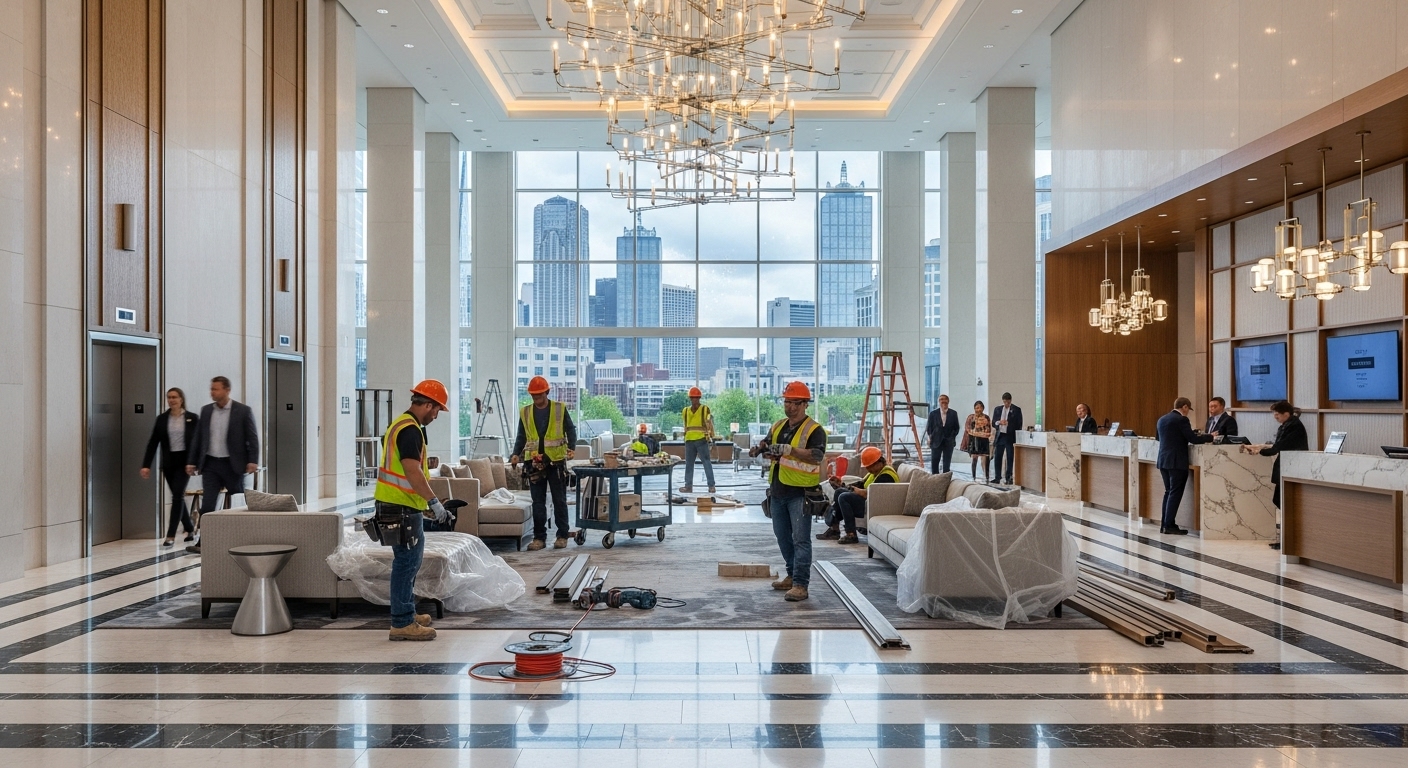
Hotel renovations present unique challenges, requiring contractors experienced in maintaining operational continuity. Successful projects minimize guest disruption through careful scheduling, sound management, and dust control measures.
The key is working with construction partners who understand the hospitality industry’s 24/7 operational requirements. Experienced teams can coordinate renovation schedules around peak occupancy periods, ensuring guest satisfaction remains high throughout the improvement process.
Design-Build Advantages for Hotel Expansion
The design-build approach streamlines hotel expansion projects by integrating design and construction under single-source responsibility. This method reduces project timelines, controls costs, and minimizes coordination issues that often plague traditional design-bid-build projects.
For hotel owners considering expansion, design-build services offer several advantages:
- Faster Project Delivery: Overlapping design and construction phases can reduce total project time by 20-40%
- Cost Certainty: Single-source contracts provide better budget control and reduce change order disputes
- Quality Integration: Design and construction teams collaborate from project inception, ensuring buildability and reducing conflicts
Third-Party Assessment Value for Hotel Investments
Before committing to major renovations or expansions, comprehensive Property Condition Assessments (PCA) and Capital Needs Assessments (CNA) provide crucial insights into existing infrastructure conditions and future maintenance requirements.
These assessments help hotel owners:
- Prioritize improvement investments for maximum ROI
- Identify potential structural or systems issues before they become expensive problems
- Develop realistic budgets and timelines for renovation projects
- Make informed decisions about property expansion feasibility
Veteran-Owned Construction Advantages
The National Defense Authorization Act (NDAA) 2025 increases opportunities for veteran-owned businesses, raising contracting goals from 3% to 5% for Department of Defense projects. While this primarily impacts government contracting, it reflects broader recognition of veteran-owned businesses’ reliability and discipline.
Veterans bring unique advantages to construction management, including:
- Mission-focused approach with clear objectives and accountability
- Proven teamwork and communication skills developed through military service
- Attention to detail and quality standards essential for hospitality renovations
- Problem-solving abilities crucial for managing complex occupied-environment projects
Companies like Alder Designs, a veteran-owned construction firm serving the Fort Worth and broader North Texas region, exemplify these qualities through their comprehensive approach to construction management and renovation services.
Maximizing Hotel Investment Returns
Strategic timing of hotel improvements can significantly impact ROI. With Plano’s major infrastructure investments creating improved accessibility and the mixed-use developments attracting new business and leisure traffic, hotel owners who modernize now position themselves to capture increased demand.
Key Investment Considerations
Market Positioning: Hotels that complete renovations before major developments like The Bend open in late 2025 will be best positioned to accommodate increased visitor traffic.
Operational Efficiency: Modern systems and energy-efficient improvements reduce ongoing operational costs, improving profit margins even before occupancy increases.
Guest Experience Enhancement: Updated amenities and modern design elements command premium rates and improve online review scores, driving direct bookings.
Planning Your Hotel Modernization Project
Successful hotel renovation requires careful planning and experienced execution. The process should begin with comprehensive assessment of current conditions, followed by strategic planning that balances guest experience improvements with operational efficiency gains.
Working with construction professionals who specialize in hospitality projects ensures understanding of industry-specific requirements, from noise control during overnight construction to maintaining security protocols during renovation work.
The combination of Plano’s robust economic growth, significant infrastructure investments, and increasing business travel demand creates an exceptional opportunity for hotel owners to maximize their property values through strategic modernization and expansion projects.
By partnering with experienced construction professionals who understand both the hospitality industry’s unique requirements and the local market dynamics, hotel owners can transform their properties into competitive assets that capitalize on North Texas’s continued growth and development.
0 Comments