
I’ll retrieve the previous step outputs to gather all the necessary information for creating this SEO blog post.
Senior Living Renovations in Plano: Why Your Community Needs Strategic Construction Planning
The senior living market in Plano and North Dallas is booming. Strong demographics, high household incomes, and limited existing supply have made the region a top destination for assisted-living, memory-care, and active-adult communities. But here’s the challenge: if you’re operating an existing senior living facility in Plano, Texas, you’re competing with brand-new communities launching around you. Your renovation strategy isn’t just about refreshing spaces—it’s about survival and growth in a competitive market.
Whether you’re planning capital improvements, modernizing guest-facing areas, or executing room turns to maintain occupancy, you need construction partners who understand the unique demands of senior living environments.
The Senior Living Boom Is Real—And It’s Creating Competitive Pressure
Plano’s senior housing market is experiencing unprecedented growth. Recent data shows multiple assisted-living, memory-care, and active-adult projects in planning or early construction phases. New communities are prioritizing hospitality-style finishes and flexible spaces designed to attract discerning residents.
For operators of existing communities, this means one thing: you can’t afford to let your property age visibly. Residents and their families actively compare features, amenities, and condition when choosing where to invest their resources. A facility with outdated carpeting, worn finishes, or tired common areas loses market share to newer competition.
The good news? Strategic renovations can level the playing field. Capital improvements done right—on time and on budget—can keep your occupancy rates strong and your reputation stellar.
The Three Biggest Renovation Challenges for Senior Living Communities
1. Maintaining Operations While Construction Is Happening
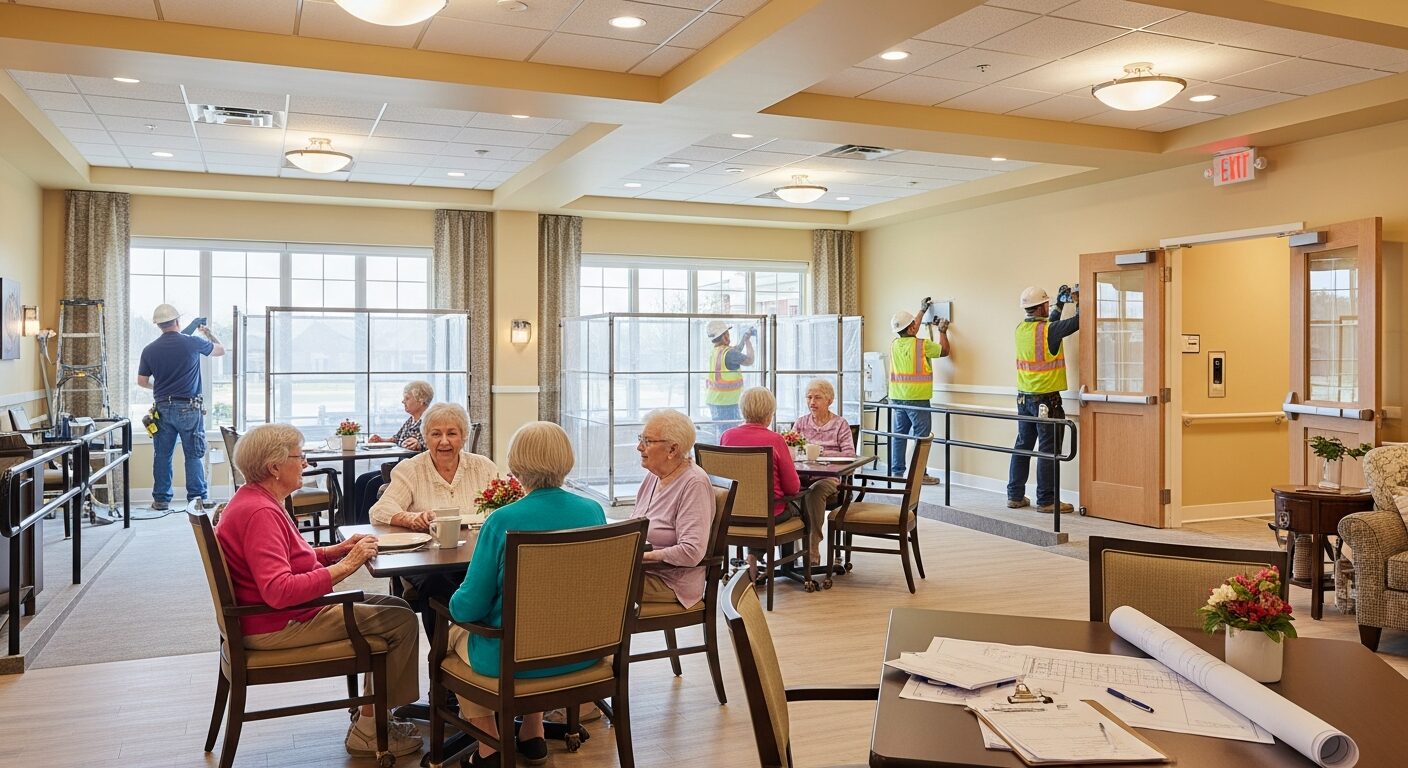
Senior living facilities can’t simply close for renovations. Your residents depend on continuous services, and staff need to work efficiently around construction activity. This creates a complex puzzle: how do you refresh units, upgrade common areas, and improve infrastructure without disrupting daily life?
Many contractors approach this casually, which leads to:
- Extended timelines that frustrate residents
- Safety hazards from construction dust and noise
- Staff burnout from navigating around crews
- Hidden costs from scope creep and rework
Strategic construction management solves this. Professional teams use phased scheduling, dust containment, and close coordination with your operations staff to keep residents safe and comfortable while renovations proceed on schedule.
2. Managing Costs and Budget Certainty
Senior living operators work with tight capital budgets. A renovation project that spirals in cost can derail your entire financial plan for the year. Yet many contractors provide initial estimates that don’t hold, leading to change orders, surprises, and broken trust.
You need:
- Transparent bidding processes
- Independent cost reviews before work begins
- Fixed pricing where possible
- Clear communication if scope changes
This isn’t just about saving money—it’s about predictability so you can allocate resources to resident care and facility maintenance.
3. Specialized Knowledge of Senior Living Design
Not all construction managers understand senior living. Your renovations need to address specific needs:
- Accessibility for mobility-limited residents
- Proper lighting for aging eyes
- Non-slip flooring that meets safety codes
- Acoustics that don’t amplify noise
- Finishes that are durable yet hospitality-focused
- Compliance with healthcare regulations
Contractors without senior living experience may miss these nuances, resulting in expensive rework or solutions that don’t truly serve your residents.
What Strategic Senior Living Renovations Should Include
If you’re planning upgrades for your Plano-area community, consider these high-impact areas:
Common Areas and Dining Spaces: These are resident touchpoints multiple times per day. Fresh paint, new lighting, updated furnishings, and flooring upgrades create an immediate impression of quality and care.
Guest Rooms and Units: Rooms deserve hospitality-grade finishes—new beds, updated bathroom fixtures, fresh paint in warm tones, and thoughtful amenities that make residents feel valued.
Accessibility Upgrades: Grab bars, ramps, wider doorways, and improved lighting aren’t just nice to have—they’re often required by code and essential for resident safety and independence.
HVAC and Infrastructure: Aging mechanical systems drive up utility costs and create maintenance headaches. Energy-efficient HVAC replacements, improved insulation, and updated plumbing are investments that pay dividends.
Memory Care and Specialized Units: If you operate memory-care communities, design matters even more. Wayfinding, secure outdoor spaces, calming colors, and therapeutic design elements can reduce resident anxiety and improve outcomes.
Exterior and Landscaping: Curb appeal matters. New roofing, façade updates, and landscaping improvements signal that your community is well-maintained and thriving.
How Professional Assessments Drive Better Renovation Decisions
Before you commit to a major renovation budget, you need clarity on what actually needs work. That’s where property condition assessments and capital needs assessments become invaluable.
A professional assessment:
- Identifies urgent structural or safety issues
- Prioritizes work based on ROI and resident impact
- Uncovers hidden problems before they become expensive
- Provides data for budgeting and phasing over multiple years
- Gives you ammunition for investor or board presentations
Many senior living operators skip this step to “save money,” then discover mid-project that a roof replacement is failing or HVAC equipment is near end-of-life. A thorough assessment prevents these shocks.
The Veteran-Owned Construction Advantage
When you’re managing a senior living community, you need partners who bring discipline, reliability, and integrity to every project. Veteran-owned construction firms often excel here because they apply military principles to construction:
- Clear chain of command: You know who to contact and that decisions get made quickly
- Precision planning: Projects are scheduled and executed with no wasted motion
- Safety-first culture: Team members treat resident safety with the same rigor as military operations
- Accountability: If something goes wrong, you’ll get a straight answer and a solution
Firms with 70+ years of combined construction expertise—particularly those specializing in occupied environments—understand the rhythms of senior living. They’ve executed fast room turns, managed phased renovations, and coordinated with healthcare staff.
Design-Build Delivery for Faster, Smarter Senior Living Projects
Design-build services combine design and construction into one coordinated process. For senior living renovations, this means:
- Faster timelines: No lengthy design-bid-build cycle; construction starts sooner
- Better coordination: Designers and builders work together from day one, catching conflicts early
- Cost efficiency: Value engineering happens during design, not after
- Flexible spaces: If your needs shift mid-project, design-build teams can adapt
Many new senior communities in Plano use design-build for this reason. Existing communities benefit equally when executing major renovations or repositioning aging buildings.
What to Expect From Third-Party Inspections and Oversight
Independent inspections protect you. Before renovations begin, and at key milestones during construction, third-party inspectors verify:
- Work meets building codes and regulatory requirements
- Materials match specifications
- Contractor workmanship meets agreed standards
- Payment aligns with work completed
For healthcare-adjacent facilities like senior living, regulatory compliance isn’t optional. Inspections and audits ensure you’re meeting all obligations while controlling costs.
Real-World Renovation Scenarios in Plano’s Senior Living Market
Scenario 1: The Aging Assisted-Living Community
Your facility was built in 2005 and needs a refresh. Common areas are dated, several units need bathroom upgrades, and the HVAC system is aging. You can’t afford a full rebuild, and you need to maintain 95%+ occupancy during construction. A phased approach—starting with common areas while simultaneously refreshing units in small batches—keeps the community attractive while minimizing disruption.
Scenario 2: The Competitive Memory-Care Addition
A new memory-care community just announced in North Plano. Your board authorized a $2M renovation to modernize and add specialized therapeutic design elements. Strategic construction management ensures the design is optimized before bidding, contractor selection is rigorous, and you’re not overpaying for quality.
Scenario 3: The Sustainability Retrofit
Rising utility costs are eating into margins. A comprehensive energy-efficiency retrofit—new roofing, HVAC upgrades, LED lighting, and water-efficient fixtures—has a clear ROI. Independent bid reviews ensure you’re getting best value, and detailed project management keeps the work on schedule.
The Cost of Delaying Senior Living Renovations
Consider the real cost of inaction:
- Occupancy pressure: Every month your facility looks dated, you compete harder to fill units
- Staff recruitment and retention: Employees want to work in well-maintained environments
- Maintenance costs: Deferred maintenance compounds; small issues become expensive emergencies
- Regulatory exposure: Aging facilities may drift out of code compliance
- Market positioning: Your community loses appeal to families and referral sources
A strategic renovation, executed professionally, pays for itself through improved occupancy, reduced turnover, and preserved market position.
Finding the Right Construction Partner for Your Plano-Area Senior Living Community
When evaluating construction firms for your senior living renovation, prioritize:
Proven experience in senior living. Ask for references from other senior communities. How did they handle occupied renovations? What was the timeline accuracy?
Transparent cost management. Request detailed bid reviews, value engineering, and clear cost controls. Avoid firms that give vague estimates or surprise you with change orders.
Regulatory and code expertise. Senior living isn’t like commercial office renovation. Ensure the firm understands ADA requirements, healthcare regulations, and local Plano building codes.
Phasing capability. Can they execute complex, phased projects while you maintain operations? This is non-negotiable for existing communities.
Independent assessments. Does the firm offer property condition assessments or capital needs assessments? This positions you to make better decisions.
Local knowledge. A contractor familiar with Plano, North Texas building departments, and local supplier networks will work more efficiently.
Third-party oversight. Do they offer or welcome independent inspections and audits? Transparency builds confidence.
Why Now Is the Time to Plan Your Renovation
Plano’s senior living market is moving fast. New communities are launching. Occupancy competition is rising. The window to renovate strategically—before your facility loses market position—is now.
If your community is five, ten, or fifteen years old, a professional assessment will tell you exactly what matters most. Phase your capital improvements over 2-3 years if needed, but start planning today.
The senior living communities winning in Plano are those that stay ahead of the curve—maintaining hospitality-grade finishes, upgrading infrastructure for efficiency, and executing renovations without operational disruption.
Your residents deserve spaces you love coming home to. Your occupancy rates depend on it. Your market position requires it.
Strategic construction planning isn’t an expense—it’s an investment in your community’s future.
0 Comments