
Let me retrieve the previous step outputs to get the complete context, keywords, and article details.
Modernize Your Hotel with Expert Construction Services: The 2026 Guide to Guest Experience Renovations
Your guests notice everything—from the moment they walk through your lobby to when they settle into their rooms. A dated guest room, outdated HVAC system, or worn common areas don’t just look bad; they directly impact your occupancy rates, guest reviews, and bottom line. In today’s competitive hospitality market across Austin and North Texas, strategic renovations aren’t a luxury—they’re essential for staying competitive and maximizing revenue.
The construction pipeline in Texas is stronger than ever. Austin and the Dallas–Fort Worth region are experiencing sustained growth in hospitality demand, with property owners increasingly choosing targeted renovations over major rebuilds. Whether you’re running a boutique hotel in Austin, a mid-size property in Fort Worth, or managing a hospitality portfolio across the region, the right renovation strategy can transform guest experiences and your financial performance.
Why Hotel Renovations Matter Now More Than Ever
Guest expectations have shifted dramatically. Modern travelers compare properties across booking platforms where reviews, photos, and ratings drive decisions. A single negative review about outdated amenities can reduce your booking rate, while positive reviews about recent renovations boost occupancy and justify higher nightly rates.
The numbers tell the story: hospitality properties that invest in capital improvements see measurable returns within 12–24 months. Energy-efficient HVAC upgrades reduce operating costs. Fresh guest room finishes attract higher-spending guests. Modernized common areas increase dwell time and ancillary spending. Construction delays and poor quality, however, compound these benefits into losses—occupancy dips during renovation, and sloppy work creates costly callbacks.
In the Fort Worth and Austin corridors, the construction market is active and competitive. This means finding a contractor who understands hospitality-specific needs—completing work in occupied properties while maintaining operational continuity—is critical.
The Four Essential Renovations That Drive Hospitality ROI
Room Refreshes and Unit Turns
Your guest rooms are your primary revenue generator. A professional room refresh doesn’t necessarily mean gutting and rebuilding. Strategic updates—new furnishings, flooring, fresh paint, updated lighting, and refreshed fixtures—can modernize a guest room in 2–3 weeks per unit while maintaining booking schedules.
The key is speed and quality. Hotels need contractors who specialize in room turns and unit refresh services that maximize occupancy and minimize downtime. A properly managed room turn keeps guests happy, reduces cancellations, and allows you to re-position inventory at higher rate tiers.
HVAC and Energy Infrastructure Upgrades
Guests judge your property partly by comfort—temperature, air quality, humidity. Aging HVAC systems struggle to maintain consistency, especially in Austin and Fort Worth summers. Beyond guest discomfort, inefficient systems inflate utility bills and create unplanned maintenance emergencies.
Capital improvement projects like HVAC upgrades, roofing, and plumbing modernization may seem like back-of-house issues, but they directly affect guest satisfaction and operating margins. Modern, efficient systems also signal premium care to guests and can justify premium pricing.
Common Area and Lobby Modernization
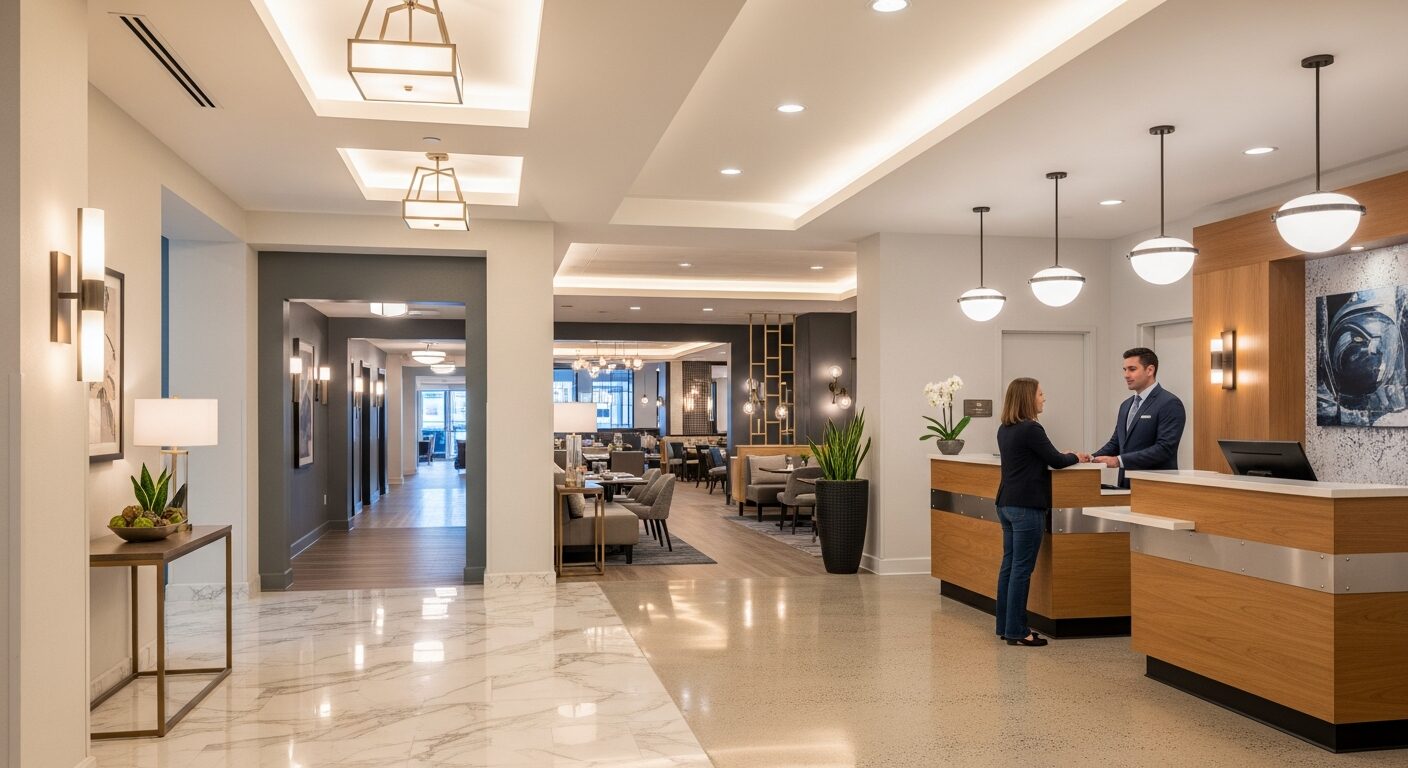
Your lobby is your first impression. High-traffic areas—front desk, restaurant, meeting spaces, corridors—require durable finishes and thoughtful design that reflects your brand while withstanding heavy use. Modernizing these spaces demonstrates investment to guests and staff alike, boosting perception of the property’s overall quality.
Many properties in Austin and the DFW region are prioritizing lobby and public space updates to remain competitive. These projects require careful planning to avoid disrupting operations—another area where specialized construction expertise is invaluable.
Bathroom and Kitchen Facility Upgrades
Bathrooms and guest kitchenettes in extended-stay properties are high-touch areas where guests notice wear most acutely. Modern fixtures, fresh tile, efficient plumbing, and updated design can rejuvenate these spaces quickly. Kitchen upgrades in hotel restaurants and room service areas also improve staff efficiency and food safety standards.
How to Plan a Hospitality Renovation Without Losing Occupancy
The biggest concern for hospitality managers is occupancy loss during renovation. Strategic phasing can minimize this impact.
Assess before you build. Before committing budget and timeline, conduct a property condition assessment (PCA) or capital needs assessment (CNA). These certified assessments identify which projects deliver the highest ROI, prioritize safety and compliance issues, and help you sequence work across multiple quarters or years.
Phase strategically. Instead of closing entire wings, renovate floor by floor, building by building, or room by room. This keeps occupancy steady while delivering visible progress and guest-facing improvements.
Hire contractors experienced with occupied spaces. Not all general contractors excel at working in operational hospitality environments. You need a partner who understands the logistics of maintaining guest access, managing noise and dust in occupied areas, and coordinating with front desk and housekeeping.
Get transparent bids and project audits. Before signing contracts, request independent bid reviews and contractor audits to ensure competitive pricing and quality standards. This protects your budget and sets clear expectations.
The Advantage of Veteran-Led Construction Partnership
Austin and Fort Worth’s construction market is robust, but not all contractors bring the same rigor and reliability to hospitality work. Veteran-owned construction firms bring a different discipline: military-trained project management, transparent communication, and a commitment to precision.
Veterans in construction have proven track records of completing complex projects on time and on budget—critical for hospitality work where delays directly impact revenue. They understand the importance of systematic planning, clear communication, and accountability throughout every phase of a project.
Look for contractors who specialize in design-build services and construction management with proven experience in occupied buildings. These firms can guide you from feasibility studies through final project completion, handling the full scope so you focus on running your property.
Specialized Services for Hospitality Owners and Managers
If you’re evaluating a renovation strategy, consider these services that hospitality-specific contractors offer:
Third-party assessments and inspections give you an independent baseline of your property’s condition and capital improvement priorities. This data helps justify investment to ownership or investors.
Project evaluations identify cost-saving opportunities and timeline efficiencies before work begins.
Contractor audits ensure vendors stay on schedule and meet quality standards throughout execution.
Fast, professional room turns maximize occupancy recovery time.
Construction services in occupied environments minimize guest disruption and operational strain.
Regional Trends Supporting Hospitality Renovation Investment
Austin’s hospitality market is booming. Population growth, corporate expansion, and tourism are driving both new construction and renovation demand. Similarly, the Dallas–Fort Worth region—with Fort Worth as a major hospitality hub—is seeing sustained capital improvement activity across commercial and hospitality properties.
Municipal and private investment in cultural infrastructure, like the McKinney performing arts center renovations currently underway, signals broader appetite for capital improvements. This healthy construction pipeline means:
- Skilled contractors are more available and competitive
- Supply chains for quality materials are stable
- Labor costs, while rising, are manageable within broader market context
- Financing options for capital improvements remain accessible
For hospitality owners, this is an optimal moment to plan and execute renovations while skilled contractors are available and market conditions favor strategic improvements.
Building a Timeline That Works for Your Operation
Successful hospitality renovations require careful scheduling. Consider these variables:
Seasonal demand. Plan major work during your slowest occupancy season. Many Texas hospitality properties see lower demand in late August through September, or early February. Phase renovations to align with these windows.
Lead time for permits and planning. Start assessments and bid reviews 3–6 months before your target start date. This allows time for design finalization, permit approval, and contractor mobilization.
Phased execution. Rather than one massive project, sequence improvements across 12–24 months. This spreads capital investment, maintains occupancy, and allows you to measure ROI on early phases before committing to later work.
Clear communication protocols. Establish daily check-ins, transparent progress reporting, and a single point of contact between your team and the contractor. This reduces surprises and keeps projects on track.
Questions to Ask Before Hiring a Construction Partner
As you evaluate contractors for your hospitality renovation, ask these critical questions:
- Do you have experience with occupied hospitality properties? General residential or commercial contractors may not understand your unique operational constraints.
- What’s your approach to phasing and minimizing occupancy disruption? Listen for specific strategies, not generic assurances.
- Can you provide references from similar projects? Hospitality properties you can visit or call.
- How do you handle budget transparency and unexpected issues? Clear change-order processes and communication protocols matter.
- What certifications and safety protocols do you follow? Professional construction requires validated expertise and rigorous safety standards.
- Can you provide independent project assessment and bid review services? Some contractors offer planning services even if you don’t hire them for execution, adding confidence.
Moving Forward: Your Renovation Strategy Starts Now
Your hotel’s competitive position depends on delivering modern, comfortable guest experiences. Strategic renovations—guided by professional assessment, phased for operational continuity, and executed with precision—drive occupancy, boost ratings, and justify premium pricing.
The Texas construction market is strong, skilled contractors are available, and the hospitality sector is actively investing. Whether you’re planning a room refresh, modernizing HVAC systems, or reimagining your lobby, starting with a professional property assessment and a construction partner with hospitality expertise is your first step.
The best time to plan a renovation is now. The best time to execute is within your next seasonal low-demand window. The best partner is one who brings military-grade discipline, transparent communication, and deep experience in hospitality construction to your project.
Your guests—and your bottom line—will thank you for the investment.
0 Comments