
I’ll retrieve the necessary information from the previous workflow steps to create your SEO blog post.
Senior Living Renovations in Plano: How to Upgrade Occupied Facilities Without Disrupting Residents
Senior living communities in Plano are experiencing unprecedented growth, and facility operators are discovering a critical challenge: how to renovate and upgrade aging buildings while keeping residents safe, comfortable, and undisturbed. If you manage or own a senior living property, you know that senior living renovations require a specialized approach that balances operational continuity with capital improvements.
The senior living boom across North Texas has created a surge in renovation demand—accessibility upgrades, HVAC modernizations, unit refreshes, and common-area redesigns are now standard investments for communities seeking to support aging-in-place. Yet executing these projects in fully occupied buildings demands expertise that goes beyond typical construction work.
Why Senior Living Renovations Are Different
Senior living communities operate around the clock. Unlike vacant office buildings or empty retail spaces, your facility houses residents who depend on continuous services, safety protocols, and minimal disruption to their daily routines.
The stakes are higher. A construction project that creates excessive noise, temporary access barriers, or safety hazards can compromise resident wellbeing and satisfaction. One misstep in scheduling or phasing can lead to complaints, regulatory concerns, and reputational damage. This is why choosing the right construction partner matters so much.
Senior living facilities typically tackle several renovation priorities simultaneously: unit refreshes to modernize resident living spaces, accessibility upgrades to accommodate mobility challenges, HVAC and plumbing upgrades to improve comfort and efficiency, and common-area redesigns to foster community and engagement.
Each of these projects requires careful planning, phased execution, and clear communication with residents, families, and staff.
The Occupied-Environment Challenge
Most general contractors are trained to work on vacant properties where they can control the entire site, block off areas completely, and maintain production schedules without compromise. Senior living is different.
In an occupied senior living community, you face unique constraints:
- Residents are always present. You cannot simply close hallways or block access to common areas for weeks at a time.
- Noise and vibration matter. Many residents are sensitive to disruption, and extended loud construction can affect sleep, stress levels, and health.
- Safety is non-negotiable. Contractors must maintain clear egress routes, prevent dust infiltration into resident spaces, and follow strict infection control protocols—especially in healthcare-adjacent settings.
- Operational continuity is required. Dining services, activities, maintenance, and emergency procedures must continue functioning normally.
- Coordination is complex. Your team, residents, families, contractors, and inspectors all need seamless communication to avoid confusion and delays.
Contractors experienced in occupied-environment construction understand these constraints. They use phasing strategies that complete work in small, isolated zones, schedule noisy activities during off-peak hours, implement dust containment barriers, and provide daily updates to facility management.
Key Renovation Areas for Senior Living Facilities
Unit Refreshes and Interior Updates
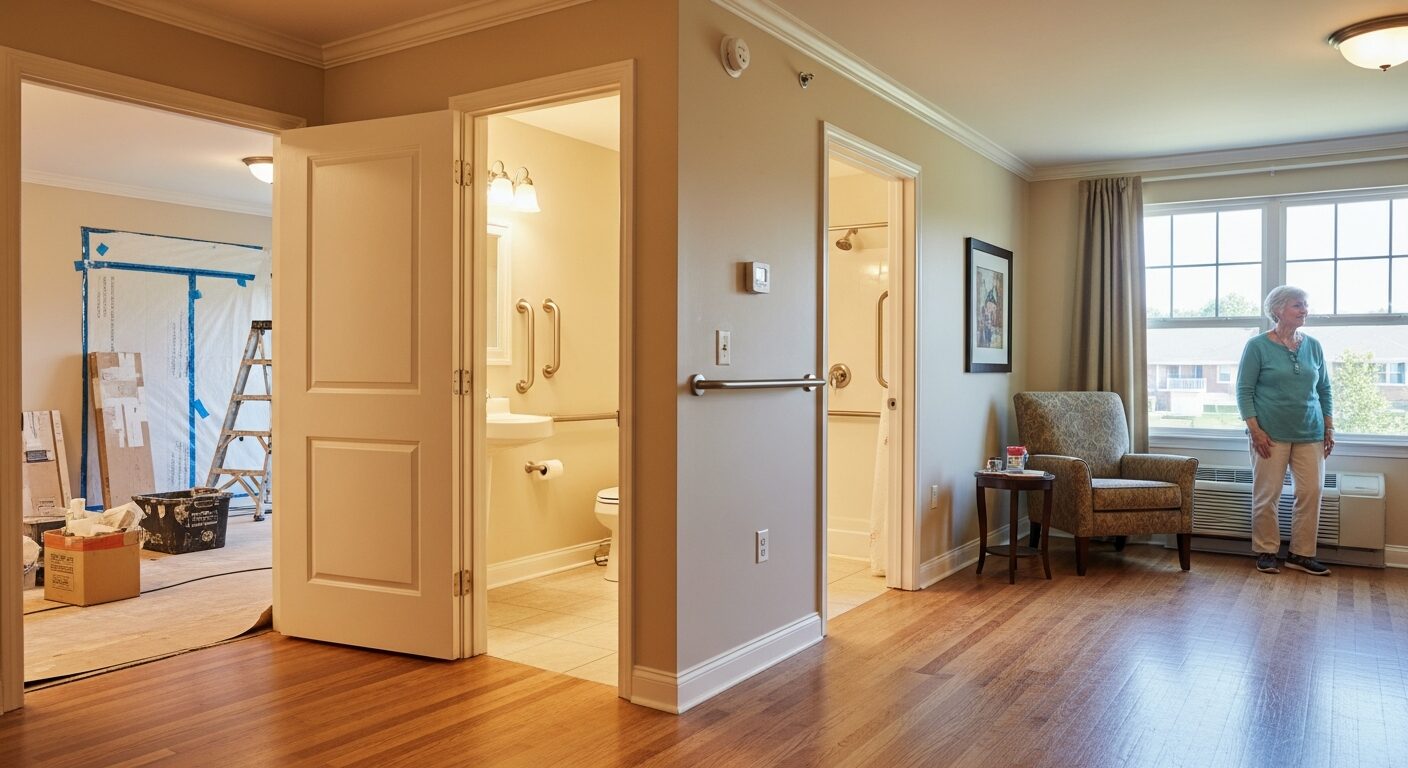
Unit refreshes are often the highest-impact investment in senior living. Fresh paint, updated flooring, modernized bathroom fixtures, improved lighting, and accessible grab bars transform resident spaces and can justify occupancy rate increases.
The best unit refresh projects complete one or two units per week, moving through the community systematically. This staged approach minimizes disruption—while one unit is under renovation, residents in adjacent spaces experience minimal impact. Contractors can move equipment, materials, and crews efficiently without overwhelming facility resources.
Accessibility and Safety Upgrades
Aging-in-place infrastructure is essential for senior living. This includes grab bars in bathrooms, widened doorways to accommodate walkers and wheelchairs, ramps and threshold modifications, improved lighting in hallways and common areas, and non-slip flooring to prevent falls.
These upgrades often address regulatory compliance and insurance requirements. Working with contractors who understand accessibility codes and can coordinate with third-party inspectors ensures that your improvements meet all standards while enhancing resident safety.
HVAC and Plumbing Modernizations
Aging HVAC systems struggle to maintain consistent temperature control, and outdated plumbing creates water pressure and water quality issues. Modernizing these systems improves resident comfort, reduces operating costs, and prevents costly emergency repairs.
However, HVAC and plumbing work can be invasive—running new ductwork through walls, replacing pipes in ceilings, and isolating zones all disrupt the building. Skilled contractors sequence this work carefully, often combining multiple trades in a single phase to minimize repeat disruption.
Common-Area Redesigns
Lobbies, dining rooms, activity spaces, and outdoor areas set the tone for your community. Redesigning these spaces to be more welcoming, accessible, and functionally vibrant attracts new residents and enhances quality of life for current ones.
Common-area work typically requires temporary alternative spaces or adjusted schedules. A dining renovation, for example, might be completed in phases so that residents can still access meals from a temporary serving area. Outdoor patio work can be staged seasonally.
The Role of Third-Party Inspections and Property Assessments
Before committing to major renovations, most senior living operators conduct property condition assessments (PCAs) or capital needs assessments (CNAs). These independent inspections identify which systems are failing or failing soon, prioritize necessary work, and provide realistic cost estimates.
Third-party inspectors bring objectivity. They identify problems your internal team might overlook, provide documentation for insurance and compliance purposes, and deliver prioritized recommendations that help you allocate capital strategically.
After renovations are complete, third-party inspections ensure that work was performed to code, meets quality standards, and solves the problems it was intended to solve. This is especially important in senior living, where safety and quality directly impact resident outcomes.
How to Choose a Construction Partner for Occupied Senior Living Renovations
The right contractor makes the difference between a smooth renovation and a nightmare that affects resident satisfaction and your bottom line.
Look for experience in occupied environments. Ask prospective contractors about their senior living or healthcare renovation experience. Can they provide references from similar communities? Do they understand the regulatory and safety requirements specific to senior living?
Evaluate their phasing and communication approach. How will they manage the project timeline? How will they communicate with residents, families, and staff? Do they have protocols for emergency situations? The best contractors provide regular updates, respect quiet hours, and maintain transparent cost tracking.
Check credentials and certifications. Contractors working in senior living should have certifications in infection control, safety protocols, and accessibility standards. They should carry appropriate insurance and maintain bonding to protect your facility.
Review their portfolio and references. Ask for examples of recent senior living projects. Call references and ask specific questions: Did they stay on budget? Did they communicate effectively? How did residents respond? Would you hire them again?
Ensure they understand design-build and assessment services. If they can also provide feasibility studies, bid reviews, and contractor audits, that’s a bonus. This integrated approach saves time and reduces the risk of costly mistakes.
Planning Your Senior Living Renovation Timeline
Successful senior living renovations follow a structured timeline:
-
Assessment phase (2-4 weeks): Conduct property inspections, interview residents and staff about needs and concerns, and develop preliminary cost estimates.
-
Planning and design (3-6 weeks): Create detailed renovation plans, coordinate with regulatory agencies if necessary, establish phasing schedules, and develop communication protocols.
-
Execution phase (varies): Complete phased renovation work while maintaining continuous facility operations. This stage typically spans 3-12 months depending on scope.
-
Delivery and inspection (1-2 weeks): Complete final inspections, address any punch-list items, train staff on new systems, and gather feedback from residents.
Throughout this timeline, expect regular communication with your construction partner. Weekly progress meetings, transparent budget reporting, and proactive problem-solving keep projects on track.
Why Timing and Budget Transparency Matter
Senior living operators understand that renovation budgets must be carefully managed. Unexpected costs can strain resources, and project delays extend disruption to residents.
The best construction partners provide fixed-price quotes, transparent change-order processes, and regular budget reporting. They understand that your bottom line depends on accurate planning and disciplined execution.
Cost overruns rarely happen by accident—they result from vague initial scopes, incomplete planning, or contractors who underestimate complexity. By working with experienced firms that conduct thorough assessments upfront and maintain clear communication throughout, you minimize surprises.
The Impact of Quality Senior Living Renovations
When done right, senior living renovations deliver measurable value:
- Higher occupancy rates as the facility becomes more attractive to prospective residents and families
- Improved resident satisfaction and quality of life
- Reduced maintenance costs from upgraded building systems
- Lower insurance premiums from improved safety and code compliance
- Staff retention as better facilities attract and retain quality personnel
- Competitive positioning in a market where new senior living communities are opening regularly
In Plano and across the Dallas–Fort Worth region, the senior living market is growing rapidly. Communities that invest in thoughtful, well-executed renovations stand out.
Moving Forward: Your Next Steps
If you operate a senior living facility, start by assessing your current needs. Which areas are showing their age? Where do residents, families, or staff report dissatisfaction? What regulatory or safety upgrades are overdue?
Then, engage an experienced construction partner who understands occupied-environment work, senior living operations, and the importance of transparent communication. Request a property condition assessment to prioritize your capital spending.
The senior living renovation work happening across Plano right now proves that strategic capital improvements are possible—even in fully occupied communities. With the right partner and careful planning, you can modernize your facility, enhance resident experience, and strengthen your competitive position without disrupting the quality of care your residents deserve.
0 Comments