
I need to retrieve the article details and search data from the previous workflow steps to create your blog post.
Modern Hotel Renovations: The Ultimate Guide to Upgrading Hospitality Properties in Arlington
Hospitality properties in Arlington, Texas, are undergoing unprecedented transformations. From the $500 million Americana by Loews rising near Globe Life Field to the Caravan Court Hotel’s full-gut renovation of a historic mid-century motel, the region’s hotel and resort sector is experiencing a construction boom that demands specialized expertise. Whether you’re a hotel owner, general manager, or property investor, understanding how to approach modern hotel renovations can mean the difference between a property that thrives and one that merely survives.
Why Hotel Renovations Matter More Than Ever
The hospitality industry is hyper-competitive. Guests today expect modernized amenities, updated technology, and seamless experiences—and they’ll book elsewhere if a property falls short. A 507-room Americana hotel launching in Arlington signals that major hospitality brands are betting big on the region’s growth. That confidence creates opportunity for property owners ready to elevate their properties.
Modern hotel renovations aren’t just about new paint and fresh carpeting. They encompass upgraded mechanical systems, reimagined guest experiences, energy-efficient infrastructure, and layouts designed for today’s traveler expectations. Properties that fall behind on these upgrades lose market share. Those that invest strategically see higher occupancy rates, improved guest satisfaction scores, and stronger revenue per available room (RevPAR).
The Scale of Arlington’s Hospitality Growth
Arlington is positioned as a major regional hospitality and entertainment hub. With major sports venues like Globe Life Field and AT&T Stadium, plus growing convention and events demand, the city attracts millions of visitors annually. This growth creates a clear pipeline: new hotels launch, existing properties need refreshes, and property owners seek experienced partners to handle complex renovations while maintaining operations.
The Caravan Court Hotel project exemplifies this trend—a historic property is being transformed into an upscale boutique experience, preserving character while adding modern systems and guest-centric amenities. Such projects require careful planning, specialized contractors, and design-build expertise to succeed.
Key Phases of a Hotel Renovation Project
Assessment and Planning
Before any wall comes down or system gets replaced, you need a clear understanding of your property’s current condition. Professional assessments evaluate structural integrity, mechanical and electrical systems, accessibility compliance, fire safety, and guest-facing elements. This phase identifies scope, budget requirements, and phased timelines.
A thorough property condition assessment (PCA) or capital needs assessment (CNA) prevents costly surprises mid-project. For Arlington hotel owners, having certified third-party evaluations protects your investment and informs realistic budgets.
Design and Bid Review
Once you understand your property’s baseline, design decisions follow. Will you pursue a full-gut renovation like Caravan Court, or selective capital improvements? Will you modernize guest rooms, upgrade lobby spaces, enhance dining areas, or refresh mechanical infrastructure?
Design-build approaches are increasingly popular in hospitality because they integrate design and construction expertise from the start, reducing delays and miscommunications. Independent bid reviews from experienced contractors ensure you’re comparing realistic proposals and avoiding overpayment.
Execution During Occupancy
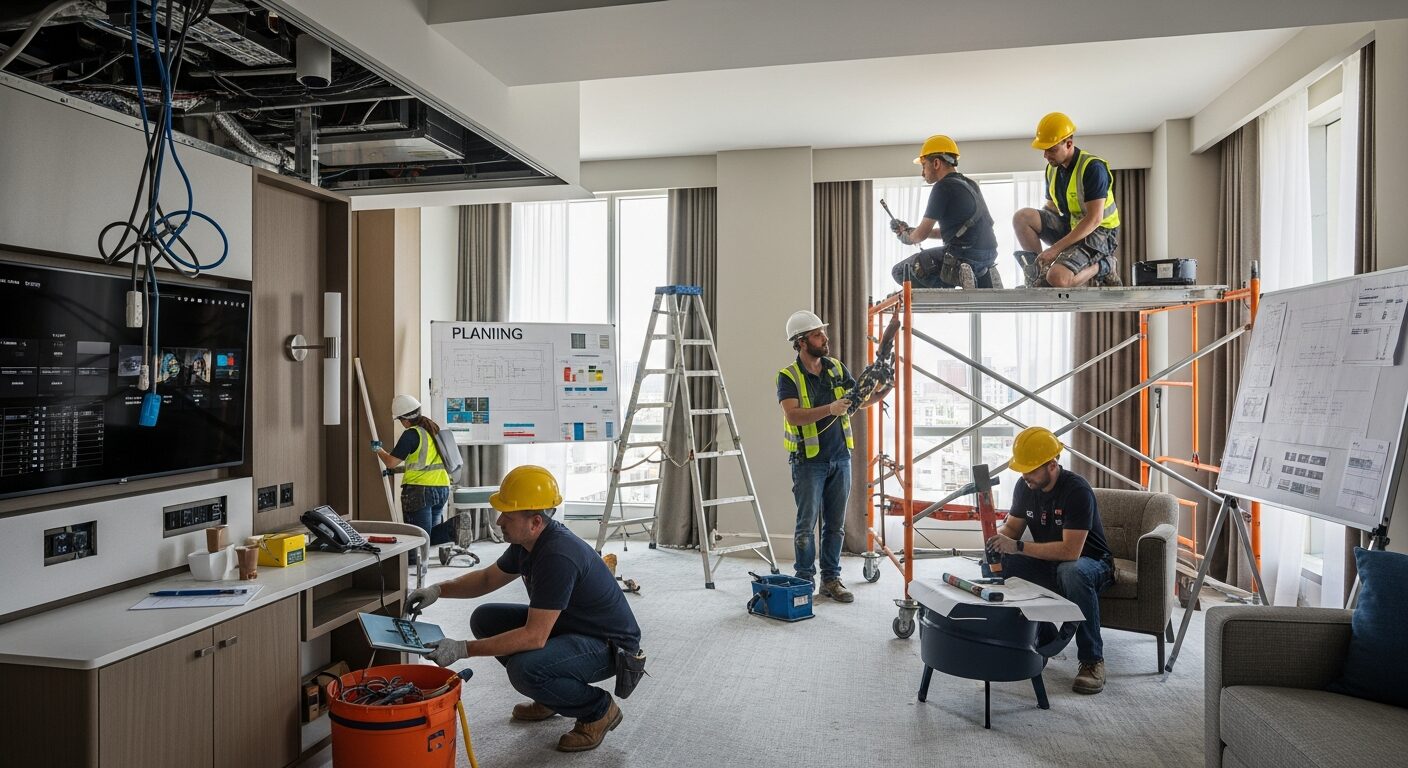
Most hospitality renovations happen while the property operates. Unlike new construction, you can’t simply close doors for 18 months. Fast, professional room turns, phased construction, and strict operational continuity management are essential. Projects must maintain guest safety, preserve revenue-generating operations, and keep staff productive throughout.
This is where precision and military-grade discipline matter. Teams experienced in hospitality construction understand how to coordinate with housekeeping, maintenance, front desk, and management to minimize disruption.
Final Delivery and Quality Assurance
Once renovations wrap, rigorous inspection ensures everything meets code, performs as designed, and reflects the quality promised. Independent verification gives stakeholders confidence that the property is ready for its next chapter.
Common Renovation Scopes for Arlington Hospitality Properties
Guest Room Modernization
Updating guest rooms involves new furnishings, improved HVAC systems, upgraded bathrooms, enhanced lighting, and integrated technology (smart TVs, charging stations, digital key access). A 100-room property might budget $150,000–$250,000 per room for a full refresh, with phased approaches spreading costs and limiting revenue impact.
Mechanical and Infrastructure Upgrades
Hospitality properties depend on reliable HVAC, plumbing, electrical, and fire safety systems. Older properties often need complete system replacements. Energy-efficient upgrades (LED lighting, smart thermostats, updated equipment) reduce operating costs and align with modern sustainability expectations.
Common Area and Lobby Refreshes
Guests form first impressions in lobbies, hallways, and public spaces. Renovations here include flooring, wall finishes, lighting, furniture, and technology integrations (self-check-in kiosks, digital signage, Wi-Fi). These projects can be completed in phases with minimal guest impact.
Food and Beverage Spaces
Restaurants, bars, and breakfast areas require updated kitchens, dining layouts, and service workflows. Modern F&B renovation focuses on flexibility (to accommodate different event types) and operational efficiency.
Accessibility and Compliance
ADA compliance isn’t optional. Many properties discover outdated accessibility features during assessments. Bringing properties into full compliance protects against liability and expands market reach to guests with mobility needs.
Why Partner With Experienced Construction Managers
Hotel renovations involve competing priorities: timeline, budget, quality, and operational continuity. Experienced construction managers coordinate trades, manage scheduling, handle inspections, and solve problems before they escalate.
In Arlington, where multiple major hospitality projects are underway, finding contractors with proven expertise in occupied-site renovations is critical. Look for teams with:
- Hospitality-specific experience (not just general construction)
- Proven ability to manage occupied environments without disrupting operations
- Strategic planning processes that identify scope, budget, and timelines upfront
- Transparent communication and regular stakeholder updates
- Certified professionals with industry-recognized credentials
- On-time delivery and budget accountability
Avoiding Common Hotel Renovation Pitfalls
Underestimating Hidden Issues
Older properties often reveal surprises—corroded pipes, failing electrical systems, structural concerns—once demolition begins. Professional pre-renovation assessments and contingency budgets (typically 10–15%) help manage these surprises.
Ignoring Guest Experience During Construction
Loud noise, dust, disrupted amenities, and visible work zones frustrate guests and risk negative reviews. Phased approaches that isolate work zones, schedule construction during off-peak periods, and maintain functional amenities protect your reputation and revenue.
Choosing the Lowest Bid
The cheapest contractor often delivers the lowest quality. In hospitality, quality failures translate directly to guest dissatisfaction and revenue loss. Value-based selection (balancing cost, experience, timeline, and quality) beats race-to-the-bottom bidding.
Poor Planning for System Replacements
Replacing HVAC, plumbing, or electrical systems without coordination plans leads to downtime, guest complaints, and cost overruns. Strategic phasing and advance coordination prevent these headaches.
The Arlington Advantage: Local Market Momentum
Arlington’s hospitality boom creates timing advantages for property owners. Major new hotels under construction signal market confidence. Investors and operators are actively upgrading properties. Competition for guest dollars drives standards higher.
For property owners considering renovation timing, now is an ideal moment. Construction expertise is available, market demand is strong, and investment returns are improving. Properties that renovate strategically position themselves to capture market share as Arlington’s hospitality sector continues expanding.
The $500 million Americana by Loews breaking ground in summer 2026, the Caravan Court Hotel opening in 2026, and ongoing investment in Arlington’s infrastructure all point to sustained growth. Properties that modernize now will be well-positioned to compete.
Moving Forward: Your Renovation Roadmap
If you own or manage a hospitality property in Arlington or the broader Fort Worth, Texas area, the time to evaluate your property’s condition and upgrade needs is now. Start with a professional assessment—understand your baseline, identify priority improvements, and develop a realistic timeline and budget.
Partner with contractors experienced in hospitality construction, occupied-site management, and design-build delivery. Verify their credentials, review case studies, and ensure they understand the intersection of construction excellence and operational continuity.
A well-executed hotel renovation transforms guest experience, strengthens competitive positioning, and increases property value. In Arlington’s expanding hospitality market, that investment directly translates to occupancy rates, guest satisfaction, and revenue growth. The question isn’t whether to renovate—it’s when, and with whom, to ensure success.
0 Comments