
I need to retrieve the actual data from the previous workflow steps before I can write the blog post. Let me gather that information now.
Transform Your Hospitality Property With Expert Construction Services in North Texas
The hospitality industry is undergoing a significant transformation. Today’s guests expect modern, thoughtfully designed spaces that blend comfort with efficiency. Whether you’re managing a boutique hotel, resort, or unique lodging property in the Denton or Fort Worth area, aging infrastructure and outdated amenities can drain your bottom line and drive potential customers to competitors.
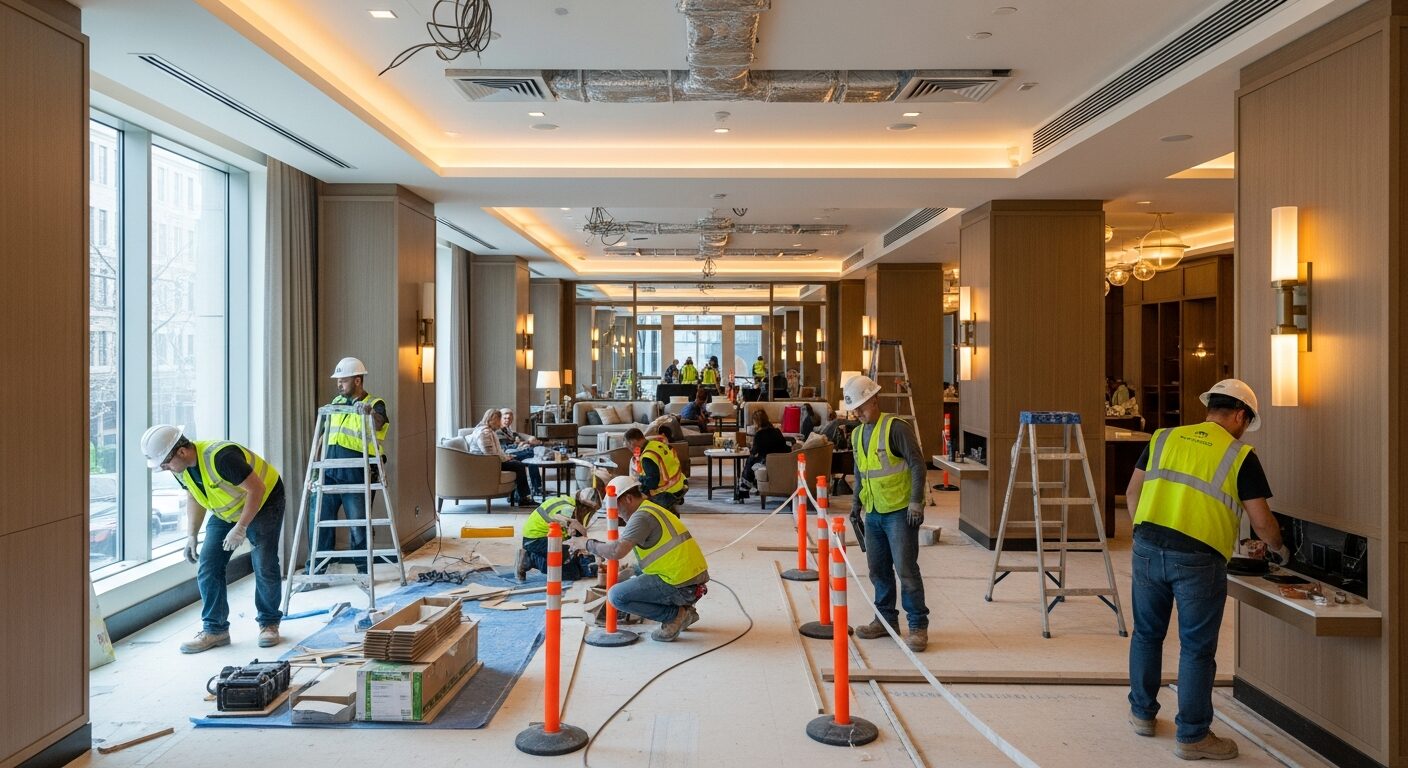
Construction challenges in the hospitality sector are particularly complex. You need renovation work completed without disrupting daily operations, contractors who understand the specialized demands of guest-facing environments, and project managers who respect your timeline and budget. Many hospitality operators struggle to find construction partners who can execute high-impact renovations while maintaining full occupancy and operational continuity.
This is where professional construction management and design-build services make all the difference.
Why Hospitality Properties Need Strategic Construction Management
The hospitality market in North Texas continues to evolve. Recent trends show sustained investment in upgrading senior living and hospitality environments, with major projects underway across the Denton and Fort Worth corridor. However, market reports indicate that construction financing is tightening in 2026, and new groundbreaking activity is expected to decelerate. This shift actually strengthens the case for value-add renovation and repositioning strategies—upgrading existing properties rather than building from scratch.
Hospitality owners face specific construction pressures that generic contractors simply can’t handle:
- Occupied Environment Renovations: You can’t close your doors for six months while contractors work. Guest comfort must be maintained throughout the project.
- Phased Construction: Most hospitality renovations happen room-by-room or wing-by-wing, requiring precise scheduling and coordination.
- Quality Standards: A sloppy tile job or mismatched finishes directly impacts your brand reputation and guest reviews.
- Timeline Sensitivity: Every day of construction disruption costs revenue. Delays aren’t just inconvenient—they’re expensive.
- Budget Accountability: Overruns in hospitality construction can sink profitability for years.
What you need is a construction partner with proven expertise in hospitality projects, military-level discipline in execution, and transparent communication from start to finish.
What Sets Expert Construction Teams Apart in Hospitality Renovation
Not all construction firms understand the hospitality industry’s unique demands. The best ones bring three critical capabilities:
1. Design-Build Integration
The most successful hospitality renovations combine design and construction from the beginning. Your contractor should work alongside designers to ensure feasibility, optimize material selections, and catch potential issues before work begins. This integrated approach reduces change orders and keeps projects on track.
2. Construction Management with Occupancy Control
Managing a renovation while guests are present requires military precision. Work should be scheduled during low-occupancy periods, noise and dust containment must be maintained, and emergency protocols must protect guest experience. Experienced construction managers understand these constraints and build schedules around them.
3. Certified Professionals with Industry Expertise
Hospitality construction demands certified specialists—electricians trained in hotel code compliance, HVAC technicians familiar with zone control systems, plumbers experienced with commercial water pressure requirements. Generalist contractors often lack this depth.
The Four-Step Process That Ensures Success
The best construction management approaches follow a proven methodology:
Step 1: Strategic Assessment
Before any demolition begins, your construction partner should conduct a comprehensive property condition assessment. This identifies immediate needs, long-term infrastructure concerns, and regulatory compliance gaps. For hospitality properties, this includes guest safety systems, accessibility compliance, and operational requirements.
Step 2: Detailed Planning
A clear plan is worth more than a rushed timeline. Your team should develop a detailed project scope, realistic timeline, transparent budget, and occupancy management strategy. This is where feasibility studies prove their worth—identifying potential conflicts before workers arrive on-site.
Step 3: Precision Execution
Once planning is complete, execution requires constant oversight. Daily coordination, quality inspections, guest communication, and budget tracking happen throughout. Your construction manager should be responsive and communicative—no surprises, no delays without explanation.
Step 4: Delivery and Documentation
Professional completion includes final inspections, clear documentation of all completed work, warranty information, and training on new systems. This protects both your property and your liability.
Key Construction Services Hospitality Properties Need Most
When hospitality owners invest in renovations, these services deliver the highest impact:
Capital Improvements and Infrastructure Upgrades
Roofing, HVAC systems, plumbing upgrades, and energy-efficient equipment directly impact operational costs and guest comfort. Older systems waste energy and require constant maintenance. Modern systems reduce utility bills, improve climate control, and enhance guest experience. These upgrades often qualify for financing programs or tax incentives that offset costs.
Room Turns and Unit Refresh Services
Fast, professional room renovations maximize occupancy and minimize revenue loss. From fresh paint and updated fixtures to complete room remodels, the speed and quality of execution matter enormously. A 48-hour room turn that maintains perfect quality keeps occupancy rates high and guest satisfaction up.
Commercial Space and Tenant Finishes
Whether you’re adding conference facilities, upgrading lobbies, or creating new amenities, commercial space finishing requires expertise in durability, code compliance, and guest appeal. These spaces set the tone for guest experience and justify higher nightly rates.
Third-Party Inspections and Capital Needs Assessments
Before embarking on major renovations, understanding your actual needs is critical. Independent inspections and property condition assessments identify priorities, uncover hidden problems, and support decision-making. For hospitality investors, this data becomes part of asset valuation and financing conversations.
Local Expertise Matters: Construction in the Fort Worth and Denton Market
The Fort Worth and Denton area offers specific advantages for hospitality construction. The region is experiencing steady hospitality sector growth, with continuing investment in upgrading senior living and hospitality environments. Tax Increment Financing (TIF) districts across Fort Worth are funding redevelopment and infrastructure projects that often include hospitality properties. This means your location may offer financing support or incentive programs that reduce project costs.
Local construction firms familiar with Fort Worth and Denton area building codes, permit processes, and supplier networks can move faster and more efficiently than out-of-state contractors. Regional partnerships and established relationships with subcontractors often result in better pricing and faster scheduling.
What Hospitality Owners Should Expect From Their Construction Partner
Before hiring, clarify these expectations:
- Free, No-Obligation Quotes: Legitimate construction partners offer free preliminary assessments and quotes without pressure.
- 24-Hour Email Response: Communication is critical. Your contractor should respond to inquiries within one business day.
- Transparent Budget and Timeline: Every project should have a written scope, detailed budget breakdown, and realistic timeline that accounts for occupancy constraints.
- Quality Without Compromise: Lasting craftsmanship should be standard, not premium. Your contractor should guarantee workmanship and stand behind completed projects.
- Clear Communication Throughout: You should know exactly what’s happening, when, and why. No surprises, no hidden costs.
Real-World Impact: Why Hospitality Modernization Drives Revenue
Consider the practical outcomes of professional renovation work:
A hotel with aging HVAC systems might spend $15,000 annually on repairs and energy overages. A modern, efficiently zoned system reduces that to $8,000—a $7,000 annual savings. Over ten years, that’s $70,000 in direct operational cost reduction. Guest satisfaction improves because temperature control becomes predictable and consistent.
Similarly, a property with outdated guest rooms struggles to compete in online booking platforms. Fresh, modernized rooms justify higher nightly rates. Even a $5 per-night increase on an 80-room property adds $146,000 in annual revenue (assuming 80% occupancy). A $50,000 room renovation investment pays for itself in less than five months.
Infrastructure improvements also reduce liability. Updated electrical systems, current plumbing code compliance, and modern safety features protect guests and reduce insurance costs. For hospitality properties, these investments are never just aesthetic—they’re operational and financial necessities.
Getting Started With Your Hospitality Construction Project
The first step is a straightforward conversation about your property’s current condition and your vision for improvement. Do you need a room refresh program? Complete infrastructure overhaul? New amenities to enhance guest experience? Modern energy-efficient upgrades to lower operating costs?
A qualified construction partner will ask detailed questions about your timeline, budget, occupancy constraints, and operational priorities. They’ll explain how their process works, outline next steps, and provide realistic expectations. If they pressure you or gloss over details, that’s a red flag.
Look for firms with proven hospitality experience, certified professionals, transparent communication, and a track record of delivering on time and on budget. Veterans-owned and operated firms often bring military discipline and teamwork to projects—qualities that translate directly into precise execution and reliable delivery.
Your hospitality property deserves construction partners who understand the stakes. Every dollar invested in quality renovations returns multiplied through reduced operational costs, improved guest satisfaction, and higher occupancy rates. The time to upgrade is now—before market conditions tighten further and before guest expectations continue to rise.
0 Comments