
I need to retrieve the information from the previous workflow steps to write this blog post. Let me gather the necessary details.
Strategic Commercial Renovations: How to Modernize Your Property Without Disrupting Operations
Arlington’s commercial real estate market is heating up. In early 2026 alone, the city approved $278 million in construction permits, with a pronounced focus on commercial renovations, tenant improvements, and capital upgrades. Senior living facilities, hospitality properties, and multi-family complexes are reinvesting heavily in existing assets—upgrading mechanical systems, refreshing interiors, and improving accessibility to stay competitive.
But here’s the challenge: most property owners can’t afford operational downtime during renovation work. You need a renovation partner who understands how to modernize aging inventory while keeping your business running.
Why Commercial Renovations Matter Now More Than Ever
The shift toward renovation-focused construction isn’t temporary—it’s a structural change in North Texas real estate. Rather than building from scratch, property owners are concentrating their capital on upgrades that extend asset life, improve occupancy rates, and reduce long-term operational costs.
The numbers tell the story. Construction Magazine reports that senior living, hospitality, and multi-family owners across Texas are upgrading mechanical systems, refreshing tenant-facing spaces, and improving building codes to remain competitive. In Arlington specifically, the city’s FY 2026 budget prioritizes a Multi-Family Inspection Program and neighborhood revitalization, signaling continued municipal pressure for property owners to maintain and improve building conditions.
This creates a distinct market reality: owners who delay renovations risk declining occupancy, tenant dissatisfaction, and code violations. Those who act strategically gain competitive advantage, extend asset life, and maximize long-term value.
The Occupied-Environment Challenge
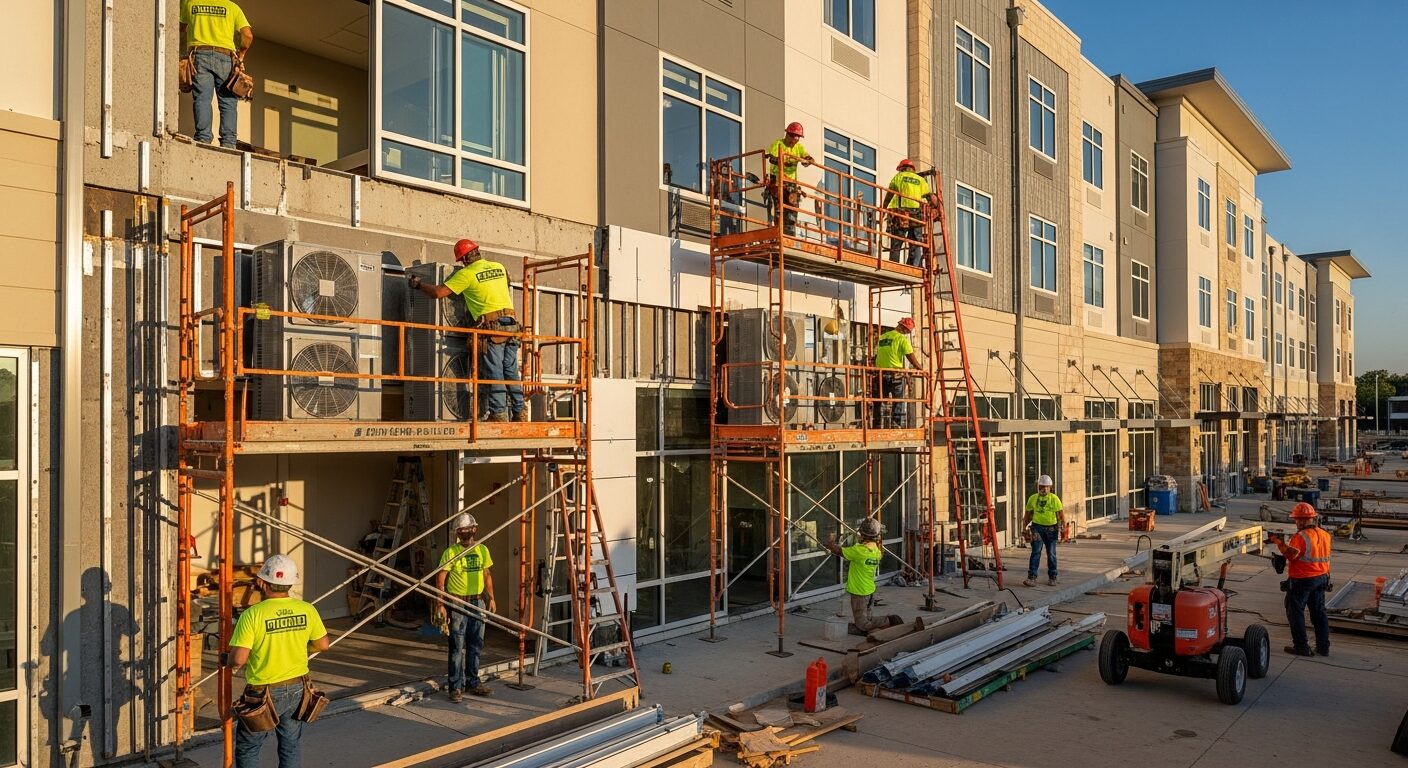
Standard construction practices assume you can close a building or section and manage disruption. Commercial renovations demand a different approach. Whether you’re operating a senior living community, running a hospitality property, or managing multi-family units, every day of downtime costs revenue and tenant goodwill.
This is where most contractors fall short. They prioritize speed and budget over operational continuity, leaving you with:
- Interrupted service delivery to residents or guests
- Hidden cost overruns when unforeseen conditions emerge
- Delayed project completion due to poor coordination with your operations team
- Safety and code compliance risks in occupied environments
A construction partner experienced in occupied-facility renovation understands the operational constraints, phases work to maintain tenant access, and coordinates closely with your team to minimize disruption. That’s not just construction management—it’s operational partnership.
The Four-Step Process That Works
Professional commercial renovation doesn’t start with a hammer. It starts with a thorough assessment and clear planning.
Step 1: Assessment & Property Evaluation
Before committing to a single dollar, conduct a comprehensive property condition assessment or capital needs assessment. This independent evaluation identifies aging systems, code deficiencies, accessibility gaps, and cost-effective upgrade pathways. For investors and property managers in Arlington, this step protects your capital and sets realistic expectations for budget and timeline.
Step 2: Strategic Planning & Bid Review
Once you understand what needs to happen, bid the work competitively. Independent contractor bid reviews and audits protect you from inflated pricing and poor workmanship. A seasoned construction team helps you evaluate bids not just on price, but on method, schedule, and the contractor’s ability to work in an occupied environment.
Step 3: Execution with Operational Discipline
This is where military discipline meets craftsmanship. Work phases are sequenced to maintain building operations, safety protocols are non-negotiable, and daily communication keeps your team informed. Materials are sourced efficiently, crews stay coordinated, and budget variances are flagged immediately—not discovered at project closeout.
Step 4: Delivery & Compliance Verification
Final inspections confirm all systems work, code compliance is documented, and the property is ready for occupants. No surprises. No punch-list drama. Just a completed, compliant, value-added asset.
High-Impact Renovation Categories
Not all renovations are equal. Capital improvements with the highest ROI typically fall into these categories:
Mechanical Systems & Energy Upgrades
HVAC, plumbing, electrical, and energy-efficient systems are often the largest operational and maintenance cost drivers. Upgrading to modern, efficient systems reduces utility costs, improves comfort, and enhances code compliance. Many property owners in Arlington are prioritizing these upgrades to reduce long-term operational expense.
Interior Refreshes & Tenant Finishes
For multi-family and commercial spaces, fresh interiors—paint, flooring, lighting, accessibility features—directly drive occupancy rates and rental rates. A thoughtfully executed refresh signals to prospective tenants that the property is well-maintained and operationally sound.
Façade & Exterior Updates
Roofing, exterior cladding, and window upgrades protect the building envelope, reduce water intrusion, and improve curb appeal. These are foundational improvements that extend asset life.
Accessibility & Code-Driven Upgrades
Senior living and multi-family properties face ongoing pressure to meet ADA standards and evolving building codes. Proactive code-driven renovations position you ahead of regulatory changes and reduce liability.
The Veteran Advantage in Construction
In Arlington and across North Texas, a new breed of construction firms is bringing military discipline and proven processes to commercial renovation. Veteran-owned and operated companies often bring distinct advantages:
- Process-driven operations: Military background instills systematic planning, clear roles, and accountability throughout a project.
- Teamwork and communication: Veterans are trained to maintain clarity under pressure, report up the chain, and coordinate complex operations—skills directly transferable to construction management.
- Integrity and transparency: A military ethos emphasizes truthful reporting, budget honesty, and on-time delivery. No excuses. No surprises.
- Craftsmanship: Veterans take pride in doing work right the first time, with lasting quality and attention to detail.
For commercial building owners in Arlington seeking a renovation partner, this foundation of discipline and purpose makes a measurable difference in project outcomes.
Finding the Right Construction Partner
Not all contractors are created equal. When evaluating a commercial renovation firm, prioritize these capabilities:
Experience in Occupied Environments
Ask for references from projects completed while the building remained operational. How did they manage phasing? Did they coordinate with your operational team? How did they minimize disruption?
Certified Professionals & Industry Credentials
Verify that the team holds relevant licenses, certifications, and insurance. For complex renovations—especially in senior living or hospitality—certifications matter.
Transparent Communication & Clear Processes
A good contractor communicates early and often. They provide regular updates, flag issues immediately, and maintain a clear change-order process. You should never be surprised by a cost overrun or timeline shift.
Proven Track Record on Budget & Schedule
Ask for data: What percentage of projects come in on budget? How often do projects slip schedule, and why? A firm that consistently delivers on time and within budget has systems in place to manage complexity.
Design-Build Capability
If your renovation involves design decisions (which most do), a firm that integrates design and construction expertise can often save money and accelerate schedule by catching design-to-build conflicts early.
Arlington’s Commercial Renovation Opportunity
Arlington is experiencing a construction inflection point. City infrastructure investments, regional commercial growth, and aging property inventory are converging to create sustained demand for sophisticated renovation services. Multi-family inspections programs, neighborhood revitalization initiatives, and owner reinvestment in competitive positioning all point to a robust market for firms that can manage complexity, maintain operational continuity, and deliver quality.
For building owners, this is a window to act. Owners who modernize now capture competitive advantage in occupancy, operational cost reduction, and tenant retention. Those who delay risk obsolescence and regulatory pressure.
The Real Cost of Waiting
Deferred renovations create a compounding cost problem. A 10-year-old HVAC system costs more to operate, breaks down more frequently, and eventually fails catastrophically. A dated interior loses tenants to newer, refreshed competitors. Unresolved code deficiencies create liability and future forced upgrades.
Strategic commercial renovation isn’t an expense—it’s a value-preservation and value-creation investment. When executed with operational discipline and transparent communication, renovation projects protect your asset, improve cash flow, and position your property for sustained market performance.
The Arlington commercial market is moving. Your next renovation project should move with it, on time, within budget, and without disrupting the operations that generate your revenue.
0 Comments