
I need to retrieve the previous step outputs to access the article details, internet search data, and other information needed to write the blog post.
Strategic Commercial Building Investment in Denton: Your Guide to Capital Improvements and Long-Term Value
Commercial building owners and investors focused on long-term value face a critical challenge in today’s fast-growing North Texas market: how to maximize property performance and asset appreciation while managing renovation costs and operational disruption. Denton’s explosive growth—driven by strong population increases, proximity to employment hubs, and favorable market demographics—creates both opportunity and urgency for property owners seeking competitive advantage through strategic capital improvements.
Why Denton’s Commercial Real Estate Market Demands Proactive Investment
Denton is experiencing transformative change. The city’s interactive development map tracks dozens of active projects, from multifamily complexes like The Renegade (a 104-unit Class A development opening in downtown Denton in 2026) to infrastructure upgrades and mixed-use developments that reshape the urban landscape. This growth signals rising tenant expectations and market standards. Properties that fail to keep pace with facility improvements risk losing competitive positioning, higher vacancy rates, and declining asset valuations.
For commercial building owners, this reality translates into a straightforward formula: strategic capital improvements drive long-term value. Whether you’re managing an aging office building, a retail property, or a multifamily asset, the question isn’t whether to invest—it’s how to invest smartly, efficiently, and without crippling your operations during construction.
Understanding Your Capital Improvement Options
Capital improvements differ from routine maintenance. They extend asset life, enhance functionality, improve safety and accessibility, and increase market appeal. Common priorities in the Denton and Fort Worth area include:
- Mechanical and electrical system upgrades: HVAC modernization, energy-efficient lighting, and infrastructure that reduces operational costs while meeting updated building codes
- Structural and envelope repairs: Roofing replacements, foundation work, and waterproofing that protect long-term structural integrity
- Unit and space refreshes: Modern finishes, updated layouts, and amenity improvements that justify higher rents or sales prices
- Safety and accessibility upgrades: ADA compliance, life-safety improvements, and egress enhancements that reduce liability and expand tenant appeal
- Common-area revitalization: Lobby upgrades, landscaping improvements, and tenant-facing spaces that signal professional management
The challenge is sequencing these investments effectively. Should you tackle everything at once, or phase work to maintain cash flow? How do you balance the lowest upfront cost against the risk of choosing the wrong contractor or missing hidden defects that compound later?
The Hidden Cost of Skipping Professional Assessment
Many owners try to cut costs by skipping professional evaluation. They work from intuition, contractor recommendations, or outdated inspection reports. This approach consistently backfires.
A Property Condition Assessment (PCA) conducted by certified independent professionals identifies existing defects, remaining useful life of major systems, and prioritizes repairs by both urgency and return on investment. For properties in Denton’s competitive market, a PCA also benchmarks your facility against comparable assets and reveals which improvements will most directly impact tenant attraction and retention.
Similarly, a Capital Needs Assessment (CNA) forecasts funding requirements over a multi-year horizon, allowing you to plan systematically and avoid surprise emergency repairs that drain reserves and disrupt operations.
The typical cost of a professional assessment—usually $3,000 to $8,000 depending on property size—pays for itself many times over by preventing costly mistakes and ensuring renovation dollars are spent on improvements that actually move the needle on value and occupancy.
Planning Renovations in Occupied Environments: The Denton Advantage
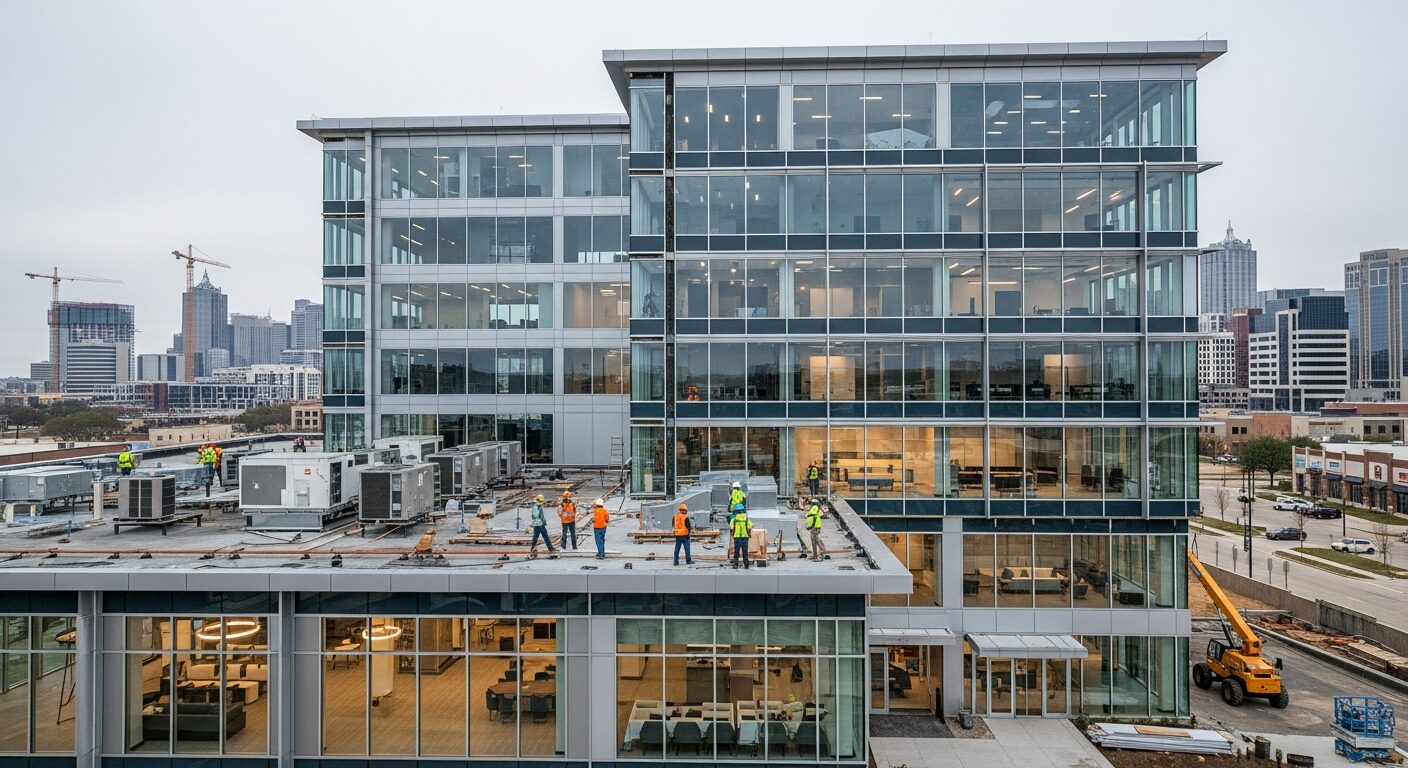
One of the biggest headaches for commercial property owners is executing renovations while maintaining normal operations. Denton’s growing multifamily and mixed-use developments prove this is possible with discipline and expertise.
Key principles for occupied-environment construction:
- Phased unit or space turns: Rather than disrupting all tenants at once, schedule renovations on a rolling basis aligned with natural lease expirations or seasonal slowdowns
- Transparent communication: Establish clear timelines, noise mitigation, and access protocols with tenants upfront to manage expectations and preserve relationships
- Certified project management: Experienced construction managers ensure daily coordination, compliance with local codes, and immediate problem-solving to minimize delays
- Quality without shortcuts: The temptation to cut corners or rush work often leads to callbacks and cost overruns that exceed any time savings
Fort Worth’s senior living renovations and Denton’s multifamily boom both demonstrate that professional construction management—paired with military-grade discipline and transparent processes—keeps projects on budget and on schedule even in complex, occupied settings.
Choosing the Right Construction Partner for Your Denton Property
The construction landscape in North Texas is crowded. How do you select a contractor or construction manager you can trust with a six-figure or seven-figure capital project?
Look for these qualifications:
- Proven experience in your property type (multifamily, office, retail, senior living, etc.) and in occupied-environment work
- Professional certifications and memberships in industry associations that signal ongoing training and accountability
- Transparent bidding and communication: Free, no-obligation quotes and responsiveness to inquiries within 24 business hours
- Independent contractor oversight: References to bid reviews, payment audits, and contractor vetting to protect you from cost overruns or quality issues
- On-time delivery and budget transparency: Verifiable track record of completing projects as promised with no surprise changes
- Local roots and regional expertise: A partner who understands Denton’s specific market dynamics, permitting processes, and code requirements
A veteran-owned construction management firm with over 70 years of combined expertise and a focus on strategic capital improvements can bring military discipline, integrity, and a proven four-step process—assessment, planning, execution, and delivery—to guide your project from feasibility study through final completion.
Case Study: Multifamily Value Creation Through Strategic Renovations
Consider the typical scenario facing Denton multifamily owners: an aging 100-unit property built in the 1990s, currently leasing at market rate but losing competitiveness to newer complexes like The Renegade. Management observes higher turnover, longer lease-up times, and complaints about outdated finishes and inefficient HVAC.
The owner engages a construction manager to conduct a PCA, which identifies three priority areas: HVAC modernization (reducing utility costs by 20–25%), selective unit refreshes (new flooring, paint, fixtures, and appliances), and common-area upgrades (lobby, fitness center, leasing office).
Execution strategy:
- Phase unit turns over 18 months, refreshing 6–8 units per month aligned with lease expirations
- Upgrade HVAC and lighting system-wide during low-season months to minimize tenant impact
- Execute common-area work during off-peak leasing periods
Outcome: Within two years, rents increase 8–12%, turnover drops to industry average, and asset value appreciates by an estimated $2–3 million based on improved income and cap-rate compression in Denton’s competitive market.
This isn’t hypothetical. It’s the reality facing smart property owners who treat capital improvements as strategic investments, not costs to minimize.
Navigating Denton’s Permitting and Code Requirements
Denton has specific building codes, zoning requirements, and development standards that govern renovation scope and timelines. The city’s Active Development Project Map and public records provide transparency, but navigating permitting can slow projects by weeks or months if you’re unfamiliar with local requirements.
A construction manager with Denton experience understands:
- Permit categories and processing times for mechanical, electrical, plumbing, and structural work
- Code compliance pathways for life-safety upgrades, accessibility modifications, and occupancy-type changes
- Expedited processes and fee structures for straightforward improvements versus complex additions
- Utility coordination with city departments for water, wastewater, and stormwater impacts
- Public notice and neighborhood coordination for projects affecting street access or adjacent properties
Building permits typically add 4–8 weeks to project timelines. A partner who can pre-coordinate with city staff, prepare applications accurately the first time, and manage the approval process in parallel with design and procurement can save months and eliminate costly rework.
Budgeting for Your Capital Improvement Project
One of the biggest sources of owner frustration is budget surprises. Renovation projects in occupied buildings often uncover hidden defects—rotted framing, outdated electrical wiring, plumbing issues—that weren’t visible during initial assessment.
Smart budgeting practices:
- Build a contingency reserve: Allocate 10–15% of total project cost for unexpected conditions and change orders
- Get detailed bids from multiple contractors: Compare scope, timeline, and payment schedules; watch for bids that seem too low (often a sign of inexperience or under-estimation)
- Establish a change-order process: Define how scope additions will be documented, priced, and approved before work begins
- Require contractor performance bonds: For projects exceeding $50,000, bonds protect you if the contractor fails to complete work or meet quality standards
- Schedule progress payments tied to milestones, not just completion, to maintain cash flow and contractor accountability
A construction manager who handles bid reviews and contractor audits acts as your advocate, questioning high-cost line items and verifying contractor references before you commit funds.
Investment Returns: What to Expect from Capital Improvements
The return on capital improvements varies by property type and specific work, but benchmarks exist:
- Energy-efficiency upgrades (HVAC, lighting, insulation): 3–6 year payback through operational savings, plus increased market value and tenant attraction
- Unit refreshes (flooring, paint, appliances, fixtures): 2–4% increase in rent per refresh, often recovering project cost within 18–24 months through higher lease rates
- Common-area and aesthetic improvements: Indirect returns through reduced turnover, faster lease-up, and improved word-of-mouth; difficult to quantify precisely but measurable in retention metrics
- Safety and code compliance upgrades: Immediate risk reduction and liability protection; non-negotiable for long-term asset viability
- Structural and system reliability improvements: Essential for preserving asset life and avoiding emergency repairs; returns measured over 20+ year asset hold periods
In Denton’s rapidly appreciating market, where property values are climbing and new competitive supply is entering constantly, the owners who are most successful at preserving and growing asset value are those who invest strategically—not minimally—in modernization and operational improvement.
Moving Forward: Your Action Plan
If you own or manage commercial real estate in Denton or the surrounding region, here’s how to get started:
Step 1: Commission a professional assessment. Engage an independent firm to conduct a PCA and CNA, identifying priority improvements and multi-year funding needs. This becomes your strategic roadmap.
Step 2: Prioritize by impact and urgency. Work with your assessment team and construction advisor to rank improvements by return on investment, regulatory compliance, and operational risk.
Step 3: Plan phasing and timelines. Determine which work can be completed immediately, which should be deferred, and how to sequence improvements to maintain occupancy and cash flow.
Step 4: Vet your construction partner. Interview at least three qualified firms; verify references; confirm experience in occupied-environment work and your specific property type.
Step 5: Execute with transparency. Establish clear communication protocols, weekly progress meetings, and defined change-order processes. Require your construction manager to provide regular reporting on budget, schedule, and quality.
Step 6: Measure and adjust. Track the performance of completed improvements—rent growth, occupancy, tenant satisfaction, utility costs—to inform future investment priorities.
The commercial real estate market in Denton is competitive and fast-moving. Property owners who delay capital improvements risk falling behind on market expectations and tenant demands. Conversely, those who invest strategically—guided by professional assessment, disciplined construction management, and clear return-on-investment thinking—position themselves to capture value, maintain competitive occupancy, and build long-term wealth from their real estate assets.
Your capital improvements don’t just maintain the status quo. When planned and executed right, they transform good properties into exceptional ones—the kind tenants prefer, lenders value, and buyers seek.
0 Comments