
I need to retrieve the previous step outputs to access the article details and internet search data. Let me gather that information now.
Senior Living Renovations: Capital Improvements That Attract Residents and Boost Property Value
The senior living industry is facing a critical challenge: aging properties are losing competitive appeal just as demand for quality facilities continues to grow. Senior living communities across the Dallas–Fort Worth region are realizing that strategic capital improvements aren’t optional—they’re essential to remaining competitive, attracting residents, and protecting their investment.
This guide explores how senior living operators can leverage targeted renovations and capital improvements to refresh their properties, increase occupancy, and enhance resident satisfaction.
Why Senior Living Properties Need Strategic Capital Improvements
Senior living communities operate in a highly competitive market. Prospective residents and their families evaluate facilities carefully, and outdated HVAC systems, worn roofing, or aging common areas send the wrong message about quality and safety. Beyond aesthetics, capital improvements directly impact operating efficiency and resident health.
Key drivers for capital improvements in senior living include:
- Occupancy competition: Newer or recently renovated competitors capture market share by offering modern amenities and reliable systems
- Regulatory compliance: Aging infrastructure may fail to meet current building codes, accessibility standards, or safety regulations
- Energy efficiency: Outdated HVAC and electrical systems increase utility costs, directly reducing profitability
- Resident satisfaction: Quality living environments improve retention rates and generate positive reviews and referrals
- Property valuation: Well-maintained, modern facilities command higher sale prices and cap rates when investors evaluate acquisitions
The Dallas–Fort Worth region is experiencing unprecedented demand for senior housing as the Baby Boomer generation ages. Properties that address deferred maintenance and modernize their offerings capture this wave of opportunity.
The Four-Step Process for Senior Living Capital Improvements
Successful renovations begin with a clear, disciplined approach. Rather than react to emergencies or guess at needed improvements, senior living operators should follow a strategic four-step framework that minimizes disruption while delivering lasting results.
Step 1: Assessment – Property Condition and Capital Needs Analysis
Before spending a dollar on renovations, commission a Property Condition Assessment (PCA) and Capital Needs Assessment (CNA) from independent third-party professionals. These evaluations identify hidden problems—failed seals on windows, corroded plumbing, roofing nearing end-of-life—that aren’t visible during routine inspections.
A comprehensive PCA covers:
- Structural integrity and foundation condition
- Roofing system age, membrane condition, and remaining useful life
- HVAC equipment performance and capacity
- Plumbing and water system reliability
- Electrical system capacity and safety compliance
- Building envelope integrity (windows, doors, sealants)
- ADA accessibility gaps
- Energy efficiency opportunities
The CNA prioritizes these findings into a ranked timeline, identifying which systems need immediate attention and which can be phased. This document becomes your roadmap—and your justification to investors or lenders that capital is being deployed strategically, not reactively.
Step 2: Planning – Design, Budgeting, and Phased Delivery
With assessment data in hand, the planning phase translates findings into actionable projects. For occupied senior living communities, this means designing renovations that don’t disrupt daily life or compromise resident safety.
Critical planning elements:
- Design-build partnerships: Work with construction teams that specialize in senior living environments and understand how to manage phased work around occupied units and shared spaces
- Phased delivery schedules: Break major projects into phases that minimize operational disruption—for example, renovating one floor of a multi-story building at a time
- Temporary solutions for critical systems: If a roof replacement will take months, implement temporary weather protection to prevent water damage while permanent work proceeds
- Resident and family communication: Transparent, ongoing updates reduce anxiety and build confidence that the community is investing in quality
- Budget refinement: Use bid reviews from experienced contractors to validate cost estimates and identify value-engineering opportunities without sacrificing quality
Step 3: Execution – Construction in Occupied Environments
Most senior living improvements must occur while residents remain on-site. This requires construction teams with proven expertise in occupied environments—contractors who understand infection control, noise management, safety barriers, and coordinating with daily activities like mealtimes and activities programming.
Execution best practices:
- Dedicated project management: Assign a single point of contact who coordinates with community leadership daily
- Safety protocols: Install temporary barriers, manage dust and noise, conduct air quality monitoring during major work
- Scheduling around resident needs: Schedule noisy work during periods when residents are less likely to be in their units
- Rapid room turns: When renovating individual units, use proven “room turn” processes that minimize vacancy—experienced contractors can refresh a senior living suite in days, not weeks
- Quality inspections: Third-party inspections during construction catch defects early, preventing costly rework after the community is occupied
Step 4: Delivery and Transparency – Results That Exceed Expectations
The final phase isn’t just “completion”—it’s ensuring that the finished work meets or exceeds specifications, stays on budget, and delivers the promised results. Experienced construction partners provide final documentation, warranty information, and training on new systems.
Delivery checklist:
- Written punch list completed before final payment
- Third-party final inspection confirming all work meets specifications
- Warranty and maintenance documentation for all new systems
- Staff training on new HVAC, security, or technology systems
- Cost reconciliation and final accounting
Senior living communities that follow this four-step process avoid costly surprises, maintain resident satisfaction during work, and emerge with properties that command premium occupancy rates and higher valuations.
High-Impact Capital Improvements for Senior Living Communities
Not all renovations are equal. Some improvements deliver dramatically higher returns in terms of occupancy, resident satisfaction, and operational efficiency. Prioritize these proven solutions:
HVAC System Upgrades
Modern, zoned HVAC systems allow senior living communities to maintain comfort in common areas while residents control their own unit temperatures. This single upgrade delivers:
- Lower energy bills: New systems are 30–40% more efficient than 10+ year-old equipment
- Improved air quality: Modern filtration reduces respiratory issues and allergens
- Resident control: Individual unit thermostats increase satisfaction and reduce complaints
- Preventive maintenance: New systems come with predictable service contracts, eliminating surprise failures
For senior living, HVAC is not a luxury—it’s essential to maintaining a healthy, comfortable environment for vulnerable residents.
Roofing and Exterior Envelope Improvements
A failing roof isn’t just an aesthetic problem—it’s a liability. Water intrusion leads to mold, ceiling collapses, and water damage that can force temporary resident relocations. Strategic roofing and exterior work includes:
- Roof membrane replacement: Modern materials last 20+ years and improve insulation
- Window and door sealing: Eliminates drafts, improves security, and reduces heating/cooling costs
- Siding and caulking repairs: Prevents water intrusion and extends building life by decades
- Parking lot resurfacing: Improves safety, reduces liability for trips and falls, and enhances curb appeal
These improvements are visible to residents and families the moment they arrive—they signal that the community is well-maintained and professional.
Accessibility and Universal Design Upgrades
As residents age in place, communities must ensure that every resident, regardless of mobility limitations, can safely navigate the property. Accessibility improvements include:
- Grab bars and handrails in bathrooms and hallways
- Wider doorways and corridors for wheelchair and walker access
- Walk-in showers with non-slip surfaces and bench seating
- Accessible parking and entry pathways
- Elevator modernization to meet current codes and improve reliability
- Lighting upgrades in hallways, bathrooms, and common areas for safety
These upgrades are often required by code and always appreciated by residents and families concerned about safety.
Common Area Modernization
Dining rooms, libraries, activity spaces, and lobbies are where residents and visitors form first impressions. Modernizing these spaces delivers disproportionate returns:
- Kitchen upgrades: Modern equipment supports diverse dietary needs and reduces staff workload
- Activity spaces: Flexible layouts with technology support (Wi-Fi, screens for virtual events) increase engagement
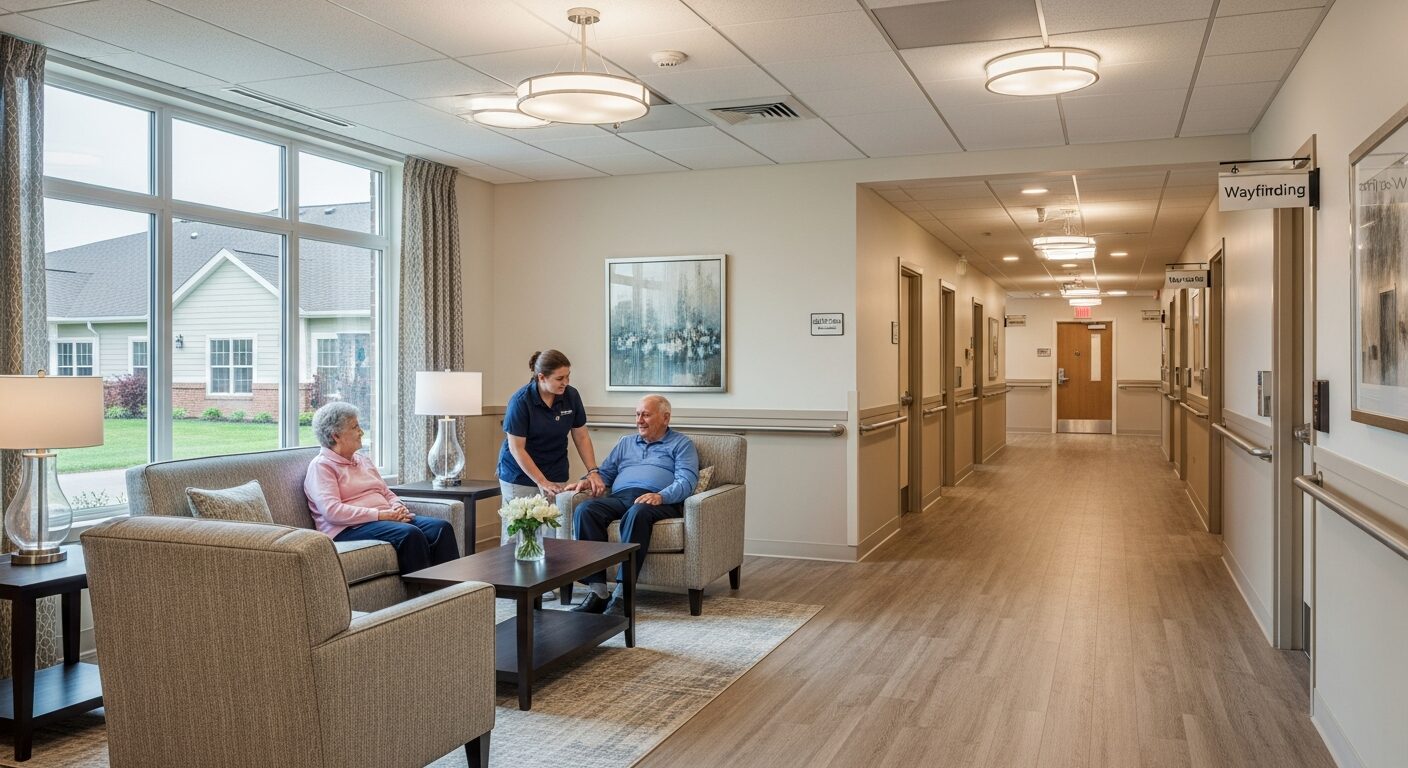
- Lobby and entrance: Fresh finishes, updated lighting, and clear wayfinding create welcoming first impressions
- Memory care environments: Specialized design with secure outdoor spaces, color-coded wayfinding, and calming finishes supports cognitive health
Senior living communities that invest in common areas see measurable increases in occupancy inquiries and positive word-of-mouth referrals.
Technology Integration and Security Upgrades
Modern senior living residents expect reliable internet, emergency alert systems, and security features that protect their independence while ensuring their safety. Key technology upgrades include:
- Network infrastructure: Whole-community Wi-Fi supports resident devices and streaming
- Emergency call systems: Modern systems alert staff instantly and can integrate with resident wearables
- Security systems: Contemporary access control and surveillance meet modern safety expectations
- Smart building controls: Automated lighting, temperature, and maintenance alerts reduce operational costs
The Dallas–Fort Worth Advantage for Senior Living Capital Improvements
The Dallas–Fort Worth region is experiencing unprecedented senior living demand. According to construction market analysis, the DFW area leads the nation in new construction activity, with specific strength in senior living, hospitality, and multi-family residential sectors. This growth creates both opportunity and urgency.
Why now is the right time for senior living renovations:
- Market tailwinds: Baby Boomers are aging into senior living at historically high rates; demand far exceeds supply in most DFW markets
- Financing availability: Lenders recognize the strong fundamentals of the senior living sector and actively finance capital improvements
- Contractor capacity: The booming construction market has elevated competition among contractors, creating opportunities to find experienced, quality teams willing to prioritize your project
- Utility incentives: Dallas–Fort Worth municipalities and utility companies offer rebates for energy efficiency upgrades, reducing net project costs
- Labor stability: Unlike some regions, the DFW construction market is experiencing stabilizing labor costs and improving material availability
Senior living operators who modernize their properties during this window position themselves to capture strong occupancy demand and command premium pricing.
Avoiding Costly Renovation Mistakes
Many senior living communities learn renovation lessons the hard way. Here are the most common pitfalls and how to avoid them:
Mistake 1: Skipping the Professional Assessment
The problem: Operating on assumptions or outdated information leads to underestimating scope, discovering hidden problems mid-project, and budget overruns.
The solution: Invest $3,000–$8,000 in a professional PCA and CNA before committing to major work. This upfront cost is recouped many times over by preventing surprises and ensuring smart prioritization.
Mistake 2: Choosing Contractors Based on Price Alone
The problem: Low-cost bids often reflect cut corners, inexperienced teams, and work quality that fails to meet senior living standards.
The solution: Use a structured bid review process. Ask contractors how they’ve managed work in occupied senior living environments, request references, and evaluate bids not just on price but on team experience, timeline, and quality standards.
Mistake 3: Poor Planning Around Resident Operations
The problem: Construction noise and disruption upset residents, damage reputation, and may violate lease terms or occupancy standards.
The solution: Choose a construction partner with proven experience in occupied environments. Establish clear communication protocols, schedule work around resident routines, and maintain transparent updates with residents and families.
Mistake 4: Underestimating Timeline and Contingency
The problem: Optimistic schedules are missed when hidden conditions are discovered or supply chain delays occur, extending disruption and escalating costs.
The solution: Work with experienced contractors to build realistic timelines that include contingency buffers. Plan for discoveries and delays—they’re nearly inevitable in renovation work on aging properties.
Mistake 5: Treating Renovations as Isolated Projects Rather Than Strategic Capital Planning
The problem: Ad-hoc renovations miss synergies, fail to address root causes, and don’t align with long-term property strategy.
The solution: Use the four-step process outlined earlier. Let the PCA and CNA guide a multi-year capital plan that addresses systems strategically and positions the property for long-term competitiveness.
How to Evaluate and Select a Construction Partner for Senior Living Projects
Choosing the right construction team is perhaps the single most important decision you’ll make. Here’s how to evaluate candidates:
Questions to ask potential contractors:
-
Experience in senior living: How many senior living communities have you worked with? Can you provide references from three senior living operators?
-
Occupied environment expertise: Describe your process for managing construction in occupied environments. How do you handle noise, dust, safety, and coordination with facility operations?
-
Quality and scheduling track record: What’s your typical schedule variance (actual vs. estimated)? What’s your quality audit and inspection process?
-
Team stability: Will the same project manager oversee the entire project? How do you ensure consistent, quality execution?
-
Problem-solving approach: When hidden conditions or scope changes arise, how do you communicate and manage them?
-
Warranty and support: What warranties and ongoing support do you provide after project completion?
-
Bid review and value engineering: Can you review bids from other contractors and help identify cost savings without compromising quality?
-
References and reputation: In the Fort Worth and Dallas–Fort Worth region, are you known and trusted by property managers and operators?
Experienced construction partners—especially those with military backgrounds and discipline-focused operations—often excel at senior living projects because they bring systematic thinking, accountability, and respect for residents to every project.
Making the Financial Case for Capital Improvements
Senior living operators sometimes hesitate on capital improvements due to cost concerns. However, the financial case is compelling:
Direct benefits:
- Occupancy improvement: A modern, well-maintained community commands higher occupancy rates. Industry data shows that renovated communities see 5–10% occupancy increases within 12 months post-renovation
- Rent premiums: Residents and families willingly pay 10–15% more per month for communities with updated amenities and modern systems
- Reduced operational costs: Modern HVAC, plumbing, and electrical systems reduce maintenance emergencies and utility expenses by 25–40%
- Lower turnover: Residents stay longer in communities they perceive as well-maintained, reducing costly turnover and vacancy
Indirect benefits:
- Property valuation: Senior living properties are valued on a multiple of operating income. By improving occupancy and reducing expenses, you directly increase property value
- Financing and refinancing: Lenders value properties with deferred maintenance much less favorably. Strategic capital improvements improve your loan terms and reduce borrowing costs
- Risk mitigation: Proactive replacement of aging systems prevents emergency failures that force temporary resident relocations or safety compromises
- Reputation and referrals: Communities known for quality and investment in resident amenities generate positive word-of-mouth and more referrals from discharge planners and families
For most senior living operators, the question isn’t whether to invest in capital improvements—it’s whether to invest now (at optimal financing rates and contractor availability) or delay (facing higher emergency costs and missed occupancy opportunities).
Next Steps: Building Your Senior Living Capital Improvement Plan
If you operate or manage a senior living community in Fort Worth, Dallas, or anywhere in the North Texas region, a structured capital improvement plan should be your next priority.
Start with these actions:
- Commission a professional assessment: Partner with an experienced third-party provider to complete a comprehensive Property Condition Assessment and Capital Needs Assessment
- Develop a prioritized capital plan: Use assessment findings to create a multi-year roadmap that addresses urgent safety and compliance needs first, then strategic improvements that drive occupancy and value
- Evaluate construction partners: Interview 3–5 experienced contractors with proven senior living expertise; prioritize those with strong references and transparent communication
- Secure financing: Discuss capital improvement financing with your lender or real estate advisor; many lending programs offer favorable terms for senior living improvements
- Communicate with residents and families: Transparency about planned improvements builds excitement and confidence in the community’s future
Senior living properties that take this systematic approach emerge with modernized facilities, higher occupancy rates, improved operational efficiency, and stronger competitive positioning. In a market with strong demand, the opportunity is now.
0 Comments