
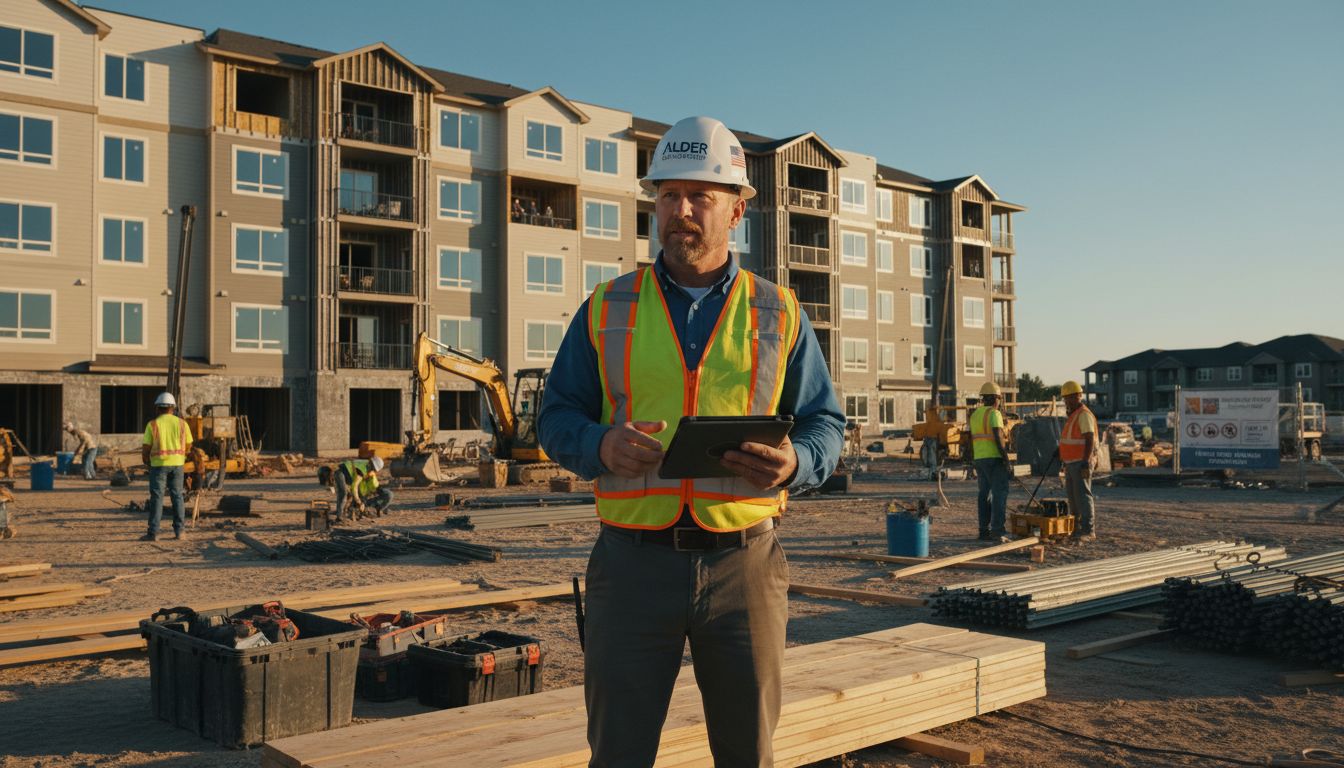
Strategic Construction Services: Transform Your Property With Confidence
Every property owner faces the same challenge: how to manage capital improvements without disrupting operations or breaking the budget. Whether you own a senior living facility, manage a multifamily complex, or oversee commercial space, construction projects require more than just contractors—they demand strategic construction services that balance quality, timeline, and transparency.
This is where professional construction management makes the difference. Alder Group Solutions, a veteran-owned construction company serving Fort Worth and the surrounding Texas area, specializes in delivering construction projects that actually get completed on time and within budget.
Why Strategic Construction Services Matter More Than You Think
Construction isn’t just about swinging hammers and laying brick. Modern property management demands a comprehensive approach that includes assessment, planning, execution, and delivery—every step carefully managed to minimize disruption and maximize results.
Property managers and owners often overlook the biggest source of project failure: poor planning. A study of construction projects shows that inadequate upfront assessment leads to cost overruns averaging 15-20% and schedule delays of 10-30 days. When your property is occupied—whether it’s a senior living community, hotel, or apartment complex—those delays translate directly to lost revenue and tenant frustration.
Strategic construction services address this by starting with what really matters: understanding your property’s unique conditions and constraints before a single nail is driven. This approach prevents costly surprises mid-project and keeps operations running smoothly alongside construction work.
The Four-Step Process That Separates Quality Construction From Chaos
Professional construction management follows a proven methodology:
1. Assessment & Planning
A certified inspection identifies current conditions, needed improvements, and potential challenges. This step alone can save thousands by catching issues before they become costly surprises. Capital Needs Assessments (CNA) and Property Condition Assessments (PCA) provide the data-driven foundation every major project requires.
2. Design & Bid Management
Once needs are identified, the design phase creates a clear roadmap. Independent bid reviews ensure you’re comparing apples to apples—not just contractor prices, but scope, quality standards, and timeline. This level of transparency prevents hidden costs and ensures competitive pricing.
3. Execution With Operational Continuity
This is where military discipline meets construction expertise. Veteran-led teams understand how to execute complex projects in occupied environments—keeping hallways clear, minimizing noise during patient care hours, maintaining safety protocols. It’s not just about building; it’s about building responsibly.
4. Quality Delivery & Inspection
The project ends not when construction stops, but when every element meets specification and client expectations. Third-party inspections verify that the work meets industry standards and contract requirements.
Capital Improvements That Strengthen Your Property’s Future
Capital improvements aren’t optional—they’re essential. Whether it’s roofing, HVAC systems, plumbing upgrades, or energy efficiency improvements, deferred maintenance becomes exponentially more expensive.
Energy upgrades are particularly valuable today. Properties that upgrade to modern HVAC systems, insulation, or LED lighting reduce operational costs by 20-30% annually. For multifamily properties and senior living facilities managing tight margins, these savings directly improve the bottom line. More importantly, residents notice the difference: better climate control, improved air quality, and lower utility costs.
Room turns in hospitality and multifamily settings are another critical area. A well-executed room refresh—painting, flooring, fixtures, and finishes—can be completed in 3-5 days without compromising quality. Fast turnarounds mean higher occupancy rates and faster revenue recovery. Slow room turns cost you tenants and revenue.
Who Needs Strategic Construction Services? Everyone Managing Property
If you manage any of the following, construction management isn’t a luxury—it’s a business necessity:
- Senior living communities dealing with aging infrastructure and residents who need minimal disruption
- Hospitality properties where downtime directly reduces revenue and guest satisfaction
- Multifamily housing complexes managing dozens or hundreds of units requiring coordinated upgrades
- Commercial properties where tenant operations cannot be interrupted
- Office buildings requiring retrofits, renovations, or technology upgrades
- Single-family rental properties needing professional oversight for renovation and turnover
Each sector faces unique challenges. Senior living requires infection control protocols and minimal resident disruption. Hospitality demands speed and zero tolerance for operational interruptions. Multifamily properties need coordinated scheduling across multiple units. Commercial tenants expect precision and professional communication.
A construction management partner who understands these differences delivers better outcomes.
What Sets Veteran-Owned Construction Apart
Veteran-owned construction companies bring something different to the table: military discipline, teamwork, and accountability. The leadership team at Alder Group Solutions served together, building a foundation of trust that translates directly into project reliability.
This isn’t just marketing language. When veterans manage construction, they bring:
- Proven systems and processes developed through military logistics and operations management
- Accountability culture where every team member owns outcomes and communicates transparently
- Precision execution from detailed planning and no shortcuts
- Problem-solving mentality that turns obstacles into solutions rather than excuses
- Timeliness because deadlines aren’t suggestions—they’re commitments
For property managers tired of contractor drama, cost overruns, and broken promises, this approach is refreshing.
Finding a Construction Partner You Can Actually Trust
Too many property managers end up burned by contractors who overpromise and underdeliver. Choosing the right partner requires looking beyond the lowest bid.
Ask potential construction partners these questions:
- What’s your assessment and planning process? If they want to start building immediately without a thorough assessment, that’s a red flag.
- Can you provide references from property managers and investors? Real testimonials from people in your industry carry weight.
- How do you handle occupied properties? Not every contractor has the discipline to work around active operations.
- What’s your response time and communication process? Clear communication prevents problems.
- Can you conduct independent inspections? Third-party verification protects your interests.
- Will you provide transparent bidding and cost management? Hidden costs are the enemy of trust.
A construction partner serving Fort Worth and the surrounding areas should have local expertise, deep community roots, and a portfolio of completed projects in your sector.
From Assessment to Completion: What to Expect
Here’s what a typical project looks like with a strategic construction partner:
Week 1-2: Assessment & Planning
A certified team inspects your property, identifies needed work, and creates a detailed scope. You receive a Property Condition Assessment or Capital Needs Assessment outlining priorities, costs, and timelines.
Week 3-4: Design & Bidding
Design plans are developed. Multiple contractors bid on the work. Your construction partner reviews bids independently, ensuring quality and fair pricing. You receive a recommendation based on quality, timeline, and cost.
Week 5+: Execution
Construction begins with a detailed schedule that minimizes disruption to your operations. Regular communication keeps you informed. Progress inspections verify work quality. The project stays on schedule and within budget because the planning was done right from the start.
Final Phase: Inspection & Delivery
Third-party inspections verify completion. Punch lists are addressed. You receive documentation, warranties, and confidence that the work will last.
The timeline varies based on project scope, but the discipline and transparency remain constant.
Renovation Trends Property Managers Should Know
The construction industry is evolving, and smart property managers stay ahead of trends:
Sustainable Materials & Energy Efficiency: Properties are moving toward sustainable building materials and energy-efficient systems. This isn’t just environmental responsibility—it’s becoming a competitive advantage in tenant recruitment and property valuation.
Health & Safety Standards: Post-pandemic, property managers demand construction processes that prioritize health and safety. Ventilation upgrades, touchless systems, and enhanced cleaning protocols are now standard expectations.
Fast-Track Renovations: Occupancy pressure means multifamily and hospitality properties need quick room turns without sacrificing quality. Construction partners must deliver speed and precision simultaneously.
Preventive Infrastructure Upgrades: Rather than waiting for pipes to burst or roofs to fail, savvy managers invest in preventive upgrades. Capital Needs Assessments help identify these opportunities before emergencies strike.
Integrated Technology: Modern renovations increasingly include technology infrastructure—networking, smart building systems, and connectivity. Construction partners must coordinate these specialized trades seamlessly.
The Cost of Waiting vs. The Cost of Acting
Here’s a hard truth: property deterioration accelerates. A roof with minor issues becomes a major repair. Aging HVAC systems fail completely rather than gradually declining. Small water damage becomes structural damage.
Deferred maintenance costs 10-25% more when finally addressed, according to property management industry data. A $50,000 capital improvement today might cost $65,000-$75,000 in three years if deferred.
Beyond dollars, deferred maintenance affects:
- Tenant satisfaction and retention (especially in senior living and multifamily)
- Competitive positioning in a market where newer facilities attract premium tenants
- Operational costs (aging systems are less efficient)
- Insurance and liability (neglected maintenance increases risk exposure)
- Property valuation (appraisers deduct for deferred maintenance)
Strategic construction services aren’t an expense—they’re an investment in your property’s value and your business’s long-term sustainability.
Local Expertise Matters: Construction in Fort Worth and Beyond
Fort Worth and the surrounding Texas communities have unique construction considerations. Local contractors understand:
–
0 Comments