
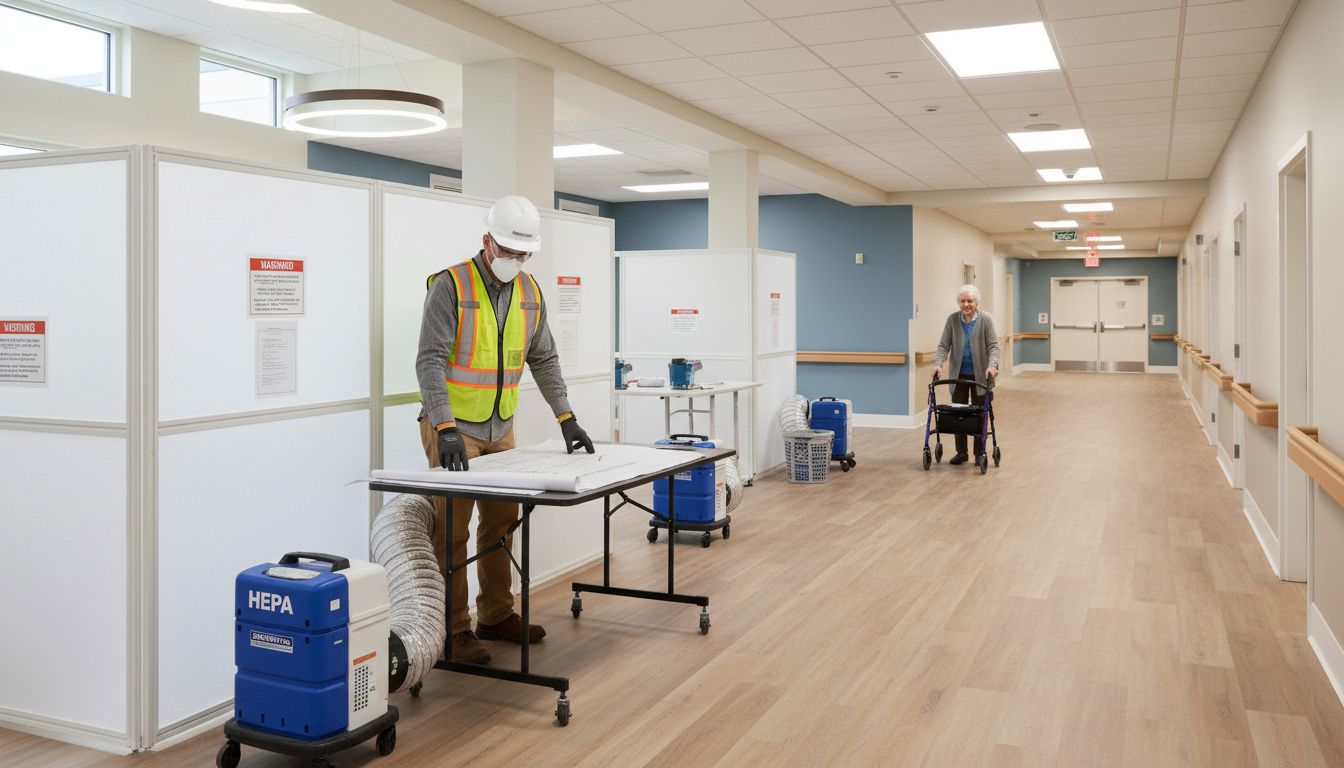
Senior Living Renovations: How to Protect Resident Safety During Construction
Senior living facilities face a unique construction challenge: how to modernize buildings without disrupting the daily care and comfort of residents. Whether you’re managing a 50-bed assisted living community or a large continuing care retirement community, renovation projects demand more than standard construction expertise. They require a construction management approach specifically designed for occupied healthcare environments where resident safety, infection control, and operational continuity are non-negotiable.
Austin’s senior living sector is experiencing significant growth, with facility operators increasingly prioritizing capital improvements to meet rising resident expectations and regulatory standards. Yet many operators discover that traditional construction timelines and methods don’t account for the complexities of working in spaces where vulnerable populations live, eat, and receive daily care. The right construction partner can mean the difference between a smooth, professionally managed renovation and a project that disrupts resident routines, compromises safety, or creates liability risks.
This guide walks you through the construction management strategies that protect resident care while delivering the high-impact renovations your facility needs.
Why Senior Living Renovations Demand Specialized Construction Management
Standard commercial construction management isn’t equipped for senior living environments. Residents aren’t temporary—they’re permanent occupants who depend on continuous access to meals, medication, activities, and care services. A dust-control failure in a skilled nursing unit isn’t a minor inconvenience; it can trigger respiratory issues or infections in immunocompromised residents.
The stakes are higher in senior living for several reasons:
- Infection control: Dust, debris, and construction activity can spread pathogens in environments where residents have compromised immune systems
- Medication and care disruption: Construction noise and vibration can interfere with medication schedules, therapy sessions, and sleep patterns
- Regulatory compliance: Senior living facilities operate under strict state and federal health codes; construction must never compromise these requirements
- Liability exposure: An injury or health incident linked to construction creates significant legal and financial risk
- Reputation impact: A poorly managed renovation can damage the facility’s standing with families, residents, and referral sources
This is why experienced construction partners in Austin and across Texas bring dedicated protocols specifically designed for senior living projects. They understand that construction done right in a senior facility isn’t just about finishing on time—it’s about finishing safely while maintaining the quality of resident life.
The Four-Step Construction Management Framework for Senior Living
Leading construction managers use a proven four-step approach tailored to occupied senior living environments:
Step 1: Comprehensive Risk Assessment
Before construction begins, conduct a detailed risk assessment specific to your facility’s layout, resident population, and ongoing care operations.
Key assessment elements include:
- Population vulnerability: Identify residents with respiratory conditions, infections, or immunocompromise who are at highest risk from construction activity
- Critical care zones: Map areas where construction activity poses the greatest risk—skilled nursing units, therapy spaces, medication rooms, dining areas
- Egress and emergency access: Ensure construction never blocks emergency exits or restricts resident movement
- Utility dependencies: Identify which mechanical systems (HVAC, water, power) cannot be disrupted without affecting resident care
- Care schedule mapping: Document medication times, meal services, therapy sessions, and visiting hours to identify construction windows
A specialized construction manager will work with your nursing and operations staff to create a risk profile that informs every aspect of the renovation plan.
Step 2: Phased Scheduling and Sequencing
Strategic phasing is the backbone of successful senior living renovations. Rather than executing work in a single, disruptive phase, experienced construction teams break projects into carefully sequenced stages that minimize resident impact.
Typical phasing strategies include:
- Unit-by-unit approach: For common area or shared amenity work, schedule construction by zone to maintain normal operations in unaffected areas
- Off-hours execution: Schedule noisy demolition, cutting, or mechanical work during late-night or early-morning hours when most residents are in private quarters
- Seasonal scheduling: Plan major HVAC or roofing work during mild weather when residents are more comfortable with temporary system adjustments
- Holiday and low-occupancy windows: Coordinate major work during periods when the facility has scheduled downtime or lower census
- Temporary housing planning: For extensive unit refreshes or renovations, arrange for residents to temporarily occupy other units with minimal transition stress
The goal is to ensure that at no point does active construction interfere with essential care services. A skilled construction manager coordinates with your staff to maintain this balance throughout the project.
Step 3: Infection Control and Contamination Management
This is where senior living construction management diverges most sharply from standard commercial work. Dust, debris, and airborne contaminants pose genuine health risks in skilled nursing and assisted living environments.
Infection control measures include:
- HEPA filtration systems: Maintain negative or neutral air pressure in construction zones using specialized equipment that captures 99.97% of particles
- Barrier walls and containment: Isolate construction areas with temporary walls, plastic sheeting, and sealed doors to prevent dust migration to occupied spaces
- Daily housekeeping protocols: Implement enhanced cleaning schedules in adjacent areas and common spaces where dust exposure poses risk
- Infection control coordination: Establish daily communication with your infection prevention team to monitor for any signs of contamination
- Equipment and vehicle management: Keep construction vehicles and equipment in designated zones away from resident entry points
- Worker health screening: Require construction workers to report illness and maintain current vaccinations (per facility and local guidelines)
These protocols go beyond standard jobsite cleanliness—they’re medical-grade containment strategies that protect a vulnerable population.
Step 4: Clear Communication and Resident/Family Engagement
Residents and their families need to understand what’s happening and why. Transparent communication reduces anxiety, builds trust, and helps residents prepare mentally and physically for temporary disruptions.
Communication best practices include:
- Pre-renovation meetings: Hold meetings with residents and families to explain the project timeline, scope, and expected impacts
- Weekly updates: Provide regular, honest updates on progress, unexpected issues, and any schedule changes
- Resident-focused information: Use large-print notices, verbal announcements, and family emails to keep everyone informed
- Grievance and feedback channels: Establish a clear process for residents and families to report concerns during construction
- Acknowledgment of inconvenience: Recognize that disruption is difficult; some facilities offer small gestures (snacks, outings during noisy work) to ease residents’ experience
- Post-project communication: Share completion timelines and explain how the renovation improves resident comfort and facility operations
When residents understand the purpose of renovations—new HVAC systems that improve air quality, updated bathrooms with safety features, refreshed common areas—they’re more likely to accept temporary inconvenience.
High-Impact Renovations That Benefit Senior Living Residents
Strategic capital improvements address resident comfort while improving facility operations and property value. Here are the renovations that deliver the greatest impact:
Unit Refreshes and Bedroom Updates
Individual resident rooms set the tone for daily life. Updates should focus on safety, comfort, and dignity:
- Flooring: Upgrade to slip-resistant, easy-to-clean surfaces that reduce fall risk
- Bathrooms: Install grab bars, walk-in showers, and emergency call systems
- Lighting: Add task lighting and nightlights to reduce falls and ease navigation
- Paint and finishes: Refresh colors to brighten spaces and mask wear from years of use
- Window treatments: Replace with light-filtering options that reduce glare while maintaining privacy
HVAC and Ventilation Upgrades
Climate control is critical for resident health and comfort, especially for those with respiratory or cardiovascular conditions:
- System replacement: Upgrade aging systems to high-efficiency models that provide consistent temperature control
- Zoning capability: Install systems that allow different areas to maintain different temperatures, accommodating varying resident preferences
- Air quality improvements: Add filtration upgrades to reduce dust, allergens, and airborne pathogens
- Humidity control: Maintain optimal humidity levels (30–50%) to reduce respiratory issues and skin irritation
Accessibility and Safety Enhancements
Many senior living residents use mobility aids; renovations should remove barriers and prevent falls:
- Handrails and grab bars: Install throughout common areas, hallways, and private bathrooms
- Flooring: Replace uneven or high-pile surfaces with smooth, slip-resistant options
- Lighting: Enhance visibility in hallways, bathrooms, and stairwells
- Doorway widening: Ensure wheelchairs and walkers can navigate all spaces
- Emergency call systems: Upgrade to modern systems with faster response times
Common Area Renovations
Shared spaces significantly impact residents’ quality of life and facility reputation:
- Dining areas: Upgrade kitchens and serving areas to improve meal service efficiency and appeal
- Activity and recreation spaces: Create bright, welcoming areas for social activities and programming
- Lobbies and entryways: Refresh to create a welcoming first impression for families and visitors
- Outdoor spaces: Add shaded seating, accessible pathways, and gardens for therapeutic outdoor time
Energy-Efficiency Upgrades
Lower operating costs benefit the facility while improving resident comfort:
- LED lighting: Reduce energy consumption while improving lighting quality
- Building envelope improvements: Seal air leaks, upgrade insulation, and replace old windows to stabilize temperatures and reduce drafts
- Water conservation: Install low-flow fixtures to reduce utility costs without compromising resident experience
Choosing a Construction Partner Experienced in Senior Living
Not all construction firms understand the nuances of senior living renovations. When evaluating partners, look for these qualities:
Experience in occupied-environment construction: They should demonstrate previous success completing projects in
0 Comments