
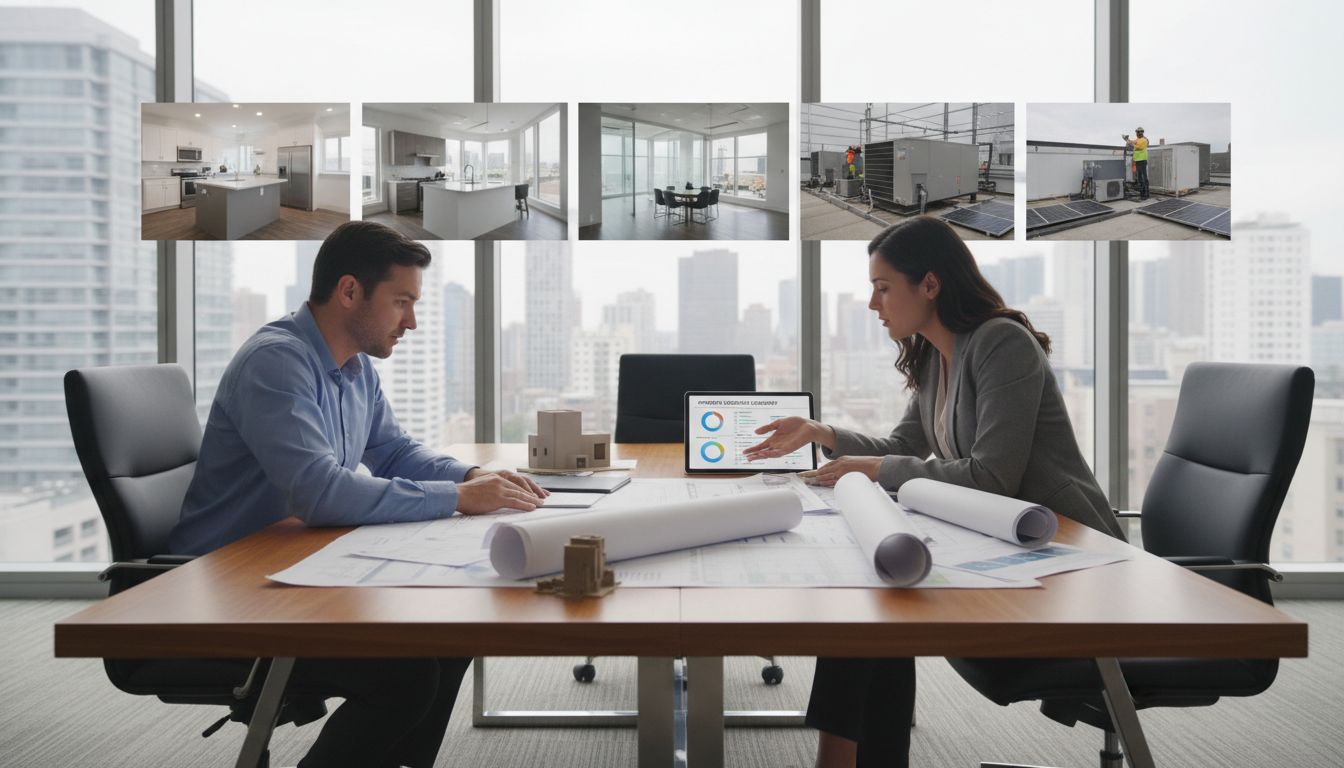
Capital Improvements for Property Management: Strategic Planning Guide for Multi-Family and Commercial Properties
Property management companies face constant pressure to maintain and improve properties while controlling costs. Capital improvements represent some of the most significant investments you’ll make, yet many property managers struggle with planning, cost estimation, and execution. Without a clear strategy, capital projects can exceed budgets, disrupt operations, and damage tenant relationships.
The stakes are particularly high for multi-family residential properties, senior living facilities, and commercial spaces where tenant satisfaction and regulatory compliance directly impact your bottom line. A single poorly executed renovation can result in extended vacancies, emergency repairs, and loss of revenue.
Understanding Capital Improvements and Why They Matter
What exactly are capital improvements? These are substantial upgrades and repairs that extend a property’s life, improve its functionality, or increase its value. Unlike routine maintenance, capital improvements include roofing replacements, HVAC system upgrades, plumbing overhauls, energy-efficient installations, and major unit renovations.
Capital improvement planning directly affects your property’s financial performance. Deferred maintenance leads to emergency repairs that cost 50% to 300% more than planned, preventive work. Strategic capital improvements increase property value, reduce operating costs through efficiency upgrades, and improve occupancy rates through modernized amenities.
For property management companies operating in Fort Worth and surrounding Texas areas, capital improvements aren’t optional—they’re essential for competitive positioning and long-term profitability. The question isn’t whether to invest in improvements, but how to plan them strategically, estimate costs accurately, and execute them without disrupting operations.
The Cost of Avoiding Proper Assessment
Many property managers make decisions based on incomplete information or contractor estimates alone. This approach creates blind spots that lead to costly problems.
Common consequences of inadequate property assessment:
- Hidden structural issues discovered mid-project that derail timelines and balloon budgets
- Emergency repairs that interrupt business operations and frustrate tenants
- Contractor disputes over scope changes and cost overruns
- Compliance violations that result from deferred maintenance
- Tenant turnover driven by aging facilities or construction disruptions
- Lost investment value when capital improvements aren’t documented and communicated to potential buyers or refinancers
A property condition assessment (PCA) or capital needs assessment (CNA) identifies these issues before they become emergencies. This upfront investment prevents far costlier surprises and gives you a realistic roadmap for capital spending over the next 5, 10, or even 20 years.
Strategic Steps for Capital Improvement Planning
1. Conduct a Comprehensive Property Assessment
Before spending a dime on improvements, understand your property’s true condition. A certified third-party assessment provides an objective evaluation of all major building systems: roofing, HVAC, plumbing, electrical, windows, structural components, and more.
What a professional assessment reveals:
- Current condition ratings for every major system
- Estimated remaining useful life (RUL) for equipment and components
- Urgency rankings based on safety, code compliance, and functionality
- Detailed cost estimates for recommended repairs and upgrades
- Prioritized investment timelines
This assessment becomes your capital improvement roadmap. It answers critical questions: What needs attention now? What can wait 5 years? What’s optional versus mandatory for code compliance?
2. Develop a Multi-Year Capital Plan
Rather than reacting to crises, create a strategic 5- to 10-year capital improvement plan. This plan sequences your projects based on urgency, impact, and budget availability.
Elements of an effective capital plan:
- Phased implementation that spreads costs and minimizes operational disruption
- Bundled improvements where related projects are grouped for efficiency (e.g., exterior work combining roof, siding, and window replacements)
- Tenant communication schedules that notify residents and prepare them for construction periods
- Budget reserves built into your operating budget each year for planned improvements
- Contingency funding (typically 10-20% of project budgets) for unforeseen issues
For multi-family and commercial properties, a well-structured capital plan demonstrates professional management to tenants, improves property valuations for refinancing, and prevents the financial shock of emergency repairs.
3. Get Independent Cost Estimates
Contractor estimates vary—sometimes dramatically. Competitive bidding is standard practice, but contractors who bid low may cut corners or discover hidden costs mid-project.
An independent cost estimate from a neutral third party provides several advantages:
- Benchmark accuracy against what the market will charge
- Identifies unrealistic bids (either suspiciously low or inflated)
- Validates scope to ensure all contractors are bidding the same work
- Reveals hidden costs that less experienced bidders might miss
- Protects your negotiations by giving you informed leverage
For complex projects—especially in occupied environments where you must maintain operational continuity—an independent review prevents contractor disputes and cost overruns that plague rushed decisions.
4. Plan for Occupied Space Renovations
Renovating multi-family units, senior living facilities, or commercial spaces while they’re occupied requires specialized expertise. Mistakes in planning create safety hazards, disrupt operations, and violate lease terms.
Best practices for occupied space renovations:
- Unit sequencing that allows phased turnover (renovate vacant units, schedule tenant moves strategically)
- Temporary utilities and access to maintain services during construction
- Noise and dust protocols that comply with lease terms and tenant rights
- Emergency response procedures for urgent maintenance needs that arise during renovation
- Quality assurance inspections at each phase to catch issues before they affect occupant satisfaction
This is where construction expertise and property management knowledge must work together seamlessly. A contractor experienced in occupied environment renovations understands tenant relations, lease compliance, and operational continuity—factors that inexperienced contractors often overlook.
Key Capital Improvements for Different Property Types
Multi-Family Residential Properties
Tenant retention and occupancy rates depend directly on unit quality and common area amenities. Capital improvements in multi-family properties should focus on:
- Unit modernization (kitchens, bathrooms, flooring, fixtures)
- Common area upgrades (lobbies, fitness centers, outdoor spaces)
- Building systems (roofing, HVAC, plumbing, electrical)
- Energy efficiency upgrades that reduce utility costs for both property and tenants
- Safety and accessibility improvements for ADA compliance and resident security
Unit turnover represents significant opportunity costs. Strategic renovations during natural turnover cycles minimize vacancy impact while improving the property’s competitive position.
Senior Living Facilities
Senior living properties face unique capital challenges due to specialized infrastructure, accessibility requirements, and health/safety regulations.
Critical capital improvement areas:
- Accessibility features (grab bars, ramps, wide hallways, accessible bathrooms)
- Safety systems (emergency call systems, handrails, lighting)
- Therapeutic spaces (activity rooms, outdoor spaces designed for seniors)
- Care delivery infrastructure (medication storage, clinical equipment support)
- Infection control upgrades (improved ventilation, isolation capabilities)
- Aesthetic improvements that create a welcoming, home-like environment
Regulatory compliance in senior living is non-negotiable. Capital improvement planning must address current codes and anticipate evolving regulations. A single compliance failure can jeopardize licensing and operations.
Commercial Properties
Commercial properties present different capital priorities depending on tenant type and lease structure.
Common commercial capital improvements:
- Tenant finishes (build-outs for new or relocating tenants)
- Building systems (HVAC efficiency, electrical capacity, plumbing reliability)
- Exterior maintenance (roof, façade, parking, landscaping)
- Technology infrastructure (broadband, security systems, smart building controls)
- Sustainability features (LED lighting, water conservation, solar potential)
In commercial properties, capital improvements directly affect lease renewals and tenant satisfaction. Outdated spaces lose tenants to newer buildings; modernized spaces command higher rents and longer lease commitments.
Financing and Budgeting for Capital Improvements
Building a Realistic Capital Budget
Property managers often underestimate capital needs. Guesswork in budgeting leads to funding shortfalls that delay necessary work or force rushed decisions.
Sound budgeting practices:
- Reserve funding formulas based on your assessment findings (typically 1-3% of property value annually, depending on age and condition)
- Cost trending that accounts for inflation and market rate increases
- Phased spending plans that distribute larger projects across multiple years
- Owner communication that educates owners about capital funding needs and long-term value
Many property owners resist capital spending because they don’t understand the consequences of deferred maintenance. A well-documented assessment and phased capital plan makes the financial case: spending $100,000 strategically today prevents $250,000 in emergency repairs within 3-5 years.
Financing Options
Not every capital improvement can be funded through operational cash flow. Understanding financing options allows you to implement projects on strategic timelines rather than emergency schedules.
Common financing approaches:
- Capital reserves (accumulated from operating budgets)
- Owner contributions (for major projects or acquisitions requiring immediate attention)
- Commercial loans (lines of credit or property improvement loans)
- Equipment financing (for mechanical systems)
- Energy efficiency financing (specialized programs for HVAC, insulation, solar)
For multi-family and commercial properties, lenders often require updated property condition assessments and capital plans before approving construction financing. This documentation gives
0 Comments