
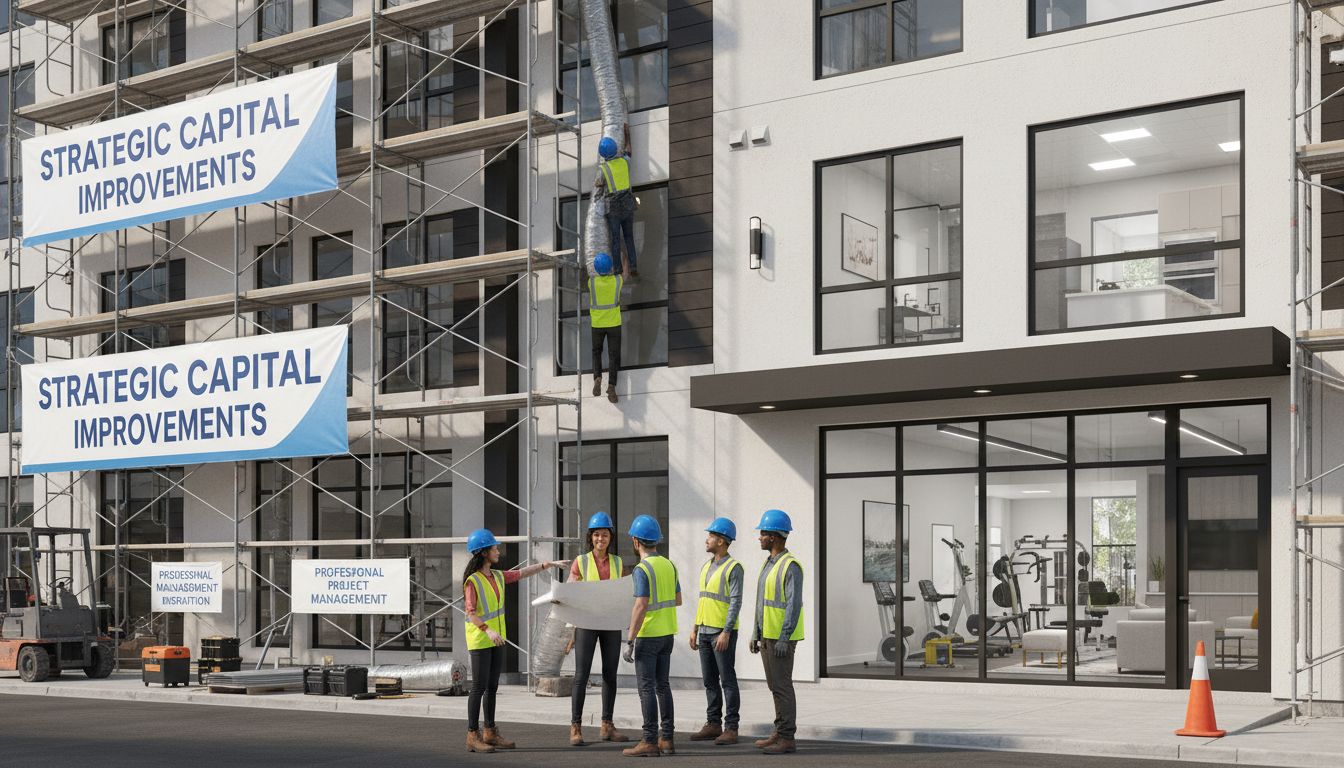
Capital Improvements for Multifamily Properties: Your Strategic Guide to Maximizing Asset Value
Capital improvements are the backbone of successful multifamily property management. Whether you’re managing a 50-unit complex or a 500-unit community, strategic renovations and building system upgrades directly impact occupancy rates, tenant retention, and long-term asset value. In today’s competitive rental market, multifamily investors across Fort Worth, Austin, and the broader Texas region are prioritizing capital improvements to stay competitive and maximize returns.
If you own or manage rental properties, you’re likely facing the same pressure: how do you plan and execute renovations without disrupting tenants, exceeding budgets, or derailing schedules? This guide walks you through capital improvements for multifamily properties, from assessment and planning to execution and delivery.
What Are Capital Improvements for Multifamily Properties?
Capital improvements are significant upgrades or replacements to building systems, common areas, or individual units that extend the asset’s useful life, increase its value, or improve operational efficiency. Unlike routine maintenance—which fixes existing problems—capital improvements are strategic investments that enhance the property’s competitive position.
Common capital improvement categories include:
- Unit renovations (kitchens, bathrooms, flooring, appliances)
- Building systems (HVAC, plumbing, electrical, roofing)
- Common area upgrades (lobbies, fitness centers, courtyards, amenity spaces)
- Energy efficiency (LED lighting, insulation, smart thermostats, HVAC optimization)
- Life-safety systems (fire suppression, security upgrades, accessibility improvements)
- Exterior work (siding, windows, landscaping, parking lot resurfacing)
The key distinction is that capital improvements must materially improve the property or extend its life—not simply maintain it. For multifamily owners, strategic capital improvements are essential to maintaining competitiveness, especially in growth markets like Austin and Fort Worth where new construction and renovated properties set rising tenant expectations.
Why Multifamily Properties Need Strategic Capital Improvements
Market Competition and Tenant Expectations
Austin and Dallas–Fort Worth rank among the nation’s top multifamily construction markets, with strong population and job growth driving rental demand. However, that same growth means competition. Tenants increasingly expect modern amenities, energy-efficient units, and well-maintained common areas. Properties that fall behind in capital improvements lose tenants to newer or recently renovated competitors.
Properties that invest strategically in capital improvements see tangible returns:
- Higher occupancy rates: Modernized units and amenities attract and retain tenants
- Premium rents: Recently renovated units command 5–15% higher rental rates
- Reduced turnover: Better condition and amenities reduce vacancy and turnover costs
- Lower operating costs: Energy-efficient systems reduce utility expenses by 10–20%
Aging Infrastructure Requires Proactive Attention
Most multifamily properties built in the 1990s and early 2000s are now 20–30 years old. Even well-maintained systems have predictable lifespans. Roofs, HVAC systems, plumbing, and electrical systems don’t fail on your timeline—they fail when they fail, often at the worst moment. Strategic capital improvements address aging infrastructure before emergency repairs become necessary.
Investor Demand for Value-Add Opportunities
Institutional owners and REITs across Texas are increasingly pursuing value-add strategies: acquiring stabilized properties and executing phased capital plans to boost net operating income (NOI). This trend has created strong demand for experienced construction and capital improvement partners who can deliver on-time, on-budget renovations in occupied environments while maintaining tenant satisfaction and operational continuity.
Developing a Capital Improvement Plan for Your Multifamily Property
Step 1: Assess Your Property’s Condition
The foundation of any successful capital improvement strategy is a comprehensive understanding of your property’s current condition. A Property Condition Assessment (PCA) or Capital Needs Assessment (CNA) identifies deferred maintenance, aging systems, safety concerns, and prioritized improvement opportunities.
During the assessment phase:
- Building systems are evaluated (HVAC age, efficiency rating, remaining life; roofing condition and warranty status; plumbing and electrical capacity; life-safety systems)
- Unit condition is reviewed (kitchen and bath finishes, appliances, flooring, fixtures, accessibility features)
- Common areas are inspected (structural integrity, envelope condition, parking lot, landscaping, amenity condition)
- Code compliance is checked (ADA accessibility, fire code, life-safety, energy code)
Independent, third-party assessments provide objective documentation that lenders, investors, and insurers rely on. They also protect you by creating a prioritized roadmap and establishing baseline documentation of the property’s condition.
Step 2: Prioritize Improvements Based on Impact and Urgency
Not all capital improvements should happen at once. Smart property managers prioritize based on:
- Life-safety and code compliance (highest priority—address fire safety, accessibility, structural integrity first)
- Operational impact (systems affecting tenant comfort and retention—HVAC, plumbing, electrical)
- Revenue impact (unit renovations and amenity upgrades that drive occupancy and rent growth)
- Cost efficiency (leverage economies of scale—renovate multiple units simultaneously if possible)
For example, a senior living community might prioritize accessibility upgrades and life-safety improvements before cosmetic common area renovations. A hospitality-adjacent property might prioritize guest-facing amenities and unit finishes to maximize occupancy.
Step 3: Budget Transparently and Plan for Contingency
Capital improvements require accurate budgeting and contingency planning. Bid reviews and contractor audits help you evaluate quality and cost across competing proposals. Independent reviews ensure fair pricing and identify potential cost overruns before work begins.
Budget considerations:
- Direct construction costs (labor, materials, equipment)
- Contingency reserves (typically 10–15% for occupied renovations, where unexpected conditions are common)
- Soft costs (design, engineering, permits, inspections)
- Project management and overhead
- Temporary accommodations (if tenant relocation during renovations is necessary)
Transparent budgeting also builds lender and investor confidence, especially for phased capital programs that extend over multiple years.
Step 4: Coordinate Execution While Minimizing Tenant Disruption
One of the biggest challenges in multifamily capital improvements is executing work in occupied environments. Unlike ground-up construction, you’re coordinating renovations while tenants live or work in the property.
Successful execution requires:
- Clear communication: Notify tenants in advance, provide schedules, and maintain responsiveness to concerns
- Phased approach: Complete units or building sections in logical sequences to minimize disruption
- Experienced project management: A construction manager familiar with occupied-environment work can coordinate trades, manage schedules, and handle the inevitable surprises that come with renovation in active properties
- Quality inspections: Third-party inspections at key phases ensure work meets standards and specifications
In multifamily settings, fast unit turns and minimal disruption are competitive advantages. Properties that can refresh vacant units quickly between tenants improve occupancy velocity and reduce revenue loss.
Capital Improvement Priorities for Multifamily Properties in 2026
Based on current market trends in Texas and across the Sun Belt, multifamily property managers are focusing on:
Energy Efficiency and Operating Cost Reduction
Rising utility costs and environmental expectations are driving investment in energy-efficient systems. Common upgrades include LED lighting, smart thermostats, high-efficiency HVAC equipment, and improved building envelope insulation. These improvements reduce operating costs—often by 10–20% annually—while improving tenant comfort and supporting sustainability goals.
Unit Renovations and Modernization
Newer properties and recently renovated communities command premium rents. Strategic unit refreshes—even without full gut renovations—improve competitive positioning. Modern kitchens, updated bathrooms, quality flooring, and contemporary finishes appeal to renters and justify higher rents. In senior living communities, accessibility improvements and modern safety features are equally important.
Amenity Upgrades
Tenants expect quality common areas. Fitness centers, co-working spaces, outdoor courtyards, and gathering areas are no longer optional amenities—they’re expectations. Renovated or upgraded amenity spaces improve property positioning and support occupancy and pricing strategies.
Life-Safety and Compliance Improvements
ADA accessibility, fire safety systems, and code compliance are non-negotiable. Properties that proactively address life-safety and regulatory requirements avoid emergency costs and potential liability issues.
Exterior and Structural Work
Curb appeal matters. Siding, windows, roofing, parking lot resurfacing, and landscaping improvements enhance property aesthetics and durability. These improvements protect the building envelope and reduce long-term maintenance costs.
How to Choose a Construction Partner for Your Capital Improvements
Your construction partner makes or breaks your capital improvement success. The right partner brings:
- Specialized experience in multifamily renovation (not just ground-up construction)
- Expertise in occupied-environment work (can navigate tenant coordination and phasing)
- Track record of on-time, on-budget delivery (transparent communication and disciplined project management)
- Certification and quality standards (licensed contractors with inspections and quality assurance processes)
- Transparent budgeting and cost control (detailed estimates, change order management, and clear pricing)
In Fort Worth and across Texas, veteran-owned construction firms with decades of combined expertise and a mission-driven approach to quality are well-positioned to manage complex multifamily capital programs. Look for partners who understand your property type—whether senior living, hospitality-adjacent multifamily, or institutional-grade communities—and can manage the nuances of renovation in occupied environments.
0 Comments