
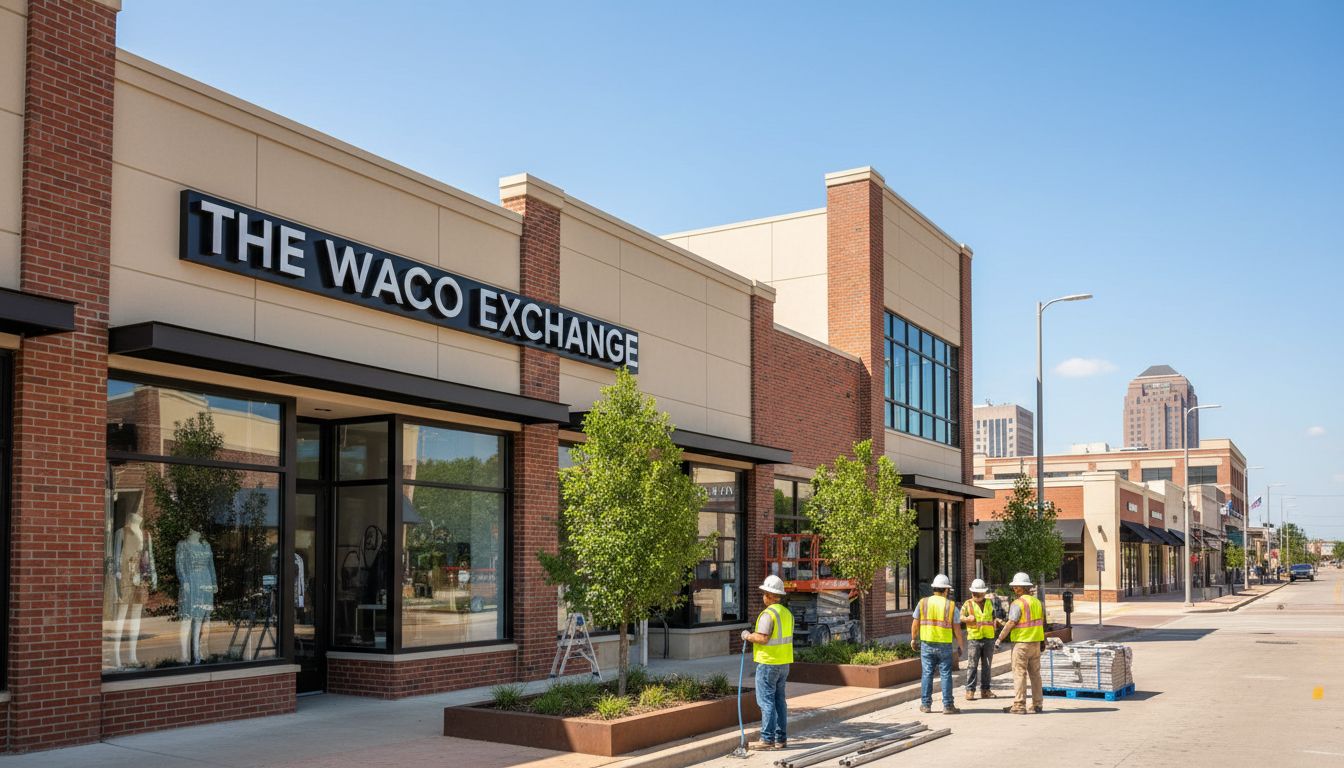
Strategic Commercial Renovations in Waco: Transform Your Property Into a Long-Term Investment
Commercial property owners and investors across Waco are facing a critical challenge: how to modernize aging buildings and capitalize on the city’s major revitalization wave without derailing daily operations or exceeding budgets. With $45 million in mixed-use redevelopment, downtown streetscape improvements, and grant-funded façade upgrades rolling out across the region, the demand for expert commercial renovations has never been higher—yet finding a contractor who truly understands occupied-environment construction is harder than ever.
The good news? Strategic commercial renovations aren’t just about preserving your property’s value. They’re about unlocking its potential. When done right, they attract new tenants, boost lease rates, reduce operational disruptions, and position your investment for long-term growth.
Why Waco’s Commercial Real Estate Market Demands Professional Renovations
Waco is experiencing unprecedented commercial development momentum. The city’s recent announcements reveal over $45 million in mixed-use transformation projects, extensive downtown redevelopment with new infrastructure, and grant programs supporting exterior property improvements. This boom creates both opportunity and urgency.
For property owners and investors, the stakes are clear: buildings that don’t evolve get left behind. Tenants expect modern spaces. Investors demand strong cap rates and long-term value. Municipal incentive programs now make renovations more affordable than ever—but only if executed by contractors who understand the technical, financial, and operational complexities of commercial construction in active environments.
Older commercial corridors in Waco—particularly retail and hospitality spaces—often sit vacant or underperform because their bones are solid but their appearance and infrastructure are dated. A professional capital improvement strategy bridges that gap, positioning your property to compete in today’s market while maintaining cash flow throughout the construction process.
The Hidden Costs of Poor Commercial Renovation Planning
Many commercial property owners delay renovations because they fear downtime will cost them tenants, income, or their reputation. Others rush into projects with the lowest bidder, only to face delays, cost overruns, and substandard work that creates problems for years to come.
The real cost isn’t the renovation itself—it’s what happens when renovations aren’t managed strategically:
- Tenant disruptions lead to lease cancellations and lost rent during and after construction
- Budget creep happens without clear scope, transparent bidding, and independent oversight
- Phased construction that isn’t coordinated creates safety risks and scheduling chaos
- Outdated infrastructure behind fresh finishes means problems resurface within months
- Permit delays and code violations halt progress and multiply expenses
The difference between a renovation that adds value and one that drains it comes down to planning, expertise, and transparent project management from day one.
Four Essential Steps to Renovating Commercial Property Strategically
Before you break ground, you need a framework. Strategic commercial renovations follow a proven four-step process that protects your investment, minimizes disruption, and delivers lasting results.
Step 1: Assessment and Capital Planning
A comprehensive property assessment identifies exactly what needs fixing and what’s worth upgrading. This isn’t just about cosmetics. A professional capital needs assessment (CNA) evaluates structural integrity, mechanical systems (HVAC, plumbing, electrical), code compliance, accessibility requirements, and energy efficiency. It prioritizes work by impact and necessity, so your budget goes where it counts most.
For commercial properties in Waco, assessments often reveal opportunities tied to recent municipal grants. The city’s façade improvement program, for example, covers exterior upgrades—but only if your property qualifies. An expert assessment identifies these opportunities and ensures you’re positioned to apply and execute successfully.
Step 2: Planning and Design-Build Strategy
Once you know what needs work, the next step is design and planning. This includes selecting the right materials, sequencing work to minimize tenant disruption, coordinating utilities and infrastructure, and building in contingencies for the unexpected.
Design-build services streamline this phase by consolidating design and construction into a single, accountable partner. Instead of managing separate architects and contractors, you get one point of contact, coordinated timelines, and transparent pricing. For properties in occupied environments—retail strips, multi-tenant buildings, hospitality spaces—this approach is essential.
Step 3: Execution with Operational Continuity
Here’s where most commercial renovations either succeed or fail. Construction in an occupied environment requires military-level discipline: daily coordination with tenants, traffic management, safety protocols, noise and dust control, and schedule adherence.
Experienced commercial contractors understand that your tenants are also your clients. They maintain clear communication, stick to agreed-upon work hours, coordinate deliveries to avoid disruption, and keep job sites secure and clean. Phased construction—tackling one section or unit at a time while keeping others operational—is standard practice for seasoned teams.
Step 4: Delivery and Long-Term Outcomes
The final step moves beyond just finishing construction. It includes inspections, final walkthroughs, warranted systems, and the documentation you need for future maintenance and resale. A contractor who stands behind their work provides detailed training on new systems, comprehensive warranties, and accessible support when questions arise.
For investors, this documentation supports your appraisal and resale value. For owner-occupants, it ensures your property performs as promised.
Common Commercial Renovation Projects in Waco
Waco’s market supports a diverse range of commercial renovations, each with unique requirements:
Retail and Shopping Center Renovations: Updates to storefronts, common areas, parking, and lighting drive foot traffic and tenant retention. The Brookview Hills Shopping Center’s $45 million transformation exemplifies this—exterior refreshes, interior reconfigurations, and site upgrades that revitalize entire corridors.
Tenant Build-Outs and Space Finishes: When a new business moves into existing commercial space, it often requires interior reconfiguration, systems upgrades, and code-driven improvements. AutoZone’s permit filings in Waco demonstrate the steady demand for these fast-track tenant improvements.
Hospitality and Entertainment Venue Renovations: Restaurants, entertainment spaces, and hospitality properties require specialized interior work—life-safety systems, accessible design, commercial kitchens, and durability-tested finishes. Escapology and similar entertainment venues expanding in downtown Waco rely on these skill sets.
Façade and Exterior Improvements: Signage, paint, windows, doors, accessibility features, and structural repairs dramatically impact curb appeal and lease-ability. Waco’s grant program explicitly supports these improvements, reducing owner costs.
Infrastructure and Systems Upgrades: Behind-the-scenes work—HVAC, plumbing, electrical, drainage, and utility coordination—often determines whether a renovation lasts or fails. Downtown redevelopment and public projects highlight the complexity of this work when coordinating with live operations.
Finding the Right Partner for Waco Commercial Renovations
Not every contractor is equipped for commercial property renovation. Residential builders often lack experience with commercial codes, tenant coordination, and the phased sequencing that occupied buildings demand. General contractors without renovation specialization may miss cost-saving opportunities or fail to identify infrastructure problems until they’re mid-project.
The right partner brings several critical capabilities:
Proven experience in your property type: Whether it’s retail, hospitality, multi-tenant office, or mixed-use, your contractor should have completed similar projects and be able to reference past clients.
Transparent bidding and cost management: You should receive detailed bids that break down labor, materials, and contingencies. Bid reviews by independent third parties help you avoid surprises and ensure competitive pricing.
Understanding of municipal codes and incentive programs: Waco’s grant programs, permitting requirements, and code standards are constantly evolving. Your contractor should stay current and help you capture available funding.
Design-build capabilities or strong designer relationships: Whether your contractor leads design or partners with architects, they should guide you through selection of finishes, systems, and sequences that balance aesthetics, durability, and cost.
Occupied-environment expertise: This is non-negotiable for commercial properties. Your contractor must demonstrate the ability to coordinate with existing tenants, manage phased work, maintain safety, and communicate proactively.
Financial stability and insurance: Large renovation projects involve significant investment. Confirm that your contractor carries adequate liability and workers’ compensation insurance, has verifiable bonding, and can provide references from lenders or previous clients.
The ROI of Strategic Commercial Renovations
Professional commercial renovations pay dividends far beyond aesthetics. Properties that undergo strategic capital improvements typically see measurable returns:
- Increased lease rates: Modern, well-maintained spaces command 10–15% higher rents
- Reduced vacancy: Attractive, functional properties attract and retain quality tenants
- Lower maintenance costs: Updated systems require fewer emergency repairs and operate more efficiently
- Higher appraisal values: Capital improvements directly increase property valuations, supporting refinancing and resale
- Tenant satisfaction and retention: Occupied-environment projects that minimize disruption build goodwill and reduce turnover
For investors and property managers, these returns compound over time. A $50,000 renovation that increases net operating income by $5,000 annually generates a 10% return in year one—and improves both your property’s market position and your bottom line.
Waco’s Renovation Momentum: Your Window of Opportunity
The transformation underway in Waco won’t last forever. Grant programs have application windows. Municipal incentives fund projects in priority corridors first. Properties that renovate early capture tenants, secure incentive funding, and establish themselves as market leaders. Those that delay risk being overshadowed by newly improved competitors.
The $45 million Brookview Hills development, downtown streetscape improvements, Chapel Park enhancements, and new Fire Station 4 all signal municipal confidence and investment. These projects create a rising tide
0 Comments