
Dallas–Fort Worth Construction Outlook 2026: Renovation Boom Fuels Plano Capital Improvements
Alder Designs forecasts a renovation-led boom across Dallas–Fort Worth in 2026, with multifamily, senior living, hospitality and commercial owners prioritizing…
I need to retrieve the information from the previous workflow steps to generate the blog post. Let me gather the necessary data.
The rental market in Plano, Texas is hotter than ever. With population growth in Collin County outpacing most of Texas and major healthcare expansions like Texas Health Presbyterian Hospital’s $343 million patient tower project underway, property owners face both opportunity and pressure. Your tenants expect modern, well-maintained spaces. Your competition is aggressive. Your margins are tight.
The question isn’t whether you should invest in your rental properties—it’s which capital improvements will deliver the highest return and fastest payback in today’s market.
What Are Capital Improvements for Rental Properties?
A capital improvement is a renovation or upgrade that extends the useful life of a property, increases its value, or adapts it to a new use. Unlike routine maintenance (fixing a leak or repainting trim), capital improvements are strategic investments that justify depreciation deductions and attract quality tenants.
Common examples include:
- HVAC system replacements (furnaces, air handlers, ductwork)
- Roofing projects (full replacement or significant repairs extending life)
- Kitchen and bathroom renovations (cabinets, appliances, flooring, fixtures)
- Plumbing system upgrades (replacing aging copper or galvanized lines)
- Electrical panel upgrades and rewiring for modern loads
- Energy-efficiency improvements (insulation, windows, solar, smart controls)
- Accessibility modifications (ADA compliance, grab bars, ramps)
- Common-area renovations (lobbies, hallways, landscaping, parking)
- Room turns (deep cleaning, paint, flooring, fixture replacement between tenants)
In Plano’s fast-paced rental market, these improvements aren’t optional—they’re competitive imperatives.
Why Capital Improvements Matter More in Plano’s Growth Market
Plano has emerged as one of the Dallas–Fort Worth region’s top rental markets. Population growth is sustained, corporate relocations are frequent, and demand for quality housing consistently outpaces supply. That’s good news for owners—but only if properties keep pace.
Property owners who delay capital improvements face measurable costs:
- Higher vacancy rates as tenants choose newer, better-maintained units
- Lower rents (competitive pressure forces price reductions on aging assets)
- Increased tenant turnover and turnover costs (advertising, showing, cleaning, repairs)
- System failures that trigger emergency, high-cost repairs mid-lease
- Declining property value as deferred maintenance compounds
- Reduced financing options when lenders view properties as higher risk
Conversely, owners who invest strategically in capital improvements enjoy:
- Faster lease-ups and shorter vacancy periods
- Higher rental rates justified by modern, reliable systems and finishes
- Improved tenant retention and longer lease terms
- Predictable operations with fewer mid-lease emergency repairs
- Stronger property valuations supporting refinancing and sales
- Tax advantages through depreciation of capital improvement costs
In Plano’s booming market, the property owner who delays capital improvements often watches market share slip to competitors with newer, better-maintained portfolios.
Strategic Capital Improvements That Deliver ROI
Not all capital improvements are created equal. Your budget is finite. You need clarity on which projects will genuinely move the needle on occupancy, tenant satisfaction, and property value.
HVAC and Climate Control Upgrades
Plano’s hot, humid summers and variable winters make reliable HVAC non-negotiable. Tenants will tolerate almost anything except uncomfortable temperatures. An aging or undersized HVAC system is a tenant magnet for vacancies.
Why it matters: Modern, efficient HVAC systems reduce tenant complaints, lower utility costs, and extend the property’s competitive lifespan. A modern system also qualifies for energy-efficiency tax credits.
Timeline and cost: System replacement typically runs $5,000–$15,000 per unit (residential) or significantly more for large multi-unit buildings. Plan for 2–4 weeks if the property is occupied.
Roofing and Weatherproofing
A failing roof is a showstopper. Water intrusion damages interiors, drives tenants away, and becomes an expensive emergency. Replacing or significantly extending roof life is one of the highest-ROI capital improvements available.
Why it matters: A new roof protects the entire asset, prevents water damage, reduces insurance premiums, and signals to prospective tenants that the property is well-maintained.
Timeline and cost: Roof replacement for a multifamily building ranges from $15,000–$100,000+ depending on square footage and complexity. Projects take 2–6 weeks.
Kitchen and Bathroom Renovations
Tenants judge rental appeal in kitchens and bathrooms first. Outdated fixtures, worn cabinetry, and failing plumbing turn away quality applicants immediately.
Why it matters: Modern kitchens and bathrooms justify higher rents, reduce tenant turnover, and make units lease faster. These spaces have high visual impact and directly influence leasing decisions.
Timeline and cost: A quality bathroom renovation runs $5,000–$12,000 per unit; a kitchen may run $8,000–$20,000+ per unit, depending on finishes. Budgeting 3–6 weeks per unit is standard.
Energy-Efficiency Upgrades
North Texas summers drive utility costs higher each year. Tenants notice rising bills. Energy-efficient windows, insulation, cool roofing, and smart HVAC controls reduce operating expenses and tenant utility bills—a powerful selling point.
Why it matters: Energy-efficient properties lower landlord expenses, reduce tenant complaints about rising utilities, and command premium rents. Many lenders and investors prioritize energy performance.
Timeline and cost: Window replacement ($3,000–$8,000 per unit), attic insulation ($1,500–$3,000 per unit), and smart thermostats ($500–$2,000 per unit) are cost-effective first steps. Payback periods often range from 5–10 years.
Plumbing and Electrical System Upgrades
Aging plumbing (corroded copper or galvanized steel) and electrical systems (undersized panels, outdated wiring) create liability, tenant dissatisfaction, and expensive emergency repairs. Modern systems are safer, more reliable, and support modern appliances and technology.
Why it matters: Modern systems reduce emergency repairs, improve safety and reliability, and allow properties to accommodate modern appliances and smart-home features tenants increasingly expect.
Timeline and cost: Full plumbing system replacement can run $8,000–$20,000+ per unit. Electrical panel upgrades and rewiring typically cost $3,000–$10,000+ per unit. Phasing these projects across multiple units spreads costs and disruption.
Room Turns and Common-Area Renovations
Between tenants, a strategic room turn—including fresh paint, updated flooring, cleaned or replaced fixtures, and touch-ups—signals that the property is actively maintained. Common areas (hallways, lobbies, outdoor spaces) are the first impression and influence leasing decisions heavily.
Why it matters: Well-executed room turns accelerate re-leasing and support higher rents. Improved common areas make the entire property feel newer and better-maintained, driving occupancy and tenant satisfaction.
Timeline and cost: A professional room turn costs $1,500–$4,000 per unit, depending on the scope. Common-area renovations vary widely but often deliver high visual impact for moderate cost.
How to Prioritize Capital Improvements for Maximum Impact
With multiple projects competing for budget, how do you decide what to fund first?
Step 1: Assess Current Conditions
Hire a professional property condition assessment (PCA) or capital needs assessment (CNA) to identify which systems are at risk, how long they have remaining, and which failures pose the highest risk to operations and tenant satisfaction. This professional appraisal removes guesswork and guides prioritization.
Step 2: Calculate Expected ROI
For each candidate project, estimate:
- Impact on rent: Will tenants pay more? How much more?
- Vacancy impact: Will the project reduce vacancy or lease-up time?
- Operating cost savings: Will the project lower utilities, insurance, or maintenance costs?
- Payback period: How long until cost savings and higher rents exceed the investment?
Step 3: Consider Timing and Sequence
Some improvements depend on others. A kitchen renovation may require electrical upgrades first. A roof replacement may uncover hidden structural work. Planning the sequence avoids surprise costs and redundant work.
Step 4: Phase Projects Strategically
In occupied properties, phasing allows you to spread disruption and cost across years. For example, renovate 20% of units per quarter, allowing occupied units to generate rent while vacated units are improved and re-leased at higher rates.
Step 5: Align with Market Trends
In Plano’s competitive market, properties that align with tenant expectations lead in occupancy:
- Energy efficiency is increasingly expected, not premium.
- Modern kitchens and bathrooms are table stakes, not upgrades.
- Reliable HVAC and systems are non-negotiable.
- Smart-home features (smart locks, thermostats, lighting) are becoming standard.
Properties that lag on these fronts lose tenants to competitors who’ve already invested.
Capital Improvements in Occupied Environments: A Specialized Challenge
One of the biggest barriers to capital improvements in Plano is that most multifamily and rental properties are occupied. You can’t simply close the property and renovate for months. Tenants are paying rent. They expect services to continue. Disruption drives vacancies and complaints.
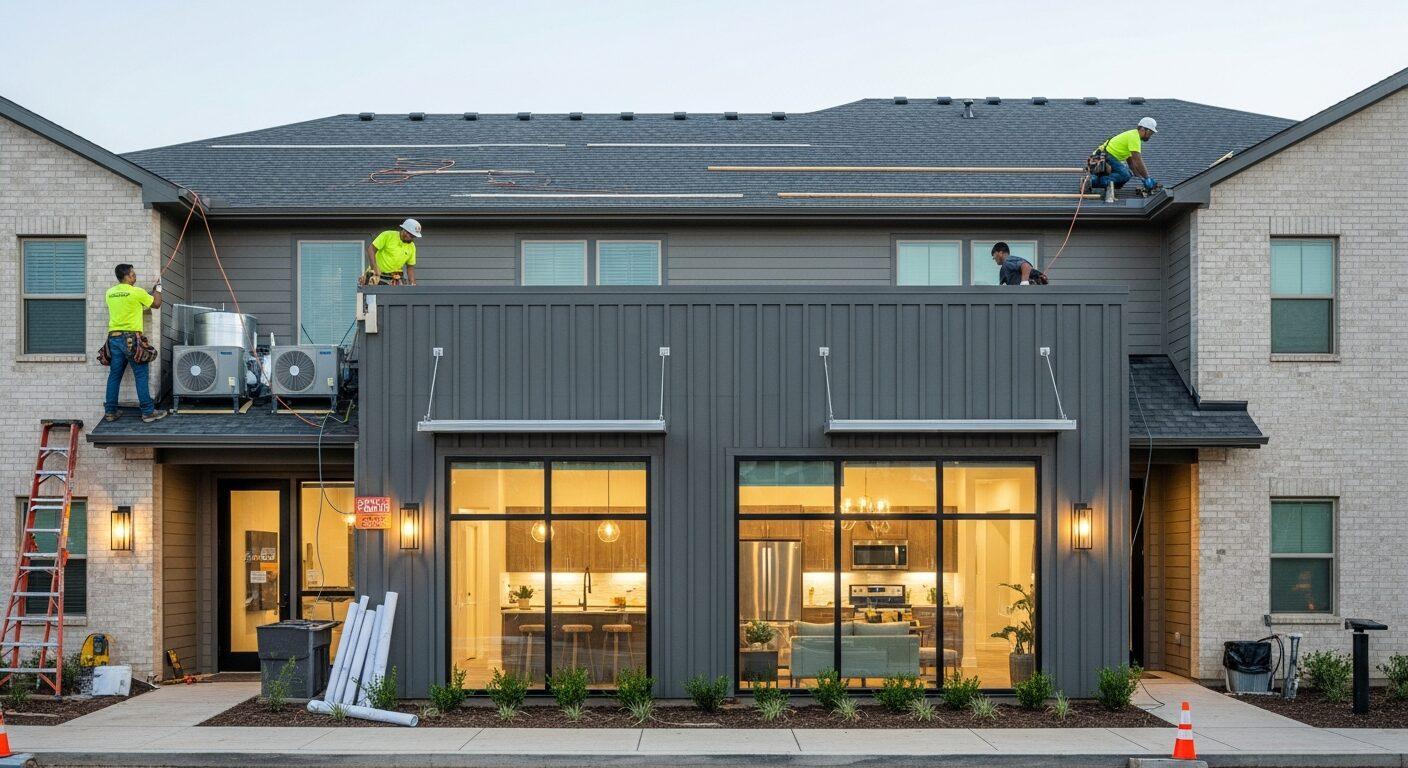
This is where specialized construction management becomes essential. Experienced construction teams understand how to execute capital improvements while keeping occupied properties operational—coordinating schedule, managing noise and dust, maintaining access and utilities, and communicating clearly with residents.
For complex projects—especially HVAC replacements, plumbing system work, or major renovations—selecting contractors experienced in occupied-environment construction isn’t a luxury; it’s a necessity.
Getting Started: Your Capital Improvement Action Plan
-
Schedule a professional assessment of your Plano rental property. Identify which systems are at highest risk and which improvements will deliver the best return.
-
Gather competitive intelligence by touring comparable properties in Plano. Note which improvements tenants respond to most—and which are now expected minimums.
-
Create a 3–5 year capital improvement plan prioritizing high-impact, high-ROI projects while phasing work to minimize disruption and spread costs.
-
Select contractors experienced in occupied-environment work. In Plano’s fast-paced rental market, the team you choose directly impacts your timeline, budget, tenant satisfaction, and final result.
-
Budget for financing. Capital improvements often qualify for favorable loan terms; discuss options with your lender.
-
Communicate proactively with tenants. Clear, honest communication about project scope, timing, and impact builds goodwill even when work creates temporary inconvenience.
Capital improvements in your Plano rental properties aren’t an option in today’s competitive market—they’re a business imperative. The owners who invest strategically in high-impact improvements enjoy stronger occupancy, higher rents, and more stable valuations. The owners who delay watch market share slip away to better-maintained competition.
Your tenants expect modern, reliable properties. Your market demands competitive amenities and systems. The question isn’t whether to improve—it’s which improvements to prioritize first and how to execute them efficiently while keeping your properties occupied and generating income.