
DFW Construction Trends: Irving & Fort Worth Multifamily Renovations & By‑Right Zoning
DFW construction is accelerating—Fort Worth’s commercial boom and Irving’s new by-right zoning are driving urgent demand for multifamily renovations.
I need to retrieve the information from the previous steps to create your blog post. Let me gather the article details, search data, and other context.
The Dallas–Fort Worth metroplex is booming. In just one year, Fort Worth surpassed $5.72 billion in commercial building projects, while Irving is advancing “by-right” zoning policies to streamline multifamily housing approvals and meet surging demand. For property managers overseeing multifamily assets across the region, this growth brings opportunity—but also complexity. Capital improvement planning, unit refresh cycles, and occupied-environment construction management are no longer nice-to-haves; they’re essential to remaining competitive and meeting investor expectations.
Why Multifamily Properties Need Strategic Construction Partners
Multifamily property owners and managers face a unique set of pressures. Your residents can’t simply relocate while renovations happen. Your timeline is measured in days per unit, not months. Your budget must account for lost rent, extended move-out schedules, and the operational friction of working in occupied buildings.
A recent Dallas Business Journal report highlighted a major multifamily investor who now owns over 10,000 apartment units across Dallas–Fort Worth—many requiring value-add renovations, unit turns, and capital refreshes. This trend isn’t isolated. Thousands of property managers across Irving and Fort Worth are wrestling with aging building stock, evolving life-safety codes, and capital improvement needs that demand precision, speed, and minimal disruption.
That’s where construction management and renovation expertise becomes critical. The difference between a two-week unit turn and a four-week unit turn directly impacts occupancy and revenue. The difference between a contractor who understands how to work around occupied units and one who doesn’t can mean resident complaints, operational headaches, and schedule overruns.
The Real Cost of the Wrong Construction Partner
When you hire a contractor unfamiliar with occupied-environment construction, the hidden costs pile up quickly:
- Timeline Creep: Inexperienced crews don’t anticipate the logistical challenges of working around residents. What should take 10 days stretches to 14.
- Quality Rework: Rushing leads to punch-list items, callbacks, and compromised finishes.
- Resident Relations: Poor communication, noise violations, or schedule disruptions create bad reviews and lease-renewal friction.
- Budget Surprises: Without thorough pre-construction assessments, change orders surface mid-project.
- Compliance Gaps: Life-safety upgrades, code adherence, and inspection readiness require expertise. Missing details invite regulatory pushback.
The right construction partner eliminates these risks through proven processes: transparent assessment, detailed planning, disciplined execution, and professional delivery.
What High-Performing Multifamily Renovation Requires
Successful multifamily construction management rests on four pillars:
1. Thorough Pre-Construction Assessment
Before a single nail is hammered, you need a clear picture of what you’re dealing with. A property condition assessment (PCA) or capital needs assessment (CNA) identifies deferred maintenance, cost-saving opportunities, and compliance issues. This isn’t guesswork—it’s a certified professional walkthrough that informs your entire capital improvement strategy.
2. Detailed Planning and Bid Review
With assessment data in hand, you can plan renovation phasing, unit refresh sequences, and temporary relocation logistics. Before selecting a contractor, a bid review and contractor audit compares proposals side-by-side, flags cost anomalies, and ensures you’re not paying for shortcuts.
3. Disciplined Project Execution
Execution in occupied environments demands military-grade precision: clear resident communication, tight scheduling, quality checklists, and real-time problem-solving. The contractor must manage the complexity without sacrificing speed or quality.
4. Professional Delivery and Inspection
At project close, a third-party inspection and report verifies that work meets specifications, local codes, and your standards. This creates a documented record for investor reporting, warranty claims, and future capital planning.
Renovation Services That Directly Impact Occupancy
In Fort Worth and Irving, multifamily property managers are prioritizing these high-impact improvements:
Room Turns and Unit Refresh Services
A 10-unit room turn program—flooring, paint, appliances, fixtures—can be completed in three weeks with the right team. Each unit turnaround directly translates to lease renewals and new resident move-ins. Fast, professional room turns reduce vacancy costs and maximize occupancy rates.
Capital Improvements and System Upgrades
Roofing, HVAC, plumbing, and energy-efficiency upgrades extend asset life and justify rate increases. HVAC replacements and energy audits are increasingly tied to lease renewal conversations and competitive positioning.
Amenity Upgrades and Common Area Finishes
Pool decks, fitness centers, leasing offices, and landscaping create resident satisfaction and support premium rents. A recent hospitality renovation trend—upgrading meeting spaces and guest-facing areas—is now influencing multifamily amenity standards.
Exterior and Structural Work
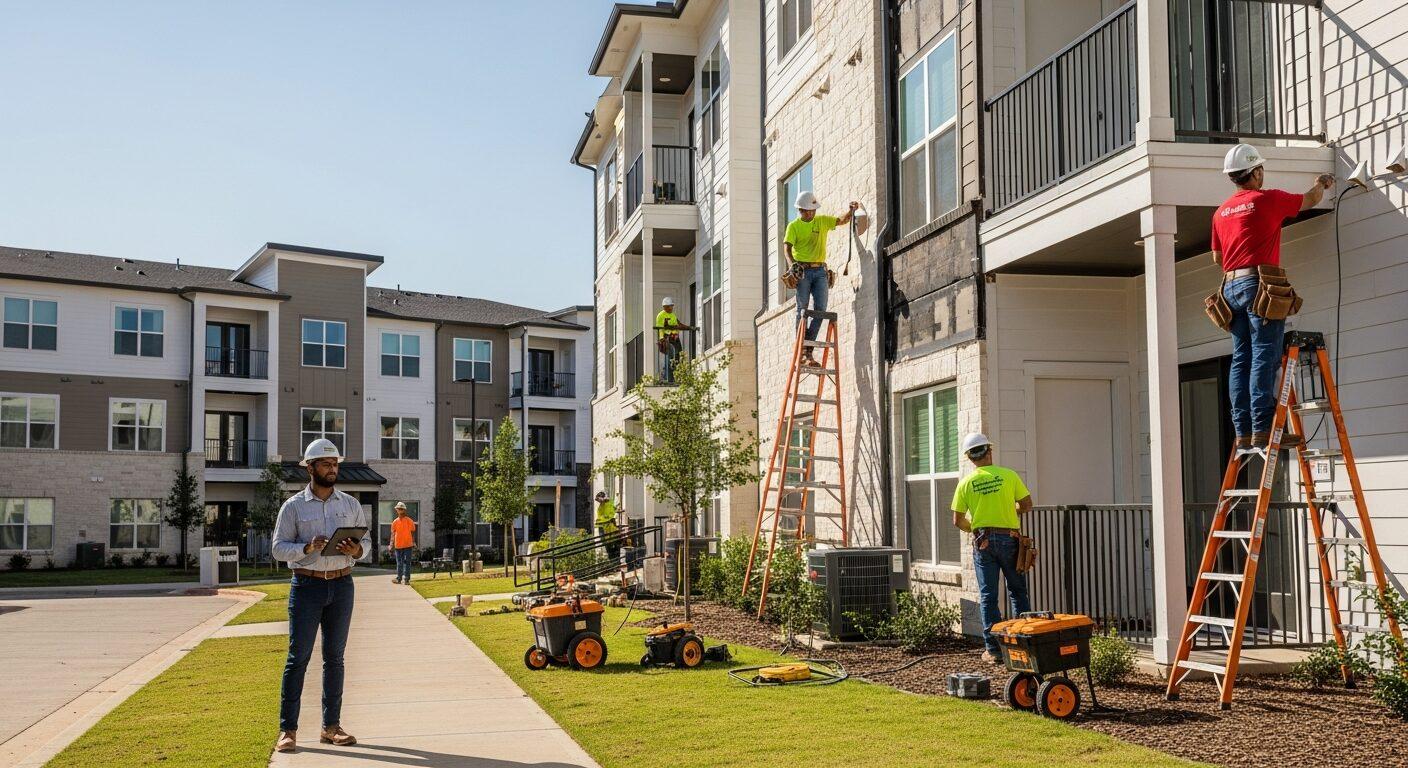
Balcony repairs, siding replacements, parking lot resurfacing, and roofing—completed without displacing residents—preserve property value and ensure compliance with local codes.
The Advantage of Veteran-Owned Construction Management
In Fort Worth and Irving, many property managers are turning to veteran-owned construction firms that bring military discipline and trust-based teamwork to complex projects. Veterans bring a different mindset: mission-driven execution, transparent communication, and an unwavering commitment to doing the job right the first time.
Over 70 years of combined construction expertise in a veteran-owned firm means you’re not working with a single person or a startup. You’re partnering with a team that has successfully navigated countless occupied-environment challenges, learned from each one, and built bulletproof processes.
That track record becomes invaluable when:
- You need a contractor who respects your residents and your operations.
- You’re managing a high-profile property where quality and reliability are non-negotiable.
- You’re coordinating multiple projects simultaneously and need a partner who communicates clearly and delivers on promise.
- You’re evaluating capital spending across a portfolio and need honest bid reviews and feasibility assessments.
How Irving’s “By-Right” Zoning Changes Affect Your Construction Needs
The City of Irving recently announced policy changes allowing certain multifamily developments “by-right” in targeted areas. This streamlines approval timelines and signals strong municipal support for housing growth. For existing multifamily property managers, this means:
- Increased Competition: New buildings will open, raising the bar for resident amenities and property condition.
- Renovation Urgency: Properties built 15–20 years ago need refreshes to compete with new supply.
- Design and Code Evolution: Updated zoning includes refined design standards and density expectations; your capital improvements should align.
- Investment Acceleration: Investors are confident in Irving’s multifamily market, meaning more capital improvement budgets and tighter timelines.
Strategic renovation planning—informed by professional assessments and executed by experienced teams—ensures your property stays competitive in this accelerating market.
Finding the Right Construction Partner in Fort Worth and Irving
When evaluating construction management firms for your multifamily properties, prioritize:
Proven Experience in Occupied Environments
Ask for case studies, resident feedback, and references from properties similar to yours. How many unit turns have they completed? What’s their average turnaround time? Do they have systems for resident communication and noise management?
Transparent Pricing and Cost Controls
Free, no-obligation quotes should come with a clear scope and timeline. A professional firm responds to email inquiries within 24 business hours and provides bid reviews that flag cost anomalies and alternatives.
Certified Assessments and Compliance Expertise
Life-safety upgrades, code adherence, and detailed reporting are non-negotiable. Your partner should offer property condition assessments, capital needs assessments, and third-party inspections—not just construction labor.
Clear Communication and Real-Time Updates
During renovation, you should know exactly where the project stands. Daily or weekly status updates, photo documentation, and responsive communication prevent surprises and maintain resident satisfaction.
Mission-Driven Quality
Look for firms that emphasize quality without compromise, on-time delivery, and integrity. A veteran-owned company with a track record of successful completions often brings a discipline and commitment that matters when managing high-stakes, occupied-environment projects.
Multifamily Construction Trends Shaping the DFW Market
Several macro trends are reshaping multifamily construction and renovation priorities across Fort Worth, Irving, and surrounding markets:
Aging Stock Meets Capital Improvement Demand
Apartment complexes built in the 1990s and 2000s are now 20–30 years old. Deferred maintenance, system replacement cycles, and competitive pressure to upgrade amenities are creating steady demand for renovations.
Life-Safety and Code Evolution
Updated electrical codes, fire-suppression standards, and ADA compliance requirements mean many properties need structured capital programs to stay compliant.
Hospitality-Inspired Amenities
As the DFW region sees major hospitality renovations—like the ongoing Hilton Anatole upgrade in Dallas—multifamily property managers are taking notes. Guest rooms are inspirational. Residents expect similar comfort and finish quality.
Sustainability and Energy Efficiency
Energy audits, HVAC upgrades, and smart-building systems are increasingly part of capital improvement conversations, driven by both tenant demand and long-term operating cost reduction.
Speed and Efficiency
With 10,000-plus unit investors across the region prioritizing value-add strategies, the bar for fast, reliable unit turns and project delivery is rising. Property managers want partners who can scale and execute without sacrificing quality.
Taking the Next Step: Assessments, Planning, and Execution
If you manage multifamily properties in Fort Worth, Irving, or the surrounding Dallas–Fort Worth area, the time to act is now. The market is moving fast. Investor expectations are high. Residents are comparing your property to newly renovated competition.
Start with an assessment. A property condition assessment or capital needs assessment by a certified professional gives you a roadmap: which units to prioritize, what systems need replacement, where to invest for maximum ROI, and which upgrades will justify rate increases or attract new residents.
Then plan strategically. Work with a construction partner who reviews competing bids, identifies cost-saving opportunities, and phases your renovation program to minimize disruption and maximize impact.
Finally, execute with discipline. Partner with a firm that understands occupied-environment construction, communicates clearly with residents, delivers on schedule, and stands behind every project with professional inspections and transparent reporting.
The right construction management partner doesn’t just build—they enable your property to compete, scale, and thrive in a rapidly evolving market. In Fort Worth and Irving, where multifamily growth is accelerating and resident expectations are climbing, that partnership is the difference between a property that merely keeps up and one that leads.