
I need to retrieve the specific business and article details from the previous workflow steps to generate the blog post. Let me gather that information now.
Frisco’s Construction Boom: Why Property Managers Need Strategic Capital Improvement Partners in 2025
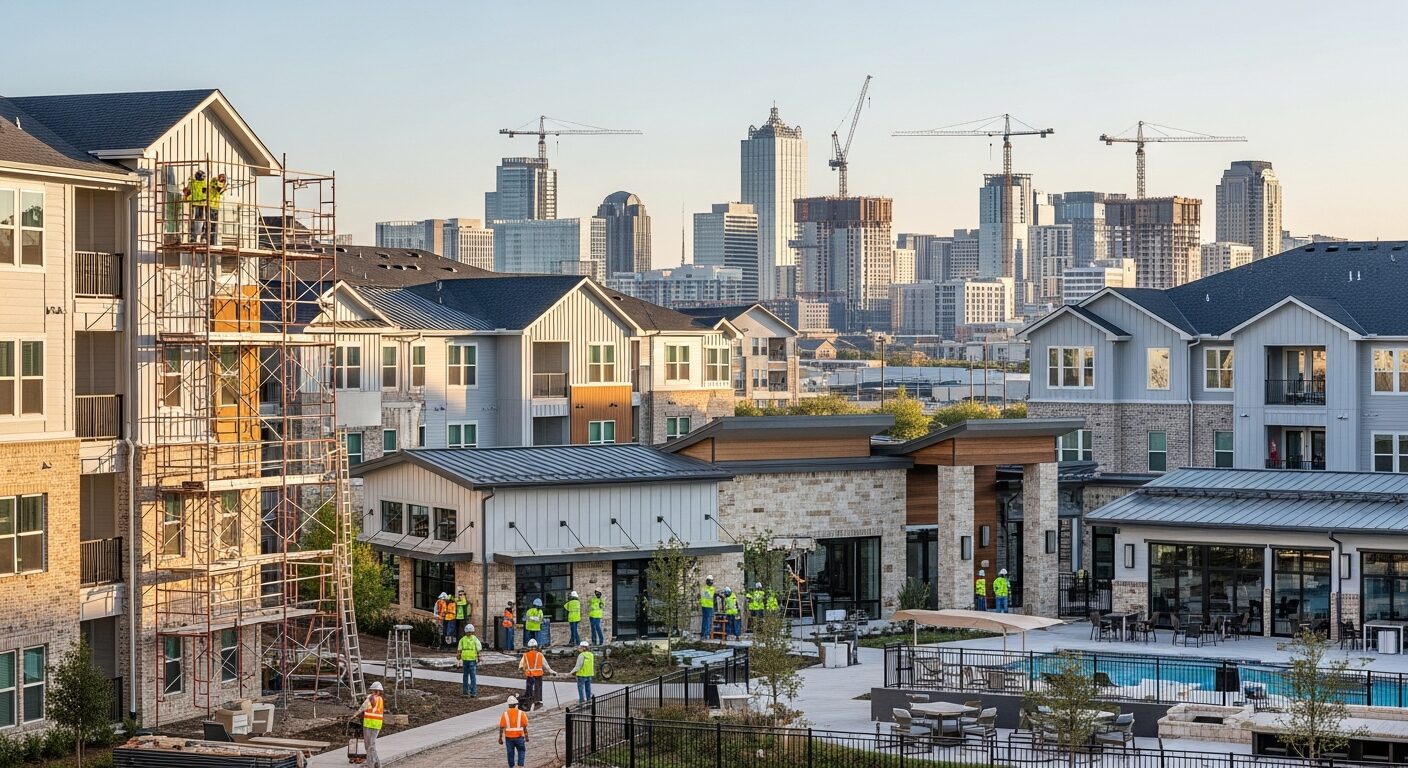
Frisco, Texas is experiencing one of the fastest construction booms in North Texas, and property managers are facing unprecedented pressure to keep their assets competitive. Between The Fields master-planned community, Universal Kids Resort, Firefly Park, and a wave of hospitality projects, the commercial landscape is shifting faster than ever—and your properties need to keep pace.
If you own or manage multifamily, senior living, hospitality, or commercial assets in Frisco, you already know that capital improvement projects aren’t optional anymore. They’re essential to maintaining occupancy rates, attracting quality tenants, and maximizing property value in an increasingly crowded market.
Why Frisco’s Growth Creates Urgent Capital Improvement Needs
Frisco’s population and commercial footprint are expanding at a rate that forces property managers to either invest proactively or fall behind. New mixed-use developments, luxury hospitality projects, and high-amenity residential communities are setting new standards for what tenants and investors expect.
The recent announcements around Firefly Park—a multibillion-dollar mixed-use development now breaking ground—along with multiple upscale hotel projects and expanded HALL Park district amenities, signal that Frisco’s market is consolidating around quality, modernization, and experience-driven design. Properties that haven’t been refreshed in the past 3-5 years are starting to show age by comparison.
This isn’t just about keeping up appearances. Strategic capital improvements directly impact:
- Occupancy rates — Upgraded spaces command higher rents and attract longer lease commitments
- Operational efficiency — New HVAC, plumbing, and energy systems reduce maintenance costs and utility bills
- Resident satisfaction — Modernized common areas, updated finishes, and ADA-compliant features improve quality of life
- Investment returns — Properties with documented capital improvements sell at higher multiples and attract institutional investors
The Hidden Cost of Delaying Capital Improvements
Property managers often treat capital improvements like optional upgrades. They’re not. Deferring major renovations creates a compound problem:
Year 1: You notice HVAC efficiency declining, common area finishes looking dated, and resident satisfaction surveys mentioning “tired” spaces.
Year 2: Tenant turnover increases slightly. You’re offering small concessions to hold onto quality residents. Maintenance requests spike as aging systems fail.
Year 3: New competitors open nearby with upgraded amenities. You’re now behind market on rent growth. Institutional investors begin viewing your property as riskier.
Year 4+: Your property now requires emergency capital expenditures instead of planned improvements, costs balloon, and you’ve lost years of revenue growth.
The properties winning in Frisco’s market are those that embrace strategic, phased renovation approaches before they become crisis situations. This requires working with partners who understand occupied-environment construction, can coordinate around resident and tenant needs, and deliver on time and within budget.
Key Capital Improvement Priorities in Frisco’s Competitive Market
Not all improvements are equally important. Based on what’s driving demand in Frisco’s market, property managers should prioritize:
Resident Suites and Interior Finishes
In senior living and multifamily communities, unit-level renovations generate the fastest returns. New flooring, updated bathroom fixtures, fresh paint, and modern appliance packages directly impact occupancy and rent rates. Phased room-turn programs allow you to maintain full occupancy while upgrading units over time.
Common Area Modernization
Amenity-rich communities are now the standard in Frisco. Clubhouses, fitness centers, lobbies, and outdoor gathering spaces are where residents judge a property’s quality. Upgrading these spaces—even without a full community refresh—signals investment and raises perceived value.
HVAC, Plumbing, and Infrastructure
Older systems are visible and costly. Modern, efficient mechanical systems reduce utility bills and create a foundation for property growth. In Frisco’s Texas heat, reliable air conditioning isn’t a luxury—it’s a requirement for competitive positioning.
ADA Compliance and Life-Safety Upgrades
Beyond legal compliance, properties that invest in accessibility and safety improvements report higher satisfaction and lower liability exposure. These upgrades protect your investment and serve aging and diverse populations better.
Exterior Appearance and Curb Appeal
First impressions matter more in competitive markets. Updated roofing, landscaping, exterior paint, and signage signal that management is actively invested in the property’s future.
Why Third-Party Assessments Matter Before You Spend
Many property managers skip the assessment phase and jump straight to improvements. That’s a costly mistake.
A professional Property Condition Assessment (PCA) or Capital Needs Assessment (CNA) provides:
- Objective data on which systems need immediate attention versus long-term planning
- Cost prioritization so you allocate budget to the highest-impact improvements first
- Timeline roadmaps that allow you to spread expenses over multiple fiscal years
- Contractor bidding leverage by giving you clear, third-party documentation of what needs work
- Investor credibility when refinancing or selling—institutional buyers want certified assessments
In Frisco’s fast-moving market, having an independent assessment from certified professionals gives you competitive advantage. It prevents you from overspending on low-priority work or underfunding critical systems.
Construction in Occupied Environments: The Real Challenge
Frisco’s property managers understand the irony: your residents and tenants pay for improvements by staying put, but they also live through the disruption. Getting this balance right separates quality contractors from the rest.
Strategic construction management in occupied environments requires:
- Scheduling precision — Working around resident routines, minimizing noise and dust disruption
- Clear communication — Keeping residents informed and managing expectations about timelines and access
- Professional coordination — Managing multiple trades (HVAC, plumbing, electrical, finishes) without creating chaos
- Safety focus — Protecting residents while maintaining an active worksite
- Budget accountability — Delivering on commitments without change orders and cost overruns
Many general contractors have experience with new construction or vacant buildings. Fewer have mastered the complexity of delivering high-quality work while residents continue daily life. This specialized expertise is what separates partners who deliver real value from those who create headaches.
Building Your Capital Improvement Strategy in 2025
If you manage properties in Frisco, now is the moment to act. The market is setting new standards, and competitive pressure is intense. Here’s a realistic approach:
1. Start with Assessment
Engage a certified professional to conduct a PCA or CNA. This takes 2-4 weeks and costs a fraction of miscalculated improvements. Get objective data on your property’s condition and needs.
2. Prioritize Strategically
Focus first on improvements that drive occupancy and rent growth: resident suites, common areas, and critical systems. Don’t try to do everything at once; phase improvements over 12-24 months.
3. Partner with Experienced Contractors
Work with construction partners who have proven success managing capital improvements in occupied multifamily, senior living, hospitality, or commercial environments. Verify their experience with Frisco properties specifically; local market knowledge matters.
4. Plan for Phased Delivery
Design improvement programs that maintain full occupancy and operational continuity. Phased room turns, evening and weekend work, and temporary amenity solutions keep disruption minimal.
5. Track Outcomes
Monitor occupancy, rent growth, maintenance cost savings, and resident satisfaction after improvements are completed. Use real data to inform your next improvements and justify your investment to owners and investors.
The Competitive Edge: Why Frisco Property Managers Are Moving Now
Frisco’s construction boom isn’t temporary. The city’s population is expected to continue growing, major mixed-use developments are under construction, and hospitality and residential standards keep rising. Properties that invested in capital improvements 12-24 months ago are now seeing occupancy growth and rent premium. Properties that delayed are now playing catch-up.
The cost and difficulty of improvements only increase as you wait. Systems deteriorate, maintenance expenses rise, and competitive positioning erodes. The best time to execute capital improvements was 2023. The second-best time is today.
Property managers who understand this reality are already working with experienced construction partners to assess their assets, develop improvement plans, and begin phased execution. They’re maximizing property value, protecting tenant relationships, and positioning themselves for growth in North Texas’ most competitive real estate market.
Your Frisco property isn’t competing just locally anymore—it’s competing with new developments, renovated properties, and constantly rising tenant expectations. Strategic capital improvements aren’t discretionary. They’re the foundation of competitive positioning and long-term value creation.
0 Comments