
I need to retrieve the specific information from the previous workflow steps to generate your blog post. Let me gather the necessary details now.
How to Maximize ROI on Multifamily Renovations in Central Texas
Your multifamily property isn’t making you money the way it should. Occupancy rates are slipping. Aging systems need replacement. Competing properties have newer finishes and better amenities. Meanwhile, new construction costs in Central Texas have skyrocketed, making ground-up development nearly impossible at acceptable returns.
You’re not alone. Across Dallas–Fort Worth and Central Texas, multifamily investors are abandoning new builds and pivoting hard toward multifamily renovations and value-add strategies. Interest rates have tightened lending, and labor shortages have driven construction costs through the roof. But here’s the opportunity: existing assets in Waco, Fort Worth, and surrounding markets are ripe for repositioning—if you know how to execute efficiently.
This guide walks you through the renovation playbook that’s working right now in Central Texas, showing you how to identify the right upgrades, coordinate construction in occupied environments, and deliver fast unit turns that maximize tenant satisfaction and occupancy.
Why Multifamily Renovations Now?
The market fundamentals are clear. New multifamily construction in the Dallas–Fort Worth region has slowed dramatically, driven by higher borrowing costs and tighter lending standards. For investors, that’s actually good news.
Value-add and renovation strategies are now the dominant wealth-creation tool. Instead of betting millions on ground-up development, savvy operators are acquiring properties at discount valuations and upgrading them strategically. Capital improvement programs—exterior work, interior rehabs, building systems modernization—have become central to investor business plans.
In Waco, this trend is accelerating. Downtown redevelopment initiatives are underway, and local developers are acquiring aging properties for infill rehabilitation. Affordable housing developers are seeking state tax credits, which requires demonstrating long-term affordability and modernized amenities through substantial renovation work.
For property managers and owners, this environment means higher demand for construction management expertise and faster execution timelines. Tenants expect modern amenities, efficient systems, and move-in-ready units. Properties that deliver these upgrades pull premium rents and maintain higher occupancy.
The Four Pillars of Successful Multifamily Renovations
Successful multifamily renovation projects share a common framework. Whether you’re managing a 50-unit complex in Fort Worth or a 100-unit property in Waco, these four pillars determine success.
1. Detailed Property Condition Assessment
Before swinging a hammer, understand exactly what you’re dealing with. A professional property condition assessment (PCA) or capital needs assessment (CNA) identifies all deferred maintenance, building system deficiencies, and code compliance gaps. This isn’t guesswork—it’s forensic inspection by certified professionals.
A thorough assessment reveals:
- Roof condition and remaining useful life
- HVAC system efficiency and replacement timeline
- Plumbing and electrical infrastructure capacity
- Foundation and structural integrity
- Exterior envelope performance and water intrusion risk
- Interior finishes and accessibility compliance
- Energy efficiency opportunities
Armed with this data, you can prioritize upgrades by impact and urgency. Sometimes a roof replacement is non-negotiable. Sometimes targeted unit refreshes with new flooring, fixtures, and paint deliver better ROI faster.
Third-party assessments also protect you during acquisition due diligence and refinancing. Lenders and investors want independent verification of a property’s true condition before committing capital.
2. Strategic Phasing and Occupancy Management
Here’s where most renovation projects stumble: coordinating construction while tenants remain in place. Botched unit turns drive resident complaints, emergency maintenance costs, and eventually, turnover you didn’t anticipate.
Successful renovation requires disciplined phasing—the ability to sequence construction work so portions of the property stay occupied and operational. This means:
- Planning unit turns during natural lease-end windows
- Sequencing common area upgrades when they disrupt fewest residents
- Managing contractor logistics to minimize noise and access conflicts
- Maintaining clear communication with tenants about timelines and access
- Delivering completed units within tight windows so you can re-lease quickly
In occupied multifamily environments, disciplined execution isn’t a nice-to-have—it’s essential. Construction done poorly or slowly tanks resident satisfaction and occupancy metrics.
3. Fast, Quality Unit Turns
The faster you turn vacant units, the sooner they generate rent again. That’s basic math. But “fast” only counts if the work is done right the first time.
Senior living communities and hospitality properties have pioneered this playbook, and multifamily operators are adopting it now. Fast room turns focus on highest-impact upgrades that move the leasing needle:
- Updated bathrooms with new fixtures, flooring, and accessibility features
- Fresh interior paint and flooring throughout
- Modern lighting and ceiling repairs
- Updated appliances and countertops
- Accessibility upgrades (grab bars, accessible entry, lever handles)
- HVAC system repairs and updates
A coordinated team working from a detailed scope can turn a unit in days, not weeks. That means your property cycles through vacant units faster, fills them with new tenants, and starts collecting rent sooner.
Property managers in Waco and Fort Worth are finding that targeted bathroom and kitchen upgrades—combined with fresh paint and new flooring—move rents 5–15% higher than untouched units in the same building.
4. Transparent Communication and On-Time Delivery
Construction projects rarely run perfectly. Materials get delayed. Unexpected conditions emerge. Subcontractors miss deadlines.
When things go wrong, transparency is the difference between a manageable situation and a crisis. Owners and property managers need weekly updates, clear communication about changes, and honest timelines.
Professional construction management provides:
- Regular project reports and schedule updates
- Clear change order protocols and cost tracking
- Direct communication between ownership, management, and contractors
- Proactive problem-solving before small issues become big costs
- Budget adherence and transparent invoicing
Contractors who operate with military discipline and teamwork—who bring a structured approach from the ground up—consistently deliver on time and on budget. That reliability builds the trust necessary for repeat work and referrals in a competitive market.
High-Impact Renovation Strategies for Central Texas Multifamily
Not all upgrades deliver equal ROI. In the Central Texas market, these categories are driving tangible results:
Building Envelope and Systems
Exterior work—roofing, siding, windows, doors—is highly visible to prospective tenants and essential for property longevity. A refreshed exterior signals “this property is well-maintained,” which supports premium rents.
Building system upgrades (HVAC, plumbing, electrical) may be invisible to tenants, but they drive operational efficiency and reduce emergency maintenance costs. Energy-efficient HVAC systems, for example, lower utility costs, reduce service calls, and improve resident comfort—all of which support occupancy.
Interior Unit Finishes
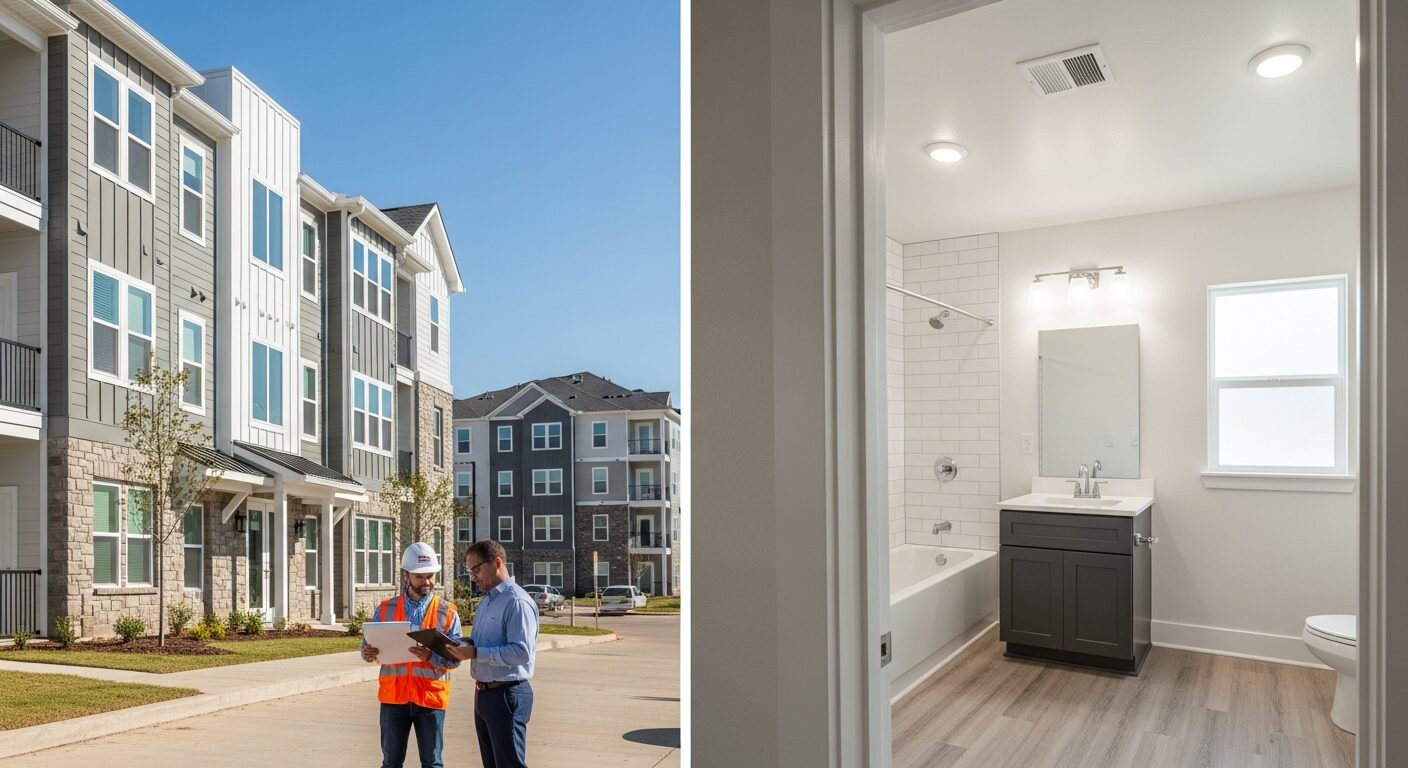
Bathrooms are the highest-ROI upgrade in multifamily. Tenants notice new fixtures, updated tile, and modern lighting immediately. A quality bathroom refresh costs less than a full kitchen renovation but delivers outsized leasing impact.
Flooring—whether luxury vinyl plank, ceramic tile, or quality laminate—transforms the feel of a unit. Combined with fresh paint and updated lighting, new flooring makes a unit feel move-in ready and commands higher rents.
Common Area Amenities
Upgraded lobbies, fitness centers, co-working spaces, and outdoor areas attract new residents and support retention. However, these upgrades require careful phasing to avoid disrupting daily operations.
In competitive markets like Waco, properties with modern, well-maintained common areas consistently outperform peers with dated amenities.
Energy Efficiency
Energy-efficient upgrades—LED lighting, reflective roofing, HVAC upgrades, smart thermostats—reduce operating costs and appeal to environmentally conscious tenants. Utility cost savings compound over time and improve net operating income.
The Waco Market Opportunity
Waco is experiencing a redevelopment inflection point. The city is driving downtown revitalization, and multiple affordable housing projects are advancing with state tax credit support. Older multifamily properties throughout the market are becoming acquisition targets for value-add investors.
Local facilities managers and property owners in Waco face mounting pressure:
- Aging properties with deferred maintenance
- Competition from newer, nicer competitors
- Tenant expectations for modern finishes and efficient systems
- Limited new supply creating strong leasing momentum—if your product is competitive
Properties that invest in strategic renovations are capturing premium rents and maintaining high occupancy. Those that delay are losing residents to competition and facing rising maintenance costs.
Critical Success Factors: Choosing the Right Construction Partner
Not all construction firms are equipped to handle occupied multifamily renovation work. Many specialize in ground-up construction or have limited experience managing complex projects with strict phasing requirements.
The best partners bring:
- Proven experience in occupied multifamily renovation and fast unit turns
- Detailed assessment capabilities to identify the right upgrade strategy for your specific property
- Construction management discipline to keep projects on schedule and on budget
- Clear communication and transparent cost tracking throughout execution
- Industry certifications and quality standards that meet lender and investor requirements
- Local market knowledge of Central Texas labor, material, and code requirements
- Ability to coordinate multiple trades working simultaneously in occupied environments
In Fort Worth and Waco, veteran-owned construction firms with deep renovation expertise and a track record in senior living, hospitality, and multifamily sectors are best positioned to deliver reliable execution.
Renovating Your Way to Better Returns
The multifamily market in Central Texas has shifted. New construction is slowing. Capital costs are high. But existing properties are generating strong leasing momentum when they’re upgraded strategically.
Your renovation roadmap should start with a thorough property assessment, move into a detailed upgrade strategy that prioritizes high-impact work, and execute through disciplined phasing that keeps your property occupied and operational.
Fast unit turns, transparent construction management, and quality execution are no longer competitive advantages—they’re table stakes. Properties that deliver move-in-ready units and modern amenities command premium rents. Those that don’t lose residents to better-maintained competitors.
If your multifamily property in Waco, Fort Worth, or Central Texas is showing its age, the time to act is now. The market is rewarding operators who invest strategically in renovations, and the construction expertise to execute those upgrades is available. The question is whether you’ll lead this wave or watch competitors capture the upside.
0 Comments