
Hospitality Construction in Austin: Veteran‑Owned Alder Designs Modernizes Hotels with Precision
Austin’s booming tourism market demands modern, guest-ready hotels. Veteran‑owned Alder Designs specializes in hospitality construction across Austin—offering…
I need to retrieve the article details and internet search data from the previous workflow steps to generate your blog post.
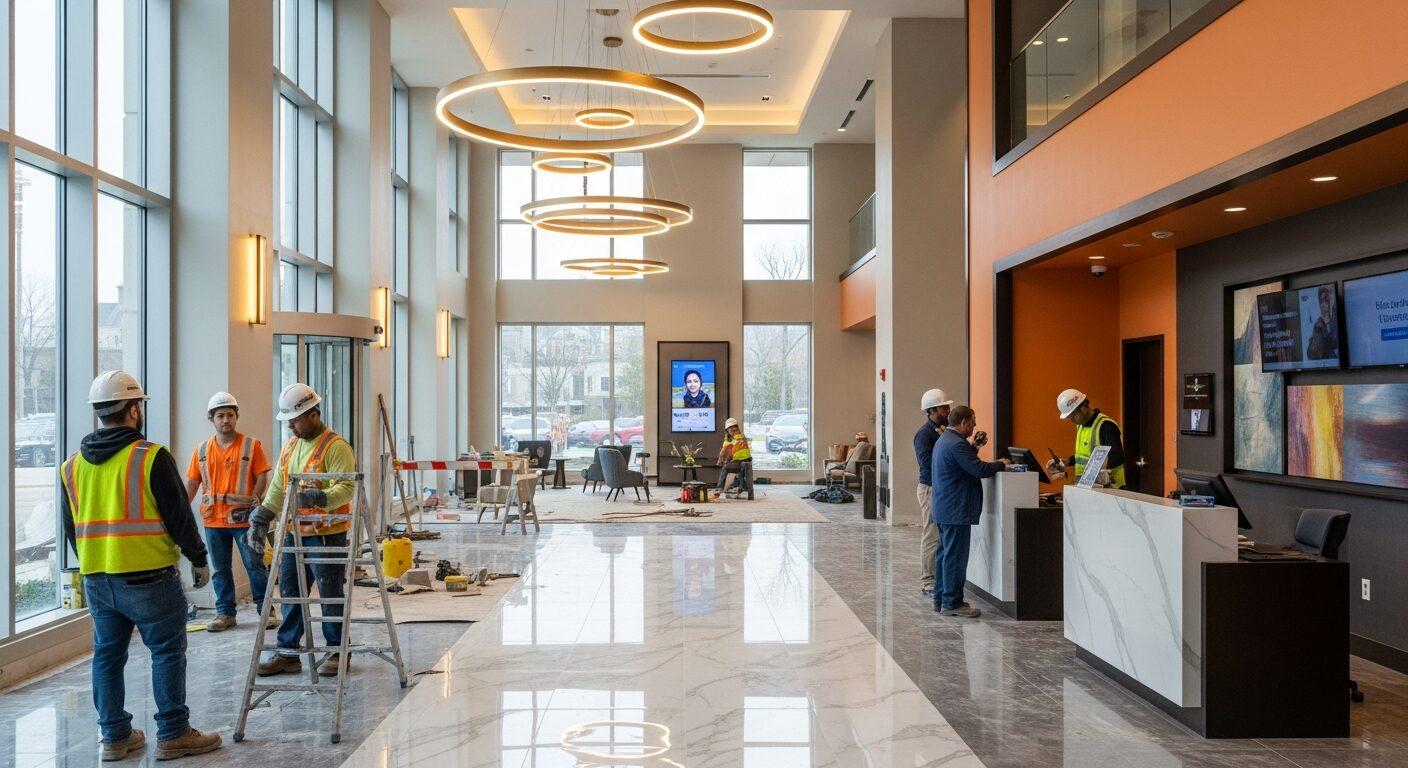
Austin’s hospitality sector is booming. As one of America’s fastest-growing tourism and business hubs, the city’s hotels, resorts, and boutique properties face mounting pressure to modernize, attract guests, and maximize revenue. Yet traditional construction approaches often disrupt operations, delay project timelines, and drain budgets. That’s where precision-driven, veteran-led construction management makes all the difference.
Why Austin Hospitality Properties Need Strategic Modernization
The Austin hospitality market has transformed dramatically over the past five years. Tourism has surged, conventions bring high-paying clientele, and remote workers are choosing Austin as a home base—all driving occupancy and room rates. But older properties with outdated amenities, aging systems, and worn guest spaces struggle to compete.
The challenge isn’t complexity—it’s execution. Hospitality construction demands zero tolerance for operational disruption. Every day a property isn’t performing at full capacity costs thousands in lost revenue. Guest experience suffers when construction noise, dust, and worker presence interfere with stays. Contractor delays and cost overruns eat into already-thin margins.
This is why Austin hotel and hospitality owners increasingly turn to construction partners who understand the unique demands of the industry. The right partner combines full-service renovation expertise, occupied-environment discipline, and veteran-level project management to deliver results on time and on budget—without sacrificing guest satisfaction.
The Critical Difference: Full-Service Hospitality Renovations vs. Basic Repairs
Not all construction firms are equipped to handle hospitality modernization. Many contractors excel at new builds or straightforward repairs but lack the specialized experience required to manage complex projects in occupied, revenue-generating properties.
Full-service hospitality construction includes:
- Complete hotel renovations — from lobby and common areas to guest rooms and back-of-house spaces
- Amenity refreshes — updated fitness centers, redesigned pools, modern lounge areas, and dining spaces
- Guest room modernizations — flooring, fixtures, technology integration, and aesthetic upgrades
- Rapid room turns — strategic scheduling to minimize occupancy loss while maximizing quality
- Energy-efficient system upgrades — HVAC, lighting, and sustainability improvements that reduce operating costs
- Life-safety and accessibility improvements — ADA compliance, fire safety, and code adherence
- Design-build coordination — seamless planning and execution from concept to final delivery
The difference between a property that merely survives and one that thrives often hinges on construction partner selection. Veteran-owned firms bring military discipline, transparent communication, and proven methodologies that transform properties without grinding operations to a halt.
Capital Condition Assessments: The Foundation of Smart Hospitality Projects
Before breaking ground, successful hospitality owners invest in third-party property condition assessments (PCAs) and capital needs assessments (CNAs). These independent evaluations identify aging systems, code violations, safety risks, and guest-experience gaps—providing a clear roadmap for prioritization and budgeting.
A PCA answers critical questions:
- Which systems are nearing end-of-life and require replacement rather than repair?
- What code compliance or safety issues exist?
- Which upgrades will generate the highest return on occupancy and guest satisfaction?
- How should projects be phased to maintain cash flow and operational continuity?
With this intelligence, property owners shift from reactive, emergency repairs to proactive, strategic capital planning. The result: reduced downtime, predictable budgets, and measurable improvements in guest experience and revenue.
Fast Unit Turns: Minimizing Vacancy, Maximizing Occupancy
In hospitality, occupancy directly drives revenue. Yet many properties operate with long gaps between guest stays—time spent on cleaning, maintenance, and repairs that could be minimized with precision execution.
Strategic fast room turns solve this problem. The goal is to refresh guest rooms—new bedding, fixtures, paint, flooring, and amenities—in the shortest possible timeframe while maintaining quality standards.
This requires:
- Pre-turn planning — detailed work schedules and material staging to eliminate delays
- Skilled, coordinated crews — experienced tradespeople who execute efficiently without cutting corners
- Quality inspections — systematic checks at each stage to prevent rework
- Flexible scheduling — coordination with housekeeping and management to avoid guest disruption
Veteran-owned construction firms excel here because military discipline translates directly to execution precision. Timelines are met, quality is guaranteed, and properties return to full revenue-generating capacity faster.
Minimizing Guest Disruption During Construction
The defining challenge of hospitality construction is this: the property must remain operational and welcoming to guests while significant construction work occurs.
This demands more than basic project management. It requires:
- Phased project sequencing — isolating construction zones to prevent noise, dust, and visual disruption in occupied areas
- Off-hours and weekend work — leveraging evening and weekend shifts when guest impact is minimized
- Clear communication protocols — keeping guests and staff informed of timelines and expectations
- Safety perimeter management — strict protocols to protect guests and staff from construction hazards
- Housekeeping coordination — seamless integration with daily operations and turnover cycles
Alder Designs, a veteran-owned construction firm serving Austin and the broader DFW region, specializes in exactly this challenge. Their proven four-step process—assessment, planning, execution, and delivery—ensures occupied-environment construction that protects guest experience while achieving renovation goals.
Design-Build Advantages for Austin Hospitality Projects
Many hospitality projects benefit from design-build delivery, where a single construction partner manages design, engineering, budgeting, and execution. This approach eliminates communication gaps between separate design and construction teams, streamlines decision-making, and reduces timeline risk.
Design-build works particularly well for:
- Room refresh and modernization packages — consistent aesthetic and functionality across guest areas
- Common-area redesigns — lobby, restaurant, bar, and leisure space updates
- Full property renovations — coordinated work across multiple building systems and spaces
- Amenity integrations — new fitness equipment, technology, or service offerings
The advantage is clear: one unified team maintains accountability, controls quality, and delivers on schedule. This transparency and coordination is essential when budgets are tight and operational continuity is non-negotiable.
Energy-Efficient Systems: Reducing Operating Costs While Enhancing Guest Experience
Austin properties increasingly recognize that energy efficiency and guest comfort go hand in hand. Modern HVAC systems, LED lighting, smart thermostats, and water-efficient fixtures reduce operating costs while delivering superior guest experiences.
Strategic energy upgrades include:
- HVAC system replacements — high-efficiency equipment with zone control for guest customization
- LED lighting systems — energy-efficient lighting that reduces electricity costs and supports modern aesthetics
- Smart building controls — automated systems that optimize temperature, lighting, and water usage
- Water-efficient fixtures — low-flow showerheads and faucets that conserve without compromising performance
- Insulation and weatherization improvements — reduced HVAC load and guest comfort
These upgrades often qualify for tax incentives and rebates, further improving ROI. More importantly, guests expect modern, efficient amenities—properties without them lose competitive advantage.
Transparent Bidding and Budget Control
Construction cost overruns are endemic in hospitality renovation. Without structured oversight, projects spiral past budgets, timelines slip, and stakeholder confidence erodes.
Veteran-led construction partners bring disciplined budget management and transparent bidding:
- Independent bid reviews — verification that contractor proposals align with scope and quality standards
- Cost tracking and reporting — regular transparency on spending versus budget
- Change-order protocols — clear procedures for scope adjustments with documented impact on cost and timeline
- Payment audits — verification that contractor payments match completed work
- Contingency planning — realistic reserves for unforeseen issues
This level of accountability is essential for hospitality owners who must answer to investors, lenders, and boards. Alder Designs emphasizes exactly this discipline—transparency and budget protection are core to their process.
Why Austin Hospitality Owners Choose Veteran-Owned Construction Partners
Hospitality construction demands more than technical skill. It requires integrity, discipline, and a mission-driven approach to client relationships and project outcomes.
Veteran-owned construction firms bring:
- Military-trained discipline — structured planning, accountability, and execution
- Proven teamwork — coordination and communication honed through team-based operations
- Integrity and transparency — mission-driven commitment to honest, straightforward client relationships
- Operational mindset — understanding that construction must serve business continuity, not interrupt it
- Experience across sectors — senior living, multifamily, hospitality, and commercial expertise that builds sophisticated problem-solving capability
Austin’s hospitality market is competitive. Properties that modernize strategically—partnering with experienced, disciplined construction managers—capture market advantage. Those that delay or choose poorly fall behind in occupancy, guest satisfaction, and revenue.
Taking the First Step: Property Condition Assessments and Honest Planning
If you own or manage a hospitality property in Austin and sense that aging systems, guest-experience gaps, or deferred maintenance are limiting performance, the answer starts with honest assessment.
A third-party PCA provides clarity on what needs to be done, in what order, and at what cost. From there, a structured capital plan—phased over multiple years if necessary—transforms uncertainty into strategic action.
The goal is straightforward: modernized properties with updated amenities, efficient systems, and compelling guest experiences that drive occupancy and revenue.
Veteran-owned construction partners in the Austin and broader Texas region specialize in making this happen with precision, transparency, and discipline. The result is hospitality properties that guests love, owners trust, and markets reward with higher valuations and consistent revenue growth.