
I need to retrieve the actual content from the previous workflow steps to write the blog post. Let me gather that information now.
I can see the Article Details, but the Internet Search data appears to be empty. Let me search for relevant information about construction services, property assessments, and real estate investment trends to build a comprehensive, data-backed blog post.
Let me scrape some of these resources to get real content and data points.
Perfect. Now I have good industry context and data. Let me write a comprehensive SEO blog post for Alder Designs based on all the information I’ve gathered.
Strategic Property Assessments and Capital Improvements: A Guide for Real Estate Investors in Texas
Property condition assessments and capital improvements are no longer optional for real estate investors looking to maximize returns—they’re essential. Whether you’re managing a senior living facility, a multi-family complex, or a hospitality property in Fort Worth, Texas, understanding how to strategically assess and improve your assets can mean the difference between competitive gains and costly mistakes.
Real estate investors and property managers face a fundamental challenge: How do you know what improvements will boost value, maintain code compliance, and deliver the strongest ROI? The answer lies in professional third-party assessments combined with expert construction management.
What Is a Property Condition Assessment and Why Does It Matter?
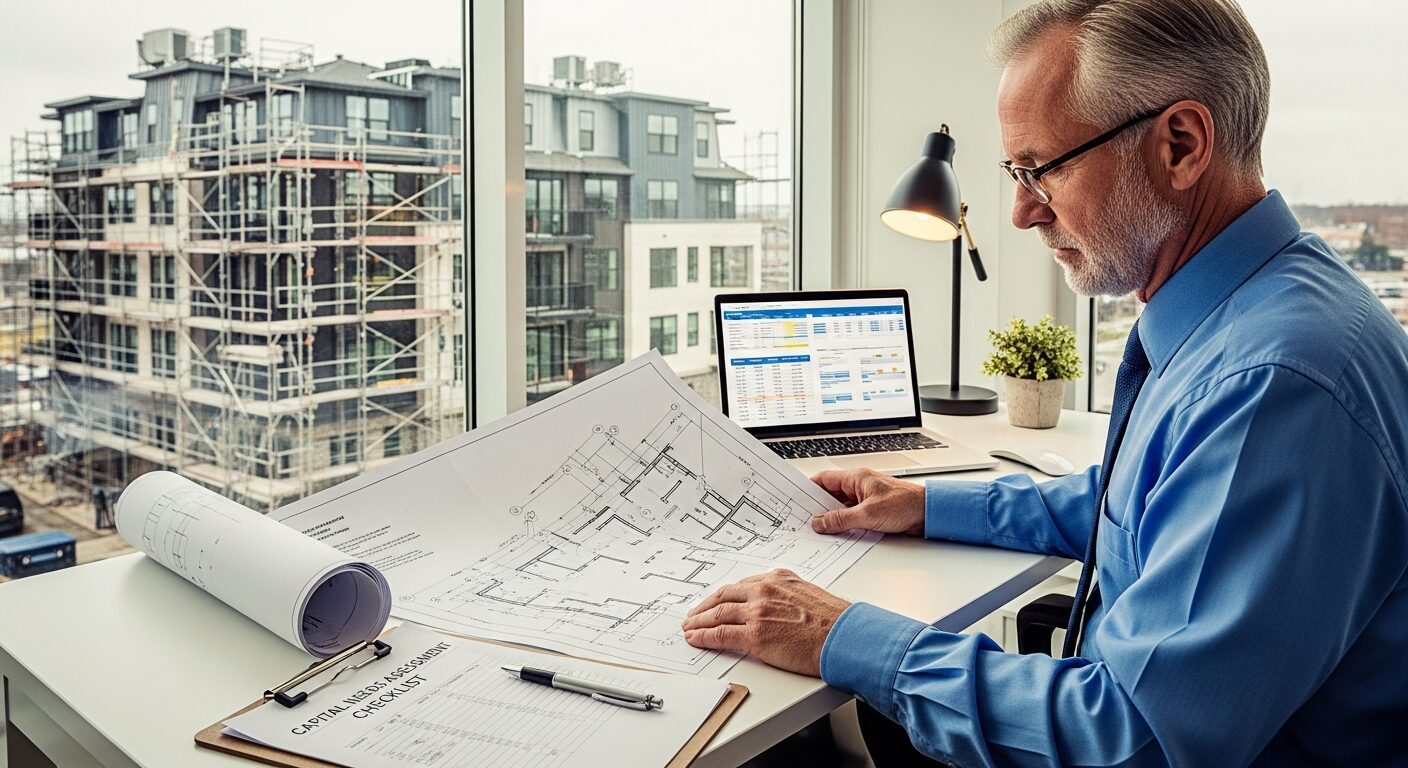
A property condition assessment (PCA) is an independent, comprehensive evaluation of a property’s physical condition and systems. Unlike inspections performed by contractors with a vested interest in securing work, a certified third-party assessment provides an unbiased snapshot of your property’s current state.
A PCA typically evaluates:
- Structural integrity of walls, roofs, and foundations
- Building systems including HVAC, plumbing, and electrical
- Exterior conditions like siding, windows, and parking areas
- Interior finishes and safety features
- Code compliance and deferred maintenance needs
For real estate investment trusts (REITs) and large-scale property owners, PCAs inform critical investment decisions. They help identify immediate repair needs, forecast capital reserve requirements, and validate property valuations before acquisition or refinancing.
According to industry practice, properties should undergo a PCA every 3–5 years, depending on age and condition. Older properties or those in harsh climates may need more frequent evaluations.
Capital Needs Assessments: Planning for Long-Term Sustainability
A capital needs assessment (CNA) goes beyond condition evaluation—it’s a strategic roadmap. A CNA projects which systems and components will require replacement over the next 20+ years and estimates costs with remarkable precision.
This forward-looking analysis is invaluable for:
- Budget planning: Reserve funds set aside for anticipated replacements
- Loan approval: Lenders require CNAs for large multifamily and commercial properties
- Investor confidence: Clear data on long-term sustainability reduces perceived risk
- Operational planning: Know when HVAC units, roofs, or plumbing systems will need replacement
Property managers in Fort Worth and across Texas rely on CNAs to allocate capital strategically rather than react to emergency failures.
The Strategic Difference: Repairs vs. Capital Improvements
Many property owners conflate repairs with capital improvements—but they’re fundamentally different.
Repairs are reactive fixes maintaining basic habitability. A leaking roof gets patched. A broken heater gets replaced. These are necessary but don’t increase property value.
Capital improvements, by contrast, are intentional, long-term upgrades that add lasting value. Installing a new HVAC system with enhanced efficiency, upgrading plumbing infrastructure, or adding square footage are capital improvements.
The IRS recognizes this distinction. Under IRS Publication 523, capital improvements must be permanent or durable (lasting more than one year). Costs are depreciated over 27.5 years for residential properties, creating significant tax advantages for investors.
High-Impact Capital Improvement Strategies for Property Types
Senior Living Facilities
Senior living communities demand specialized renovation expertise. Residents require continuous care, and any construction must respect safety protocols and minimize disruption to daily operations.
Key improvements for senior living include:
- Modernized accessibility features: Wider doorways, grab bars, accessible bathrooms
- Updated HVAC and plumbing systems: Enhanced comfort and reliability
- Flooring upgrades: Non-slip, durable surfaces reducing fall risk
- Emergency and security systems: Modern call buttons, monitoring, secure entrances
A veteran-owned construction firm working in occupied senior living environments understands the delicate balance between progress and resident dignity. Phased construction, strict safety protocols, and coordination with care staff are essential.
Multi-Family Residential Properties
Apartment complexes generate revenue only when units are occupied and tenant satisfaction is high. Strategic capital improvements directly impact both.
Priority improvements include:
- Unit refreshes: Modern kitchens, updated flooring, fresh paint, new fixtures
- Common area upgrades: Lobbies, fitness facilities, community spaces
- Infrastructure modernization: Electrical panel upgrades, plumbing improvements, energy-efficient lighting
- Exterior work: Roof repairs, parking lot resurfacing, landscaping enhancements
Multi-family properties benefit from fast, professional room turns—the ability to quickly refresh units between tenants. This reduces vacancy and maximizes occupancy rates.
Hospitality Properties
Hotels and hospitality assets live or die by guest experience. Capital improvements directly affect reviews, booking rates, and nightly rates.
High-ROI hospitality improvements:
- Guest room modernization: Updated beds, bathrooms, technology integration
- Lobby and public space upgrades: First impressions matter
- Technology infrastructure: WiFi, smart locks, digital check-in systems
- Energy efficiency: Lower operating costs, appeal to eco-conscious travelers
Commercial Spaces and Office Environments
Commercial tenants expect modern, efficient spaces. Capital improvements secure long-term leases and justify higher rental rates.
Strategic commercial improvements:
- Tenant finish-outs: Customized spaces meeting tenant needs
- Building system upgrades: HVAC efficiency, electrical modernization
- Interior renovations: Updated finishes, improved layouts, enhanced lighting
- Sustainability features: LEED-aligned improvements, energy management systems
The Role of Third-Party Inspections and Bid Reviews
Before committing capital to improvements, smart investors get independent validation. Third-party inspection services and bid reviews protect against:
- Contractor conflicts of interest: Ensuring contractors don’t overstate repair needs
- Inflated quotes: Comparing multiple bids ensures competitive pricing
- Code compliance issues: Independent inspectors verify all work meets current standards
- Hidden defects: Comprehensive inspections catch problems contractors might miss
For REITs and institutional investors managing large portfolios, these services reduce risk and ensure capital efficiency.
Why Construction Done Right the First Time Saves Money
Construction quality directly impacts long-term costs. Shoddy work leads to callbacks, warranty disputes, and premature system failures.
A construction partner with a proven track record and a mission-driven approach delivers:
- Lasting craftsmanship: Systems installed correctly last longer
- Transparent budgeting: Clear costs and timelines prevent surprises
- On-time delivery: Projects completed as scheduled minimize operational disruption
- Clear communication: Regular updates keep stakeholders informed
For property managers in Fort Worth and across Texas, a construction partner combining military discipline with construction expertise brings both precision and reliability.
Strategic Construction Services: Assessment to Completion
The strongest property improvement strategy flows logically from assessment to completion:
- Assessment Phase: Independent property condition evaluation identifies current state and deferred maintenance
- Planning Phase: Capital needs assessment projects future requirements; bid reviews validate contractor quotes
- Execution Phase: Professional construction management ensures quality, schedule adherence, and budget compliance
- Delivery Phase: Final inspections, punch-list completion, and transition to normal operations
This systematic approach transforms capital improvements from risky guesses into strategic, data-backed investments.
Fort Worth, Texas: Construction Services for Institutional Properties
Real estate investors operating in Fort Worth and surrounding areas have access to veteran-owned construction firms specializing in the exact property types requiring improvement: senior living facilities, hospitality properties, multi-family housing, and commercial spaces.
These firms bring:
- Proven expertise across multiple property sectors
- Understanding of occupied environment construction, allowing work to proceed while properties remain operational
- Texas-specific compliance knowledge, including local building codes and permitting requirements
- Fast turnaround on room turns and unit refreshes, critical for revenue-generating properties
- Transparent communication throughout all phases
Taking Action: Your Next Steps
If you own or manage property in Fort Worth, Celina, or across Texas, evaluate whether a property condition assessment would benefit your portfolio. For institutional investors with large holdings, a capital needs assessment should inform your reserve fund strategy.
Then, identify a construction partner that combines integrity, expertise, and transparent communication. Request free quotes for your specific needs. Ensure contractors can handle your property type—whether senior living, hospitality, multi-family, or commercial.
The properties you’ll love coming home to—and the ones generating strong returns—are built on a foundation of smart assessment, strategic planning, and construction done right the first time.
0 Comments