
817-401-0091

by | Oct 18, 2025

Plano’s Construction Boom: How Design-Build Partnerships Drive Major Development Success

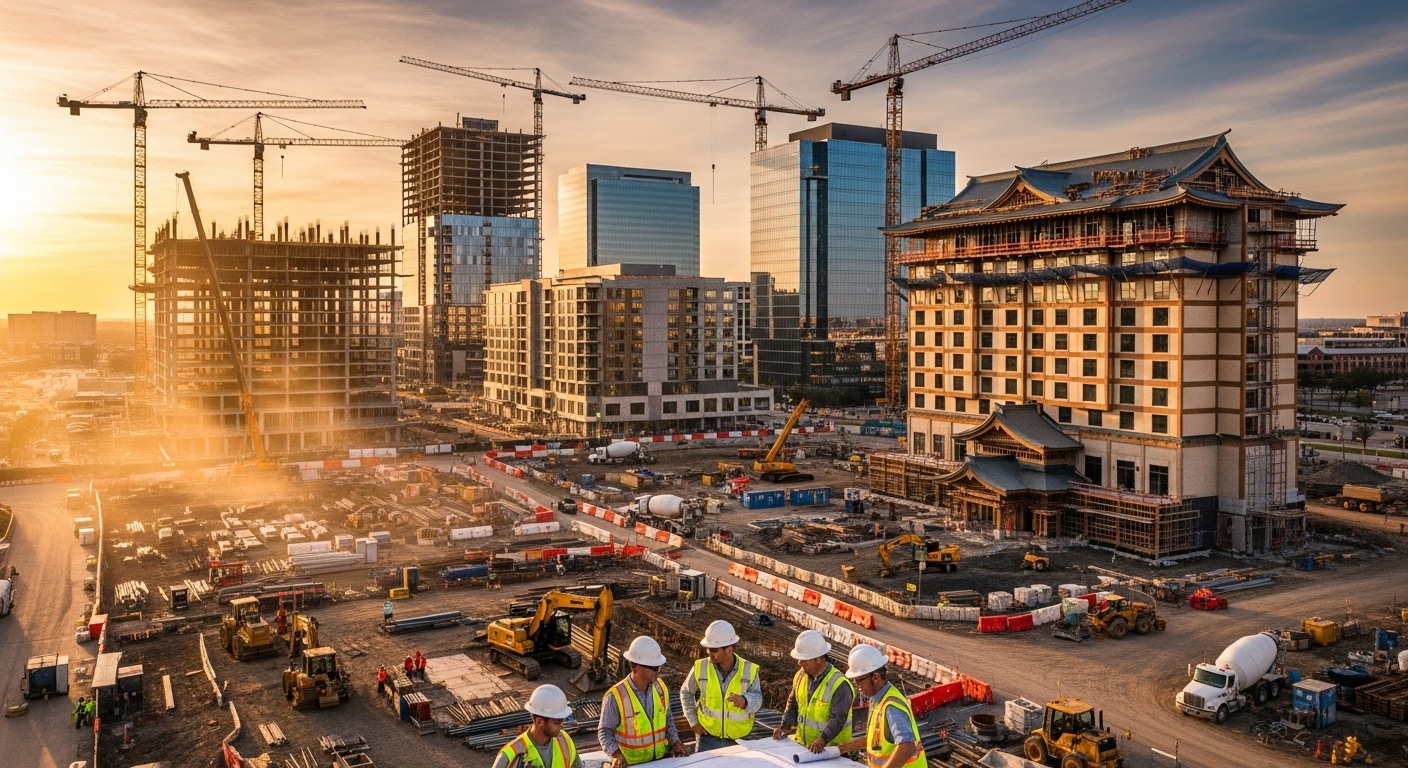
Plano, Texas is experiencing an unprecedented construction renaissance that’s reshaping the city’s skyline and infrastructure. With over $1.4 billion in active development projects, including the groundbreaking $117.5 million Miyako Hybrid Hotel and multiple mixed-use developments, Plano has become a hotbed of construction activity that demands exceptional expertise and execution.

For architectural and design-build firms operating in this dynamic market, the key to success lies not just in innovative design, but in partnering with construction teams that can deliver complex projects on time, within budget, and to the highest quality standards.

Plano’s Development Landscape: A $928 Million Investment in Growth

The city of Plano recently approved a $928 million budget with significant allocations for infrastructure and development projects. This massive investment includes $321 million dedicated to capital projects spanning roads, parks, and city facilities. The scope of development activity creates both tremendous opportunities and complex challenges for design-build firms.

Recent major projects highlight the scale of opportunity:

  • Miyako Hybrid Hotel: A 12-story, 217-room luxury hotel featuring Japanese-inspired design elements
  • Ryan Tower: A completed 23-story office building representing 409,000 square feet of Class AA workspace
  • Legacy Business Park Redevelopment: A 750-unit mixed-use development around the former JCPenney headquarters
  • Haggard Farms: A 142-acre mixed-use development including townhomes and commercial spaces

The Critical Role of Construction Execution Partners

While design innovation captures headlines, construction execution determines project success. The complexity of Plano’s development environment—from high-rise construction to occupied space renovations—requires construction partners who understand both the technical demands and the local market dynamics.

Key Success Factors for Design-Build Projects

1. Veteran Leadership and Discipline
Projects of this magnitude require military-style precision and organization. Construction teams with veteran leadership bring proven methodologies for complex project coordination, risk management, and timeline adherence.

2. Multi-Sector Expertise
Plano’s diverse development portfolio spans hospitality, commercial office, residential, and mixed-use projects. Design-build firms need construction partners experienced across all these sectors.

3. Occupied Environment Capabilities
Many projects involve renovations or construction within occupied spaces. This requires specialized expertise in maintaining operational continuity while delivering high-quality construction results.

Recent Texas legislative changes are reshaping development standards in Plano. New laws including SB 840, SB 15, and SB 2477 allow more multifamily and mixed-use projects while reducing minimum lot sizes and streamlining conversions. Design-build firms must partner with construction teams that understand these evolving regulations and can navigate the approval process efficiently.

The Infrastructure Investment Opportunity

Plano’s commitment to infrastructure improvements creates additional opportunities for design-build partnerships. The city recently completed major asphalt overlay projects on key arterial roads and approved over $629,000 for park enhancements. These projects require construction teams that can work within municipal frameworks while maintaining public access and safety.

Water Infrastructure Expansion

The recent acquisition of Plano’s Crescent Constructors by Zachry Construction highlights the growing demand for water infrastructure expertise. As regulations tighten and repair needs increase, design-build firms specializing in municipal and industrial water projects will find expanding opportunities.

Building Lasting Partnerships in North Texas

Success in Plano’s competitive construction market requires more than technical capability—it demands true partnership between design and construction teams. The most successful projects emerge from collaborations where:

  • Communication flows transparently between all stakeholders
  • Budget management occurs proactively with clear milestone tracking
  • Quality standards remain uncompromising regardless of timeline pressures
  • Problem-solving happens collaboratively when challenges arise

Fort Worth-Based Expertise Serving Plano

Given Plano’s proximity to Fort Worth and the interconnected nature of the North Texas construction market, many successful projects leverage expertise from throughout the region. Fort Worth-based construction firms bring valuable perspective on similar urban development challenges while understanding the specific dynamics of Plano’s market.

The veteran-owned construction companies operating from Fort Worth often bring distinctive advantages:

  • Proven project management methodologies refined through military service
  • Commitment to timeline and budget discipline essential for large-scale developments
  • Experience with complex multi-phase projects common in urban redevelopment
  • Understanding of regulatory compliance across multiple jurisdictions

Future-Proofing Design-Build Success

As Plano continues its rapid growth trajectory, design-build firms must consider long-term partnership strategies. The city’s emphasis on sustainability, mixed-use development, and infrastructure resilience will define successful projects for years to come.

Key considerations include:

  • Energy efficiency standards that may evolve with new regulations
  • Mixed-use integration requiring coordination across multiple building types
  • Transit connectivity as regional transportation networks expand
  • Community impact as developments shape neighborhood character

Maximizing Project Success Through Strategic Partnerships

The most successful design-build projects in Plano’s current market share common characteristics: they combine innovative design with flawless execution, maintain clear communication throughout the process, and deliver results that exceed client expectations.

For architectural and design-build firms looking to capitalize on Plano’s growth, the choice of construction partner can determine project outcomes. Teams that bring together design innovation with construction expertise, military-grade project discipline, and deep understanding of local market dynamics are positioned to thrive in this dynamic environment.

The construction boom transforming Plano represents more than individual projects—it’s reshaping how North Texas approaches urban development. Design-build firms that align with construction partners sharing their commitment to excellence, transparency, and client success will find themselves at the forefront of this transformation.

As Plano continues investing in its future through major infrastructure and development projects, the opportunities for collaborative success between design and construction professionals will only continue to expand. The key lies in building partnerships that can deliver on the promise of exceptional results, project after project.

0 Comments

Submit a Comment

Your email address will not be published. Required fields are marked *

Waco HUD Grants: Funding for Senior Living Renovations

Waco’s Housing & Community Development office invites qualified organizations to apply for HUD grant funding from March 2 to April 3, 2026. Grants will support senior living renovations, affordable housing rehabilitation, accessibility upgrades, and community facility improvements. Developers, nonprofits, and construction service providers that serve lower-income residents are encouraged to partner on projects that improve safety, accessibility, and quality of life. This article outlines eligible projects, the value of a capital needs assessment, tips for working with contractors in occupied facilities, and practical steps to prepare a competitive application before the deadline.

Fort Worth Architects: Secure a Trusted Construction Partner for the 2026 Multifamily Boom

With Dallas‑Fort Worth ranked among the top U.S. markets for multifamily construction, Fort Worth architects face unprecedented demand for renovations, capital improvements, and fast-track builds. Success now depends on partnering with construction firms that can manage occupied environments, deliver on time and on budget, and handle multi-unit capital programs, senior living retrofits, and hospitality renovations. This post explains what to look for in a construction execution partner—industry expertise, certifications, transparent project management, and occupied-site experience—and outlines a four-step framework to protect your design intent while scaling your firm. Learn how the right partner turns design excellence into reliable delivery.

Senior Living Renovations in Waco: Strategic Upgrades to Boost Occupancy

Waco’s senior living communities face growing demand—and aging facilities risk occupancy, staff retention, and reputation. This article explains why strategic renovations are essential, outlining a four-step roadmap: property assessment, design and planning, phased execution in occupied environments, and final delivery. High-impact upgrades include unit refreshes, common-area modernizations, infrastructure improvements, accessibility updates, and kitchen/dining enhancements. Learn how Waco’s cost advantages and veteran-owned construction expertise deliver fast, transparent projects that minimize disruption. Start with a free property condition assessment to prioritize work, control costs, and boost resident experience and occupancy.

Frisco, Texas Development Boom: New Hospitality, Retail & Entertainment Projects

Frisco, Texas is experiencing a major development surge as new hospitality, retail, and entertainment projects reshape the market through 2026. For commercial owners and investors, staying competitive requires strategic capital planning, professional property condition assessments, and renovation partners who can execute occupied, phased work quickly and transparently. This article outlines why CNAs and disciplined design-build execution matter, how fast unit turns and specialized tenant finishes drive rent recovery, and a practical four-step framework to assess, plan, bid, and execute capital improvements that protect and grow your investment.

Waco VA EHRM Infrastructure Upgrades: Guide for Waco Contractors

A federal procurement notice outlines EHRM infrastructure upgrades at the Waco VA Medical Center, including building-system modifications, IT improvements, and facility work in an occupied healthcare setting. This opportunity is especially relevant to contractors experienced with phased, occupied renovations—such as senior-living and institutional projects—who can manage coordination, safety, and IT integration. This article summarizes the procurement highlights, regional construction context, and practical bidding tips to help qualified firms assess fit and prepare responsive proposals. Read on for key takeaways and action steps to pursue this Waco contract opportunity.

Modernize Hotel Rooms (2026): Boost Occupancy with Smart Renovations

Guest expectations have shifted—today’s travelers book experiences, not just rooms. This 2026 guide shows Dallas-Fort Worth hospitality owners how targeted room upgrades, efficient room turns, and capital improvements (HVAC, plumbing, energy systems) boost guest satisfaction and occupancy without long closures. Learn how design-build teams, construction crews experienced with occupied hotels, and third-party inspections protect your investment and speed delivery. Prioritize high-ROI improvements, work around operations, and partner with veteran-led teams for disciplined project management. Start with a property condition assessment and request a free, no-obligation quote to turn renovations into a competitive advantage.

DFW Multifamily Report: Renovation Budgets Rise in Irving — 2026 Phased Strategy for Owners

Irving is among the most active DFW markets as owners boost renovation budgets to compete with newer Class A buildings. This guide explains typical scopes—unit refreshes, common-area modernizations, and systems upgrades—plus why PCAs and CNAs are essential for smart planning. Learn how to phase work around lease turnover, control costs with construction management, and prioritize projects that drive rent premiums and reduce operating expenses. If you own or manage 1980s–90s multifamily assets in Irving, this article shows how strategic, phased renovations can protect value and accelerate returns in 2026.

BAM Builders Recognized Among Leading Waco Remodelers

BAM Builders, a Waco-based contractor featured on Yelp, is being recognized among the area’s leading remodelers for bathroom renovations, custom homes and high-end finish work. Reviews emphasize strong project management, clear pricing, and the ability to work in occupied homes—qualities that matter as Waco adopts updated building codes. This post explains which renovations deliver the best return, how to vet contractors, and why starting with a professional assessment and transparent bid review protects your investment.

Adaptive Reuse and Renovation Surge in Fort Worth’s Urban Core (2026 Opportunities)

Fort Worth’s urban core is experiencing a surge in adaptive reuse and renovation projects as developers convert older office, industrial, and hospitality properties into multifamily, healthcare, and mixed‑use spaces. These complex, occupied‑building renovations require thorough pre‑project assessments, phased construction strategies, and disciplined project management to avoid costly delays and budget overruns. Veteran‑led construction teams and independent contractor audits provide the structured planning, operational continuity, and accountability developers need to deliver fast unit turns and maximize returns. Read on to learn why choosing an experienced, locally rooted construction partner is the key to profitable adaptive reuse in Fort Worth in 2026.

Senior Living Renovation Deal Highlights Capital Improvements in Frisco Market

Frisco’s senior living market is seeing major capital investment—including a $13M renovation of a 150,000 sq ft facility—highlighting the urgency for operators to modernize without disrupting residents. This article outlines high-impact upgrades (HVAC, roofing, interiors, accessibility), the value of property condition and capital needs assessments, and construction strategies for occupied environments: phased work, dust and noise containment, fast room turns, and independent bid reviews. Prioritize projects that boost resident satisfaction and operational efficiency, and partner with experienced teams to protect wellbeing and occupancy.