
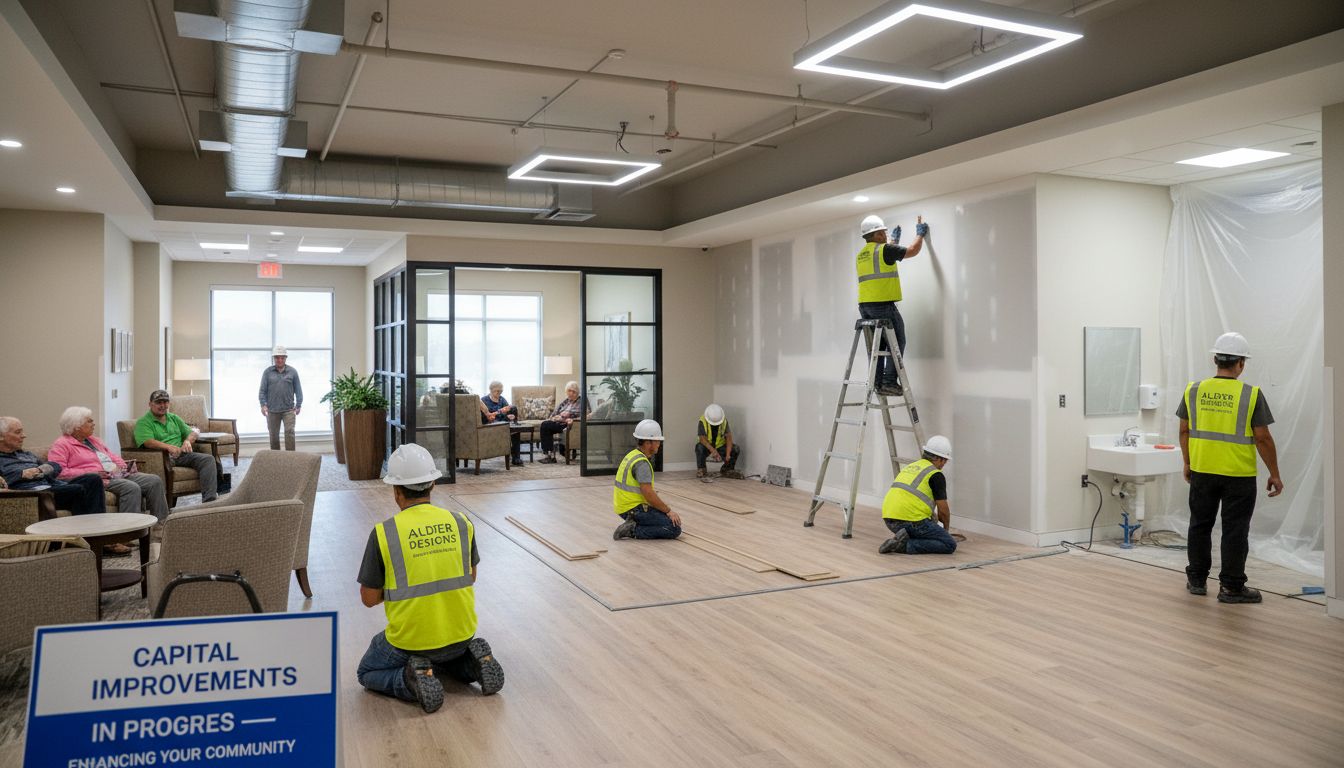
Expert Senior Living Construction & Design-Build Services in Fort Worth
Senior living facilities demand precision, discipline, and deep expertise—qualities that separate exceptional construction from merely adequate builds. Whether you’re designing new communities, upgrading existing housing stock, or managing complex renovations in occupied environments, design-build construction services and strategic capital improvements are essential for delivering spaces residents love and operators trust.
The North Texas region, particularly around Fort Worth and the surrounding markets, is experiencing unprecedented growth in senior housing. McKinney alone has projects like Forest View Senior Housing—a 222-unit, age-55+ community designed to serve households at 30–80% of area median income. This boom reflects broader demand for quality senior living facilities that combine affordability, modern amenities, and operational excellence.
Alder Designs understands these challenges intimately. As a 100% veteran-owned construction company based in Fort Worth, we bring over 70 years of combined expertise to senior living renovations, design-build projects, and construction management across Texas. Our mission is straightforward: deliver spaces you’ll love coming home to, executed with integrity, precision, and purpose.
Why Senior Living Projects Demand Specialized Construction Services
Senior living facilities present unique construction challenges that generic contractors struggle to manage. Residents depend on continuous services—dining, medical care, recreation—while renovation work progresses around them.
Building in occupied environments requires military-level coordination and discipline. Unlike new construction, where crews control a single timeline, senior living upgrades must work within operational schedules, minimize disruption to resident routines, and protect vulnerable populations from construction hazards.
Staffing and turnover in senior living are constant pressures. High occupancy rates drive revenue, but sustained operational disruption erodes satisfaction and increases move-outs. A construction partner who understands this reality schedules work to maximize occupancy throughout the project lifecycle.
Capital improvements in senior housing span critical systems: roofing, HVAC, plumbing, energy-efficiency upgrades, and unit refreshes. Each upgrade directly impacts resident comfort, facility operating costs, and long-term asset value. Poor execution leads to warranty disputes, extended vacancy periods, and unexpected repairs—all eroding returns.
The Fort Worth Market: Growth, Competition, and Opportunity
Fort Worth and North Texas are at the center of a construction explosion. McKinney’s pipeline alone includes 3,119 projects worth $9.69 billion, split between 1,454 new builds and 1,665 renovation projects across 78 million square feet of commercial, residential, and mixed-use space.
Senior housing specifically is accelerating. Communities like Forest View demonstrate investor confidence in age-55+ properties in North Texas. Simultaneously, existing facilities are upgrading to compete—modernizing unit finishes, improving common areas, and addressing aging building systems.
This growth creates opportunities, but also competitive pressure. Facility operators need construction partners who can:
- Minimize resident impact through disciplined scheduling and communication
- Deliver on time and within budget without compromising quality
- Provide third-party assessments to guide capital allocation decisions
- Coordinate across multiple stakeholders—residents, operators, designers, and inspectors
- Execute complex work in occupied buildings while maintaining operational continuity
Generic construction companies treat senior living like any other project. Specialized partners understand the intersection of construction excellence, resident safety, and operational strategy.
Core Construction Services for Senior Living Facilities
Room Turns & Unit Refreshes: Maximizing Occupancy
A room turn is the renovation cycle between resident moves. Speed matters—every week of vacancy reduces revenue. Quality matters equally—potential residents expect modern, well-maintained units.
Alder Designs specializes in fast, professional room turns that maximize occupancy and minimize downtime. Our four-step process—assessment, planning, execution, and delivery—ensures every refresh meets design standards without surprises.
Typical room turn projects include flooring replacements, paint, lighting upgrades, plumbing fixtures, and appliance updates. By pre-staging materials, coordinating subcontractors, and maintaining detailed checklists, we turn units in days, not weeks.
Capital Improvements: Strategic System Upgrades
Aging building systems are the hidden cost drivers in senior housing. HVAC efficiency, roofing integrity, and plumbing reliability directly impact utility costs and resident satisfaction.
A Capital Needs Assessment (CNA) is your first decision point. This third-party evaluation identifies which systems need priority attention, estimated costs, and potential return on investment. Rather than guessing which upgrades matter most, a CNA provides data-driven guidance.
Once priorities are clear, Alder Designs executes phased upgrades designed for occupied buildings. Rather than shutting down entire communities for months, we sequence work to maintain operations while completing critical improvements:
- HVAC upgrades reduce energy costs and improve comfort year-round
- Roofing replacements prevent costly water damage and extend building life
- Plumbing and water-efficiency improvements lower utility bills and reduce emergency repair risk
- Energy upgrades (insulation, windows, LED lighting) improve resident comfort and lower operating costs
Property Condition Assessments: Third-Party Insight
Before acquiring, refinancing, or renovating a senior living community, operators and investors need honest, independent assessment of building condition. Property Condition Assessments (PCAs) are the industry standard.
Alder Designs conducts certified third-party inspections and reports that identify deferred maintenance, code violations, and long-term capital needs. This information is essential for underwriting loans, setting asset budgets, and protecting your investment.
Unlike sellers’ contractors or in-house maintenance staff, third-party assessors have no financial interest in minimizing problems. Our reports provide the transparency needed for confident decision-making.
Design-Build Services: From Concept to Completion
Design-build construction integrates design and construction under a single contract, reducing coordination risk and accelerating timelines. For senior living operators planning expansions, major renovations, or new community builds, design-build streamlines decision-making and accountability.
Alder Designs works with architects and designers from feasibility studies through final project completion. Our construction expertise informs design decisions, preventing costly field changes and ensuring buildability from the start.
Complex projects—like the West Grove mixed-use development or large senior housing communities—benefit from this integrated approach. A single partner manages the entire process, with clear communication and predictable outcomes.
Bid Reviews & Contractor Audits: Quality Assurance
Facility operators often solicit multiple bids for major work. Bid reviews and contractor audits help evaluate proposals, identify red flags, and ensure competitive pricing for quality.
Alder Designs reviews contractor bids, evaluates qualifications, and audits work quality to protect operators from unreliable partners or overpriced proposals. This advisory service is especially valuable for organizations managing multiple properties across regions.
Why Alder Designs Stands Apart in Senior Living Construction
Our veteran ownership isn’t merely a credential—it defines how we work. Veterans understand discipline, clear communication, and accountability. These principles translate directly to construction excellence.
70+ years of combined expertise means we’ve managed the complexity of senior housing across booms and downturns. We know how to sequence work to maintain operations, coordinate with facility staff, and deliver results that earn trust.
Four-step process—assessment, planning, execution, delivery—ensures every project has clear milestones, transparent communication, and predictable outcomes. Facility operators know exactly what to expect.
Construction done right the first time reflects our commitment to lasting craftsmanship. Rework, change orders, and warranty disputes are expensive and disruptive. We get it right to begin with.
On-time delivery and budget transparency mean no surprises. Cost estimates are detailed, schedules are realistic, and communication is constant. This approach earns partnerships that extend across multiple facilities and projects.
Strategic Capital Improvements: Planning for ROI
Capital improvements are investments, not expenses. The Dallas–Fort Worth region’s construction outlook for 2025 emphasizes opportunities in senior living, hospitality, and multi-family upgrades—particularly HVAC, roofing, energy efficiency, and tenant finishes completed in occupied environments.
The key to maximizing ROI is strategic sequencing. Rather than upgrading every system simultaneously, prioritize work that:
- Improves resident experience immediately (unit refreshes, common-area upgrades)
- Reduces operating costs (energy efficiency, HVAC, utilities)
- Extends building life (roofing, foundation, structural repairs)
- Minimizes occupancy impact (phased, scheduled work)
Phased renovations preserve cash flow while modernizing facilities. For example, a multi-family community might sequence unit refreshes quarterly, completing 25% each quarter while maintaining 100% occupancy. This approach requires disciplined project management and clear communication—exactly what Alder Designs delivers.
Senior Living Construction Trends in North Texas
McKinney and the Fort Worth region are seeing explosive growth in senior housing. The $1.47 billion in McKinney construction includes hundreds of multifamily units designed for or adaptable to older adults. Simultaneously, existing communities are upgrading to compete.
Affordability pressure is reshaping senior housing. Communities serving households at 30–80% of area median income demand efficient, cost-effective construction. Developers and operators cannot absorb endless cost overruns—disciplined construction partners who deliver on budget and schedule are increasingly valuable.
Occupied environment construction is becoming table stakes. New projects increasingly include phased delivery with partial occupancy, requiring construction teams experienced in balancing resident services with active renovation.
Third-party verification (inspections, assessments, bid audits) is standard practice among institutional operators and lenders.
0 Comments