
North Texas Commercial Renovation Market: Trends Shaping 2025
The North Texas commercial renovation market is gaining momentum in 2025, driven by capital inflows and demand across Fort Worth and Denton.
I need to retrieve the information from the previous workflow steps to generate your blog post. Let me gather the necessary details.
The North Texas commercial renovation market is experiencing unprecedented momentum. With commercial real estate borrowing and lending climbing 40% in 2025 alone, property owners and investors across Fort Worth, Denton, and surrounding markets are unlocking capital for transformative renovation projects. Whether you’re a developer, asset manager, or property owner, understanding these market dynamics is essential to staying competitive and maximizing your portfolio’s value.
What’s Driving the Commercial Renovation Boom in North Texas
The surge in capital availability isn’t random—it’s fueled by a fundamental shift in how businesses and investors think about commercial space. Post-pandemic work patterns have reshaped office layouts, hospitality owners are racing to modernize common areas and guest experiences, and multifamily investors are discovering that strategic renovations deliver stronger returns than new construction in secondary markets like Denton.
Energy-efficiency upgrades have become a priority as property owners seek to reduce operating costs and meet tenant expectations for sustainable workspaces. Room-turn acceleration is critical in hospitality and multifamily sectors, where speed directly impacts occupancy rates and revenue. Meanwhile, transparent construction management has shifted from a luxury to a necessity—tenants and stakeholders demand clear timelines, cost controls, and minimal operational disruption.
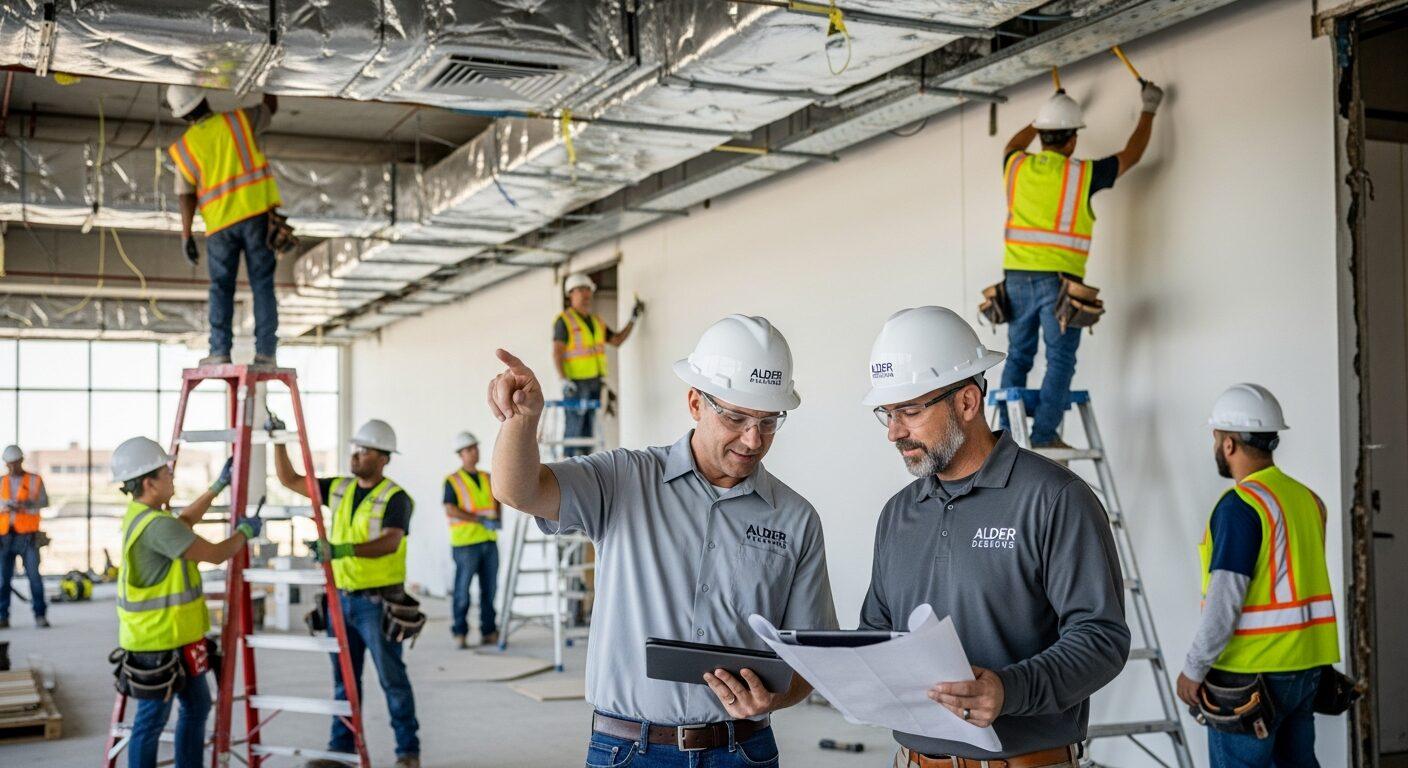
In Denton specifically, a 5,250-square-foot office renovation at Tetra Pak exemplifies this trend: the project maintained full operations while delivering updated workspaces and amenities through careful phasing and coordination. That combination of speed, quality, and operational continuity is now the market standard.
Office and Medical Space Renovations Leading the Charge
Office buildings across North Texas are undergoing rapid transformation. Companies that previously planned relocation are now modernizing existing spaces instead, driving strong demand for interior remodels, tenant improvements, and design-build expertise in occupied corporate environments.
Medical spaces are following suit. Healthcare providers in Fort Worth, Denton, and the broader North Texas corridor are refreshing clinical areas, updating patient-facing amenities, and reconfiguring staff workflows to align with evolving care delivery models. These projects require specialized knowledge—infection control protocols, accessibility compliance, and the ability to work in active healthcare settings without compromising patient care.
The financial incentive is clear: retrofitting existing medical or office space costs significantly less than relocating, while improving asset value and tenant retention. This is why experienced construction partners who can navigate occupied-environment work are in high demand.
Hospitality and Multifamily: The Value-Add Wave
Hospitality owners are accelerating room-turn cycles—a critical metric that directly correlates with occupancy rates and revenue. Whether it’s updating guest rooms, refreshing lobbies, or modernizing amenity areas, speed without sacrificing quality is the competitive edge.
Multifamily investors in secondary markets like Denton have discovered the power of capital improvement programs targeting aging assets. Rather than wait for complete property lifecycles, savvy owners are executing targeted renovations: unit refreshes, common-area upgrades, mechanical systems improvements, and life-safety enhancements. These value-add strategies increase net operating income, improve marketability, and position properties for future repositioning or sale at premium valuations.
The challenge lies in execution. Multifamily properties operate continuously—residents can’t be displaced during renovations. This demands construction teams that specialize in phased work in occupied buildings, maintaining resident services and minimizing disruptions while delivering high-impact improvements on time and within budget.
Energy Efficiency: More Than a Trend, Now a Requirement
Smart owners recognize that energy-efficient renovations deliver dual benefits: reduced operating expenses and enhanced property valuations. HVAC upgrades, LED lighting retrofits, insulation improvements, and smart building controls are now standard scope items in commercial renovation projects across North Texas.
Tenants—whether corporate office workers or apartment residents—increasingly expect energy-efficient, sustainably designed spaces. This expectation is particularly strong among hospitality guests and senior living residents, who directly experience comfort and utility cost benefits.
The financial case is straightforward: a comprehensive HVAC or energy upgrade typically pays for itself within 5-7 years through reduced utility bills, while simultaneously improving asset appeal and supporting higher rents or sales prices.
Why Transparent Construction Management Matters
In a market flooded with capital and opportunity, project transparency has become a competitive differentiator. Owners and investors demand:
- Clear, fixed budgets with no surprise cost escalations
- Realistic timelines with documented milestones and progress tracking
- Stakeholder communication at regular intervals, especially in occupied environments
- Quality assurance that catches issues early rather than creating rework
- Respectful operations that honor the needs of tenants, residents, or guests
Construction teams that operate with military-grade discipline, clear communication protocols, and a commitment to delivering projects right the first time stand out in this competitive landscape. This is particularly critical in senior living facilities, hospitality properties, and multifamily complexes—sectors where operational continuity is non-negotiable.
Denton: An Emerging Hub for Commercial Renovation
Denton has attracted significant investor attention as a growth market. The city’s logistics network, expanding healthcare infrastructure, and aging commercial stock have created a perfect environment for renovation-focused developers and operators.
Several dynamics are converging:
- Senior living expansion: Denton’s aging demographic and healthcare corridor are driving senior housing investment, creating ongoing opportunities for specialized contractors in occupied renovations and facility upgrades.
- Commercial repositioning: Aging office parks, industrial buildings, and retail centers are being reimagined for modern tenants and uses.
- Multifamily value-add: Investors are acquiring older apartment communities and executing comprehensive capital improvement programs.
These trends directly parallel what’s happening in Fort Worth and across North Texas, but Denton’s secondary-market positioning offers opportunities for growth-focused contractors and developers to establish strong market presence and build long-term partnerships.
The Importance of Professional Property Assessments
Before embarking on any major renovation, smart owners commission third-party property condition assessments (PCAs) or capital needs assessments (CNAs). These evaluations identify hidden issues, prioritize improvements by urgency and ROI, and prevent costly surprises mid-project.
For multifamily and senior living properties, a thorough PCA informs a 5-10 year capital planning roadmap. For commercial spaces, it validates renovation scope and budgets. Investors increasingly require these assessments before closing acquisitions, and lenders often mandate them as a condition of construction financing.
A professional assessment also provides third-party validation that renovation plans are sound—protecting all stakeholders and establishing a clear roadmap for execution.
Choosing the Right Construction Partner for Your North Texas Project
The North Texas commercial renovation market is booming, but success depends on partnering with contractors who understand your specific sector, can work expertly in occupied environments, and operate with unwavering transparency.
Look for firms that bring:
- Sector-specific expertise: Whether senior living, hospitality, or commercial office, proven experience with your property type
- Occupied-environment proficiency: Ability to execute complex phased work while maintaining operations and minimizing tenant disruption
- Third-party inspection and planning: Teams that leverage professional assessments to inform smart, efficient renovation strategies
- Certified professionals: Industry-recognized credentials demonstrating technical mastery and ongoing education
- Disciplined project management: Clear budgets, realistic timelines, regular communication, and quality oversight
- Veteran-backed values: Leadership teams that bring military discipline, integrity, and a proven commitment to doing work right the first time
In Fort Worth and Denton, construction teams rooted in these principles are delivering transformative renovations across senior living, hospitality, multifamily, and commercial office sectors—turning aging assets into competitive, high-performing properties while maintaining seamless operations throughout the process.
Conclusion: Your Renovation Opportunity Awaits
The 2025 commercial renovation market in North Texas is brimming with capital, investor appetite, and opportunity. Whether you’re a senior living operator modernizing resident experiences, a hospitality owner accelerating room turns, a multifamily investor executing value-add strategies, or a commercial landlord upgrading office space, this is the moment to act.
Start with a clear assessment of your property’s condition and renovation needs. Partner with experienced professionals who understand your market, respect your timeline, and communicate with transparency every step of the way. The renovation trends shaping 2025—energy efficiency, accelerated timelines, occupied-environment expertise, and disciplined project management—aren’t temporary. They’re the new foundation of competitive advantage in North Texas commercial real estate.